ETFs Vs Index Funds: Key Differences And How To Choose
Discover the core distinctions between ETFs and index funds to optimize your passive investment strategy for long-term growth.
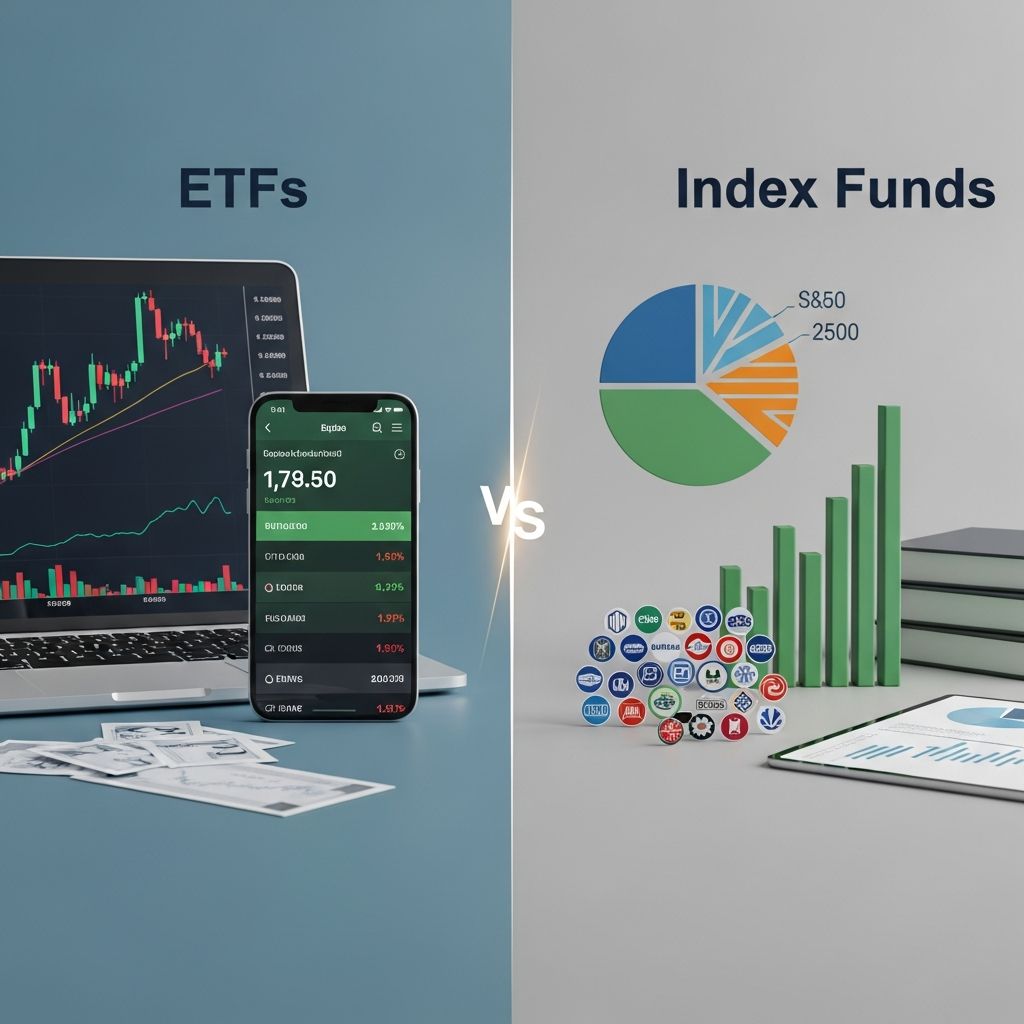
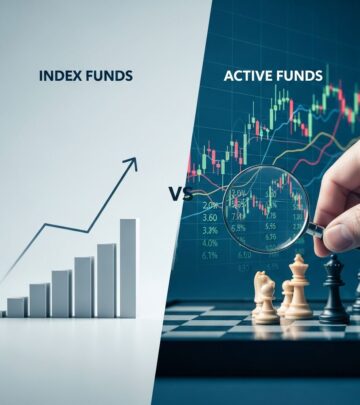
Exchange-traded funds (ETFs) and index funds represent cornerstone options in passive investing, both designed to replicate market benchmarks like the S&P 500 without attempting to outperform them. While they share goals of broad diversification and low costs, their structures lead to distinct trading mechanisms, expense profiles, and tax implications that can significantly impact investor outcomes.
Understanding the Fundamentals of Passive Vehicles
Passive investments prioritize matching index performance over active stock picking, appealing to those seeking reliable, cost-effective market exposure. ETFs trade on stock exchanges like individual shares, enabling real-time pricing throughout market hours. In contrast, index funds—typically structured as mutual funds—calculate net asset value (NAV) once daily at market close, limiting transactions to end-of-day executions.
This core distinction influences liquidity and flexibility. ETFs allow intraday adjustments, ideal for tactical moves, while index funds suit buy-and-hold strategies where daily price fluctuations matter less.
Core Similarities Driving Popularity
Despite operational differences, ETFs and index funds align on key strengths that underpin their dominance in modern portfolios.
- Broad Diversification: A single investment grants exposure to hundreds of securities, mitigating single-asset risk across sectors and geographies.
- Low Expense Ratios: Passive management eliminates high active fees; index mutual funds averaged 0.05% in 2024, with many ETFs at 0.03% or below.
- Proven Long-Term Performance: By mirroring benchmarks, they capture historical market gains, often surpassing most active funds.
- Simplicity: No need to select individual stocks; professional replication handles portfolio construction.
These traits make both vehicles accessible for novice and seasoned investors building wealth steadily.
Trading Mechanics: Intraday vs End-of-Day
The most prominent divergence lies in tradability. ETFs function like stocks, with prices fluctuating based on supply-demand dynamics during exchange hours. Investors can buy or sell anytime the market operates, tracking intraday index moves closely.
Index funds, however, process orders at the day’s closing NAV, shielding against intra-day volatility but restricting responsiveness. This suits long-term holders unconcerned with short-term swings but frustrates active traders.
| Feature | ETFs | Index Funds |
|---|---|---|
| Trading Window | Intraday, like stocks | End-of-day NAV only |
| Price Determination | Market-driven | Calculated once daily |
| Liquidity | High, continuous | Batch-processed |
Cost Structures and Hidden Expenses
Both boast low fees, but nuances emerge. ETFs often edge out with rock-bottom expense ratios, though brokerage commissions, bid-ask spreads, and taxes like STT apply per trade. Index funds avoid these but may carry slightly higher management fees and potential entry loads.
Fidelity data highlights index mutual funds at 0.05% average expense ratio in 2024, versus 0.14% for equity ETFs—yet premier S&P 500 ETFs dip to 0.03%. Total costs hinge on trading frequency: frequent ETF trades amplify transaction fees, favoring index funds for infrequent investors.
- ETFs: Lower ongoing fees, but trade costs add up.
- Index Funds: No brokerage per trade, potential IDCW options for income needs.
Tax Efficiency and Capital Gains
ETFs excel in tax optimization via in-kind redemptions, where shares exchange without selling underlying assets, minimizing taxable events. Mutual fund index structures trigger gains when redemptions force asset sales, passing taxes to remaining shareholders—even non-sellers.
Vanguard notes this “in-kind” mechanism renders ETFs more tax-efficient, especially in taxable accounts. Index funds shine in tax-advantaged vehicles like IRAs where distributions don’t matter.
Investment Minimums and Accessibility
ETFs lower barriers with share-based pricing—often under $100—and fractional shares at many brokers. Index funds impose higher minimums, sometimes $1,000+, though no-minimum options exist.
This favors ETFs for small portfolios or dollar-cost averaging, while index funds demand larger initial commitments.
Transparency and Holdings Disclosure
ETFs disclose full portfolios daily, enabling precise tracking and arbitrage for price accuracy. Index mutual funds reveal holdings monthly or quarterly, offering less visibility.
Daily transparency reduces premium/discount risks in ETFs, enhancing investor confidence.
Pros and Cons at a Glance
| Aspect | ETFs Pros | ETFs Cons | Index Funds Pros | Index Funds Cons |
|---|---|---|---|---|
| Flexibility | Intraday trading | Brokerage fees | Simple end-of-day | No intra-day control |
| Costs | Often lowest ER | Transaction charges | No trade commissions | Slightly higher ER |
| Taxes | Highly efficient | – | – | Potential distributions |
| Minimums | Low/share price | – | Some no-minimum | Often higher |
Strategic Applications for Portfolios
Choose ETFs for active management, sector rotation, or taxable accounts needing liquidity. Index funds fit core satellite approaches, retirement plans, or hands-off strategies.
Hybrid portfolios blend both: ETFs for tactical tilts, index funds for stable anchors. Consider goals—growth via broad indices or income through dividend-focused variants.
Performance Realities and Market Context
Both track indices faithfully, with tracking error minimized through sampling or full replication. Historical S&P 500 data underscores passive superiority: active funds rarely beat benchmarks long-term.
Morningstar’s 2024 analysis showed just 13.2% of active funds outperforming the S&P 500, reinforcing passive appeal.
Frequently Asked Questions
Which is better for beginners?
Index funds offer simplicity with end-of-day pricing, ideal for novices avoiding intraday decisions.
Are ETFs always cheaper?
Not total cost-wise; low trading favors index funds despite ETF’s edge in expense ratios.
Can I lose money in these?
Yes, as they mirror markets—volatility applies, but diversification tempers risk.
How do they handle dividends?
ETFs reinvest or distribute; index funds offer growth/IDCW options.
Best for tax-advantaged accounts?
Index funds, as tax efficiency matters less there.
Building Your Investment Approach
Align choices with horizon, risk tolerance, and account type. Frequent traders lean ETFs; patient accumulators prefer index funds. Regularly review fees and performance to ensure alignment.
Diversify across both for balanced exposure, leveraging their complementary strengths for resilient growth.
References
- ETF versus Index Funds – Mirae Asset Mutual Fund — Mirae Asset. 2024. https://www.miraeassetmf.co.in/knowledge-center/index-funds-vs-etf
- ETF vs. index fund: What’s the difference? – Fidelity Investments — Fidelity. 2024. https://www.fidelity.com/learning-center/smart-money/etf-vs-index-fund
- ETFs vs. Index funds | TD Direct Investing — TD. 2024. https://www.td.com/ca/en/investing/direct-investing/articles/etf-vs-index-fund
- Index Fund vs. ETF: Differences and Similarities – NerdWallet — NerdWallet. 2024. https://www.nerdwallet.com/investing/learn/etf-vs-index-fund-compare
- ETFs vs. Mutual Funds: Which To Choose | Vanguard — Vanguard. 2024. https://investor.vanguard.com/investor-resources-education/etfs/etf-vs-mutual-fund
- ETFs vs. Mutual Funds – What’s the Difference? | Charles Schwab — Charles Schwab. 2024. https://www.schwab.com/etfs/mutual-funds-vs-etfs
Similar Articles








Read full bio of medha deb