ETF Investing: 5 Essential Steps For Beginners
Unlock the power of diversified investing with ETFs: low-cost, flexible strategies for building long-term wealth.
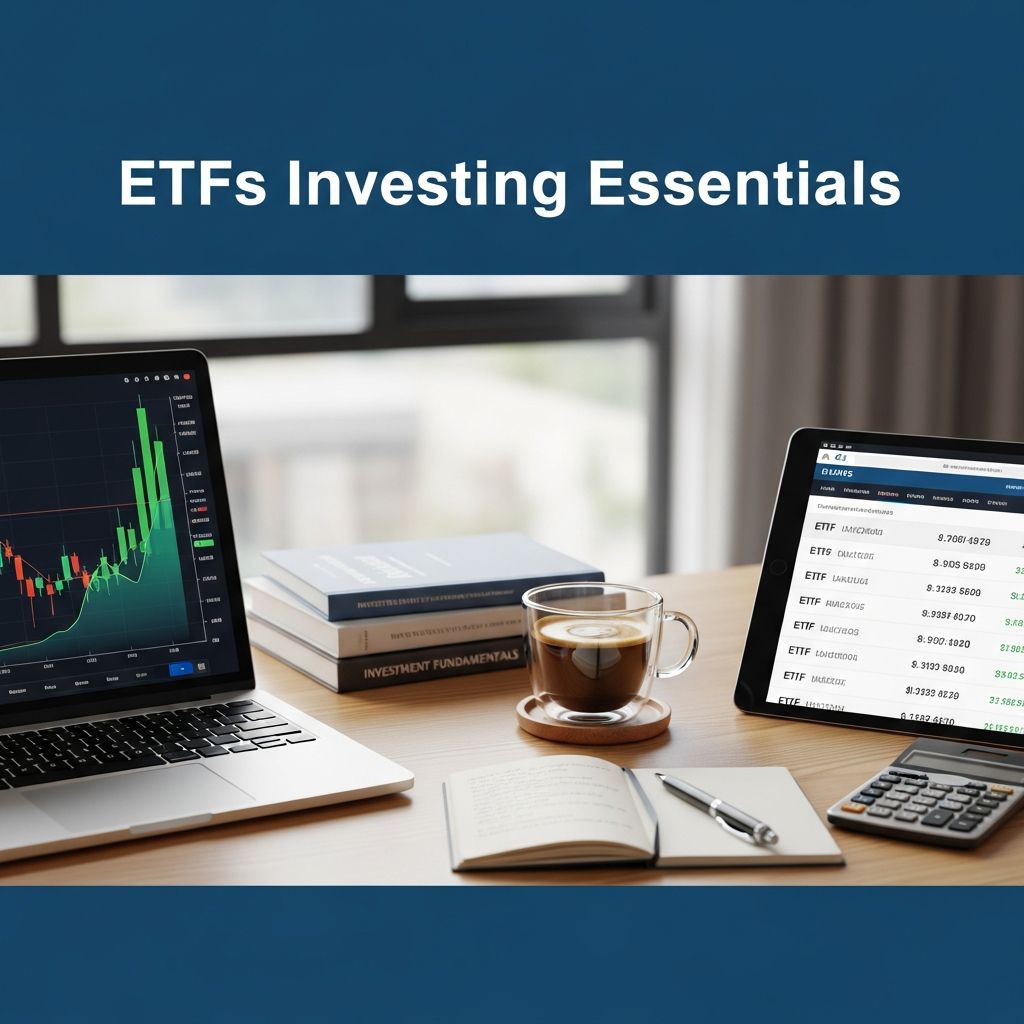
ETFs Investing Essentials
Exchange-traded funds (ETFs) offer a straightforward path to diversified investing, combining the flexibility of stocks with the broad exposure of mutual funds at lower costs. Ideal for novices and seasoned investors alike, ETFs track indexes, sectors, or commodities, enabling portfolio growth through passive strategies.
Understanding the Core of ETFs
ETFs represent baskets of assets traded on exchanges like individual stocks, providing instant diversification across hundreds or thousands of holdings. Unlike mutual funds, they trade throughout the day, offering liquidity and real-time pricing. This structure minimizes the need for active stock picking, reducing emotional decision-making and associated costs.
Key advantages include low expense ratios—often under 0.2% annually—compared to mutual funds averaging 0.5-1%. They also facilitate tax efficiency via in-kind redemptions, limiting capital gains distributions. For beginners, starting with broad-market ETFs like those mirroring the S&P 500 ensures exposure to top U.S. companies without single-stock risk.
Exploring Major ETF Categories
ETFs span various asset classes, allowing tailored exposure based on goals and risk appetite. Here’s a breakdown:
- Broad Market Index ETFs: These replicate global or regional benchmarks like MSCI World or S&P 500, holding equities from developed markets for steady long-term growth.
- Sector-Focused ETFs: Target industries such as technology, healthcare, or energy, ideal for thematic investing but with higher volatility due to concentration.
- Bond and Fixed-Income ETFs: Invest in government, corporate, or municipal bonds, providing income stability and lower risk for conservative portfolios.
- Commodity and Alternative ETFs: Offer indirect access to gold, oil, or real estate, hedging against inflation without physical ownership.
- Thematic and ESG ETFs: Emphasize trends like clean energy or sustainable practices, aligning investments with personal values while pursuing returns.
Choosing the right type depends on diversification needs; combining equity and bond ETFs balances growth and protection.
Steps to Launch Your ETF Portfolio
Building an ETF investment plan requires deliberate steps to align with financial objectives.
- Assess Goals and Risk: Determine timelines—short-term (1-3 years) favors bonds; long-term (10+ years) suits equities. Evaluate risk tolerance via quizzes on brokerage sites.
- Budget Allocation: Allocate 10-20% of disposable income monthly. Emergency funds should precede investing.
- Select a Broker: Opt for low-commission platforms with ETF screeners, fractional shares, and savings plans. Compare fees, tools, and ETF availability.
- Research Funds: Use ISIN codes to identify low-fee options. Prioritize total expense ratio (TER), tracking error, and fund size (over $1B for liquidity).
- Execute and Automate: Buy via lump sum for immediate exposure or dollar-cost average through plans to mitigate timing risks.
| Investment Approach | Pros | Cons | Best For |
|---|---|---|---|
| Lump Sum | Maximizes time in market | Market timing risk | High conviction, large capital |
| Dollar-Cost Averaging | Reduces volatility impact | Potentially lower returns | Beginners, regular savers |
| Savings Plan | Automated, low entry (€1+) | Opportunity cost if markets rise | Long-term discipline |
Accumulating vs. Distributing: Tailoring Returns
ETFs distribute dividends either by reinvesting (accumulating) or paying out (distributing). Accumulating suits growth-focused investors, compounding returns tax-deferred in many jurisdictions. Distributing appeals to those seeking income, like retirees, providing cash flow without selling shares.
Consider tax implications: In the U.S., qualified dividends receive favorable rates; in Europe, accumulating may defer taxes. Review key information documents (KIDs) for dividend policies and yields.
Broker Selection and Account Setup
Choosing a broker is pivotal for cost efficiency and ease. Look for:
- Zero-commission ETF trades.
- Fractional shares for small investments.
- Robust search tools with filters for TER, assets under management (AUM), and regions.
- Educational resources and mobile apps.
Popular options include those integrated with banks or standalone platforms. Opening an account involves ID verification (often video), funding via bank transfer, and enabling trading permissions—typically 1-3 days.
Portfolio Construction Strategies
Diversification is paramount; avoid overlap by using tools to check holdings. A simple global portfolio:
- 60% Global Equity ETF (e.g., MSCI World).
- 30% U.S. Bonds.
- 10% Emerging Markets or Commodities.
Rebalance annually to maintain allocations. For beginners, one global ETF suffices, covering 1,500+ companies across 23 countries. Advanced users layer sector tilts cautiously.
Navigating Fees, Taxes, and Costs
Minimize drag from expenses:
- Expense Ratio: Aim for <0.2%.
- Trading Fees: Prefer free ETF lists.
- Spread/Bid-Ask: Larger funds have tighter spreads.
- Taxes: Hold in tax-advantaged accounts like IRAs; track cost basis for sales.
Over 20 years, a 0.1% fee difference compounds to 20% more wealth.
Risk Management in ETF Investing
While diversified, ETFs face market, liquidity, and tracking risks. Mitigate via:
- Broad indexing over niche funds.
- Long horizons (5+ years).
- Regular contributions.
- Stop-losses sparingly, favoring buy-and-hold.
Currency risk affects international ETFs; hedged versions counter this.
Advanced Tactics for Growth
Once basics are set, explore:
- Core-Satellite: 80% broad ETFs, 20% thematic.
- Smart Beta: Factor-based (value, momentum) for potential alpha.
- Leveraged/Inverse: Short-term only, high risk.
Monitor via apps tracking performance against benchmarks.
Common Pitfalls to Avoid
Steer clear of chasing past performance, over-trading, or ignoring inflation (target 4-7% real returns). Emotional selling during downturns erodes gains; history shows markets recover.
FAQs
What is the minimum to start with ETFs?
Many platforms allow €1 via savings plans; $100+ for lump sums.
Are ETFs safer than stocks?
Yes, due to diversification, but not risk-free—market declines affect them.
How often should I rebalance?
Annually or if allocations drift 5-10%.
Can ETFs generate income?
Distributing ones pay dividends; bond ETFs yield steadily.
What’s the best first ETF?
A global equity index like MSCI World for broad exposure.
References
- Investing in ETFs: A Beginner’s Guide — N26. 2023. https://n26.com/en-eu/investing-in-etfs
- ETFs for beginners — justETF. 2023. https://www.justetf.com/en/academy/etf-for-beginners.html
- The Best ETFs Right Now and How to Start Investing — NerdWallet. 2026-01. https://www.nerdwallet.com/investing/learn/how-to-invest-in-etf-exchange-traded-fund
- How To Invest In ETF’s in 2026! Investing Beginners Guide — YouTube (Trading 212 promo). 2026. https://www.youtube.com/watch?v=yBkk7UA3Wy4
- Learn about ETFs | ETFs 101 — Fidelity. 2023. https://www.fidelity.com/learning-center/investment-products/etf/etfs
Similar Articles







Read full bio of Sneha Tete