Estate: Definition, Types, and Planning Essentials
Complete guide to understanding estates, their components, and effective estate planning strategies.
What Is an Estate?
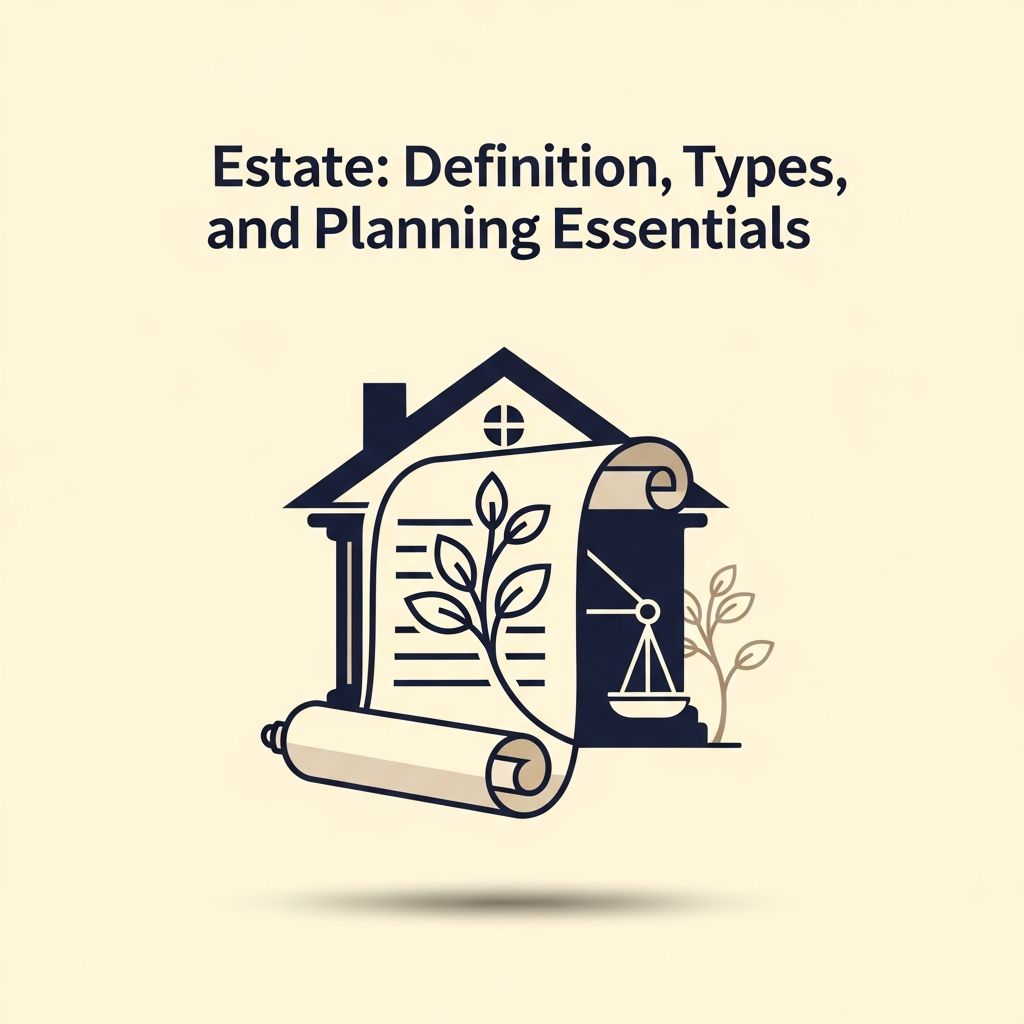
An estate represents the sum total of an individual’s assets and liabilities that exist at the time of their death. It encompasses all property owned during a person’s lifetime, including real estate, personal possessions, financial accounts, investments, and business interests. The estate serves as the foundation for the probate process and inheritance distribution, making it a critical concept in financial and legal planning.
The term “estate” is commonly used in the context of estate planning, which involves organizing and preparing for the transfer of wealth to heirs and beneficiaries. Understanding the composition and value of an estate is essential for developing an effective estate plan that minimizes taxes, avoids probate complications, and ensures assets are distributed according to the individual’s wishes.
Key Components of an Estate
An estate typically includes various categories of assets and debts that must be accounted for during the settlement process:
- Real Property: Includes residential homes, investment properties, land, and commercial real estate holdings. Real property is often among the most valuable components of an estate.
- Financial Assets: Bank accounts, savings accounts, checking accounts, money market accounts, and certificates of deposit (CDs) that hold liquid funds.
- Investment Portfolio: Stocks, bonds, mutual funds, exchange-traded funds (ETFs), and other investment securities held in taxable accounts.
- Retirement Accounts: Traditional IRAs, Roth IRAs, 401(k) plans, 403(b) plans, and other qualified retirement plans that may have designated beneficiaries.
- Business Interests: Ownership stakes in sole proprietorships, partnerships, limited liability companies (LLCs), or closely held corporations.
- Personal Property: Vehicles, jewelry, artwork, collectibles, furniture, and other tangible personal possessions of value.
- Intellectual Property: Copyrights, patents, trademarks, and royalty rights that may generate ongoing income.
- Liabilities: Mortgages, loans, credit card debt, and other financial obligations that must be paid from estate assets.
Types of Estates
Estates can be classified in several ways depending on their size, complexity, and the legal mechanisms used for asset distribution:
Probate Estate
A probate estate includes all assets that pass through the probate court system following death. These are assets titled solely in the decedent’s name without beneficiary designations or joint ownership arrangements. The probate process involves court validation of the will, identification and inventory of assets, payment of debts and taxes, and distribution of remaining assets to heirs according to the will or state intestacy laws. Probate estates are subject to public record disclosure and can involve significant legal fees and delays.
Non-Probate Estate
A non-probate estate comprises assets that transfer directly to beneficiaries outside the probate process. These include assets held in joint tenancy with right of survivorship, accounts with designated beneficiaries (such as life insurance policies and retirement accounts), assets in living trusts, and payable-on-death accounts. Non-probate assets transfer more quickly and privately to beneficiaries.
Gross Estate
For federal estate tax purposes, the gross estate includes the fair market value of all property in which the decedent had an interest at the time of death. This encompasses both probate and non-probate assets, life insurance proceeds, and certain gifts made within specific timeframes before death. The gross estate is used to calculate potential federal estate tax liability.
Taxable Estate
The taxable estate is calculated by subtracting allowable deductions and exemptions from the gross estate. These deductions may include outstanding debts, funeral expenses, estate administration costs, charitable donations, and spousal bequests. The taxable estate determines the final amount subject to federal estate taxes.
Net Estate
The net estate represents the remaining assets available for distribution to beneficiaries after all debts, taxes, administrative costs, and claims against the estate have been paid. This is the amount that heirs ultimately receive.
Estate Planning Fundamentals
Effective estate planning involves creating a comprehensive strategy to manage and distribute assets during life and after death. Key estate planning documents and tools include:
Wills and Testaments
A will is a legal document that specifies how assets should be distributed after death, designates guardians for minor children, and appoints an executor to manage the estate. A valid will must comply with state-specific requirements regarding witnesses, signatures, and legal formalities. Without a will, assets are distributed according to state intestacy laws, which may not align with personal preferences.
Trusts
Trusts are legal arrangements where a trustee holds assets for the benefit of designated beneficiaries. Revocable living trusts allow the grantor to maintain control during life while providing for easier asset transfer after death, avoiding probate. Irrevocable trusts, once established, cannot be modified and offer potential tax and creditor protection benefits.
Power of Attorney
A durable power of attorney authorizes a trusted individual to make financial and legal decisions on behalf of the estate owner in the event of incapacity. This prevents the need for costly guardianship proceedings.
Healthcare Directives
Healthcare directives and living wills specify medical treatment preferences and designate healthcare proxies to make medical decisions if the individual becomes incapacitated.
Beneficiary Designations
Many financial accounts and insurance policies allow designation of specific beneficiaries who receive those assets directly upon death, bypassing probate. Regularly reviewing and updating beneficiary designations ensures they align with current estate planning goals.
Estate Tax Considerations
Estate taxes can significantly reduce the amount available for heirs. Federal estate tax applies to estates exceeding the current exemption threshold, which changes periodically based on inflation and legislative changes. State-level estate or inheritance taxes may also apply in certain jurisdictions. Strategic planning techniques such as gifting strategies, charitable donations, and trust arrangements can minimize tax liability.
The Probate Process
Probate is the legal process through which a deceased person’s will is validated and estate assets are distributed. The process typically involves several stages:
- Filing the will with the probate court
- Appointing an executor or personal representative
- Notifying beneficiaries and creditors
- Inventorying and appraising estate assets
- Paying outstanding debts, taxes, and administrative expenses
- Distributing remaining assets to beneficiaries
Probate timelines vary by jurisdiction but typically require several months to over a year to complete. Court fees, attorney fees, and other administrative costs can consume a significant portion of estate assets.
Why Estate Planning Matters
Comprehensive estate planning provides numerous benefits:
- Control: Your estate plan ensures assets are distributed according to your specific wishes rather than default state laws.
- Tax Efficiency: Strategic planning minimizes estate and income tax burdens on heirs.
- Probate Avoidance: Proper structuring of assets can bypass expensive and time-consuming probate proceedings.
- Privacy: Non-probate transfers maintain privacy since probate records are public.
- Incapacity Planning: Documents such as powers of attorney address management of assets if you become unable to manage them.
- Family Harmony: Clear instructions reduce confusion and potential disputes among heirs.
- Charitable Giving: Structured giving plans support causes you care about while providing tax benefits.
Estate Planning Timeline
Estate planning should begin early and be reviewed regularly. Young adults should establish basic documents such as wills and healthcare directives. Mid-career individuals should develop comprehensive plans including trusts and tax strategies. Retirees should ensure plans reflect current assets and updated beneficiary designations. Major life events such as marriage, divorce, birth of children, or significant asset changes should trigger plan reviews and updates.
Frequently Asked Questions
Q: What is the difference between a will and a trust?
A: A will is a document that specifies how assets are distributed after death and goes through probate. A trust is a legal arrangement where assets are held for beneficiaries and can avoid probate. Trusts offer more control, privacy, and flexibility during both life and after death, while wills are simpler but subject to public probate proceedings.
Q: Do I need an estate plan if I have few assets?
A: Yes. Even individuals with modest assets benefit from basic estate planning documents. A simple will ensures your wishes are followed, designates guardians for minor children, and appoints an executor. Healthcare directives and powers of attorney address incapacity planning regardless of asset size.
Q: What happens if I die without a will?
A: If you die without a valid will (intestate), state intestacy laws determine asset distribution. Typically, assets pass to spouses, children, parents, or other relatives in a legally prescribed order. This process may not reflect your wishes and involves court administration.
Q: How often should I update my estate plan?
A: Review your estate plan every three to five years and whenever major life changes occur, such as marriage, divorce, birth of children or grandchildren, significant asset changes, or changes in tax laws. Regular reviews ensure your plan continues to reflect your current wishes and circumstances.
Q: Can I reduce estate taxes through planning?
A: Yes. Several strategies can minimize estate taxes, including gifting during life (up to annual exclusion limits), establishing charitable trusts, using marital deduction strategies, and implementing qualified personal residence trusts. Consulting with tax professionals and estate attorneys helps identify strategies appropriate for your situation.
Q: What is a living will and do I need one?
A: A living will (healthcare directive) specifies your preferences for medical treatment if you become unable to communicate your wishes. It addresses end-of-life care decisions and designates healthcare proxies. While not legally required everywhere, healthcare directives are valuable documents that provide guidance to family members and medical providers during critical situations.
Q: How is estate value determined for tax purposes?
A: Estate value is determined using the fair market value of all assets as of the date of death (or alternate valuation date, six months after death if elected). Fair market value is the price at which property would sell between a willing buyer and willing seller. Professional appraisals may be required for real estate, business interests, artwork, and other specialized assets.
References
- Publication 559: Survivors, Executors, and Administrators — Internal Revenue Service (IRS). 2024. https://www.irs.gov/publications/p559
- Estate and Gift Taxes — Internal Revenue Service (IRS). Updated November 2024. https://www.irs.gov/businesses/small-businesses-self-employed/estate-and-gift-taxes
- Uniform Probate Code — National Conference of Commissioners on Uniform State Laws (NCCUSL). Official legislative resource. https://www.uniformlaws.org/committees/community-home
- Guide to Estate Planning — American Bar Association. 2024. https://www.americanbar.org/resources/public-services/
- Probate and Estate Administration Guide — National Association of Estate Planners & Councils. Official educational resource. https://www.naepc.org/
Similar Articles








Read full bio of medha deb