Essential Trade Order Types for Smart Investing
Master market, limit, stop, and advanced orders to control your trades, minimize risks, and maximize opportunities in today's dynamic markets.
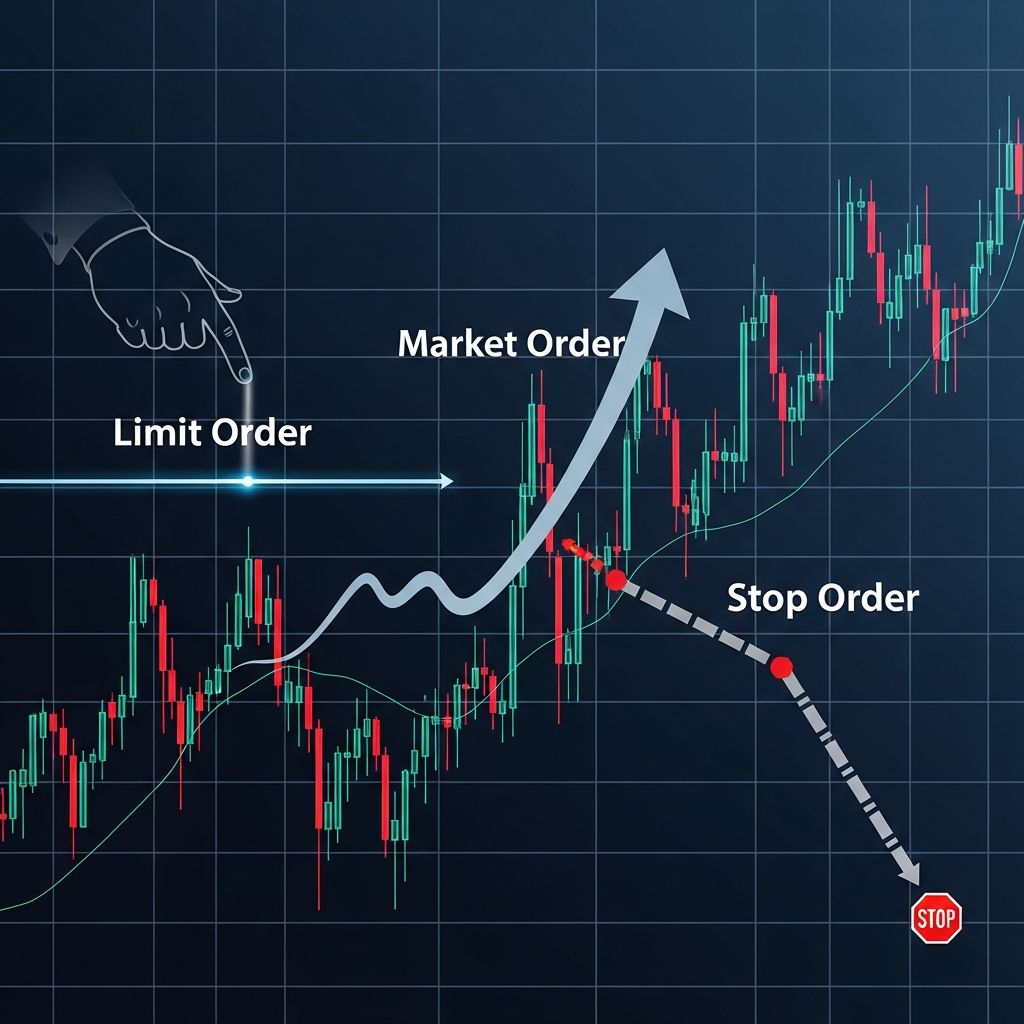
Navigating the stock market requires more than just picking the right assets; it demands precise control over how and when your trades execute. Trade orders serve as the instructions you give to your broker, determining the price, timing, and conditions under which buys or sells occur. Understanding these tools empowers investors to adapt to market volatility, protect gains, and avoid costly mistakes. This article delves into the core types of trade orders, their mechanics, strategic applications, and best practices for beginners and seasoned traders alike.
Why Trade Orders Matter in Modern Markets
In fast-moving markets, the difference between profit and loss often hinges on order selection. Basic ‘buy’ or ‘sell’ commands lack nuance, exposing you to slippage—where execution prices deviate from expectations due to rapid price swings. Advanced orders like limits and stops provide safeguards, ensuring trades align with your financial goals. According to official investor education resources, the most prevalent orders include market, limit, and stop-loss varieties, each suited to distinct scenarios.
Whether you’re day trading volatile tech stocks or holding long-term positions in ETFs, mastering these orders enhances precision. They help manage risk amid economic shifts, earnings reports, or geopolitical events that can trigger sudden price movements.
Market Orders: Speed Over Precision
A market order instructs your broker to execute a trade immediately at the best available current price. If buying, you pay the lowest ask; if selling, you receive the highest bid. This order prioritizes speed, making it ideal for liquid markets where prices remain stable.
Execution typically occurs within seconds, placing your order at the front of the queue. However, in illiquid or highly volatile conditions, you risk paying more (or receiving less) than anticipated. For instance, during a market surge, a buy market order might fill at a peak price just before a pullback.
- Best for: Highly traded stocks or ETFs with tight bid-ask spreads.
- Pros: Guaranteed execution; quick entry or exit.
- Cons: No price guarantee; vulnerable to gaps and slippage.
Traders often use market orders for positions where timing trumps exact pricing, such as entering a trending stock during regular hours.
Limit Orders: Price Control at a Cost
Unlike market orders, a limit order specifies the maximum price you’re willing to pay (for buys) or minimum to accept (for sells). The trade only executes at your set price or better, offering precise control.
For example, if a stock trades at $50 but you set a buy limit at $48, the order waits until the price dips to $48 or lower. Sell limits work inversely, triggering only above your threshold. This prevents overpaying in rallies or underselling in dips.
| Scenario | Buy Limit Example | Sell Limit Example |
|---|---|---|
| Current Price | $50 | $50 |
| Your Limit | $48 (or better) | $52 (or better) |
| Execution Condition | Price ≤ $48 | Price ≥ $52 |
| Risk | Order may not fill if price rises | Order may not fill if price falls |
While powerful, limit orders aren’t foolproof: they may go unfilled if the market skips your price level, stranding capital on the sidelines.
Stop Orders: Protecting Against Downside
A stop order, often called a stop-loss, activates a market order once a stock hits your predetermined stop price. It’s primarily defensive, limiting losses on existing positions.
Say you own shares at $100 and set a stop at $90. If the price falls to $90, it converts to a market sell order. This automates exits during adverse moves, preserving capital. Stop orders for buys (stop-buy) enter positions above current prices, useful for breakout strategies.
- Key Benefit: Emotional discipline—removes hesitation in turbulent markets.
- Drawback: In fast drops, execution might occur below the stop due to gaps.
Investors.gov emphasizes stop-losses as essential for risk management, recommending them for all but the most conservative buy-and-hold strategies.
Stop-Limit Orders: The Hybrid Safeguard
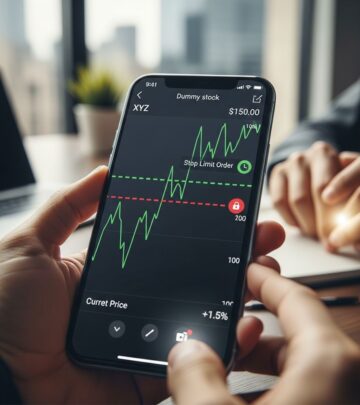
Combining stop and limit features, a stop-limit order triggers a limit order at the stop price. You define both a stop (activation) and limit (execution range), blending protection with price control.
Example: Stock at $30; stop at $25, limit at $24. At $25, it becomes a sell limit at $24 or better. This avoids market-order slippage but risks non-execution if prices gap beyond the limit.
Advanced variants include trailing stops, which adjust dynamically with favorable moves (e.g., trail by 5% from peaks), locking in gains during uptrends.
| Order Type | Trigger | Execution | Ideal Use |
|---|---|---|---|
| Stop | Stop price hit | Market order | Quick loss protection |
| Stop-Limit | Stop price hit | Limit order | Price-controlled exits |
| Trailing Stop | Price retraces by set % | Market order | Trend-following gains |
Comparing Order Types: A Strategic Overview
Selecting the right order depends on your goals, risk tolerance, and market conditions. Market orders suit urgent, liquid trades; limits ensure value; stops defend portfolios; hybrids fine-tune both.
- Volatile Markets: Favor stops and limits to curb losses.
- Trending Markets: Use trailing stops to ride waves.
- Illiquid Assets: Limits prevent poor fills.
Vanguard notes that during volatility, mismatched orders can amplify losses, underscoring the need for tailored selection.
Practical Tips for Implementing Trade Orders
To leverage these tools effectively:
- Assess Liquidity: Check average daily volume; avoid market orders on low-volume stocks.
- Set Realistic Levels: Base stops on technical support/resistance, not arbitrary figures.
- Test in Paper Trading: Simulate strategies without real capital.
- Monitor Extended Hours: Pre/post-market orders carry higher risks.
- Combine with Analysis: Pair orders with fundamentals and charts for robust decisions.
Broker platforms like those from Schwab or Vanguard offer customizable defaults, with cost basis tracking for tax efficiency.
Risks and Common Pitfalls to Avoid
No order eliminates market risk. Market orders invite slippage; limits risk missed opportunities; stops can trigger prematurely on wicks. Over-reliance on automation ignores news-driven gaps.
Quantitative data from sources like Charles Schwab highlights how stop-limits mitigate but don’t erase execution gaps in crashes. Diversify, size positions modestly (1-2% risk per trade), and review performance regularly.
Advanced Applications for Seasoned Traders
Beyond basics, explore conditional orders like one-cancels-the-other (OCO), bracketing entries/exits automatically. Algorithmic platforms enable high-frequency scalping with tight stops, though retail access varies.
For ETFs, which bundle diversification, limits shine in sector rotations. Active traders averaging 10+ monthly deals benefit from nuanced orders to time short-term events.
FAQs: Trade Orders Demystified
What happens if a limit order doesn’t fill?
It expires or remains pending until conditions meet, depending on your time-in-force (day, GTC).
Can I use stops on ETFs?
Yes, ideal for broad-market exposure with downside protection.
What’s the difference between stop and stop-limit?
Stop becomes market (fast but imprecise); stop-limit becomes limit (precise but may not execute).
Are trailing stops available everywhere?
Most major brokers offer them; check fees and minimums.
How do taxes factor in?
Orders don’t affect taxes directly, but use FIFO or specific ID methods via your broker.
Building a Resilient Trading Plan
Integrate trade orders into a holistic strategy: define risk parameters, align with time horizons, and adapt to personal psychology. Start small, learn from fills, and scale with confidence. Resources from Investor.gov stress education as the foundation for sustainable success.
By wielding these orders adeptly, you transform reactive trading into proactive wealth-building.
References
- 3 Order Types: Market, Limit, and Stop Orders — Charles Schwab. 2023. https://www.schwab.com/learn/story/3-order-types-market-limit-and-stop-orders
- Types of Orders — Investor.gov. 2024. https://www.investor.gov/introduction-investing/investing-basics/how-stock-markets-work/types-orders
- Stock Order Types: When to Use Market, Limit and Stop Orders — Navy Federal Credit Union. 2024. https://www.navyfederal.org/makingcents/investing/stock-order-types-market-limit-stop.html
- Trade Order – Definition, Types, and Practical Examples — Corporate Finance Institute. 2024. https://corporatefinanceinstitute.com/resources/career-map/sell-side/capital-markets/trade-order/
- Stock & ETF Orders: Limit, Market, Stop, & Stop-Limit — Vanguard. 2024. https://investor.vanguard.com/investor-resources-education/online-trading/stock-order-types
- Stock Trading: What It Is and How It Works — NerdWallet. 2024. https://www.nerdwallet.com/investing/learn/stock-trading-how-to-begin
Similar Articles








Read full bio of Sneha Tete