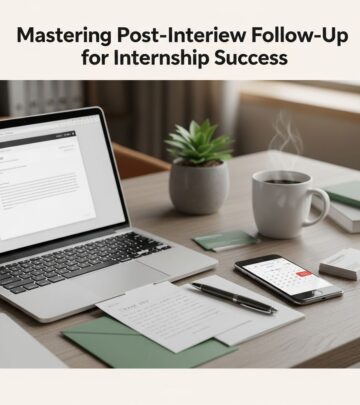
Essential Interview Strategies for Job Success
Master proven interview techniques to land your dream job with confidence and preparation.

Securing a job offer requires more than just a strong resume and relevant experience. The interview process is a critical opportunity to demonstrate your value to potential employers and determine if a role aligns with your career goals. Whether you’re interviewing for an entry-level position or a senior leadership role, understanding and implementing effective interview strategies can significantly increase your chances of success.
The interview process has become increasingly rigorous in today’s competitive job market. On average, companies conduct between two to four interviews before making a final hiring decision, with more senior positions often involving significantly more meetings. This extended process means candidates must be prepared to perform consistently well across multiple interactions while managing interview fatigue and pressure.
Understanding the Two-Way Conversation
One of the most important interview strategies is recognizing that interviews are fundamentally two-way conversations. Too many candidates approach interviews as interrogations where they passively answer questions, but successful interviewees actively engage with their potential employers. This means you should interview them as much as they interview you.
The goal is to gather enough information about the role, company culture, and team dynamics to make an informed decision about whether this opportunity aligns with your career objectives. By asking thoughtful questions throughout the interview, you demonstrate genuine interest in the position while simultaneously evaluating cultural fit and growth opportunities. This balanced approach helps establish rapport and positions you as a confident, strategic professional rather than someone simply desperate for employment.
The Power of Thorough Preparation
Right preparation sets you up to be calm and confident during your interviews. The level and type of preparation should be tailored to the interview stage you’re at in the hiring process.
Initial Screening Stage
During the initial screening phase, focus on being prepared to discuss your background and experience in a clear, concise manner. You should be able to articulate your professional journey, key accomplishments, and why you’re interested in the specific role. This is not the time to dive deeply into company research; instead, focus on having your personal narrative polished and ready.
Technical Interview Preparation
For technical interviews, familiarity with the job specification is essential. Review the job description carefully to understand the specific problems you’ll need to solve and the technical skills the role demands. Tailor your preparation to match these challenges so you can demonstrate relevant expertise and problem-solving abilities.
Behavioral and Management Interviews
When preparing for behavioral or management interviews, you should be familiar with the company’s culture, markets, and specific challenges. This research allows you to discuss how your skills and experience would contribute to addressing their organizational needs. Understanding the company’s strategic direction helps you position yourself as someone who can make meaningful contributions from day one.
Being well-prepared also means accepting that you won’t have all the answers. Prepare yourself mentally for questions you don’t have direct experience with. When faced with unfamiliar territory, demonstrate your ability to approach problems methodically, remain calm under pressure, and think through issues logically. Employers often value how candidates respond to challenges as much as their existing knowledge.
Mastering the STAR Technique
The STAR technique is a structured method for answering behavioral interview questions effectively. STAR stands for Situation, Task, Action, and Result, and it provides a framework that helps you communicate your experiences clearly and compellingly.
Breaking Down the STAR Method
Situation: Begin by setting the scene. Describe the context, when it occurred, and who was involved. This provides the interviewer with necessary background information to understand your story.
Task: Explain the challenge or responsibility you faced. What were you trying to accomplish? What obstacles existed? This section demonstrates your understanding of the complexity involved.
Action: Detail the specific steps you took to address the situation. Focus on your individual contributions rather than what your team did. This is your opportunity to showcase your decision-making, problem-solving, and initiative.
Result: Conclude with the outcomes of your actions. Quantify results whenever possible with metrics, percentages, or concrete achievements. This demonstrates the impact of your work and provides closure to your story.
When using the STAR technique, spend roughly equal time on each section. Avoid dwelling excessively on any single component, as this can make your response feel unbalanced or cause you to exceed the interviewer’s time expectations. A well-executed STAR response typically takes two to three minutes and leaves room for follow-up questions that allow you to elaborate further.
Developing Compelling Examples
Interviewers commonly use open-ended questions such as “Tell me about a time when…” or “Describe a challenging situation you faced” to explore your skills, personality, and mindset. These questions provide interviewers insight into how you think, communicate, approach problems, and handle adversity.
Having a collection of prepared examples is essential. Develop four to six detailed stories from your professional experience that demonstrate different competencies such as leadership, teamwork, problem-solving, adaptability, and resilience. Your examples should be specific and authentic, drawn from real situations you’ve experienced.
Practice articulating these examples until you can tell them naturally without sounding rehearsed. Be prepared to adapt your stories based on the specific question asked. The same situation might be used to demonstrate different competencies depending on which aspect you emphasize.
Mastering Communication Styles
Successful interviewees are aware of their own communication style and those of the interviewer. Communication preferences vary widely among individuals and industries. Being adaptable shows emotional intelligence and interpersonal awareness.
Adapting to Direct Communicators
If your interviewer is direct, to the point, and willing to cut in to move forward, they likely prefer concise, structured answers. Adapt by providing shorter, bullet-point-style responses that hit the key information without excessive elaboration. Respect their time and demonstrate efficiency in your communication.
Engaging with Exploratory Communicators
Conversely, if the interviewer is more open and willing to discuss questions in greater detail, you can provide more comprehensive answers with relevant examples and nuance. These interviews may feel more like conversations, and you should match that energy by being conversational and engaging.
Pay attention to nonverbal cues as well. Body language, facial expressions, and tone convey important information about how your message is being received. Maintain good posture, make appropriate eye contact, and use gestures naturally to emphasize your points. Project confidence through your physical presence while remaining authentic.
Time Management During Interviews
Effective time management is crucial during interviews. At least one party should be aware of the time remaining, and you should be respectful of the interviewer’s schedule. Stay focused and to the point when answering questions, avoiding tangents that don’t directly address what was asked.
However, if you notice the interviewer spending extensive time on a particular topic and you’re concerned about missing the opportunity to discuss other relevant skills or achievements, it’s appropriate to politely ask if you can move on to another topic. You might say something like, “That’s a great question, and I appreciate the opportunity to discuss this. Before we wrap up, I’d also like to touch on my experience with [relevant skill].”
Conversely, use your time strategically when it’s your turn to ask questions. Rather than asking generic questions that are easily answered by reviewing the company website, ask questions that reveal what you’ve already researched and demonstrate genuine interest in the role and organization.
Strategic Questioning and Company Research
Your questions to interviewers are just as important as your answers to their questions. Use this opportunity to explore aspects of the role that aren’t clear in the job description. Ask about day-to-day responsibilities, success metrics for the position, team dynamics, and the company’s short-term and long-term goals.
Ask questions designed to understand company culture and the team you would be working with. Consider asking: “How would you describe the team culture?” “What does success look like in this role during the first 90 days?” “What are the biggest challenges facing the department right now?” These questions demonstrate critical thinking and help you evaluate whether the opportunity is truly right for you.
Setting an Evaluation Standard
Aim to leave each interview able to explain to a friend or family member what the role entails, what the company does, what the organizational culture is, and how you would fit in. If you can’t articulate these things, you have unanswered questions that you should work to address before accepting an offer. This standard ensures you’re making informed career decisions rather than simply accepting the first offer that comes your way.
Handling Interview Anxiety and Rejections
Many job seekers experience performance anxiety or interview fatigue, particularly when interviewing for highly sought-after positions or after facing multiple rejections. It’s important to remember that rejections are part of the process and don’t necessarily mean you’re not good enough for a role. There are numerous factors influencing hiring decisions beyond your interview performance, including other candidates’ backgrounds, internal referrals, and specific technical requirements.
Be prepared to a point where you’re genuinely confident in your abilities and can clearly demonstrate how your skills and experience would benefit the company. Focus on what you can control: thorough preparation, authentic communication, and thoughtful engagement during the interview process.
Managing interview stress involves both practical strategies and mindset shifts. Practice your responses in low-pressure environments with friends, mentors, or professional interview coaches. The more you practice, the more natural your answers become, reducing anxiety during actual interviews.
Continuous Skill Development
Interview success is a skill that improves with practice and intentional development. Consider the following approaches to strengthen your interview abilities:
Practice communication skills regularly: Seek opportunities to speak publicly, lead meetings, or present ideas. The more comfortable you are communicating in professional settings, the more naturally this confidence transfers to interviews.
Practice talking about your skills and experience: Discuss your accomplishments with friends, colleagues, and mentors. Articulating your value proposition becomes easier with repetition.
Take an active role in meetings: Practice steering conversations toward topics relevant to demonstrating your expertise and value. This helps develop the conversation-management skills essential in interviews.
Seek feedback: After interviews, request feedback from interviewers when appropriate. Understanding their perspective on your performance helps identify areas for improvement.
Frequently Asked Questions
Q: How should I prepare for different types of interviews?
A: Tailor your preparation to the interview stage and type. For screening interviews, focus on your background. For technical interviews, study the job requirements and practice relevant skills. For behavioral interviews, research the company deeply and prepare STAR examples demonstrating relevant competencies.
Q: What should I do if I don’t know the answer to a question?
A: Acknowledge the question honestly, explain your thought process for approaching the problem, and demonstrate your ability to learn and remain calm under pressure. This often impresses interviewers more than having a perfect answer.
Q: How can I manage interview anxiety?
A: Practice extensively in low-pressure environments, use breathing techniques to manage stress, prepare thoroughly so you feel confident, and remember that some nervousness is normal and can actually help you perform better.
Q: What questions should I ask at the end of an interview?
A: Ask questions that demonstrate preparation and genuine interest: “What would success look like in this role?” “What are the biggest challenges the team is facing?” “How would you describe the team culture?” Avoid questions easily answered by researching the company.
Q: How important is body language in interviews?
A: Body language is very important. Maintain good posture, make eye contact, smile naturally, and use gestures to emphasize points. Your nonverbal communication should reinforce your confidence and authenticity.
References
- How an Interview Coach Helps Job Seekers Land Their Dream Job — Paperbell. 2024. https://paperbell.com/blog/interview-coach/
- Top Tips For A Successful Interview — Graham Watts. 2024. https://www.grahamwatts.co.uk/successful-interview/
Similar Articles








Read full bio of Sneha Tete