Essential General Skills for Success and Growth
Master the fundamental skills needed for personal and professional success in today's world.

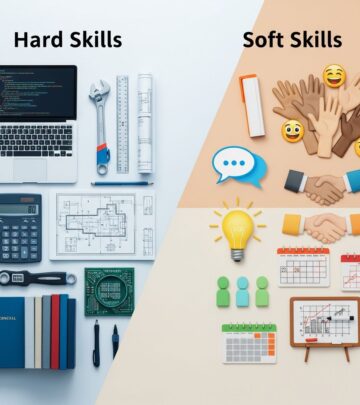
In today’s rapidly changing world, possessing a diverse set of general skills has become more important than ever. Whether you’re navigating your career, managing your personal finances, or building meaningful relationships, the ability to develop and refine core competencies can significantly impact your quality of life and professional trajectory. General skills—often referred to as soft skills or transferable skills—are the foundational abilities that complement technical expertise and enable you to thrive in virtually any environment.
Unlike specialized technical skills that apply to specific industries or roles, general skills are universally valuable across all professions and life situations. These competencies form the backbone of personal effectiveness, interpersonal success, and long-term achievement. By investing time and effort into developing these skills, you create a strong foundation for growth, adaptability, and resilience in an increasingly complex world.
Understanding the Importance of General Skills
General skills serve as the bridge between technical knowledge and real-world application. While technical expertise might get you in the door, your ability to communicate effectively, manage your time, solve problems creatively, and work collaboratively with others is what truly sets you apart in any field. Employers consistently report that candidates with strong general skills are more valuable, adaptable, and likely to advance in their careers.
These skills are not innate talents that only a few possess—they are learnable competencies that anyone can develop with deliberate practice and commitment. The investment you make in developing general skills today will pay dividends throughout your entire career and personal life, creating opportunities and enabling you to overcome challenges more effectively.
Communication Skills: The Foundation of Success
Effective communication stands at the forefront of essential general skills. The ability to express your ideas clearly, listen actively to others, and adapt your communication style to different audiences is invaluable in any context, whether professional or personal. Strong communication skills enable you to build stronger relationships, resolve conflicts more effectively, and convey complex information in understandable ways.
Communication encompasses several dimensions:
- Verbal Communication: Articulating your thoughts clearly, speaking with confidence, and adjusting your tone and pace to suit your audience
- Written Communication: Composing clear emails, reports, and documents that convey your message professionally and concisely
- Active Listening: Fully engaging with what others are saying, asking clarifying questions, and demonstrating genuine interest in understanding their perspective
- Nonverbal Communication: Being aware of body language, facial expressions, and other nonverbal cues that reinforce or contradict your spoken message
- Presentation Skills: Delivering information to groups in an engaging and organized manner, using visual aids effectively
Time Management and Organization
Time management is a critical general skill that directly impacts your productivity, stress levels, and overall success. With countless demands on your attention, the ability to prioritize effectively, plan strategically, and execute consistently is what separates high achievers from those who struggle to meet their goals.
Effective time management involves understanding your priorities, breaking large projects into manageable tasks, and allocating your time according to importance rather than urgency. By mastering time management, you create space for meaningful work, reduce procrastination, and increase the quality of your output. Organization—the companion skill to time management—ensures that your systems, files, and resources are structured in ways that minimize wasted effort and maximize efficiency.
Key strategies for improving time management include:
- Creating daily, weekly, and monthly goals that align with your larger objectives
- Using tools like calendars, task lists, and project management applications to stay on track
- Learning to say no to activities that don’t align with your priorities
- Building in buffer time for unexpected challenges or opportunities
- Regularly reviewing and adjusting your systems based on what’s working
Critical Thinking and Problem-Solving
In an era of information overload and rapid change, the ability to think critically and solve problems systematically has become a cornerstone of success. Critical thinking involves analyzing information objectively, questioning assumptions, and evaluating evidence to reach well-reasoned conclusions. Problem-solving builds on critical thinking by applying these analytical skills to develop practical solutions to challenges.
Strong critical thinking skills enable you to:
- Distinguish between reliable and unreliable information sources
- Identify underlying assumptions in arguments and claims
- Consider multiple perspectives before reaching conclusions
- Recognize patterns and connections that others might miss
- Develop creative and innovative solutions to complex problems
By cultivating these skills, you become more resilient in the face of challenges and better equipped to navigate uncertainty. You’re able to approach problems systematically rather than reactively, which leads to better outcomes and more sustainable solutions.
Emotional Intelligence and Interpersonal Skills
Emotional intelligence—the ability to recognize, understand, and manage your own emotions while also recognizing and influencing the emotions of others—is increasingly recognized as essential for success in all areas of life. People with high emotional intelligence build stronger relationships, navigate conflicts more effectively, and demonstrate greater leadership potential.
Emotional intelligence comprises several key components:
- Self-awareness: Understanding your own emotions, strengths, weaknesses, and how your actions affect others
- Self-regulation: Managing your emotional responses and maintaining composure under pressure
- Empathy: Understanding and relating to the emotions and perspectives of others
- Social skills: Building and maintaining positive relationships, collaborating effectively, and influencing others constructively
- Motivation: Maintaining focus on your goals and persisting through challenges
Developing strong interpersonal skills—which flow naturally from emotional intelligence—enables you to work collaboratively with diverse teams, navigate workplace dynamics skillfully, and build a professional network that supports your growth and success.
Financial Literacy and Money Management
Financial literacy represents a critical yet often overlooked general skill that impacts every aspect of your life. Understanding how to manage money, create budgets, build credit, and make informed financial decisions provides security and freedom. Financial skills are essential for achieving long-term goals, whether that’s homeownership, education, retirement, or financial independence.
Core financial skills include:
- Budgeting: Tracking income and expenses to understand your cash flow and make intentional spending decisions
- Understanding Credit: Learning how credit scores work and making strategic decisions about building and maintaining good credit
- Managing Debt: Understanding interest rates, credit cards, and developing strategies to manage debt responsibly
- Saving and Investing: Developing the discipline to save regularly and letting compound interest work for you over time
- Basic Financial Planning: Setting financial goals and creating plans to achieve them
Financial literacy is not just for wealthy individuals or financial professionals—it’s a foundational skill that enables anyone to take control of their financial future. By mastering money management skills, you reduce financial stress and create opportunities for growth and security.
Adaptability and Continuous Learning
In a world of constant change, adaptability—the ability to adjust your approach, thinking, and behaviors in response to new circumstances—has become essential. Equally important is the commitment to continuous learning: recognizing that your current knowledge and skills are not sufficient and seeking opportunities to grow and develop throughout your career.
Developing adaptability involves:
- Maintaining flexibility in your thinking and approach
- Viewing challenges as opportunities for growth rather than threats
- Staying curious and asking questions to deepen your understanding
- Building resilience to bounce back from setbacks
- Embracing change as a normal part of life and work
Continuous learning might include formal education, online courses, reading, seeking mentorship, or simply reflecting on your experiences to extract lessons and insights. This commitment to growth ensures that your skills remain relevant and valuable regardless of how your industry or circumstances change.
Leadership and Collaboration
Whether or not your job title includes the word “leader,” leadership skills are valuable for everyone. Leadership involves inspiring others, taking initiative, and influencing positive change. It also requires the ability to collaborate effectively with colleagues, clients, and stakeholders toward shared goals.
Strong leaders demonstrate:
- Clear vision and the ability to articulate it to others
- Integrity and consistency in their words and actions
- The ability to motivate and inspire others
- Openness to feedback and willingness to develop
- Strong delegation and trust-building skills
Collaboration, closely related to leadership, is the ability to work effectively with others toward common objectives. In today’s interconnected world, few significant accomplishments are achieved in isolation. The ability to coordinate efforts, leverage diverse perspectives, and maintain positive working relationships multiplies your effectiveness and impact.
Negotiation and Influence
The ability to negotiate effectively and influence others constructively is a powerful general skill that extends far beyond the boardroom. Whether negotiating salary, resolving conflicts, making purchase decisions, or securing resources, negotiation skills can significantly impact your outcomes. Skilled negotiators understand that the goal is not to “win” at someone else’s expense, but to reach mutually beneficial agreements.
Effective negotiators master these techniques:
- Thorough preparation and research before entering negotiations
- Understanding the other party’s interests and priorities
- Creative problem-solving to find solutions that benefit all parties
- Clear and persuasive communication of your position and reasoning
- Patience and persistence in working toward agreement
Closely related to negotiation is the skill of influence—the ability to convince others of your perspective or gain their support for your ideas. Unlike manipulation, ethical influence is based on genuine expertise, credibility, and concern for the other party’s wellbeing.
Decision-Making and Judgment
The quality of your decisions directly determines the quality of your results. Strong decision-making skills involve gathering relevant information, weighing alternatives, considering consequences, and committing to a course of action. Good judgment—developed through experience, reflection, and learning from both successes and failures—helps you make decisions that align with your values and goals.
To improve your decision-making ability:
- Define the decision that needs to be made and set clear criteria for success
- Gather sufficient information from reliable sources
- Consider multiple options and their potential consequences
- Involve others who have relevant expertise or perspective
- Make the decision and commit to executing it fully
- Reflect afterward to understand what you learned
Frequently Asked Questions
Q: Why are general skills important if I have strong technical abilities?
A: While technical skills get you hired, general skills enable you to advance in your career, work effectively with others, and adapt to changing circumstances. Employers value candidates who can both execute their role and collaborate, communicate, and lead effectively.
Q: Can general skills be learned, or are they personality traits?
A: General skills are learnable competencies that anyone can develop with deliberate practice and effort. While personality traits influence how you approach skill development, they do not determine whether you can acquire these skills.
Q: How long does it take to develop strong general skills?
A: Skill development is an ongoing process. Basic competency might take weeks or months of consistent practice, while mastery often requires years of deliberate effort. The key is starting now and committing to continuous improvement.
Q: Which general skills should I prioritize developing first?
A: Start with communication and time management, as these foundational skills amplify your ability to develop other competencies. Then focus on skills most relevant to your current role and long-term goals.
Q: How can I demonstrate general skills to potential employers?
A: Provide specific examples in your resume and interviews showing how you’ve applied these skills. Highlight accomplishments that required collaboration, problem-solving, leadership, or other relevant skills, and use your interview performance to demonstrate communication and interpersonal abilities.
References
- Five Basic Financial Skills All Young Adults Should Know — Waverly Advisors. 2025. https://waverly-advisors.com/insights/financial-skills-young-adults/
- 12 Personal Finance Skills Everyone Should Master — Wise Bread. 2025. https://www.wisebread.com/12-personal-finance-skills-everyone-should-master
- Make a Budget Worksheet — Consumer Financial Protection Bureau (CFPB). 2025. https://consumer.gov/sites/default/files/pdf-1020-make-budget-worksheet_form.pdf
Similar Articles








Read full bio of Sneha Tete