Essential Financial Topics Everyone Should Understand
Learn the core money topics—budgeting, credit, debt, saving, investing, retirement and more—to build long-term financial stability.

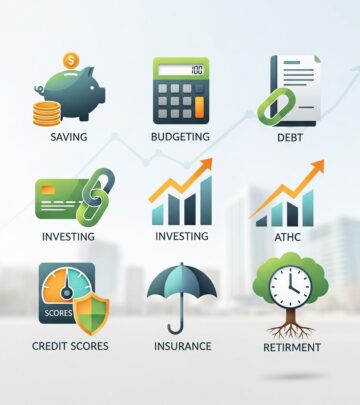
Building long-term wealth starts with understanding a few core financial topics. When you learn how to budget, manage debt, build credit, save and invest, and plan for retirement, you give yourself the tools to create real financial security and freedom.
This guide walks through the most important money concepts in a clear, practical way so you can start applying them to your life right away.
1. Budgeting: The Foundation of Your Money Plan
A budget is a plan for how you will use your income to cover needs, wants, and financial goals each month. Creating and following a budget is one of the strongest predictors of financial success because it forces you to be intentional with every dollar you earn.
Why budgeting matters
- Keeps your spending aligned with your priorities and values.
- Helps you avoid relying on debt to cover everyday expenses.
- Makes it easier to save, invest, and reach long-term goals.
- Gives you a clear picture of where your money is really going.
Basic steps to build a simple budget
- Calculate your monthly net income (take-home pay after taxes and deductions).
- List fixed expenses (rent, mortgage, insurance, minimum debt payments).
- List variable expenses (groceries, fuel, entertainment, dining out).
- Assign dollar amounts to each category and make sure your plan fits within your income.
- Track your spending during the month and adjust as needed.
Popular budgeting methods
| Method | How it works | Best for |
|---|---|---|
| Zero-based budget | Every dollar of income is assigned a job (spend, save, invest, or pay debt) so that income minus expenses equals zero. | People who want very close control of their money. |
| 50/30/20 rule | Roughly 50% of income to needs, 30% to wants, 20% to saving and debt payoff. | People who prefer a simple, high-level structure. |
| Envelope/cash stuffing | Use cash or digital “envelopes” for categories; once the money is gone, you stop spending in that category. | People who tend to overspend and want hard limits. |
2. Tracking Expenses and Building an Emergency Fund
Many people underestimate how much they spend. Regularly tracking expenses helps you catch problem areas early, cut waste, and free up money for savings and debt payoff.
Practical ways to track spending
- Use a budgeting app or spreadsheet to categorize transactions.
- Review bank and credit card statements weekly.
- Keep a simple spending log in your notes app.
Emergency funds: your first line of defense
An emergency fund is savings set aside for unexpected expenses such as job loss, medical bills, or urgent home or car repairs. Many experts recommend keeping at least three to six months of essential expenses in an accessible account.
- Store emergency savings in a high-yield savings account so it is safe and easy to access, but separate from everyday spending.
- Start with a small target (e.g., $500 or $1,000) and increase it over time.
- Treat contributions to your emergency fund like a required bill.
3. Understanding Credit Scores and Reports
Your credit score is a number that summarizes your credit history and helps lenders estimate how risky it may be to lend to you. In the U.S., FICO scores typically range from 300 to 850; higher scores generally qualify you for better borrowing terms and lower interest rates.
Main factors that affect your credit score
- Payment history – Whether you pay bills on time is usually the most important factor.
- Credit utilization – How much of your available credit you are using; keeping it under about 30% is often recommended.
- Length of credit history – How long your accounts have been open.
- Credit mix – Variety of credit types you use (credit cards, loans, etc.).
- New credit/inquiries – How often you apply for new credit.
Credit reports
A credit report is a detailed record of your borrowing history. In the U.S., you can access free reports from the three major credit bureaus through the government-mandated site AnnualCreditReport.gov.
- Check your reports regularly to correct errors and monitor for identity theft.
- Dispute inaccuracies in writing with the credit bureaus and the lender that reported them.
4. Debt: Types, Costs, and Payoff Strategies
Not all debt is equal. Understanding the type of debt and its interest rate helps you decide what to pay off first and whether borrowing is worth it.
Common types of debt
- High-interest consumer debt: Usually credit cards or personal loans; often the most expensive and should be prioritized for payoff.
- Student loans: Can be an investment in earning power but still require a payoff plan.
- Mortgage debt: Secured by your home; typically has lower interest rates but is also a long-term commitment.
- Auto loans: Secured by a vehicle; aim to avoid being “upside down” (owing more than the car is worth).
Key payoff strategies
- Debt avalanche: Pay off debts starting with the highest interest rate while making minimum payments on others; this minimizes total interest cost.
- Debt snowball: Pay off the smallest balances first to build momentum and motivation.
- Refinancing or consolidating: Replace high-interest debt with a lower-interest loan if you qualify and can avoid new debt.
5. Saving and Goal Setting
Clear financial goals give your money a purpose and help you stay focused over time. Goals are often grouped into short-term, mid-term, and long-term horizons.
Types of financial goals
- Short-term (up to 2 years): Building an emergency fund, paying off credit card debt, saving for a vacation, or creating sinking funds for irregular expenses.
- Mid-term (2–5 years): Saving a home down payment, paying off personal or auto loans, funding further education, or growing a business.
- Long-term (5+ years): Retirement, paying off a mortgage, funding children’s education, or achieving financial independence.
Making your goals effective
- Turn vague wishes (“I want to save more”) into specific, measurable targets (“Save $5,000 in 18 months”).
- Break big goals into monthly or weekly milestones.
- Automate transfers so saving happens without constant decision-making.
6. Investing Basics
Investing means putting money into assets that you expect to grow in value or generate income over time, such as stocks, bonds, or funds. Historically, long-term investors in diversified stock portfolios have earned higher returns than they would from cash savings alone, though returns are never guaranteed.
Key investing concepts
- Risk vs. return: Investments with higher potential returns usually come with higher risk.
- Diversification: Spreading money across many assets or sectors to reduce the impact of any single investment’s performance.
- Time horizon: How long you plan to keep the money invested; longer horizons can usually handle more volatility.
- Compounding: Earnings that are reinvested can generate their own earnings, which is a key driver of long-term growth.
Common investment options
| Investment type | What it is | General characteristics |
|---|---|---|
| Stocks | Shares of ownership in a company. | Higher potential growth; more price volatility. |
| Bonds | Loans to governments or companies, with interest payments. | Generally lower risk and return than stocks, but not risk-free. |
| Mutual funds | Pooled investments managed by professionals that hold many securities. | Instant diversification; may have ongoing fees. |
| Index funds & ETFs | Funds that track a market index, often at low cost. | Diversified and typically lower fees; widely used for long-term investing. |
7. Retirement Planning
Retirement planning is about ensuring you have enough income to support yourself when you are no longer working. Because of inflation and increasing life expectancy, saving and investing for retirement is essential for most people.
Retirement accounts
- Employer-sponsored plans such as 401(k) or 403(b): Often offer tax advantages and sometimes employer matching contributions, which is essentially free money toward your retirement.
- Individual retirement accounts (IRAs): Accounts you can open on your own, often with tax benefits; contribution limits and rules vary by country.
- Government pensions or social security: May provide some income in retirement but typically are not enough alone to maintain your standard of living.
Steps to start planning
- Enroll in available workplace plans and aim to contribute enough to get the full employer match.
- Increase contributions whenever your income rises.
- Choose a diversified mix of investments suited to your age and risk tolerance.
8. Insurance and Risk Management
Insurance protects you and your family from the financial impact of major unexpected events. Without it, a single emergency can undo years of progress.
Core types of insurance to understand
- Health insurance: Helps pay for medical expenses and is one of the most important protections for your finances.
- Auto insurance: Required in many places; covers damage, liability, and sometimes medical costs.
- Homeowners or renters insurance: Protects your home or belongings from loss or damage.
- Life insurance: Provides a payout to your beneficiaries if you die; especially important if others rely on your income.
- Disability insurance: Replaces part of your income if you cannot work due to illness or injury.
9. Taxes and Take-Home Pay
Understanding taxes helps you read your paystub, plan your budget, and avoid surprises at tax time. Income taxes, payroll taxes, and sometimes local taxes reduce your gross pay to the net amount that hits your bank account.
Basic concepts
- Gross income: Your total earnings before taxes and deductions.
- Net income: Your take-home pay after taxes, retirement contributions, insurance premiums, and other deductions.
- Tax-advantaged accounts: Retirement or savings accounts that offer tax benefits, such as tax-deferred growth or tax-free withdrawals for specific purposes.
10. Money Mindset and Behaviour
Knowledge alone is not enough. Your money mindset—your beliefs, habits, and emotions about money—shapes whether you act on what you know. Research in behavioral economics shows that people often make financial choices based on emotions, mental shortcuts, and social pressures rather than pure logic.
Healthy money habits to cultivate
- Regularly reviewing your finances instead of avoiding them.
- Setting realistic goals and celebrating small progress.
- Avoiding lifestyle inflation when your income increases.
- Building a supportive environment with friends, family, or communities that encourage smart money choices.
Frequently Asked Questions (FAQs)
How do I decide which financial topic to focus on first?
Start with stability and protection: build a starter emergency fund, create a basic budget, and make minimum payments on all debts. Once those are in place, focus on paying off high-interest debt and increasing savings for emergencies and retirement.
How much of my income should I save?
There is no single right number, but many guidelines suggest aiming to save at least 10–20% of your income for long-term goals, including retirement, once you have covered essentials. If that is not possible yet, start smaller and increase your saving rate over time as your situation improves.
Is it better to pay off debt or invest?
As a general rule, prioritize paying off high-interest debt (such as credit cards) because the interest cost often exceeds what you are likely to earn from investing. Low-interest debts, such as some mortgages or student loans, can sometimes be paid off more slowly while you also invest for long-term goals.
How often should I check my credit report?
Review your credit reports at least once a year, and consider checking more frequently if you are preparing for a major loan application, such as a mortgage, or suspect identity theft.
What if I am starting late with retirement savings?
It is still worth starting. Focus on increasing your savings rate, cutting unnecessary expenses, extending your working years if possible, and choosing cost-effective, diversified investments that align with your risk tolerance and time frame.
References
- Consumer Financial Protection Bureau: Start Small, Save Up — Consumer Financial Protection Bureau. 2023-04-01. https://www.consumerfinance.gov/consumer-tools/save/
- Retirement Planning Basics — U.S. Securities and Exchange Commission, Investor.gov. 2023-06-15. https://www.investor.gov/introduction-investing/investing-basics/retirement
- Financial Literacy and Education Commission: MyMoney Five — U.S. Department of the Treasury. 2022-11-10. https://home.treasury.gov/policy-issues/consumer-policy/financial-literacy
- FINRA Foundation National Financial Capability Study — FINRA Investor Education Foundation. 2022-12-01. https://www.finrafoundation.org/financial-capability-study
- Building Wealth: A Beginner’s Guide to Securing Your Financial Future — Federal Reserve Bank of Dallas. 2020-08-01. https://www.dallasfed.org/education/buildingwealth
Similar Articles








Read full bio of medha deb