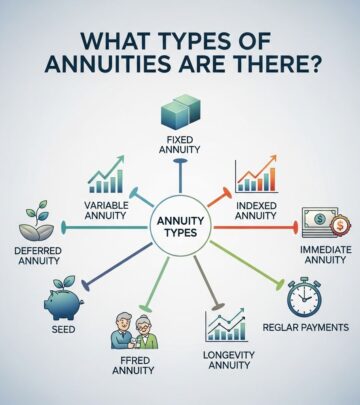
Equity-Indexed Annuities: Understanding Hybrid Investment Vehicles
Learn how equity-indexed annuities combine fixed income security with stock market growth potential.

What Are Equity-Indexed Annuities?
Equity-indexed annuities (EIAs), also known as fixed indexed annuities, represent a unique category of financial products that blur the line between traditional fixed annuities and variable annuities. These hybrid instruments combine the safety features of fixed income investments with the growth potential of equity market performance. Understanding these complex products is essential for anyone considering them as part of their retirement planning strategy.
An equity-indexed annuity is essentially a contract between an investor and an insurance company. The investor contributes a lump sum of money or periodic payments, and in return, the insurance company guarantees a minimum return while also offering the possibility of higher returns based on the performance of a specific stock market index, such as the S&P 500. This dual-natured structure makes EIAs an attractive option for conservative investors seeking growth without exposing themselves to the full volatility of stock market fluctuations.
How Equity-Indexed Annuities Work
The mechanics of equity-indexed annuities involve several key components that determine how returns are calculated and credited to the annuity holder’s account. Understanding these mechanisms is crucial for evaluating whether an EIA aligns with your investment objectives.
The Indexing Mechanism
At the core of an equity-indexed annuity lies the indexing mechanism. When you purchase an EIA, your investment is linked to the performance of a specific market index. The insurance company calculates your returns based on how that index performs during the contract period, which is typically one to ten years. However, the insurance company does not invest your money directly in the index. Instead, they use complex financial strategies, including options and other derivatives, to replicate the index’s performance while protecting themselves against significant losses.
The relationship between your contribution and index performance is governed by several variables:
- Participation Rate: This percentage determines how much of the index’s gains you receive. For example, if the participation rate is 80% and the index returns 10%, your account would be credited with 8%. Participation rates typically range from 60% to 100%, though some products may offer higher rates.
- Caps: Most EIAs impose a ceiling on annual returns, known as a cap rate. Even if the underlying index soars 20%, your account might be capped at 12% annual returns. Caps typically range from 6% to 12%, depending on the product and prevailing interest rate environment.
- Floors: This is a critical feature protecting investors during market downturns. The floor establishes a minimum return, usually 0%, meaning that even if the index experiences negative returns, your account value won’t decline. Some products offer floors of 1% or 2%, providing more downside protection.
- Spreads and Fees: Insurance companies charge spreads, margin fees, or administrative costs that reduce the returns credited to your account. These fees are often deducted from index gains before calculating your return.
Return Calculation Methods
Insurance companies use different methodologies to calculate returns, which can significantly impact the actual returns you receive:
- Annual Point-to-Point: This method compares the index value at the end of each contract year to its value at the beginning of that year. Returns are calculated annually and then summed over the annuity period.
- Monthly Sum: Returns are calculated monthly, with each month’s gain or loss added to the running total. This method can be more favorable in volatile markets.
- High Water Mark: This approach uses the highest index value reached during the measurement period, protecting you if the index falls near the contract’s end.
- Averaged Index: The ending index value is compared to an average of the index’s values during the measurement period, which can reduce the impact of market volatility.
Advantages of Equity-Indexed Annuities
Equity-indexed annuities offer several compelling benefits that appeal to retirement investors with specific financial goals and risk tolerance levels.
- Principal Protection: The most significant advantage is the guaranteed floor. Your initial investment is protected against market downturns, ensuring you won’t lose money due to stock market declines. This feature provides peace of mind for conservative investors approaching or in retirement.
- Growth Potential: Unlike fixed annuities that offer only a predetermined interest rate, EIAs provide the opportunity to participate in stock market gains. This growth potential helps protect against inflation and can enhance long-term wealth accumulation.
- Tax-Deferred Growth: Like other annuities, equity-indexed annuities offer tax-deferred growth. You won’t pay taxes on gains until you withdraw funds, allowing your investment to compound more efficiently.
- Insurance Company Backing: Your investment is backed by the insurance company issuing the annuity, adding a layer of security and stability compared to direct stock market investments.
- Income Options: Many EIAs can be converted into income streams during retirement through annuitization, providing guaranteed lifetime income or income for a specified period.
Disadvantages and Risks of Equity-Indexed Annuities
While equity-indexed annuities offer attractive features, they come with significant drawbacks that investors must carefully consider before committing their money.
- Capped Returns: The cap rates limit your upside potential. If the market experiences exceptional returns, you’ll miss out on gains beyond the cap. Over long periods, this limitation can substantially reduce wealth accumulation compared to direct equity investments.
- Limited Participation: Participation rates below 100% mean you capture only a portion of index gains. Spreads and fees further reduce your effective returns, creating a disconnect between index performance and account credits.
- Complex Structure: The mechanics of EIAs are intricate and often difficult for average investors to understand fully. This complexity can make it challenging to accurately compare products or assess true value.
- High Surrender Charges: Annuities typically impose substantial penalties for early withdrawal. Surrender charges often decline over the contract period but can exceed 10% in the early years. If you need access to your funds, these penalties can be prohibitively expensive.
- Illiquidity: Your money is essentially locked up during the contract period. While some products offer limited annual withdrawal allowances (typically 10% of the account value), accessing significant amounts incurs penalties.
- Inflation Risk: Even with growth potential, if the cap rate and participation rate don’t fully outpace inflation, your purchasing power may decline over time, particularly in a retirement spanning several decades.
- Counterparty Risk: Although insurance companies are regulated, there remains the risk of insolvency. Your investment depends on the insurance company’s financial stability and claims-paying ability.
- Commission-Based Sales: EIAs are typically sold by commission-driven advisors, which may bias recommendations toward products that benefit the salesperson rather than the investor. High commissions (often 5-7%) are built into the product, affecting returns.
Key Features Comparison Table
| Feature | Fixed Annuity | EIA | Variable Annuity |
|---|---|---|---|
| Principal Protection | Guaranteed | Guaranteed (Floor) | Not Guaranteed |
| Growth Potential | Limited | Moderate (Capped) | Unlimited |
| Complexity | Low | High | High |
| Liquidity | Restricted | Restricted | Restricted |
| Income Options | Yes | Yes | Yes |
Are Equity-Indexed Annuities Right for You?
Determining whether an equity-indexed annuity fits your financial plan requires careful consideration of your circumstances, goals, and risk tolerance.
EIAs May Be Suitable For:
- Conservative investors nearing or in retirement who prioritize capital preservation but desire growth
- Those with low risk tolerance who fear significant portfolio losses
- Investors seeking tax-deferred growth on a portion of their retirement savings
- Individuals wanting guaranteed lifetime income in addition to growth potential
- People with longer time horizons who can tolerate illiquidity during the contract period
EIAs May Not Be Suitable For:
- Aggressive investors seeking maximum growth potential
- Those who need frequent access to their funds
- Individuals uncomfortable with complex financial products
- Investors in high income tax brackets who could benefit more from tax-efficient strategies
- People with shorter time horizons incompatible with surrender charge periods
Important Considerations Before Investing
Before committing to an equity-indexed annuity, thoroughly evaluate the following aspects:
- Product Comparison: Compare multiple products from different insurers. The specific terms—participation rate, cap rate, floor, spread, and calculation method—can vary dramatically and significantly impact returns.
- Advisor’s Credentials: Work with a fiduciary advisor who has your best interests in mind. Ask about compensation structure and potential conflicts of interest. Consider obtaining recommendations from certified financial planners.
- Contract Terms: Carefully read the entire contract. Understand the surrender charge schedule, any annual withdrawal allowances, how returns are calculated, and what happens at maturity.
- Alternative Options: Compare the expected performance and features of EIAs with alternatives like low-cost index funds, target-date funds, or laddered bond portfolios that may offer better flexibility and lower costs.
- Insurance Company Rating: Check the credit ratings of the insurance company from agencies like A.M. Best, Moody’s, or Standard & Poor’s to assess financial stability.
Frequently Asked Questions
Q: How are equity-indexed annuity returns taxed?
A: When you withdraw funds or annuitize the contract, returns are taxed as ordinary income at your marginal tax rate. If purchased within a qualified retirement plan like an IRA, growth is tax-deferred, but withdrawals are taxed as ordinary income. Withdrawals before age 59½ may incur a 10% penalty in addition to income taxes.
Q: Can I get my money back if I change my mind?
A: Most states allow a “free look” period (typically 10 days) during which you can cancel the contract without penalty. After this period, early withdrawals are subject to surrender charges that gradually decrease over the contract term.
Q: What happens to my EIA when I die?
A: Upon your death, the contract typically passes to your beneficiaries. Most EIAs guarantee that beneficiaries receive at least your original principal, plus any credited gains, regardless of market performance. Some products offer enhanced death benefits for an additional cost.
Q: How do EIAs compare to traditional stocks or mutual funds?
A: While stocks and mutual funds offer unlimited growth potential and greater liquidity, they provide no downside protection. EIAs sacrifice some upside potential (through caps and participation limitations) in exchange for principal protection. The choice depends on your risk tolerance and investment timeline.
Q: What are typical cap rates and participation rates?
A: Cap rates typically range from 6% to 12% annually, while participation rates generally span from 60% to 100%. These rates vary based on prevailing interest rates, the insurance company’s financial position, and market conditions. Higher participation rates often correlate with lower cap rates.
Q: Can I move my EIA to another company?
A: Yes, you can transfer your EIA to another insurance company through a 1035 exchange, which allows transfers without immediate tax consequences. However, you’ll enter a new contract with potentially different terms and surrender charges, and the transfer process can be complex.
Conclusion
Equity-indexed annuities represent a middle ground between conservative fixed annuities and aggressive variable annuities, offering a blend of safety and growth potential. However, their complexity, cost structure, and limitations make them suitable primarily for specific investor profiles. Before investing, thoroughly research available products, understand all terms and conditions, and consider consulting with a fee-only fiduciary advisor to determine whether an EIA aligns with your overall retirement strategy.
References
- Fixed Indexed Annuities: A Closer Look — Financial Industry Regulatory Authority (FINRA). 2023. https://www.finra.org/investors/alerts/fixed-indexed-annuities-closer-look
- Annuities and Your Retirement Income — U.S. Securities and Exchange Commission (SEC) Office of Investor Education and Advocacy. 2024. https://www.sec.gov/investor/pubs/annuities.htm
- Variable Annuities: What You Should Know — Consumer Financial Protection Bureau (CFPB). 2023. https://www.consumerfinance.gov/about-us/newsroom/
- Indexed Annuities: Issues and Concerns — National Association of Insurance Commissioners (NAIC). 2022. https://www.naic.org
- Understanding Annuity Surrender Charges — American Council of Life Insurers (ACLI). 2023. https://www.acli.org
Similar Articles








Read full bio of medha deb