Equity Financing: Definition, Types, and How It Works
Understand equity financing, its advantages, disadvantages, and how it compares to debt financing for your business.

What Is Equity Financing?
Equity financing is a method of raising capital for a company by selling shares of the company to investors. When you pursue equity financing, you are essentially giving investors a stake in your business in exchange for funding. This approach does not require repayment of the funds like traditional debt financing does, making it an attractive option for many entrepreneurs and growing businesses. Equity financing can come from various sources, including angel investors, venture capital firms, private equity investors, and the general public through initial public offerings (IPOs) or crowdfunding platforms.
The fundamental concept behind equity financing is straightforward: instead of borrowing money that must be repaid with interest, companies sell ownership shares to raise capital. This means investors become partial owners of the company and may have a say in business decisions, depending on the terms of the investment. Companies often go through several rounds of equity financing as they grow and scale operations, using different equity instruments based on their specific needs and stage of development.
How Equity Financing Works
Equity financing operates through the sale of shares or ownership stakes in a company. When a business decides to raise capital through equity, it offers investors the opportunity to purchase shares, which represent a percentage of company ownership. The process typically involves identifying potential investors, negotiating terms, and determining the valuation of the company.
In the early stages of a company’s life, equity financing often comes from founders themselves, friends and family, or angel investors. As the company grows and demonstrates traction, venture capital firms and other institutional investors may become interested. The amount of equity given up depends on the company’s valuation and the amount of capital needed. For example, if a company is valued at $10 million and raises $2 million through equity financing, the new investors would typically own 20% of the company, while existing shareholders’ ownership would be diluted proportionally.
Types of Equity Financing
Angel Investment
Angel investing represents one of the earliest forms of equity financing for startups. Angel investors are typically high-net-worth individuals who provide capital to early-stage companies in exchange for equity ownership. These investors often bring not only funding but also valuable experience, mentorship, and industry connections to the businesses they support. Angel investments are crucial for companies at the pre-seed and seed stages, when traditional financing options may not be available.
Venture Capital
Venture capital (VC) firms invest in companies with high growth potential, typically in exchange for equity stakes. Venture capitalists raise funds from limited partners such as pension funds and insurance companies, then deploy this capital into promising startups and growing companies. Venture capital is often deployed in stages or rounds, with each round representing a different phase of company development.
VC funding typically follows a structured progression:
- Seed Stage: Companies refine their products or develop concepts before bringing products to market. Early-stage VCs often invest in businesses local to them.
- Series A: Revenue-generating companies use funds to finalize products, pay staff salaries, and conduct market research. VCs provide investment in return for equity.
- Series B: Profitable companies seeking to scale up, expand market share, or develop new product ranges attract established VC funds.
- Series C: Companies with significant market traction secure funding to gain greater market share, develop additional products, or prepare for acquisition or IPO.
Private Equity
Private equity (PE) firms raise capital from institutional investors such as pension funds and insurance companies, forming private equity funds to invest in businesses. The primary objective of private equity investors is to increase the value of invested companies and then sell them or their stakes for a profit. The most common form of private equity investment is the leveraged buyout, where the PE firm acquires a majority stake using a combination of equity and significant debt. Although the acquired company bears responsibility for repaying this debt, the private equity investor typically applies operational expertise and sound management practices to boost profitability and reduce the debt burden.
Equity Crowdfunding
Equity crowdfunding allows companies to raise capital by listing their business on a regulated online platform, enabling investors and members of the public to purchase shares. This democratized approach to fundraising opens investment opportunities to a broader range of businesses, from pre-revenue startups to more established companies. In the United Kingdom, all equity crowdfunding is regulated by the Financial Conduct Authority (FCA), which establishes rules regarding how much capital can be raised and investment limits for individual investors.
Initial Public Offering (IPO)
An IPO represents the process of offering shares of a private corporation to the public through a new stock issuance. This transition from private to public ownership allows companies to raise substantial capital from a wide pool of investors. Following an IPO, companies can also sell additional shares to the public in follow-on offerings. Public stock markets like the AIM market and Main Market provide access to varying levels of capital, with the AIM market enabling fundraising up to £200 million and the Main Market providing access to over £1 billion from a much wider investor base.
Advantages of Equity Financing
Equity financing offers several compelling advantages for companies seeking capital:
- No Repayment Obligations: Unlike debt financing, equity financing does not require repayment of principal or interest payments. This reduces financial stress on the company, particularly during uncertain economic periods.
- No Additional Financial Burden: Since there are no loan payments to make, the company’s cash flow is not constrained by debt service requirements, allowing more capital to be reinvested in business operations.
- Access to Expertise and Connections: Equity investors often bring valuable business experience, industry expertise, and professional networks that can significantly benefit company growth and strategic development.
- Improved Company Health: Raising equity capital can strengthen the company’s balance sheet by decreasing the debt-to-equity ratio and improving credit scores, which enhances the company’s financial standing.
- Validation and Credibility: Securing investment from reputable venture capital or private equity firms provides external validation of the business model and can enhance credibility with customers, partners, and other stakeholders.
Disadvantages of Equity Financing
Despite its advantages, equity financing carries several significant disadvantages:
- Ownership Dilution: Selling shares means giving up a portion of company ownership. Founders and existing shareholders experience proportional dilution of their ownership stakes with each financing round.
- Loss of Control: Depending on the equity stake granted, investors may gain board seats or voting rights, requiring business leaders to consult with investors on major decisions. This can limit the founder’s ability to make independent strategic choices.
- Higher Cost of Capital: Equity typically costs more than debt financing due to the higher risk investors assume. Investors expect returns proportional to the risk they undertake, which can be more expensive than interest payments on debt.
- Difficulty Finding Investors: Securing equity investment is often more challenging than obtaining debt financing, as equity investors conduct extensive due diligence and have stricter requirements for investment.
- Pressure for Growth and Exit: Equity investors typically expect significant returns within a specific timeframe, creating pressure to achieve aggressive growth targets or pursue acquisition or IPO exit strategies.
Equity Financing vs. Debt Financing
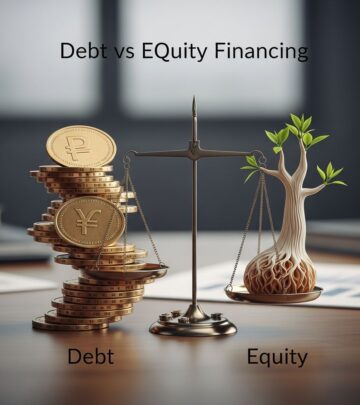
Businesses typically utilize a combination of debt and equity financing to fund growth, as both classes offer advantages at different stages of development. Understanding the differences between these approaches is essential for making informed financing decisions.
| Factor | Equity Financing | Debt Financing |
|---|---|---|
| Repayment | No repayment required; investors own stake | Principal and interest must be repaid |
| Ownership | Ownership dilution; partial loss of control | Complete ownership retained by founder |
| Cash Flow Impact | No regular payment obligations | Monthly or periodic loan payments required |
| Cost | Higher cost due to risk premium | Lower cost; interest-based payments |
| Availability | Difficult for early-stage companies | Easier for established businesses with cash flow |
| Investor Involvement | Active involvement; governance rights | Limited involvement; creditor relationship |
| Debt-to-Equity Impact | Improves ratio; strengthens balance sheet | Increases leverage; worsens ratio |
Key Considerations for Business Owners
Before seeking equity financing, business owners should carefully consider several important factors:
- Funding Accessibility: Evaluate which sources of funding are most realistically accessible for your company. Debt financing may be easier to obtain if your business has established cash flow, but venture capital and private equity continue to display significant appetite for stakes in strong businesses serving growing markets.
- Ownership and Control: Consider how important it is to maintain complete control of your company. In equity financing, you retain majority ownership but experience proportional dilution. With debt financing, you maintain complete ownership without dilution.
- Investor Resources: Venture capital, growth equity, and private equity firms bring operational expertise, management improvements, and strategic connections beyond just capital. Evaluate what resources specific investors can provide beyond funding.
- Growth Strategy and Add-on Acquisitions: If considering private equity investment, understand that PE firms often make add-on acquisitions to create synergies and increase scale. Consider how such acquisitions would impact your company’s culture and operational performance.
- Timeline and Exit Strategy: Equity investors typically expect returns within specific timeframes. Clarify your long-term vision and whether you’re comfortable with the pressure to achieve growth targets or pursue exit strategies like acquisition or IPO.
Frequently Asked Questions
Q: What is the main difference between equity and debt financing?
A: The primary difference is ownership and repayment. Equity financing involves selling company shares and does not require repayment, while debt financing involves borrowing money that must be repaid with interest. Equity financing results in ownership dilution, while debt financing allows the owner to retain complete ownership.
Q: Is equity financing suitable for early-stage startups?
A: Yes, equity financing is particularly suitable for early-stage startups that lack the cash flow or collateral to qualify for traditional debt financing. Angel investors and seed-stage venture capital firms specifically target early-stage companies with innovative business models and growth potential.
Q: How much ownership do I have to give up in equity financing?
A: The ownership percentage depends on your company’s valuation and the amount of capital you’re raising. For example, if you raise $2 million for a company valued at $10 million, investors typically receive 20% ownership. The exact percentage is negotiated based on market conditions and investor expectations.
Q: Can I maintain control of my company with equity financing?
A: You can often maintain operational control if you retain a majority stake, though this becomes more difficult with each funding round. However, investors may gain board representation or veto rights on major decisions depending on the terms negotiated.
Q: What is a leveraged buyout in private equity?
A: A leveraged buyout (LBO) occurs when a private equity firm acquires a majority stake in a company using a combination of equity and a large amount of debt. The acquired company is responsible for repaying the debt, while the PE investor applies operational expertise to improve profitability.
Q: How long does the equity financing process typically take?
A: The timeline varies significantly based on the financing type. Angel investments may take weeks to months, venture capital funding typically takes 3-6 months, and IPOs can take 6-12 months or longer. Equity crowdfunding campaigns typically run for 30-60 days.
Q: What happens to investors if my company fails?
A: Equity investors bear the risk of total loss. If the company fails, their investment becomes worthless. This is why equity investors conduct thorough due diligence and typically expect higher returns to compensate for this risk compared to debt investors.
References
- What is Equity Finance — British Business Bank. 2025. https://www.british-business-bank.co.uk/business-guidance/guidance-articles/finance/what-is-equity-finance
- Advantages and Disadvantages of Equity Financing — Capstone Partners. 2025. https://www.capstonepartners.com/insights/article-advantages-and-disadvantages-of-equity-financing/
- Equity Financing Definition — Investopedia. 2024. https://www.investopedia.com/terms/e/equityfinancing.asp
Similar Articles








Read full bio of medha deb