Enron Executives: Key Players in Corporate Scandal
Discover the key Enron executives behind one of history's largest accounting frauds.
Enron Executives: Architects of Corporate Deception
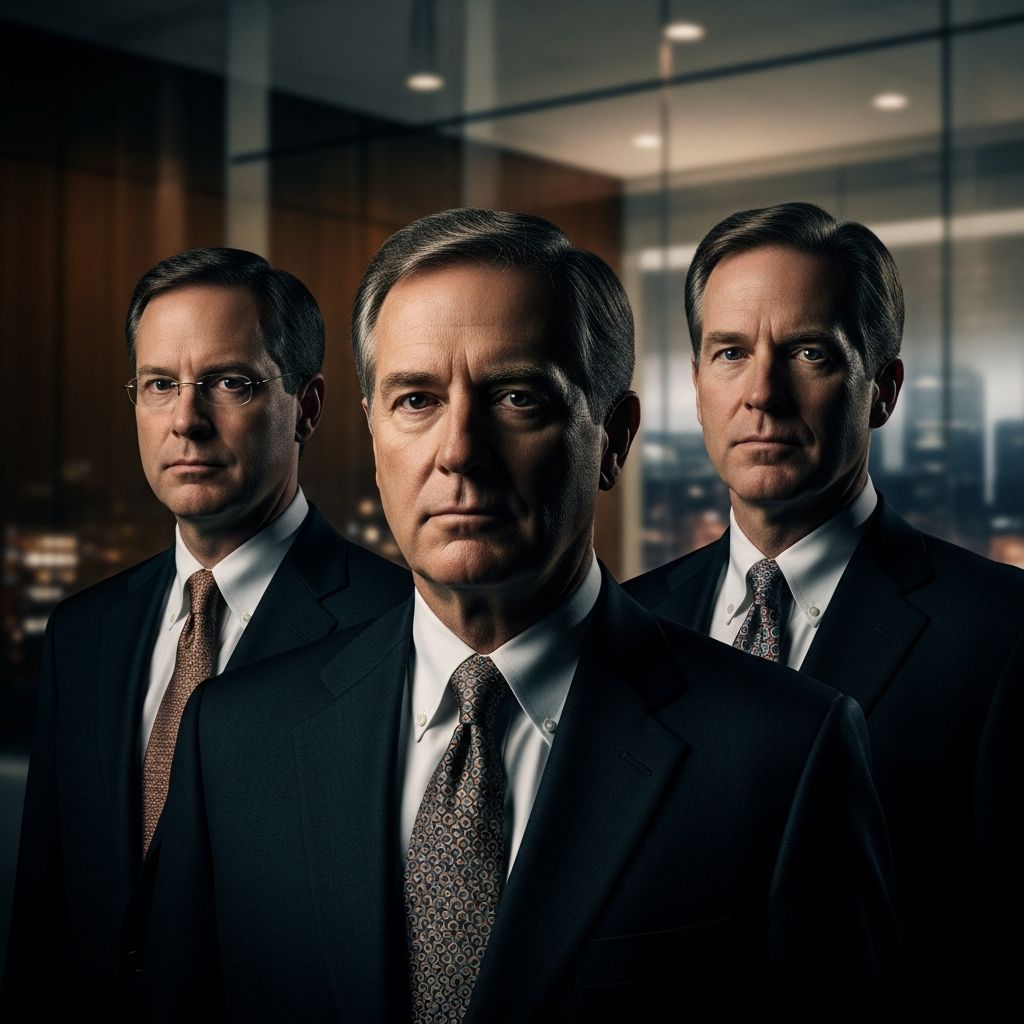
The Enron scandal stands as one of the most significant corporate frauds in American history, exposing how a group of executives orchestrated a sophisticated scheme to deceive investors, employees, and regulators. Founded in 1985 as a natural gas pipeline company, Enron transformed under the leadership of key executives who prioritized financial manipulation over sustainable business practices. The scandal that emerged in the early 2000s revealed how these executives used complex financial instruments and accounting tricks to inflate stock prices and hide massive losses, ultimately leading to one of the largest bankruptcies in U.S. history. Understanding the roles of these key players provides crucial insights into how corporate governance failures can devastate an entire organization and its stakeholders.
Kenneth Lay: The Founder and Chairman
Kenneth Lay served as the founder and chairman of Enron, establishing the company’s initial vision as a natural gas pipeline operator. As the company’s leader, Lay held ultimate responsibility for the corporate culture and strategic direction that would eventually lead to the scandal. According to investigators, Lay approved of the questionable actions taken by other executives, including Jeffrey Skilling and Andrew Fastow, although he often claimed not to inquire about the specific details of their operations. This hands-off approach allowed fraudulent practices to flourish unchecked within the organization. In his final years at Enron, Lay served as the chairman and later resumed the CEO position after Skilling’s resignation in August 2001. Despite his significant role in the company’s downfall, Lay was indicted and convicted of multiple charges but died before being sentenced, thus never serving prison time for his involvement in the fraud.
Jeffrey Skilling: The Ambitious CEO
Jeffrey Skilling emerged as one of the most influential executives at Enron, eventually becoming Chief Executive Officer. Skilling was instrumental in transforming Enron from a traditional pipeline company into an aggressive trading operation that diversified into telecommunications, energy trading, and other complex financial ventures. His strategy relied heavily on mark-to-market accounting, a practice that allowed the company to record projected future profits immediately as current revenue. This aggressive accounting approach created an illusion of consistent growth that masked underlying financial problems. During his tenure as CEO, Skilling benefited substantially from the company’s artificially inflated stock price. In August 2001, after only six months as CEO, Skilling abruptly announced his resignation, citing personal reasons. However, observers noted that in the months preceding his departure, Skilling had sold approximately 450,000 shares of Enron stock valued at around $33 million while maintaining over a million additional shares. His sudden departure raised immediate red flags among analysts and investors, who became concerned about the transparency of Enron’s financial statements and the true nature of its reported earnings.
Andrew Fastow: The CFO and Financial Architect
Andrew Fastow served as Enron’s Chief Financial Officer and played a central role in designing the special purpose entities (SPEs) that became the primary vehicles for financial deception. Fastow created complex partnerships, including the notorious LJM partnerships, which were ostensibly designed to hedge risk and manage specific business operations. However, these entities functioned primarily to hide losses and transfer problematic assets away from Enron’s official balance sheet. To manage these entities while simultaneously serving as CFO, Fastow required an exemption from Enron’s code of ethics, which the board of directors granted. This conflict of interest remained largely unexamined during the company’s operating years. In October 2001, Fastow disclosed to Enron’s board that he had personally earned approximately $30 million from compensation arrangements related to managing the LJM limited partnerships. This shocking revelation triggered immediate market reaction, with Enron’s stock price plummeting from $25.05 to $20.65 in a single day. Just three days later, on October 25, 2001, Fastow was removed from his position as CFO after several major financial institutions refused to provide additional loans to Enron while he remained in this role. His removal highlighted the severe damage his activities had caused to investor and creditor confidence in the company.
Sherron Watkins: The Whistleblower
While not an executive in the traditional sense, Sherron Watkins served as Vice President of Corporate Development and played a critical role in exposing the company’s fraudulent practices. Following Jeffrey Skilling’s sudden resignation on August 14, 2001, Watkins immediately recognized the dangers posed by the company’s questionable accounting practices and the concerning nature of Skilling’s departure. The next day, she wrote an email to Kenneth Lay expressing her concerns about how markets would react to Skilling’s exit and identifying specific weaknesses in Enron’s financial structure. Watkins specifically warned about the Raptor and Condor deals, which were special purpose entities that functioned ostensibly to hedge risk but actually served to conceal losses. Her warning came too late to prevent the company’s collapse, but her courage in speaking up established her as the company’s whistleblower and one of the few insiders who attempted to alert management to the problems within the organization.
Rebecca Mark and Other Key Executives
Rebecca Mark served as an executive at Enron and contributed to the company’s aggressive diversification strategy. Like other executives, Mark was involved in perpetuating the combination of accounting practices and corporate strategies that eventually led to bankruptcy. These executives, along with Lay, Skilling, and Fastow, shared responsibility for creating and maintaining the corporate culture that prioritized aggressive growth and financial manipulation over ethical business practices and transparent accounting. The combination of their individual decisions and collective failure to implement proper controls created the perfect environment for large-scale fraud to flourish.
The Role of Arthur Andersen
While not Enron executives per se, the auditors at Arthur Andersen, one of the most prestigious accounting firms in the United States, played a crucial enabling role in the scandal. The firm failed to fulfill its professional responsibilities in auditing Enron’s financial statements and did not adequately bring concerns about the company’s internal controls over related-party transactions to the board’s attention. The Powers Committee, appointed by Enron’s board to investigate the accounting irregularities, concluded that Andersen had not met its professional obligations. The firm was later found guilty of illegally destroying documents relevant to the SEC investigation, which resulted in the revocation of its license to audit public companies. This conviction effectively closed the firm, ending the careers of thousands of employees and destroying a business that had operated for over 80 years.
The Mechanics of Deception
The executives’ fraudulent strategy relied on several interconnected mechanisms. First, they employed mark-to-market accounting, which allowed projected future profits to be recorded as immediate revenue. Second, they created numerous special purpose entities that were technically independent but actually remained under Enron’s control. These entities functioned as a shell game, moving money between corporate divisions to create an illusion of vibrant growth while hiding unprofitable ventures. Third, they engaged in related-party transactions that allowed losses to be transferred off Enron’s official balance sheet. The funding for these entities came from major financial institutions including Wachovia, J.P. Morgan Chase, Credit Suisse First Boston, and Citigroup, each contributing approximately $390 million collectively, with Merrill Lynch adding an additional $22 million.
Timeline of Key Events
August 14, 2001: Jeffrey Skilling announces his resignation as CEO after only six months, citing personal reasons while simultaneously selling $33 million worth of company stock.
August 15, 2001: Sherron Watkins sends her warning email to Kenneth Lay regarding the company’s accounting practices and the Raptor and Condor deals.
October 22, 2001: Fastow discloses his $30 million in personal compensation from LJM partnerships; stock price drops from $25.05 to $20.65 in one day.
October 25, 2001: Andrew Fastow is removed as CFO after major banks refuse to provide additional loans while he remains in position.
December 2, 2001: Enron files for Chapter 11 bankruptcy protection, marking one of the largest bankruptcies in U.S. history.
Consequences for Executives and Stakeholders
The executives’ actions had devastating consequences extending far beyond the corporate boardroom. Thousands of Enron employees lost retirement accounts based largely on company stock, with some employees losing as much as $800,000 to $900,000 in savings. Millions of American investors suddenly lost billions of dollars in savings and investment portfolios. Meanwhile, Kenneth Lay stood to receive a $60 million change-of-control payment following the failed Dynegy acquisition, while ordinary employees watched their financial security evaporate. The criminal investigations resulted in convictions for multiple executives, though their sentences varied significantly based on their levels of involvement and the evidence against them.
Frequently Asked Questions
Q: What was Kenneth Lay’s role in the Enron scandal?
A: Kenneth Lay served as founder and chairman of Enron, approving the questionable actions of other executives including Skilling and Fastow, though he often claimed not to inquire about specific details. He was indicted and convicted but died before being sentenced.
Q: Why did Jeffrey Skilling resign so suddenly?
A: Skilling announced his resignation as CEO in August 2001 after only six months, citing personal reasons. His departure coincided with and accelerated market concerns about the company’s financial transparency.
Q: What was Andrew Fastow’s primary responsibility?
A: Andrew Fastow served as CFO and designed the special purpose entities and LJM partnerships that were used to hide losses and transfer problematic assets away from Enron’s official balance sheet.
Q: How did Sherron Watkins contribute to exposing the scandal?
A: Watkins served as Vice President of Corporate Development and sent an email to Kenneth Lay warning about the company’s accounting practices and the problematic nature of the Raptor and Condor deals following Skilling’s resignation.
Q: What happened to Arthur Andersen as a result of the scandal?
A: Arthur Andersen was found guilty of illegally destroying documents relevant to the SEC investigation and had its license to audit public companies revoked, effectively closing the firm and ending thousands of employees’ careers.
References
- Enron scandal — Wikipedia. 2025. https://en.wikipedia.org/wiki/Enron_scandal
- Enron Bankruptcy Reveals Massive Financial Fraud — EBSCO Research. 2025. https://www.ebsco.com/research-starters/law/enron-bankruptcy-reveals-massive-financial-fraud
- Enron Scandal – Overview, Role of MTM, Agency Conflicts — Corporate Finance Institute. 2025. https://corporatefinanceinstitute.com/resources/esg/enron-scandal/
Similar Articles








Read full bio of Sneha Tete