Bonds: 3 Core Advantages For Portfolio Resilience
Discover how strategic bond investments provide stability, reliable income, and effective diversification to fortify your long-term financial strategy against market volatility.

Enhancing Portfolios with Bonds
Bonds serve as a cornerstone for building resilient investment portfolios by delivering consistent income, lowering overall volatility, and counterbalancing equity market swings. Their inverse relationship with stocks often provides a safety net during downturns, enabling investors to pursue growth without excessive risk exposure.
Understanding the Core Advantages of Fixed-Income Securities
Fixed-income investments like bonds issue regular interest payments, known as coupons, which create a predictable revenue stream independent of stock dividends that can fluctuate. This reliability proves invaluable for retirees or those nearing withdrawal phases, securing essential cash flows amid uncertain equity performance.
Historically, bonds exhibit significantly lower price swings compared to equities. For instance, during major stock declines in years like 2000, 2001, 2002, 2008, and 2022, investment-grade bonds frequently posted positive returns, acting as a portfolio stabilizer. This lower volatility stems from bonds’ fixed maturity dates, where issuers repay principal, contrasting stocks’ open-ended nature.
- Income Reliability: Coupons paid semi-annually or quarterly offer steady payouts, often surpassing equity dividends in consistency.
- Principal Protection: Holding to maturity guarantees return of face value for most bonds, barring defaults.
- Tax Efficiency: Municipal bonds evade federal taxes, while Treasuries skip state levies, boosting after-tax yields.
The Diversification Power of Bonds Against Equities
Incorporating bonds dilutes portfolio risk through negative correlation with stocks—when equities falter due to economic slowdowns, bonds often rise as investors seek safety. This dynamic has historically muted overall portfolio drawdowns, preserving capital for recovery phases.
Over decades, bond-inclusive portfolios demonstrate reduced standard deviation of returns. Charts of asset class performance reveal bonds clustering around steadier gains, rarely plunging into deep losses like stocks during recessions. For accumulation-phase investors, even modest bond allocations—say 20-40%—slash volatility by over 30% without severely hampering growth.
| Asset Class | Avg. Annual Volatility (1980-2023) | Max Drawdown (2008 Crisis) |
|---|---|---|
| Stocks | 15-20% | -50% |
| Investment-Grade Bonds | 5-8% | -5% |
| Balanced Portfolio (60/40) | 10-12% | -25% |
This table illustrates bonds’ role in smoothing returns; data derived from long-term indices.
Bonds as a Superior Inflation Hedge Over Cash Equivalents
Unlike cash, which erodes via inflation, bonds historically outpace rising prices. From 1975 onward, U.S. bonds exceeded inflation in 71% of years with a 3.1% real return, versus cash’s 57% success rate and 0.6% average. Elevated yields post-rate hikes, as in 2022, amplify this edge, forming a ‘yield buffer’ for reinvestment.
In high-inflation eras, longer-term bonds capture higher coupons locking in gains, while cash yields lag. This positions bonds as a dynamic preserver of purchasing power within diversified mixes.
Strategic Bond Allocation Across Life Stages
Optimal bond weighting varies by investor horizon and risk tolerance. Younger accumulators benefit from 20-30% bonds for volatility control, ramping to 50-70% near retirement for income security.
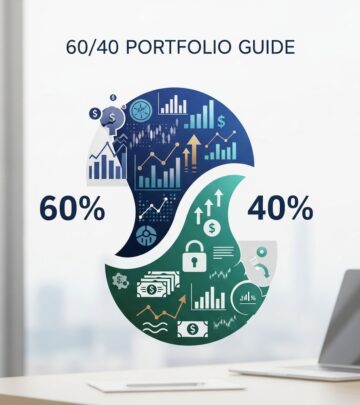
A classic 60/40 stock-bond split has endured market cycles, balancing growth and defense. Retirees leverage bonds to match liabilities, withdrawing coupons without depleting principal.
- Early Career: Minimal bonds (10-20%) prioritize equity growth.
- Mid-Career: 30-50% bonds enhance stability amid family obligations.
- Retirement: 60%+ bonds secure income, minimizing sequence-of-returns risk.
Building a Resilient Bond Portfolio: Diversification Tactics
Avoid single-bond concentration; opt for funds holding thousands across sectors, maturities, and geographies. Core index funds track aggregates like U.S. Treasuries and corporates, while core-plus adds selective credits for yield boosts.
International bonds introduce currency and regional diversification, though U.S.-centric suffices for many. Blend passive trackers with active managers navigating rate shifts.
| Bond Type | Risk Level | Yield Potential | Best For |
|---|---|---|---|
| Treasuries | Low | Moderate | Safety |
| Investment-Grade Corporates | Medium | Higher | Income |
| Municipals | Low-Medium | Tax-Advantaged | High-Tax Brackets |
| Emerging Market | High | Highest | Growth Seekers |
Navigating Interest Rate Cycles and Rebalancing Discipline
Rising rates depress bond prices short-term, yet higher yields reward patience. Post-2022 hikes, coupons rebuilt income streams. Rebalance annually to target allocations, selling high-flyers to buy dips, capturing mean reversion.
Skip emotional shifts during dual stock-bond slumps; history affirms diversified persistence outperforms timing attempts.
Common Pitfalls and Mitigation Strategies
Over-relying on cash post-bond dips ignores long-term superiority. Chasing yield via junk bonds amplifies default risk—stick to investment-grade cores. Individual bonds demand expertise; funds streamline access.
- Monitor duration to align rate sensitivity with views.
- Reinvest coupons compounding returns.
- Assess credit quality avoiding overexposure.
FAQs
Why include bonds if stocks historically outperform?
Bonds prioritize stability over raw returns, slashing portfolio risk for sustainable long-term compounding.
Are bonds safe in rising rate environments?
Short-term prices dip, but higher yields and maturities restore value; diversify durations.
How much should I allocate to bonds?
Match to age and goals: roughly 110 minus age as a rule of thumb.
Do bond funds outperform individual bonds?
Funds excel in diversification and liquidity, suiting most investors.
Can bonds protect against inflation?
Treasury Inflation-Protected Securities (TIPS) directly hedge; nominals via yields beating CPI historically.
Key Takeaways for Bond Integration
Bonds fortify portfolios via income, ballast, and inflation resilience. Methodical allocation, diversification, and discipline unlock their full potential across cycles.
References
- How bonds can strengthen your portfolio — Vanguard. 2023. https://investor.vanguard.com/investor-resources-education/article/how-bonds-can-strengthen-portfolio
- What is a Bond and How do they Work? — Vanguard. 2024-01-15. https://investor.vanguard.com/investor-resources-education/understanding-investment-types/what-is-a-bond
- Bonds 101: Leveraging Bonds for Portfolio Diversification — PIMCO. 2023-06-10. https://www.pimco.com/us/en/resources/education/bonds-101-leveraging-bonds-for-portfolio-diversification
- Bond basics — RBC Global Asset Management. 2024. https://www.rbcgam.com/en/ca/learn-plan/investment-strategies/bond-basics/detail
- The Types of Bonds That Your Portfolio May Need — Morningstar. 2023-11-20. https://www.morningstar.com/portfolios/types-bonds-that-your-portfolio-may-needand-bond-types-it-can-do-without
- The Benefits of Bonds in a Multi-Asset Class Portfolio — Fidelity. 2023. https://www.fidelity.com/bin-public/060_www_fidelity_com/documents/managed-accounts/benefits-bonds-conversation-starter.pdf
Similar Articles







Read full bio of medha deb