Employment Identity Theft: How To Detect, Prevent, Recover
Discover how criminals misuse your personal data for jobs, the red flags to watch for, and proven steps to safeguard your identity and fix the damage.
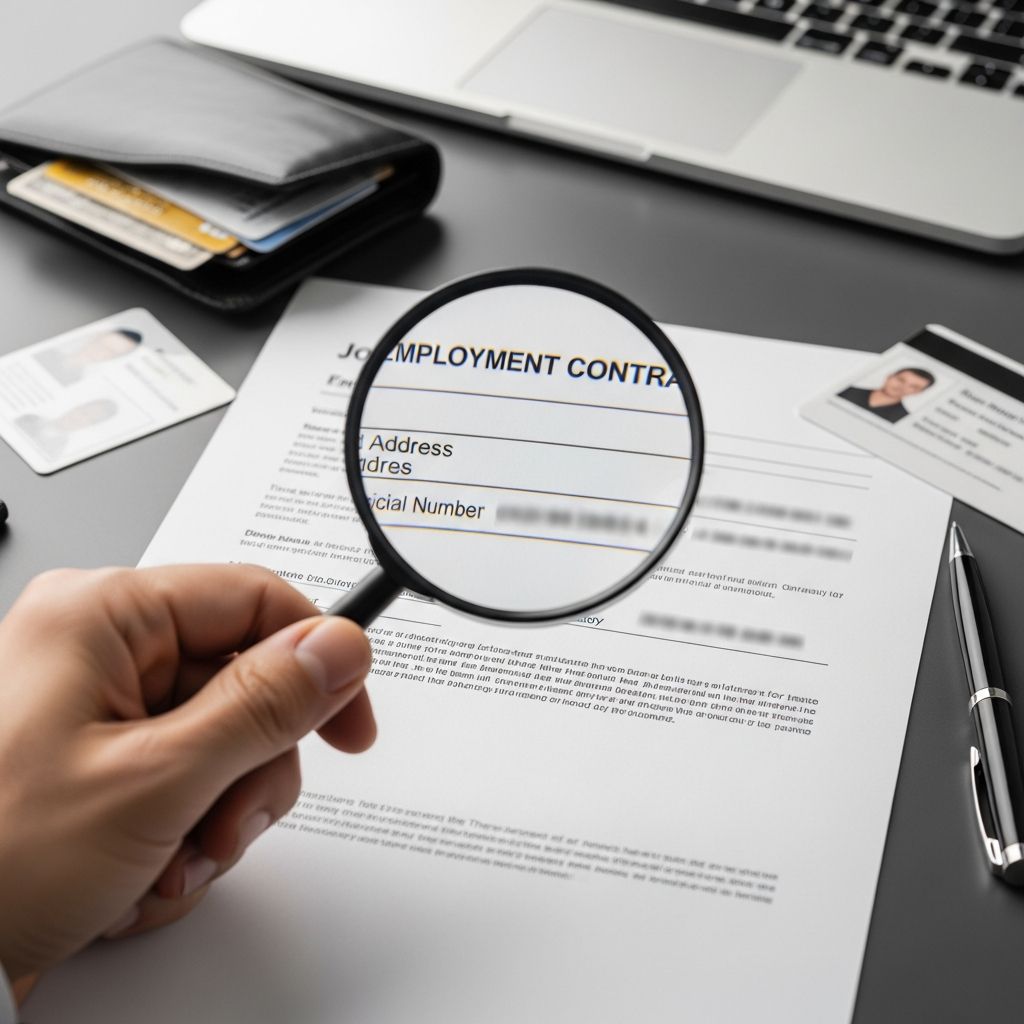
Employment identity theft takes place when fraudsters steal personal identifiers, such as Social Security numbers (SSNs), to obtain jobs or receive payments under a victim’s name. This form of fraud creates lasting disruptions, including unexpected tax liabilities and distorted work histories.
Understanding the Core Mechanics of Employment Fraud
At its essence, this theft targets employment-related data to bypass hiring checks. Thieves often select SSNs belonging to children, seniors, or those with clean records to pass verifications like Form I-9. The result? Victims face “ghost jobs”—positions they never held—reported to government agencies.
Unlike traditional identity theft focused on credit, employment variants prioritize income streams. Fraudsters might secure remote roles or credentialed positions, such as nursing, by impersonating qualified individuals. This not only earns them paychecks but also pollutes the victim’s official records.
Primary Avenues Criminals Exploit for Data Acquisition
Fraudsters gather information through diverse channels, turning everyday interactions into vulnerabilities.
- Phishing and scams: Deceptive emails, texts, or calls trick people into revealing SSNs or job application details.
- Data breaches: Leaks from employer databases expose applicant or employee records en masse.
- Physical document theft: Discarded paperwork or stolen mail containing tax forms or IDs provides raw material.
- Insider betrayal: HR or payroll staff with access to systems sell or misuse sensitive files.
- Dark web markets: Bulk SSNs from breaches are purchased cheaply for job applications.
Online platforms amplify risks; public study materials or profiles inadvertently share real identifiers mistaken for examples.
Real-World Scenarios Illustrating the Threat
Consider a common case: An overseas operative uses a U.S. child’s SSN for a tech job, passing checks and drawing salary until IRS notices alert the family. Another involves high-turnover sectors where old forms are recycled for new hires, evading scrutiny.
Regulated fields like healthcare see credential fraud, where unqualified individuals pose as licensed professionals using stolen identities. Even remote work booms have fueled schemes, with thieves filing under victims’ names for distributed roles.
Detecting the Hidden Signs of Unauthorized Employment
Victims rarely notice immediately, but telltale indicators emerge over time. Key red flags include:
| Sign | Description | Potential Impact |
|---|---|---|
| IRS wage notices | Letters about income from unknown employers | Tax filing rejections or audits |
| Unexpected W-2s | Multiple or foreign forms in mail | Duplicate reporting errors |
| Benefit denials | Social Security or unemployment claims rejected | Loss of entitled payments |
| Background check flags | Unfamiliar jobs in pre-hire screenings | Job offer withdrawals |
| Credit alerts | New accounts or liens tied to fake wages | Financial complications |
Common victims include those with prevalent names or inactive SSNs, making impersonation seamless.
Immediate Response Protocols for Victims
Upon detection, swift action minimizes fallout. Start with official channels:
- Contact IRS: Submit Form 14039 (Identity Theft Affidavit) to flag fraudulent wages.
- Notify SSA: Report misuse via their fraud hotline to protect benefits.
- Freeze credit: Block new accounts at Equifax, Experian, TransUnion.
- Police report: File for documentation in disputes.
- Employer outreach: Inform current HR if background issues arise.
Track progress with tax transcripts and monitor accounts quarterly. Resolution can span months, requiring persistence.
Proactive Safeguards for Individuals
Preventive habits fortify defenses against data exploitation.
- Shred documents with SSNs before disposal.
- Use unique passwords and enable two-factor authentication on job sites.
- Review free credit reports annually via AnnualCreditReport.com.
- Avoid sharing full identifiers in emails or public posts.
- Opt for digital alerts from IRS and SSA for anomalies.
For children or elders, routinely check SSNs for activity, as dormant numbers attract thieves.
Employer Best Practices to Mitigate Risks
Organizations play a pivotal role by tightening verification and storage protocols.
| Practice | Benefit |
|---|---|
| E-Verify integration | Confirms work eligibility instantly |
| Secure data storage | Encrypts HR databases against breaches |
| Regular audits | Detects internal misuse early |
| Training programs | Educates staff on phishing recognition |
| Document destruction | Prevents reuse of old forms |
Implementing these reduces liability and protects legitimate hires.
Long-Term Ramifications and Recovery Outlook
Beyond immediate hassles, victims endure prolonged battles. Tax disputes may delay refunds years, while tainted histories hinder promotions. Full cleanup demands coordinating multiple agencies, yet most resolve with documentation.
Trends show rising incidents tied to remote hiring and data proliferation. Staying vigilant remains key.
Frequently Asked Questions
What should I do first if I get an IRS notice about unknown wages?
File Form 14039 immediately and gather proof of non-employment, like pay stubs from real jobs.
Can employment theft affect my Social Security?
Yes, fake earnings skew benefit calculations; report to SSA promptly.
How do I check if my SSN is misused for jobs?
Request your SSA earnings statement and IRS wage transcript annually.
Is employment identity theft covered by insurance?
Some policies include resolution services; review for identity theft riders.
Who is most vulnerable to this fraud?
People with common names, kids, seniors, or clean records.
References
- Employment Identity Theft: How It Occurs — Hr Simple. 2023. https://hrsimple.com/employment-identity-theft-how-it-occurs/
- Identity Theft — Harvard University Police Department. 2024-01-15. https://www.hupd.harvard.edu/identity-theft
- What Is Employment Identity Theft? — Experian. 2025-06-12. https://www.experian.com/blogs/ask-experian/what-is-employment-identity-theft/
- What is employment identity theft? — Higginbotham. 2024. https://www.higginbotham.com/blog/employment-identity-theft/
- What Is Employment Identity Theft and How Does It Happen? — American Express. 2024-03-20. https://www.americanexpress.com/en-us/credit-cards/credit-intel/employment-identity-theft/
- How Employment Identity Theft Puts HR & Security Teams at Risk — Adaptive Security. 2024-11-05. https://www.adaptivesecurity.com/blog/how-employment-identity-theft-puts-hr-security-teams-at-risk
- Guide to employment-related identity theft — Internal Revenue Service. 2025-02-01. https://www.irs.gov/identity-theft-fraud-scams/employment-related-identity-theft
Similar Articles








Read full bio of medha deb