Employers and Credit Checks: What You Need to Know
Discover why companies review your credit history during hiring, the details they access, legal protections, and strategies to strengthen your financial profile for career success.
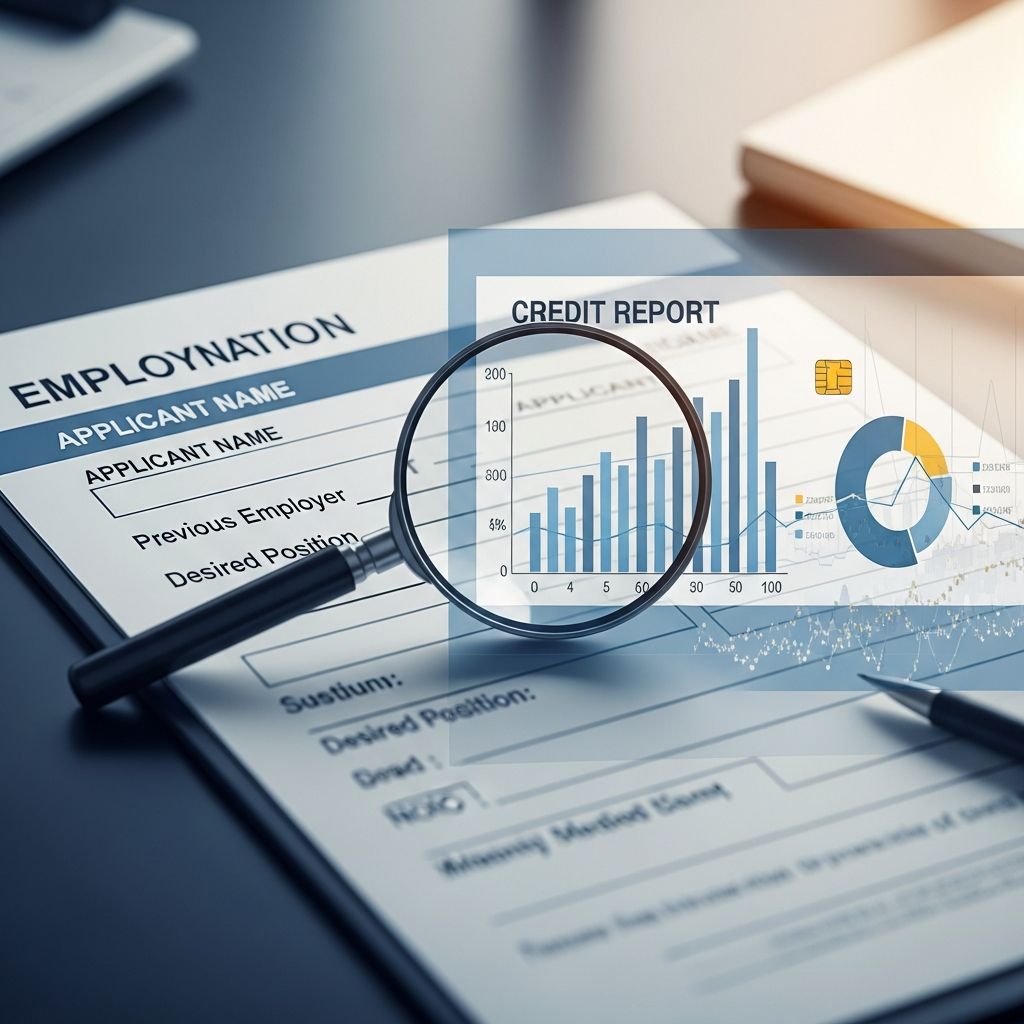
Many hiring managers pull credit reports as part of background screening to gauge a candidate’s financial reliability, particularly for roles involving money or sensitive data. This practice helps companies minimize risks like fraud or poor decision-making, though it’s regulated by federal laws and varies by state.
The Role of Credit History in Modern Hiring Practices
In today’s competitive job market, employers seek comprehensive insights into applicants beyond resumes and interviews. Credit checks serve as a tool to assess traits like responsibility and judgment, especially in positions where financial oversight is critical. For instance, industries handling cash, confidential information, or high-stakes decisions prioritize candidates with stable financial backgrounds to safeguard assets and reputation.
Statistics show that a significant portion of HR professionals incorporate financial reviews. Surveys indicate around 25% use them for specific positions, with 6% applying them universally, often alongside criminal and reference checks. This layered approach ensures thorough vetting without relying on any single metric.
When Do Companies Request Financial Background Reviews?
Not every job triggers a credit inquiry. Employers typically reserve them for roles demanding trust and fiscal acumen. Common scenarios include:
- Financial services positions like accountants, bankers, or financial advisors, where personal money management mirrors job duties.
- Government and law enforcement jobs requiring security clearances, using credit data to verify identity and reliability.
- Cash-handling roles in retail, casinos, or hospitality to predict fraud risks.
- Executive or management spots involving budgeting, contracts, or company funds.
These checks occur post-offer but pre-employment, after obtaining written consent. They form part of broader due diligence, not a standalone disqualifier.
Decoding the Contents of an Employment Credit Report
Unlike consumer credit pulls for loans, employment reports exclude your credit score to focus on behavioral patterns. Here’s what employers typically see:
| Category | Details Visible | Why It Matters |
|---|---|---|
| Personal Identifiers | Full name, address, date of birth, Social Security number | Confirms identity and detects fraud |
| Account Information | Open credit cards, loans, mortgages with balances and limits | Reveals debt levels and financial obligations |
| Payment History | On-time payments, delinquencies, late payments over 30/60/90 days | Indicates reliability and organization |
| Public Records | Bankruptcies, liens, judgments (typically within 7-10 years) | Highlights major financial setbacks |
| Inquiries and Employment Notes | Past employer listings from credit apps, recent hard inquiries | Verifies work history and application patterns |
Notably absent: credit score, salary, race, medical history, or reasons for delinquencies. Employers interpret patterns, such as chronic lates signaling stress or disorganization, potentially linked to fraud risks per fraud examiner studies.
Employer Motivations: Balancing Risk and Reliability
Companies justify credit reviews as risk mitigators. Primary goals include:
- Reducing Fraud Exposure: Financial pressure motivates occupational fraud, a top concern in high-trust roles.
- Evaluating Judgment: Consistent payments suggest sound decision-making transferable to job tasks.
- Verifying Data: Cross-checks resume accuracy via employment history on reports.
- Promoting Organizational Stability: Avoids negligent hiring claims by selecting prudent candidates.
Proponents argue this yields ‘peace of mind,’ aligning hires with company values. However, critics question efficacy, citing studies like Stanford’s showing subjective ‘moral storytelling’ over predictive power.
Legal Framework: Your Rights Under FCRA
The Fair Credit Reporting Act (FCRA) governs these checks, mandating:
- Written Consent: You must authorize the inquiry explicitly.
- Adverse Action Notice: If denied based on the report, receive a copy, explanation, and dispute rights.
- Accuracy Assurance: Employers must use certified agencies like Equifax, Experian, or TransUnion.
Violations invite lawsuits. These soft inquiries don’t harm scores, unlike hard pulls for credit products.
State-Level Restrictions and Evolving Regulations
Federal law permits checks, but states impose limits amid fairness concerns:
- California, Hawaii, Illinois, Maryland, Massachusetts, Nevada, Oregon, Vermont, Washington ban most private employer use.
- New York restricts to fiduciary roles; others like Connecticut limit non-supervisory positions.
- Over a dozen states regulate broadly, often exempting banks or government jobs.
Trends suggest expansion; monitor local laws as disparities impact hiring nationwide.
Improving Your Financial Profile for Career Edge
Proactive credit management enhances employability. Key strategies:
- Monitor Regularly: Free weekly reports at AnnualCreditReport.com; track errors.
- Pay Timely: Automate bills; retain statements proving responsibility.
- Reduce Debt: Prioritize high-interest balances; aim under 30% utilization.
- Address Issues: Dispute inaccuracies; negotiate settlements.
- Build Positively: Use secured cards or credit-builder loans if thin file.
Strong credit aids promotions, insurance rates, and loans, creating a virtuous cycle.
Common Myths and Realities of Job-Related Credit Pulls
Myth 1: All employers check credit. Reality: Limited to ~25% for targeted roles.
Myth 2: Bad credit auto-disqualifies. Reality: One factor; context like medical debt may excuse.
Myth 3: It hurts your score. Reality: Employment pulls are soft inquiries, invisible to lenders.
Myth 4: Credit predicts performance. Reality: Limited evidence; often socioeconomic proxy.
Frequently Asked Questions (FAQs)
Can any employer see my credit score?
No, employment reports omit scores, focusing on history and patterns.
How far back do credit checks look?
Most data spans 7 years for negatives, 10 for bankruptcies.
What if I have poor credit due to hardship?
Explain context during interviews; laws in some states protect.
Do credit checks appear on my report?
Yes, as non-credit inquiries, not affecting scores.
How to prepare for a potential check?
Review your report, fix errors, and maintain positive habits.
Navigating Credit Checks Strategically
Understanding employer perspectives empowers candidates. While not universal, financial responsibility signals professionalism in scrutinized fields. Combine solid credit with skills for standout applications. Stay informed on laws, as regulations evolve toward equity. Ultimately, viewing credit as a career asset motivates sustained improvement, opening doors to trusted roles.
References
- Why Bother with a Pre-employment Credit Check? — Chane Solutions. 2023-05-15. https://www.chanesolutions.com/blog/why-bother-with-a-pre-employment-credit-check
- The Hidden Career Tool: How Your Credit Can Impact Job Opportunities — Ava (MeetAva). 2024-02-20. https://www.meetava.com/blog/the-hidden-career-tool-how-your-credit-can-impact-job-opportunities
- How Do Credit Checks for Employment Work? — American Express. 2025-01-10. https://www.americanexpress.com/en-us/credit-cards/credit-intel/credit-check-for-employment/
- Pre-employment Credit Checks: What are they and why conduct one? — Xref. 2024-08-05. https://www.xref.com/blog/pre-employment-credit-checks-what-are-they-and-why-conduct-one
- Credit Checks in Employment — OnLabor (Harvard Law). 2023-11-12. https://onlabor.org/credit-checks-in-employment/
Similar Articles








Read full bio of Sneha Tete