Employee Stock Ownership Plan (ESOP): Definition and How It Works
Understanding ESOPs: How employee stock ownership plans align worker and company interests.
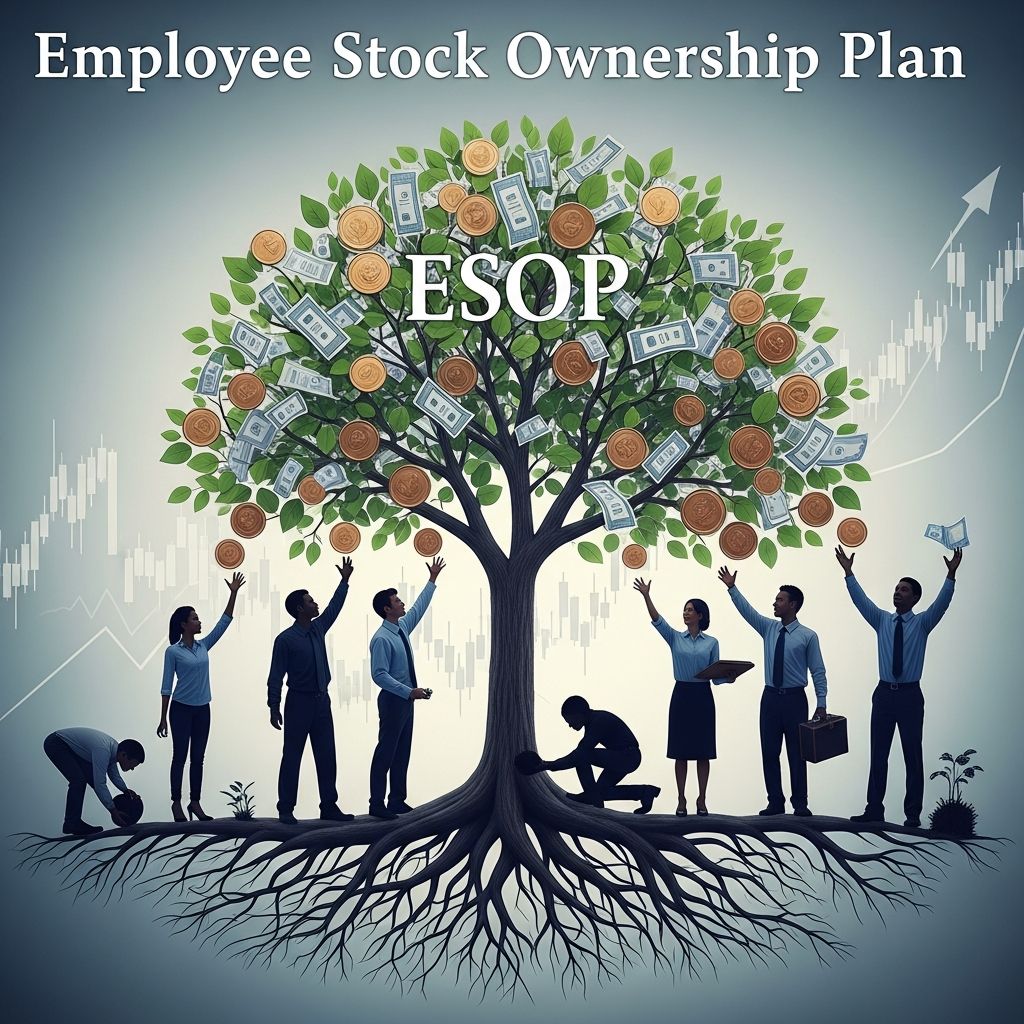
What Is an Employee Stock Ownership Plan (ESOP)?
An Employee Stock Ownership Plan, commonly abbreviated as ESOP, is a qualified defined-contribution retirement plan designed to provide employees with an ownership interest in their employer company. Unlike traditional retirement plans that invest in diversified portfolios across multiple companies and asset classes, an ESOP invests primarily in company stock, creating a direct financial link between employee wealth and corporate performance.
The fundamental purpose of an ESOP is to align the interests of employees with those of the company’s shareholders. By transforming workers into owners, ESOPs theoretically motivate employees to work toward the company’s success, since they directly benefit from improved performance through increased stock value. This ownership structure represents a significant shift in the traditional employer-employee relationship, moving beyond a simple wage-based arrangement toward a model where workers have a genuine stake in organizational outcomes.
Employee Stock Ownership Plans are subject to regulation under the Internal Revenue Code Section 401(a) and must comply with the Employee Retirement Income Security Act (ERISA), which establishes fiduciary standards, vesting requirements, and reporting obligations. These regulatory frameworks ensure that ESOP participants receive fair treatment and adequate disclosure of their ownership interests and plan operations.
How Employee Stock Ownership Plans Work
The mechanics of an ESOP involve several key components working together to facilitate employee ownership. Understanding these components is essential for both employers considering implementing an ESOP and employees participating in one.
Plan Structure and Setup
When a company establishes an ESOP, it must create an independent legal entity called an ESOP trust. This trust serves as the vehicle through which employees hold their ownership stakes. The company then contributes shares of its own stock or cash to purchase existing shares into this trust. Contributions made to the ESOP trust are typically tax-deductible up to certain regulatory limits, providing immediate tax incentives for employers.
ESOPs can be structured in two primary ways: leveraged and non-leveraged. A leveraged ESOP involves the trust borrowing funds to purchase company stock, with the borrowed amount being repaid over time. This structure enables more rapid transfer of ownership to employees and is commonly used in succession planning scenarios. A non-leveraged ESOP relies on the company making direct contributions of shares or cash to the trust over time, resulting in a more gradual accumulation of employee ownership.
Share Allocation Methods
Once shares are held in the ESOP trust, they must be allocated to individual employee accounts according to a predetermined allocation formula. The most common allocation methods are based on employee compensation, years of service with the company, or a combination of both factors. This allocation approach ensures a relatively equitable distribution while recognizing differences in employee contribution to the organization.
New employees typically begin receiving allocations only after completing a specified period of service, often one year of employment. This waiting period prevents rapid turnover from creating excessive administrative complexity and ensures that allocation benefits long-term employees who have demonstrated commitment to the company.
Vesting and Share Ownership
Vesting represents a critical component of ESOP mechanics. Vesting refers to the increasing rights employees receive to their allocated shares as they accumulate seniority within the organization. Rather than gaining immediate full ownership, employees gradually acquire ownership rights through vesting schedules established by the company. These schedules typically span three to six years, with employees gaining incremental ownership rights annually.
The vesting requirement serves multiple purposes: it incentivizes long-term employment, reduces administrative burden from frequent employee turnover, and aligns employee interests with long-term company success. Once shares are fully vested, employees have complete ownership rights to those shares.
Repurchase Obligations
When employees leave the company or retire, the ESOP must provide a mechanism for them to liquidate their holdings. Private companies are legally required to repurchase departing employees’ shares at fair market value, typically within 60 days of separation. This repurchase obligation ensures employees can realize their investment returns upon departure.
The repurchase obligation creates a significant financial consideration for companies with mature ESOPs. Companies must conduct annual stock valuations to determine fair market value, and they must maintain sufficient cash reserves or cash flow to fund repurchases when multiple employees depart, particularly when share values have appreciated substantially. Large repurchase obligations can strain company finances during periods of high employee turnover or economic difficulty.
Benefits of ESOPs for Employees
Employee Stock Ownership Plans offer multiple significant advantages for workers who participate in them.
Wealth Accumulation and Retirement Security
The primary benefit of ESOP participation is the potential for substantial wealth accumulation through stock appreciation. As the company succeeds and grows, stock value increases, directly boosting the retirement savings of participating employees. This wealth-building opportunity can provide employees with meaningful retirement security, potentially supplementing or replacing traditional pension plans that many companies have discontinued.
Employees receive their accumulated ESOP balance upon retirement or separation, valued at the fair market value of company stock at that time. For employees of successful, growing companies, this can represent a substantial retirement nest egg.
Enhanced Engagement and Involvement
Ownership creates psychological and financial incentives for employees to care about company performance. Research and practice consistently show that ESOP companies experience higher employee engagement and involvement compared to non-ESOP firms. Employees who own stakes in their companies demonstrate greater commitment to quality, efficiency, and customer satisfaction.
ESOP participants often gain increased opportunity to influence company decisions regarding products, services, and strategic direction. Many ESOP companies provide employees with more information about financial performance and strategic plans, empowering workers to make meaningful contributions to organizational success.
Improved Trust and Communication
The transparency and shared success orientation of ESOP companies typically foster improved trust between management and employees. When workers understand that management is committed to company success that benefits them directly, relationships tend to strengthen. This improved organizational culture can reduce turnover, increase productivity, and enhance overall company performance.
Benefits of ESOPs for Companies
Companies implementing ESOPs receive substantial advantages beyond improved employee relations.
Tax Advantages
One of the most compelling reasons companies establish ESOPs is the tax benefits available. Companies can deduct ESOP contributions from taxable income up to specified limits. For S corporations, the tax advantages become even more attractive, potentially allowing significant tax savings. These deductions reduce the company’s tax burden while simultaneously building employee wealth, creating mutual benefits.
Employee Retention and Productivity
ESOPs significantly improve employee retention and productivity. The financial incentive of stock ownership, combined with the psychological benefits of ownership and engagement, creates powerful motivation for employees to remain with the company and perform at high levels. Reduced turnover decreases recruitment and training costs while preserving institutional knowledge.
Improved organizational performance resulting from higher engagement directly translates to business success. As company performance improves, stock prices appreciate, creating a virtuous cycle where employee wealth increases and motivation strengthens further.
Succession Planning and Capital Transition
ESOPs provide an elegant solution for succession planning in closely held companies. Owners can gradually or completely transition ownership to employees through the ESOP, ensuring business continuity while providing personal liquidity to retiring owners. This approach preserves company culture and operations better than typical mergers or external sales.
Drawbacks and Risks of ESOPs
Despite their numerous benefits, ESOPs carry significant risks and drawbacks that both employees and companies must carefully consider.
Concentration Risk and Lack of Diversification
The most significant drawback of ESOP participation is the fundamental lack of diversification. Investment theory emphasizes the importance of spreading retirement savings across multiple companies, industries, and asset classes to minimize risk. ESOP participants concentrate their retirement savings in a single employer’s stock, violating basic diversification principles.
This concentration risk becomes particularly problematic because employees depend on the same company for both salary/wages and retirement savings. If the company encounters financial difficulties or collapses, employees face the catastrophic prospect of losing both their income and their retirement savings simultaneously. Historical examples like Enron and WorldCom dramatically illustrate this risk, where employees lost not only their jobs but also their entire retirement savings when company stock became worthless.
Limited Benefits for New Employees
ESOP structures inherently limit benefits to employees hired later in the company’s history. Employees who joined the ESOP early benefit from continuous contributions over many years, accumulating substantial holdings and voting power. In contrast, newly hired employees receive allocations starting from zero, meaning they will never accumulate as much wealth as long-term employees even in stable, successful companies.
This disparity means new employees have significantly less opportunity to influence company decisions during shareholder meetings and other governance forums. While this creates intergenerational inequity, it also reflects the reality that long-tenured employees have contributed more to company success.
Share Dilution
As new employees join the company and receive share allocations, the overall percentage ownership represented by each share decreases. This dilution reduces the voting power and percentage ownership of all ESOP participants, including long-standing employees. While share dilution is a normal part of business growth, it can diminish the ownership benefits that encouraged earlier participation in the ESOP.
Cash Flow and Repurchase Obligations
Companies must maintain sufficient cash flow to fund repurchase obligations as employees depart. In companies with mature ESOPs where many employees have accumulated substantial holdings, these repurchase obligations can create significant financial burdens. During economic downturns or periods of high employee turnover, repurchase requirements can strain company finances and potentially limit capital available for business investment.
ESOPs Compared to Other Equity Compensation Plans
| Feature | ESOP | Stock Options | Restricted Stock | Phantom Stock |
|---|---|---|---|---|
| Ownership Structure | Actual ownership in trust | Right to purchase shares | Actual shares with restrictions | Cash bonus based on appreciation |
| Immediate Ownership | Yes, with vesting | No, conditional on exercise | Yes, with vesting | No actual ownership |
| Tax Treatment | Tax-deductible contributions | Capital gains treatment | Income tax on vesting | Income tax on payment |
| Retirement Plan Structure | Yes, qualified plan | Not a retirement plan | Can be retirement plan | Not a retirement plan |
| Voting Rights | Yes, typically | No until exercised | Yes, as shareholder | No voting rights |
| Equity Dilution | Yes, significant | Yes, upon exercise | Yes, significant | No dilution |
Employee-Owned Corporations and Worker Cooperatives
Companies with majority employee ownership through ESOPs are known as employee-owned corporations. These entities share some similarities with worker cooperatives but maintain important distinctions. In worker cooperatives, capital is typically distributed more evenly among all members, whereas ESOP ownership often reflects differences in compensation and tenure, resulting in unequal ownership stakes.
This structural difference means that senior employees in ESOP companies exercise greater voting power than newer employees, reflecting their greater accumulated stake in the organization. While this creates some inequity, it also preserves traditional incentive structures that reward tenure and seniority.
Regulatory Framework and Compliance
Employee Stock Ownership Plans operate under a comprehensive regulatory framework designed to protect participant interests. The Employee Retirement Income Security Act (ERISA) establishes multiple requirements including fiduciary responsibilities, requiring trustees to act exclusively in the best interests of plan participants. ERISA also mandates diversification rights for certain retiring participants, allowing them to diversify their concentrated holdings as they approach retirement.
Vesting rules under ERISA establish minimum standards ensuring employees acquire ownership rights over time. Companies must provide regular reporting and disclosure to participants and government agencies, maintaining transparency about plan operations and participant accounts. These regulatory protections help ensure that ESOPs operate fairly and serve their intended purpose of building employee wealth.
Frequently Asked Questions About ESOPs
Q: What is the difference between an ESOP and a 401(k) plan?
A: While both are retirement plans, ESOPs invest primarily in employer company stock and are designed specifically for employee ownership, whereas 401(k) plans typically invest in diversified portfolios including mutual funds, stocks, and bonds across multiple companies. ESOPs also offer different tax advantages and legal requirements compared to traditional 401(k)s.
Q: Can public companies have ESOPs?
A: Yes, both private and public companies can establish ESOPs. However, ESOPs are more common in private companies where they serve succession planning purposes. Public company ESOPs face different regulatory considerations and voting rights implications.
Q: What happens to my ESOP shares if the company is sold?
A: If the company is sold, the ESOP typically participates in the sale proceeds based on the percentage of company stock held by the ESOP. Employees receive the fair market value of their allocated shares, though specific treatment depends on the sale structure and ESOP documentation.
Q: How often is the ESOP stock value determined?
A: Private company ESOPs must conduct annual stock valuations to determine fair market value for allocation and repurchase purposes. Public company stock values are determined by market prices. These valuations ensure proper accounting of employee wealth and compliance with repurchase obligations.
Q: Can I lose my ESOP shares?
A: Vested ESOP shares belong to you and cannot be forfeited, though their value can decrease if company stock declines. Unvested shares may be forfeited if you leave the company before vesting is complete, depending on the vesting schedule and plan provisions.
Conclusion
Employee Stock Ownership Plans represent a unique approach to retirement planning and employee compensation that aligns worker and company interests through shared ownership. For employees willing to accept concentration risk in exchange for potentially substantial wealth accumulation and enhanced engagement opportunities, ESOPs can provide meaningful retirement security. For companies seeking to improve employee retention, productivity, and succession planning while accessing tax benefits, ESOPs offer compelling advantages.
However, the significant concentration risk and potential financial burdens from repurchase obligations require careful consideration before implementation. Both employers and employees should thoroughly understand ESOP mechanics, benefits, and risks before committing to this ownership structure.
References
- Employee Stock Ownership Plans (ESOPs) — Internal Revenue Service. 2025. https://www.irs.gov/retirement-plans/employee-stock-ownership-plans-esops
- Employee Stock Ownership Plan (ESOP) – How it Works — Corporate Finance Institute. 2024. https://corporatefinanceinstitute.com/resources/career/employee-stock-ownership-plan-esop/
- Employee Stock Ownership Plan (ESOP) – Wall Street Prep — Wall Street Prep. 2024. https://www.wallstreetprep.com/knowledge/employee-stock-ownership-plan/
- What Are Employee Stock Ownership Plans (ESOPs)? — J.P. Morgan. 2025. https://www.jpmorgan.com/insights/wealth-planning/taxes/what-are-employee-stock-ownership-plans-esops
- Employee Retirement Income Security Act (ERISA) — U.S. Department of Labor. 2024. https://www.dol.gov/agencies/ebsa/about-ebsa/our-activities/resource-centers/faqs/erisa-faq
Similar Articles








Read full bio of medha deb