Email Message Closing Examples for Professional Communication
Master professional email closings with comprehensive examples for every business situation.
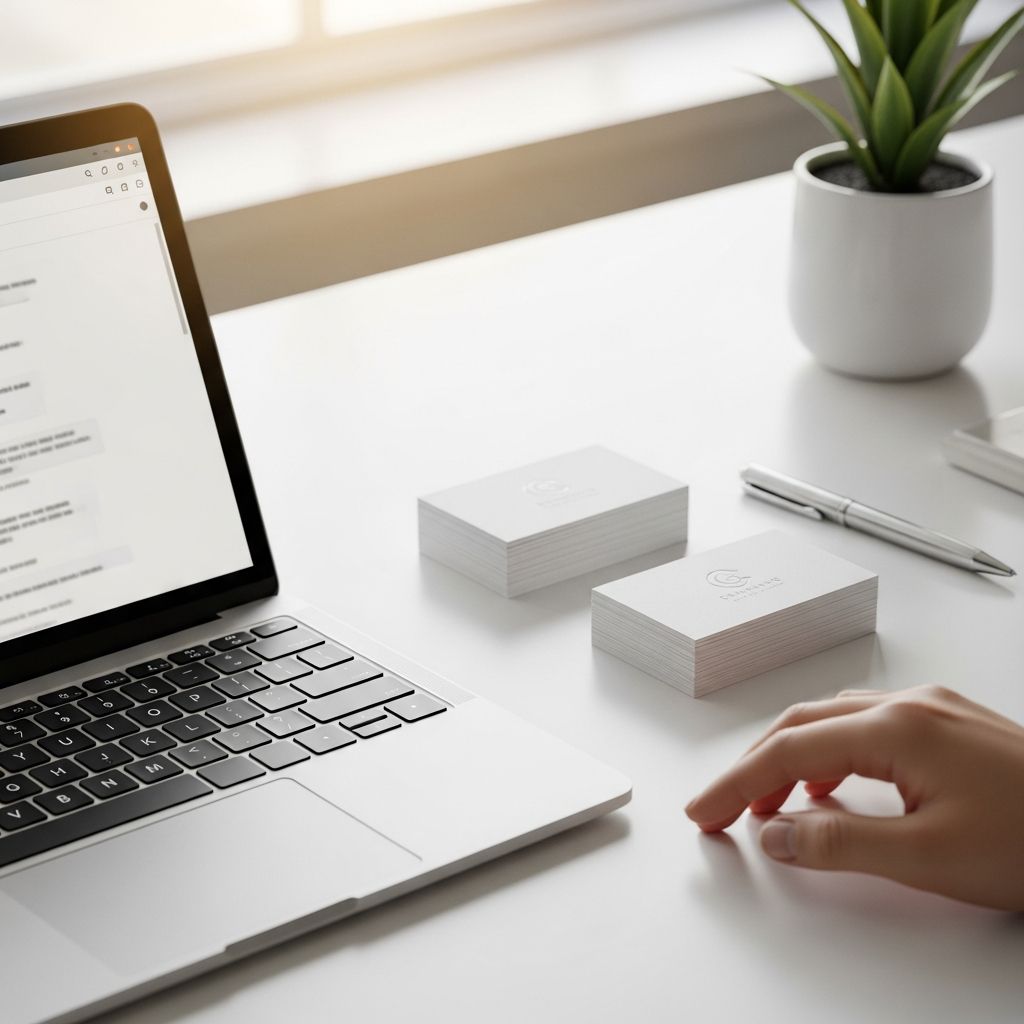
The way you close an email can significantly impact how your message is received and remembered. A well-chosen closing phrase, combined with an appropriate sign-off and signature, demonstrates professionalism, respect, and attention to detail. Whether you’re communicating with clients, colleagues, supervisors, or business partners, understanding how to properly conclude your email is essential for maintaining a positive professional image and ensuring your intended message resonates with the recipient.
Email closings serve multiple purposes in business communication. They summarize your key points, provide a clear call to action, establish the appropriate tone, and leave a lasting impression on your reader. The right closing can reinforce your credibility, build stronger relationships, and encourage the recipient to take the action you’ve requested. Conversely, an inappropriate or poorly chosen closing can undermine your entire message and damage professional relationships.
Understanding Email Structure
A professional email consists of several key components that work together to create an effective message. Understanding each element helps you craft emails that achieve your communication goals while maintaining appropriate professionalism.
The typical structure of a professional email includes the greeting, body content, closing phrase, sign-off, and signature. The closing phrase appears before your sign-off and should tie together the main points of your email while indicating what you expect from the recipient. This might be a request for feedback, confirmation of a meeting, or simply acknowledgment of information provided. The sign-off is the brief phrase or word that immediately precedes your name, such as “Sincerely” or “Best regards.” Finally, your signature should include your full name, job title, company name, contact information, and potentially links to professional social media accounts or your company website.
Formal Email Closing Phrases
Formal email closings are essential when communicating with senior management, clients, external partners, or in situations where you’ve just met the recipient. These closings maintain a professional distance while still conveying respect and competence.
When crafting formal closing phrases, incorporate specific details about next steps or express gratitude for the recipient’s time and consideration. For example, a formal closing might read: “Thank you for considering our proposal. I look forward to discussing how our solutions can address your organization’s needs.” Another effective formal closing is: “I appreciate your time and expertise on this matter. Please let me know if you require any additional information before making your decision.”
Additional formal closing phrases include statements such as “Thank you for your immediate attention to this urgent matter,” “I value your continued partnership and look forward to our future collaboration,” or “Thank you for the opportunity to present our services. We are confident in our ability to deliver exceptional results.” These phrases maintain formality while personalizing your message to the specific situation and recipient.
Formal Email Sign-Offs
The sign-off is a critical component that bridges your closing statement and your signature. A formal sign-off should be concise, professional, and appropriate for the business context. The most universally accepted formal sign-offs include:
- Sincerely – The gold standard of formal email closings, appropriate for nearly any professional situation
- Best regards – A warm yet professional option that conveys respect and positive feelings
- Kind regards – Slightly warmer than “Best regards” while maintaining formality
- Warm regards – Adds a personal touch while remaining professional
- Respectfully – Conveys high regard and deference, suitable for formal or hierarchical situations
- Regards – Simple and straightforward, universally appropriate
- Thank you – Functions as both closing phrase and sign-off, expressing gratitude
- All the best – Professional yet warm, often described as the “Oprah hug” of sign-offs
- Best wishes – Conveys positive sentiment and professionalism
- Cordially – A more traditional formal option, still effective in business contexts
Professional Sign-Offs for Different Contexts
Different professional situations call for different sign-offs. Understanding which sign-off matches each context helps you communicate more effectively and appropriately.
Business Development and Sales
When reaching out to prospects or nurturing client relationships, your closing should be engaging and forward-looking. Appropriate sign-offs include “Looking forward to connecting with you,” “Excited to explore this opportunity together,” or “Ready to help you achieve your goals.” These sign-offs convey enthusiasm while maintaining professionalism and encouraging the recipient to take the next step.
Formal Business Proposals
When submitting proposals or formal business communications, stick with traditional, conservative sign-offs such as “Respectfully,” “Sincerely,” or “Best regards.” These convey the seriousness and importance of your message and demonstrate that you understand professional standards.
Client Communications
For existing clients, you can use slightly warmer sign-offs while maintaining professionalism. Options include “Warm regards,” “Best,” “All the best,” or “Thank you.” These acknowledge the relationship you’ve built while remaining appropriately professional.
Internal Communications
When emailing colleagues or team members, you can use more casual sign-offs if the relationship and company culture permit. Options include “Best,” “Thanks,” “All the best,” or even “Cheers” if your workplace has an informal culture. However, always err on the side of professionalism unless you’re certain the recipient will appreciate a more casual tone.
Situational Email Closing Examples
Different situations require different closing strategies. Below are examples of how to close emails effectively in various professional scenarios.
Meeting Confirmation Emails
Example 1: “Thank you so much for connecting! I look forward to speaking with you on Tuesday, December 3rd at 2:00 PM. Please feel free to reach out if you need to reschedule.”
Example 2: “I’m looking forward to our meeting next week. I’ve attached the agenda and background materials for your review. Please let me know if you have any questions before we meet.”
Follow-Up Emails After Meetings
Example 1: “Thank you again for meeting with me today. I truly appreciated your insights and perspective on our proposed solution. I will send the detailed proposal by end of business Friday.”
Example 2: “I appreciate the productive discussion we had this morning. As promised, I’ve attached the resources we discussed. Please review at your convenience and let me know if you have any questions.”
Request for Decision or Action
Example 1: “I’ve sent over the marketing materials we discussed. Please review by Friday and let me know if you have any questions or would like to discuss any modifications.”
Example 2: “Your feedback on this proposal would be invaluable. Would you be available for a brief call next Tuesday to discuss your thoughts? I’m available between 10 AM and 3 PM.”
Apology or Clarification Emails
Example 1: “Please accept my apologies for the confusion regarding the project timeline. I’ve clarified the schedule and attached an updated timeline for your reference. Thank you for your patience.”
Example 2: “I apologize for any inconvenience this may have caused. I’m committed to resolving this matter promptly and would welcome the opportunity to discuss solutions.”
Information Sharing or Update Emails
Example 1: “I hope the attached report provides the information you needed. Please don’t hesitate to reach out if you require any clarification or additional details.”
Example 2: “Thank you for all the information you’ve provided. I’ll review everything thoroughly and follow up with any questions by end of week.”
Casual Email Closings
While maintaining professionalism in business settings, you can use more relaxed closings when communicating with colleagues you have strong relationships with or in companies with informal cultures. However, reserve truly casual language for interactions with friends or close colleagues where the relationship clearly permits informality.
Casual email closing options include:
- Thanks – Simple, warm, and universally acceptable in most business contexts
- Best – Friendly yet professional, works in most situations
- Cheers – Casual but still professional, popular in some industries and regions
- Take care – Warm and personable without being unprofessional
- Stay in touch – Encourages ongoing connection in a casual way
- Talk soon – Implies continued interaction, appropriate for ongoing relationships
- See you soon – Friendly and forward-looking
Email Signature Best Practices
Your email signature is the final element recipients see and plays an important role in your professional image. A well-crafted signature should include essential professional information presented in a clean, organized format.
Your signature should contain your full name, job title, company name (ideally as a hyperlink to your company website), and primary contact information such as phone number and email address. If appropriate for your industry or role, you may include links to your professional social media accounts such as LinkedIn, which helps establish your professional presence and makes it easy for recipients to connect with you or learn more about your background.
Some professionals include company logos or graphics in their signatures to reinforce brand identity. However, keep your signature relatively concise and professional. An overly elaborate signature with excessive graphics can seem unprofessional and may not display correctly across all email clients and devices. Additionally, be mindful of email size, as images in signatures can add significant file size to each email you send.
Common Mistakes to Avoid
Several common errors can undermine your professional email closing. Being aware of these mistakes helps you maintain a polished, professional image.
Avoid sign-offs that are too casual for the situation, such as “Later” or “TTYL” (talk to you later) in formal business communications. Similarly, avoid signs-offs that seem cold or dismissive, such as simply signing your first name without any closing phrase or sign-off. Don’t use sign-offs that are unclear or might confuse the recipient about your relationship or intentions.
Additionally, avoid forgetting to include a call to action in your closing phrase, especially when you expect something from the recipient. Closing an email without making clear what you want or expect from the recipient can leave them uncertain about next steps. Finally, ensure your closing is consistent with the tone of your entire email. A warm, friendly closing contradicts a formal, serious email body, while an overly formal closing might seem out of place in a casual team communication.
Personalizing Your Email Closing
The most effective email closings are personalized to reflect both the recipient and the specific situation. Generic closings lack impact and may not resonate as strongly as closings tailored to your relationship with the recipient and the context of your communication.
Consider referencing specific details from your conversation or previous interactions. For example, instead of a generic closing, you might write: “I’m excited to help you implement that efficiency plan we discussed,” which shows you were paying attention and care about the recipient’s specific needs. Similarly, personalizing by name when possible (such as addressing them in the closing phrase itself) creates a stronger sense of connection.
Matching your closing tone to your relationship with the recipient demonstrates emotional intelligence and professionalism. With someone you’ve worked with for years, a slightly warmer closing feels natural. With someone you’ve just met, maintain more formal distance. This sensitivity to context shows that you’re thoughtful and professional.
Email Closing Phrases by Purpose
Closing Phrases for Requests
- Could you please review this at your earliest convenience?
- I would greatly appreciate your feedback on this proposal.
- Would you be available for a meeting next week to discuss this further?
- Your input on this matter would be invaluable.
- I look forward to hearing your thoughts on this proposal.
Closing Phrases for Gratitude
- Thank you so much for your time and consideration.
- I truly appreciate all your help with this project.
- Thank you for the opportunity to work with you on this initiative.
- I appreciate your expertise and support throughout this process.
- Thanks again for going above and beyond to help us succeed.
Closing Phrases for Next Steps
- I will follow up with you next week regarding the details we discussed.
- Please let me know your availability for a meeting this week.
- I’ll send you the updated proposal by Friday for your review.
- I look forward to our collaboration on this exciting project.
- Let’s schedule a time to discuss how we can move forward together.
Email Closing Effectiveness Comparison
| Closing Type | Formality Level | Best Used For | Example |
|---|---|---|---|
| Sincerely | Very Formal | Formal business communications, first-time contacts | Sincerely, John Smith |
| Best regards | Formal | Professional business communications, client emails | Best regards, Sarah Johnson |
| Warm regards | Semi-formal | Established business relationships, appreciative tone | Warm regards, Michael Chen |
| Best | Casual-Professional | Colleagues, informal team communications | Best, Emily Rodriguez |
| Thanks | Casual | Internal communications, relationships with familiarity | Thanks, James Wilson |
Frequently Asked Questions
Q: What is the most professional email sign-off?
A: “Sincerely” remains the most universally professional and appropriate email sign-off for formal business communications. However, “Best regards,” “Kind regards,” and “Respectfully” are also highly professional options that work well in most business contexts.
Q: Is it acceptable to use casual closings in business emails?
A: Casual closings like “Thanks,” “Best,” or “Cheers” are acceptable in business emails when used appropriately with colleagues you have established relationships with or in companies with informal cultures. However, always use more formal closings when emailing senior management, external clients, or in first-time communications.
Q: Should I include a call to action in my email closing?
A: Yes, when appropriate. If you expect action or response from the recipient, your closing phrase should clearly indicate what you need from them. This might be a request for feedback, confirmation of a meeting, or approval to proceed with something discussed in the email.
Q: How long should my email signature be?
A: Your email signature should be concise and professional, typically including your name, job title, company name with website link, phone number, and potentially professional social media links. Keep it to 4-6 lines for optimal professionalism and readability across all devices.
Q: Can I use the same closing for all my business emails?
A: While you can develop a default sign-off that works for most situations (such as “Best regards”), it’s better to adapt your closing phrase to each specific situation and relationship. Personalizing your closing shows professionalism and consideration for the recipient.
Q: What should I avoid in email closings?
A: Avoid closings that are too casual for the situation, unclear about next steps, inconsistent with the email tone, or potentially confusing to the recipient. Also avoid generic closings without any call to action when action is needed, and always proofread to ensure proper punctuation and spelling.
References
- How to End an Email Professionally (With 30+ Examples) — Forage. 2024. https://www.theforage.com/blog/basics/how-to-end-email-professionally
- How to End an Email Professionally [+Examples] — Nicereply. 2024. https://www.nicereply.com/blog/how-to-end-email-professionally/
- Best Email Closing Lines to Seal More Deals — Callbox Inc. 2024. https://www.callboxinc.com/email-marketing/best-email-closing-lines-for-closing-deals/
- 50 Email Closing Lines That Leave Lasting Impressions — Instantly.ai. 2024. https://instantly.ai/blog/email-closing-lines/
- How to End an Email Professionally + Examples — LivePlan. 2024. https://www.liveplan.com/blog/starting/professional-email-sign-offs
- How to Close an Email – 40 Email Closing Lines, Phrases & Sentences — Maestro Labs. 2024. https://www.maestrolabs.com/how-to/email-closing-lines
- How to End an Email: The Best and Worst Email Sign-Offs — Grammarly. 2024. https://www.grammarly.com/blog/emailing/how-to-end-an-email/
Similar Articles








Read full bio of medha deb