How to Email for an Internship Recommendation
Master the art of requesting internship recommendations with professional email templates and proven strategies.
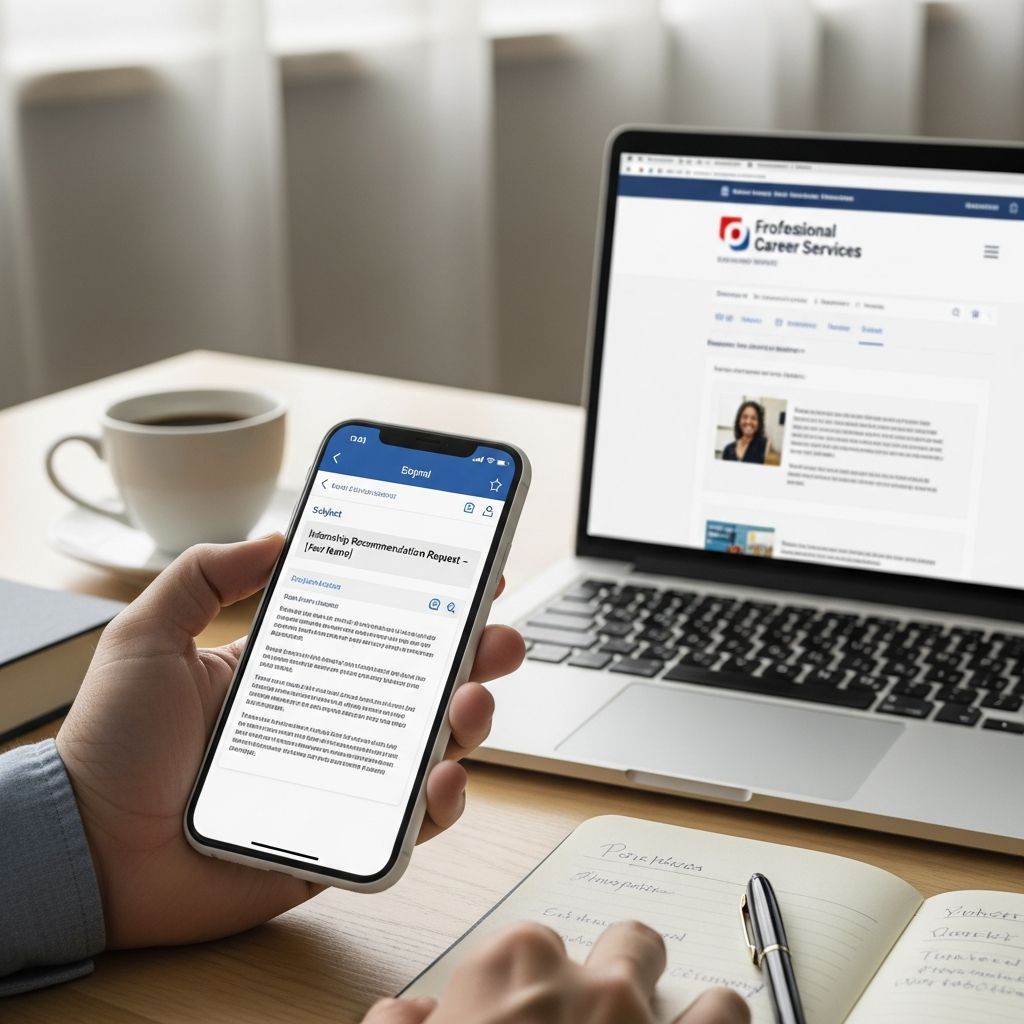
Securing an internship is a crucial step in launching your career, and one of the most effective ways to stand out is by requesting a recommendation from someone influential in your desired field. However, crafting the right email to ask for an internship recommendation requires finesse, professionalism, and strategic thinking. Whether you’re reaching out to alumni, professors, or industry professionals, this guide will walk you through the essential steps to create a compelling recommendation request email that increases your chances of success.
Understanding the Power of a Strong Internship Email
An email requesting an internship recommendation serves as your introduction to potential mentors and decision-makers. Unlike a generic job application, a well-crafted email demonstrates your initiative, professionalism, and genuine interest in the opportunity. The key is to make it easy for the recipient to help you while showing that you’ve done your homework. Research indicates that personalized outreach significantly improves response rates compared to mass emails, making the quality of your message paramount.
Step 1: Identify and Research Your Target Contacts
Before writing your email, invest time in identifying who you should reach out to. Start with your most valuable connections:
Alumni Connections
School alumni are your semi-warm contacts and should be your first point of contact. These individuals are naturally inclined to read your emails and help fellow graduates. Access your school’s alumni directory, LinkedIn’s advanced search feature, or your career center’s database to find alumni working at companies you’re interested in. Alumni are more likely to respond because they understand your educational background and share a common school affiliation.
Academic Contacts
Professors, teaching assistants, and academic advisors can be excellent sources for recommendations. They can speak to your intellectual capabilities, work ethic, and character. Consider professors whose classes you’ve excelled in or whose research interests align with your career goals.
Professional Connections
Family friends, networking contacts, and professionals you’ve met at industry events can also provide valuable recommendations. These individuals offer insights into professional environments and can speak to your potential in the workplace.
Target Company Personnel
When reaching out to specific companies, the tier of contact matters. For bulge bracket banks and large corporations, start with junior analysts and associates from your school. For smaller firms, reaching out to VPs and managing directors is more likely to yield results. Keep in mind that associates and above typically have significant influence in hiring decisions.
Step 2: Conduct Thorough Company and Role Research
Before hitting send, research the company and the specific internship role thoroughly. Read the company’s website, review their recent press releases, understand their business model, and familiarize yourself with current projects or initiatives. This research serves multiple purposes: it helps you identify the right contact person, allows you to mention specific aspects of the company in your email, and demonstrates genuine interest rather than generic mass outreach.
When you reference specific details about the company in your email, the recipient immediately recognizes that you’re not sending template emails to hundreds of people. This personal touch significantly increases response rates.
Step 3: Craft Your Subject Line
Your subject line is your first impression and determines whether your email gets opened. Keep it clear, specific, and professional:
Effective subject line examples:
– “Internship Opportunity – [Your Name], [School Name] Graduate”
– “Summer Internship Inquiry – [Your Major/Field]”
– “Introduction: Seeking Mentorship for Finance Internship”
– “Alumni Connection – [Company Name] Internship Interest”
Avoid generic subject lines like “Hello” or “Quick Question.” Your subject line should immediately convey the purpose of your email and why the recipient should open it.
Step 4: Structure Your Email Body for Maximum Impact
Opening: Establish Your Connection
Begin by introducing yourself and establishing your connection to the recipient. If they’re an alumnus, mention this immediately. If you were referred to them, explain by whom and why. This opening paragraph is critical because it explains why you’re reaching out to this specific person.
Example opening: “Dear Ms. Johnson, I’m Jane Smith, a junior at [University] studying finance. I discovered through our alumni directory that you’re a senior analyst at [Company], and I’m reaching out because I’m deeply interested in pursuing an internship in investment banking.”
Middle: Present Your Value Proposition
In the second paragraph, clearly state your objective and why you’re interested in this particular company and internship. Keep this section focused and specific. Highlight attributes of the company that genuinely excite you based on your research. Avoid generic statements about the company being “prestigious” or “well-known.” Instead, reference specific projects, business lines, or values that resonate with you.
This is also where you briefly mention your most relevant qualifications. Don’t provide your entire resume in paragraph form; instead, highlight the top two or three accomplishments or skills that directly relate to the internship. For example, if you’re applying for a finance internship, mention relevant coursework, prior finance experience, or analytical projects you’ve completed.
Example middle paragraph: “I’m particularly interested in your firm’s work in sustainable finance and infrastructure development. Your recent projects in renewable energy caught my attention, and I’m eager to develop practical experience in this sector. In my finance coursework, I’ve developed strong analytical and modeling skills, and I completed a semester-long project analyzing green bond market trends.”
Call to Action: Make Your Request Clear
Clearly state what you’re asking for. Are you requesting a recommendation for an internship application? Are you asking for advice on how to pursue an internship? Do you want an introduction to another person at the company? Be explicit and make it easy for the recipient to help you.
Example call to action: “I would greatly appreciate any guidance you could provide regarding internship opportunities at [Company], or if you’d be willing to serve as a recommendation contact for my application. I’m happy to discuss this at your convenience, and I’m flexible with scheduling.”
Closing: Professional Sign-Off
Thank the recipient for their time and consideration. Express genuine appreciation and confidence, and include your contact information. Keep the tone warm but professional.
Step 5: Keep Your Email Concise and Personalized
Busy professionals receive dozens of emails daily. Respect their time by keeping your message concise—aim for 150 to 250 words. Each sentence should serve a purpose. Eliminate unnecessary details and focus only on the most relevant information that demonstrates why you’re a compelling candidate.
Additionally, avoid mass-email indicators. Personalize every message for the specific recipient and company. Generic emails about consulting or banking opportunities get filtered out quickly, while personalized messages that demonstrate research and genuine interest receive attention.
Step 6: Decide Whether to Attach Your Resume
Including your resume in an initial cold email can seem presumptuous or aggressive. Unless you’re responding to a specific internship posting or the recipient has requested your resume, consider mentioning that it’s available upon request. You can say something like, “I’ve attached my resume for your reference” or “I’d be happy to send you my resume and any additional materials that would be helpful.” This approach gives the recipient the option without overwhelming them with unsolicited documents.
Step 7: Proofread and Perfect Your Message
Before sending, proofread your email multiple times. Check for spelling errors, grammatical mistakes, and formatting issues. Read it aloud to ensure it flows naturally. Have a trusted friend or mentor review it as well. A single typo or grammatical error can undermine your professionalism and reduce the likelihood of a positive response.
Email Template for Internship Recommendations
Subject Line: Internship Opportunity – [Your Name], [University] Class of [Year]
Email Body:
Dear [Recipient Name],
I hope this email finds you well. My name is [Your Name], and I’m a [class year] at [University] studying [major/field]. I found your profile through [source: alumni directory/LinkedIn/referral], and I’m reaching out because I’m very interested in pursuing an internship at [Company Name].
Your work in [specific area] particularly resonates with me, especially [mention specific project or initiative]. During my time at [University], I’ve developed strong skills in [relevant skills], including [specific example]. I believe these capabilities, combined with my genuine interest in [industry/field], would allow me to make a meaningful contribution to your team.
I would greatly appreciate any advice or guidance you might offer regarding internship opportunities at [Company]. If possible, I would also welcome the opportunity to briefly discuss potential career paths in [industry]. I’m flexible with scheduling and happy to work around your calendar.
Thank you so much for considering my request. I look forward to hearing from you.
Best regards,
[Your Name]
[Phone Number]
[Email Address]
[LinkedIn Profile URL]
Follow-Up Strategy After Sending Your Email
Sending the email is just the beginning. Develop a systematic follow-up strategy to maximize your results:
Timing Your Follow-Up
If you don’t receive a response within 5-7 business days, send a polite follow-up email. Keep your follow-up brief and reference your initial message. You might write: “Hi [Name], I wanted to follow up on my email from [date] regarding internship opportunities at [Company]. I remain very interested and would appreciate any guidance you could provide.”
Maintaining a Contact Log
Keep a detailed spreadsheet of all contacts you reach out to, including their names, positions, companies, email addresses, phone numbers, dates contacted, and response status. This organization helps you track your outreach efforts and ensures you follow up appropriately without being intrusive.
Phone Calls as a Complement
Consider calling the company’s main line 1-2 days after sending your email. This follows up on your message while it’s still fresh in their mind. A brief, friendly phone call can set you apart from other applicants and demonstrates your initiative and genuine interest.
Common Mistakes to Avoid
Mass Emailing Without Personalization
Recipients can tell when they’re receiving a template email. Avoid this by personalizing every message with specific details about the company and the individual.
Making Your Email Too Long
Long, rambling emails often get deleted. Be concise and respect the reader’s time.
Failing to Research the Company
Lack of research is obvious and off-putting. Always research the company thoroughly before reaching out.
Being Unclear About Your Request
Don’t make the recipient guess what you want. Be explicit about whether you’re asking for advice, a recommendation, or an introduction.
Forgetting to Proofread
Errors in spelling, grammar, or formatting reflect poorly on your attention to detail.
Frequently Asked Questions
Q: Should I include my resume in my initial email?
A: Generally, it’s better to mention that your resume is available upon request rather than attaching it unsolicited. This avoids seeming overly presumptive and keeps your initial email focused on building the relationship.
Q: How long should my email be?
A: Aim for 150-250 words. Your email should be long enough to demonstrate genuine interest and provide context, but concise enough to respect the recipient’s time.
Q: What if I don’t know anyone at the company?
A: Use LinkedIn and your school’s alumni directory to find connections. Even distant alumni connections are valuable. If you truly have no connections, research the company thoroughly and reach out to entry-level staff or HR, explaining your interest in the company.
Q: How many times should I follow up?
A: Send one polite follow-up email after 5-7 days if you don’t receive a response. After that, assume they’re not interested and move on to other prospects.
Q: What if my email gets no response?
A: Don’t be discouraged. Response rates to cold emails vary. Continue reaching out to other contacts, and consider whether your message needs adjustment based on the lack of response.
Q: Should I mention specific internship postings?
A: Yes, if applicable. Reference the specific internship posting, include the reference number, or provide a link. This shows you’re responding to a concrete opportunity, not just exploring vaguely.
Conclusion: Making Your Email Stand Out
Successfully requesting an internship recommendation via email requires a combination of thorough research, personalization, professionalism, and strategic follow-up. By following the framework outlined in this guide, you significantly increase your chances of receiving a positive response. Remember that most professionals are willing to help when they see genuine interest and effort. Your personalized, well-researched email demonstrates both, positioning you as a serious candidate worthy of their time and support. Start identifying your target contacts today, craft thoughtful, personalized messages, and take the next step toward securing that valuable internship experience.
References
- Cold Emailing for Internship — Wall Street Oasis. https://www.wallstreetoasis.com/forum/job-search/cold-emailing-for-internship
- Asking for an Internship via Email: Steps, Examples, and Templates — The Muse. https://www.themuse.com/advice/ask-for-an-internship-email-examples
- Internship Cover Letter Template: How To Write + Tips — Corporate Finance Institute. https://corporatefinanceinstitute.com/resources/career/internship-cover-letter/
Similar Articles








Read full bio of medha deb