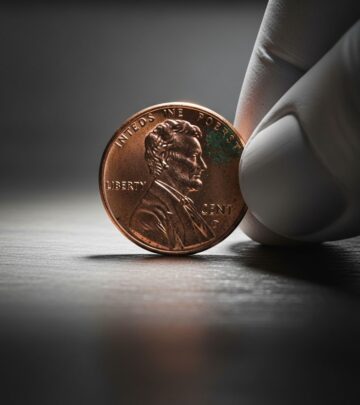
Should the U.S. Eliminate the Penny? Arguments For and Against
Examining the economic case for retiring the penny and the arguments for keeping it in circulation.

The Case for Eliminating the Penny: An Economic Analysis
The discussion surrounding the elimination of the U.S. penny has gained significant momentum in recent years, particularly following recent directives from the Trump administration to the Treasury Department. While the penny has been a staple of American currency since 1793, its continued production has become increasingly contentious due to fundamental economic inefficiencies. The core argument for retiring the penny centers on a straightforward but compelling reality: it costs the federal government significantly more to produce and distribute pennies than their actual face value.
The Production Cost Problem
The most compelling economic argument for eliminating pennies lies in production costs. According to the 2024 U.S. Mint annual report, the federal government produced approximately 3.2 billion pennies with a production cost of 3.7 cents per penny. This means that taxpayers essentially subsidize each penny produced, paying more than the coin’s actual value. The total cost to produce these 3.2 billion pennies reached $117 million, while their combined face value amounted to only $31.7 million—a staggering loss of approximately $85.3 million annually. Notably, the U.S. Mint itself has acknowledged this inefficiency and recommended curtailing penny production because of these mounting costs.
According to a third-party analysis cited by the U.S. Mint, reducing penny production could potentially save the government up to $100 million per year. This substantial savings could be redirected toward other essential government functions or deficit reduction. When examined over a decade, such savings accumulate to approximately $1 billion, making the case for penny elimination increasingly difficult to ignore from a fiscal responsibility perspective.
The Opportunity Cost Argument
Beyond direct production costs, economists present another compelling argument based on opportunity cost. Americans earn approximately one cent every two seconds, according to economic analyses. This calculation demonstrates that if it takes longer than two seconds to use a penny in a transaction—which it typically does—the time spent handling the coin exceeds the value of the penny itself. When viewed through this lens, pennies represent a waste of human capital and economic efficiency. Multiplied across millions of daily transactions nationwide, the cumulative time loss constitutes a significant hidden cost to the economy.
Environmental Considerations
The environmental impact of penny production represents an often-overlooked argument for elimination. Producing 3.2 billion pennies annually requires substantial natural resources, including metals and energy. Discontinuing penny production would reduce resource consumption and the environmental footprint associated with mining, processing, and manufacturing. While not the primary argument, environmental benefits serve as an important secondary consideration in the broader case for penny retirement.
Declining Circulation and Modern Commerce
The U.S. Mint has identified another critical issue: a substantial percentage of low-denomination coins already in circulation struggle to circulate effectively. Modern commerce has fundamentally transformed with the rise of electronic and cashless payment systems. Toll booths, laundromats, transit systems, parking meters, and casinos—historically major coin users—increasingly accept electronic payments, credit cards, and mobile payment applications. This shift has dramatically reduced the demand for physical coins, particularly low-value denominations like the penny.
Approximately 240 billion pennies currently exist in circulation, equating to roughly 700 pennies per American. However, these coins rarely move through commerce efficiently. Instead, they accumulate in penny jars, junk drawers, couch cushions, and leave-a-penny-take-a-penny dishes at retail counters. This hoarding behavior necessitates the continuous production of billions of new pennies annually, as retailers must request penny rolls from banks to make change—a vicious cycle that perpetuates waste.
Arguments Against Penny Elimination: Consumer and Social Concerns
Despite the compelling economic arguments for penny elimination, significant opposition exists, grounded in legitimate concerns about consumer impacts and broader economic effects. These arguments merit careful consideration in any comprehensive analysis of penny elimination.
Rounding and Price Increases
One of the primary concerns raised by penny elimination opponents centers on rounding practices. When prices must be rounded to the nearest nickel—a necessary consequence of eliminating pennies—consumers could potentially experience modest price increases on certain purchases. For example, a price ending in $.01, $.02, $.06, or $.07 would round up to the nearest nickel, adding cost to transactions. Critics argue that while individual rounding effects may seem negligible, the cumulative impact across millions of transactions could burden consumers, particularly those making frequent small purchases.
Impact on Unbanked and Underbanked Populations
A significant portion of the American population remains unbanked or underbanked, relying primarily on cash transactions for daily commerce. These individuals, including low-income families and those in rural areas with limited banking access, would face particular challenges if pennies disappeared from circulation. Eliminating the penny effectively removes a pricing mechanism that allows consumers to make purchases at precise price points. For vulnerable populations operating with limited financial margins, even small increases resulting from rounding could prove burdensome over time.
The Slippery Slope Concern: The Nickel Question
Critics raise an important concern: if pennies are eliminated based on production cost inefficiency, what prevents the same logic from applying to nickels? Each nickel costs approximately 13.8 cents to produce—significantly more than the penny’s production cost. This raises the philosophical question: where does cost-based currency elimination end? Some opponents worry that penny elimination represents the first step in a gradual process of eliminating low-denomination coins entirely, potentially disadvantaging consumers who prefer to use cash over digital payment methods.
Transition Challenges and Practical Implementation
The logistics of eliminating pennies from circulation present practical challenges. Hundreds of billions of pennies currently exist in the monetary system. While the government could stop producing new pennies, existing pennies would remain legal tender for an extended transition period. The practical implementation of rounding procedures, coordination among retailers, and public education about the transition would require substantial effort and coordination. Different retailers might implement rounding inconsistently, creating consumer confusion during the transition period.
International Precedents and Global Perspectives
Examining how other nations have handled low-denomination coin elimination provides valuable insights for the U.S. debate. Several countries have successfully retired their lowest-value coins without experiencing significant economic disruption.
Canada’s Penny Elimination Experience
Canada provides the most relevant international precedent for U.S. penny elimination. The Canadian government ceased minting pennies in 2012 and discontinued their use entirely in 2013. The transition proceeded relatively smoothly, with businesses adapting rounding procedures and consumers adjusting to conducting cash transactions with nickels as the lowest denomination. Canadian retailers implemented consistent rounding practices, with most adopting “round to the nearest nickel” protocols for cash transactions while maintaining exact pricing in electronic systems.
The Canadian experience demonstrates that penny elimination does not create the economic chaos that some opponents predict. Consumer purchasing power remained intact, and the efficiency gains aligned with economic projections. Canada’s successful transition suggests that similar implementation in the United States could proceed smoothly with adequate preparation and coordination.
International Trends in Low-Denomination Coin Elimination
Beyond Canada, numerous other nations have eliminated their lowest-value coins. Many European countries reduced their coin denominations following currency conversions during the Euro transition. These experiences consistently show that when lowest-value coins are retired, the next-lowest denomination naturally assumes greater circulation, and the economy adapts without significant disruption.
The Nickel Dilemma and Future Currency Reform
An important consideration in the penny debate involves understanding the relationship between penny elimination and potential future currency reforms affecting other low-value coins.
Why Nickels Stay in Circulation
Despite the fact that nickels cost more to produce than pennies, nickels actually circulate more effectively. In 2024, the U.S. Mint produced only 113 million nickels compared to 3.2 billion pennies. This dramatic difference reflects a crucial behavioral pattern: consumers maintain nickels in their wallets and purses for actual use in transactions, while pennies end up discarded or hoarded. Nickels represent approximately one per every three Americans, while pennies exceed 700 per capita. This circulation efficiency partially justifies continued nickel production despite higher per-unit costs.
The Long-Term Timeline for Low-Denomination Reform
Eliminating the penny does not necessarily signal imminent nickel elimination. Historically, currency denominations remain in circulation far longer than production economics might suggest. The United States eliminated the half-penny in 1857—more than 160 years ago—yet the penny remained in production ever since. This extended timeline suggests that while the nickel may eventually become inefficient, its retirement likely lies decades in the future. As inflation erodes purchasing power, eventually even the nickel will become economically unjustifiable, but this transition would occur only when consumer behavior and economic conditions warrant such action.
Current Policy Developments and Treasury Direction
Recent policy developments have accelerated the penny elimination discussion from theoretical debate to practical consideration. In February 2025, President Trump directed the U.S. Treasury Department to cease penny production, citing the inefficiency of minting coins that cost more than their face value. The Treasury subsequently made its final order of penny blanks, with the U.S. Mint set to continue manufacturing pennies only while existing blank inventory remains.
This represents a significant policy shift from treating penny production as inevitable to treating it as discretionary and inefficient. The Treasury’s decision acknowledges the fundamental economic reality that penny production represents wasteful government spending that contradicts principles of fiscal responsibility.
Industry Perspectives and Stakeholder Positions
Various stakeholders have expressed distinct perspectives on penny elimination based on their particular interests and operational considerations.
Retail and Convenience Industry Support
Convenience stores and retail merchants have generally supported penny elimination efforts. The National Association of Convenience Stores has previously agreed that eliminating the penny could improve transaction efficiency. As retail operations emphasize speed of service, even minor improvements in transaction time provide operational benefits. Additionally, the elimination of penny hoarding would reduce retailers’ need to request penny rolls from banks, simplifying cash management procedures.
Opposition from Coin Supply Industries
Predictably, entities with financial interests in continued penny production oppose elimination. The Americans for Common Cents trade group, funded primarily by Anzac—the company supplying blanks for penny production—actively advocates for penny retention. These industry representatives argue that penny elimination would require increased nickel production to fill the currency void, though historical data from other countries suggests this replacement production would be substantially lower than current penny volumes.
Frequently Asked Questions About Penny Elimination
Q: Will the penny be immediately removed from circulation if production stops?
A: No. Eliminating penny production does not mean existing pennies cease to be legal tender. The transition would likely occur gradually, with existing pennies remaining usable in commerce while new pennies stop being produced. Over time, circulation would deplete the existing penny supply through loss, hoarding, and wear, effectively phasing out the coin naturally.
Q: How would rounding work without pennies?
A: Cash transactions would round to the nearest nickel. Prices ending in $.01–$.02 would round down to $.00, while prices ending in $.03–$.07 would round up to $.05. Electronic transactions would continue to use exact pricing. This system has functioned successfully in countries like Canada.
Q: Would penny elimination cause significant inflation?
A: No. Rounding effects in countries that eliminated low-value coins have been negligible, with any pricing impact averaging less than 0.1%. The psychological perception of rounding sometimes exceeds the actual financial impact on consumers.
Q: What happens to existing penny hoards?
A: Existing pennies would remain legal tender indefinitely, though many currently hoarded pennies would likely never return to circulation. Individuals could exchange pennies at banks at their face value or donate them to charity, but there is no mandatory redemption deadline.
Q: Could penny elimination occur without Federal legislation?
A: While Congressional legislation would provide clearer authority for elimination, the Treasury Department already possesses discretionary authority over coin production decisions. The current directive to cease penny minting operates within executive authority, though legislation would solidify the policy.
References
- Is It Time to Retire the Penny? — Baker Institute for Public Policy. 2025. https://www.bakerinstitute.org/research/it-time-retire-penny
- The Treasury Unveils Its Plan to Kill the Penny — KSL News. 2025. https://www.ksl.com/article/51317903/the-treasury-unveils-its-plan-to-kill-the-penny
- Why Eliminating the Penny Makes Sense — Wake Forest University News. February 13, 2025. https://news.wfu.edu/2025/02/13/why-eliminating-the-penny-makes-sense/
- 2024 United States Mint Annual Report — U.S. Mint. 2024. https://www.usmint.gov/about/production-sales-figures/circulating-coins-production
Similar Articles








Read full bio of Sneha Tete