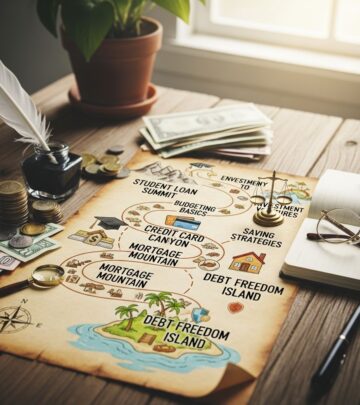
Eliminate Credit Card Debt: Complete Step-By-Step Roadmap
Discover proven strategies to pay off credit card debt faster, from budgeting basics to advanced tactics like balance transfers and consolidation.

Credit card debt affects millions, often growing due to high interest rates that compound quickly if only minimum payments are made. Taking control starts with understanding your balances, rates, and creating a structured plan to reduce them systematically. This guide outlines actionable steps, from foundational budgeting to sophisticated repayment tactics, helping you regain stability.
Assess Your Financial Situation Thoroughly
Begin by compiling a complete inventory of your debts. List every credit card, including the outstanding balance, annual percentage rate (APR), and minimum monthly payment required. This snapshot reveals the total debt load and identifies which accounts accrue the most interest.
Track your monthly income from all sources, such as salary, freelance work, or side gigs. Then, categorize expenses into essentials like housing and food, discretionary spending like entertainment, and irregular costs like car repairs. Tools like spreadsheets or apps simplify this process, providing clarity on surplus funds available for debt reduction.
- Gather statements from all cards to note due dates and avoid late fees.
- Calculate your debt-to-income ratio by dividing total monthly debt payments by gross income.
- Identify high-interest debts (typically over 15-20% APR) as primary targets.
Build a Budget Tailored for Debt Elimination
A solid budget prioritizes debt repayment without sacrificing necessities. Adopt the 50/30/20 framework: allocate 50% of after-tax income to needs, 30% to wants, and 20% to savings and extra debt payments. Adjust as needed if debt urgency demands more from the ‘wants’ category.
Review spending habits critically. Common areas for cuts include dining out, subscriptions, and impulse buys. Redirect these savings directly to debt. For instance, skipping daily coffee could free up $100 monthly for payments.
| Budget Category | Percentage | Example Monthly Allocation ($4,000 Income) |
|---|---|---|
| Needs (rent, utilities, groceries) | 50% | $2,000 |
| Wants (entertainment, dining) | 30% | $1,200 |
| Savings/Debt | 20% | $800 |
Automate payments to ensure consistency, starting with minimums on all accounts to maintain good credit standing, then applying extras strategically.
Choose the Right Repayment Strategy
Two popular methods dominate: the debt snowball and avalanche. Each suits different motivations, balancing psychological wins with mathematical efficiency.
Debt Snowball: Build Momentum with Quick Wins
This approach orders debts from smallest to largest balance, ignoring interest rates initially. Make minimum payments on all, but direct extra funds to the tiniest balance. Once cleared, roll that full payment to the next smallest.
The psychological boost from early successes keeps motivation high, ideal for those with multiple small debts. Though it may cost more in interest long-term, the momentum often leads to faster overall payoff.
- Example: $500 card (paid off in 2 months), then add to $2,000 card.
- Best for: Beginners needing encouragement.
Debt Avalanche: Maximize Savings on Interest
Conversely, list debts by highest to lowest APR. Target the costliest first with extra payments while covering minimums elsewhere. After payoff, advance to the next highest rate.
This minimizes total interest paid, suiting analytical minds focused on efficiency. It’s mathematically superior for high-rate debts but requires patience as initial progress may feel slow.
- Example: 24% APR card first, even if balance is large.
- Best for: Larger debts with varying rates.
| Method | Focus | Pros | Cons |
|---|---|---|---|
| Snowball | Smallest balance | Motivational quick wins | Potentially higher interest costs |
| Avalanche | Highest interest | Saves money overall | Slower visible progress |
Leverage Balance Transfers for Interest Relief
Shift high-rate balances to a new card offering 0% introductory APR, typically 12-21 months. This pauses interest accrual, directing all payments to principal reduction.
Fees of 3-5% apply, so calculate savings carefully. Ensure payoff before promo ends to dodge retroactive rates. Maintain discipline to avoid new charges on the card.
- Shop for longest 0% periods and lowest fees.
- Ideal if you can commit $500+ monthly.
Explore Debt Consolidation Options
Combine multiple cards into one loan or card with lower rates. Personal loans often feature fixed rates (8-15%) below credit card averages (20%+), simplifying to a single payment.
Benefits include predictable terms, potential credit score improvements from reduced utilization, and easier budgeting. Qualify based on creditworthiness; improve scores first if needed.
- Debt consolidation loan: Fixed payments, set end date.
- Home equity options: Lower rates but risk of asset loss.
Increase Income and Accelerate Payoff
Boost cash flow through side hustles like ridesharing, freelancing, or selling items. Even $200 extra monthly halves payoff time on average debts.
Negotiate rates with issuers; loyalty can yield reductions of 2-5%. Avoid new debt by using cash/debit for purchases.
Monitor Progress and Adjust as Needed
Track monthly via apps or spreadsheets, celebrating milestones like zeroing a card. Reassess if life changes occur, switching methods if snowball loses steam.
Build emergency savings (3-6 months expenses) post-debt to prevent relapse. Credit counseling from nonprofits offers free plans if overwhelmed.
Frequently Asked Questions
What’s the fastest way to pay off credit card debt?
Combine avalanche method with extra payments from budget cuts and side income for quickest results.
Does paying off one card help my credit score?
Yes, lowering utilization boosts scores, especially if total debt drops significantly.
Should I close paid-off accounts?
Keep open to maintain credit history length and utilization ratio; use sparingly.
Can I pay off debt while building savings?
Prioritize high-interest debt (>7%) over low-yield savings, but save $1,000 emergency fund first.
What if I can’t afford minimum payments?
Contact issuers for hardship programs or seek nonprofit counseling immediately.
References
- How to Pay Off Credit Card Debt: Fast & Long-Term Strategies — UMCU. 2023. https://www.umcu.org/learn/resources/blogs/how-to-pay-off-credit-card-debt
- Strategies for Debt Repayment — UMassFive.coop. 2024. https://umassfive.coop/its-money-thing/strategies-debt-repayment
- 5 Debt Repayment Strategies That Could Change Your Life — Navy Federal Credit Union. 2025-02-01. https://www.navyfederal.org/makingcents/credit-debt/debt-repayment-strategies.html
- 5 Strategies for Paying Off Credit Card Debt — Baird Wealth. 2022-08-01. https://www.bairdwealth.com/insights/wealth-management-perspectives/2022/08/5-strategies-for-paying-off-credit-card-debt/
- How to get out of credit card debt faster — Bank of America Better Money Habits. 2024. https://bettermoneyhabits.bankofamerica.com/en/debt/how-to-pay-off-credit-card-debt-fast
Similar Articles








Read full bio of Sneha Tete