Electronic Retailing (E-Tailing): Definition and Overview
Complete guide to e-tailing: Learn how businesses sell products online to consumers and other businesses.
What Is Electronic Retailing (E-Tailing)?
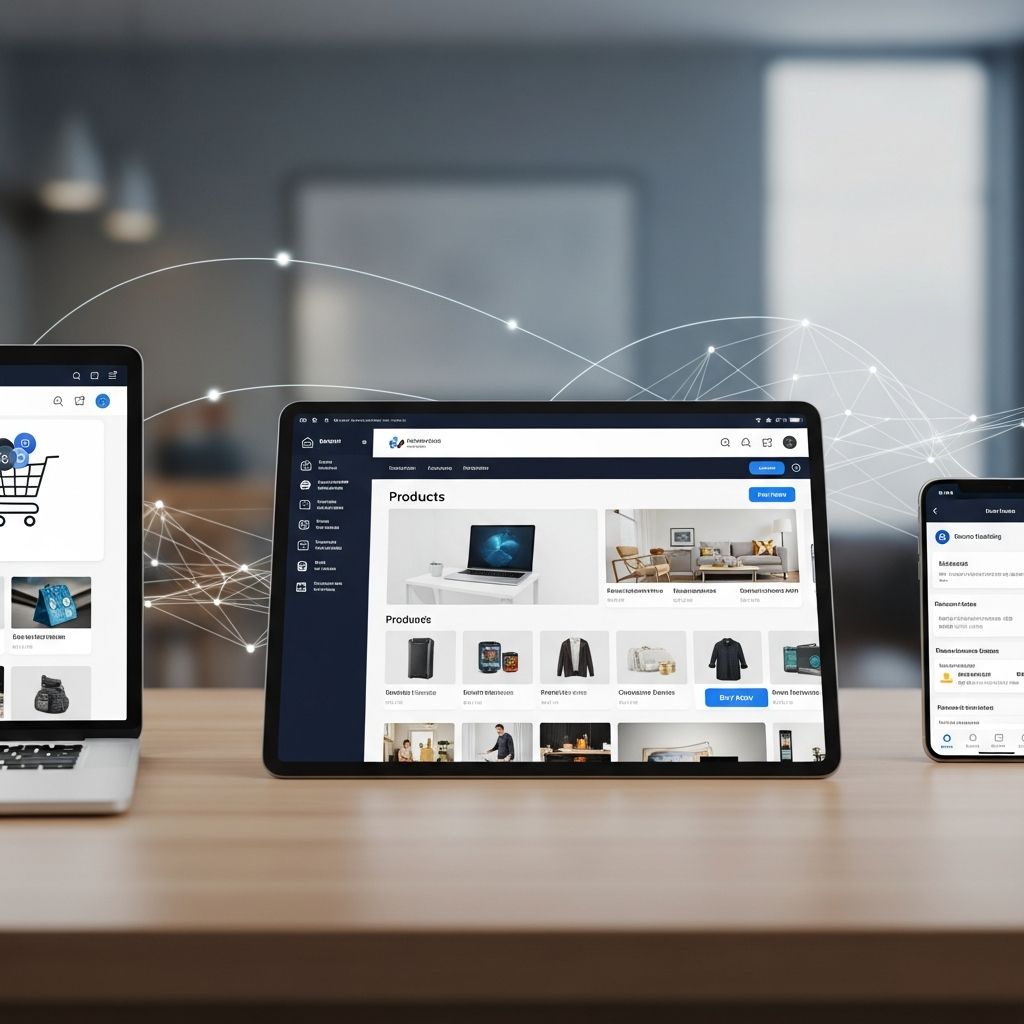
Electronic retailing, commonly abbreviated as e-tailing, is an internet-based sales platform where consumers and businesses can buy and sell goods and services online without the necessity of physical inspection before purchase. Unlike traditional brick-and-mortar retail establishments, e-tailing operates entirely or partially through digital channels, allowing organizations to reach customers globally and operate continuously, 24 hours a day, seven days a week. E-tailing represents a fundamental shift in how commerce is conducted in the modern economy, combining technological infrastructure with customer service delivery to create seamless online shopping experiences.
When retailing is conducted completely or primarily online, organizations face numerous distinct challenges and opportunities when constructing their business models. These challenges range from managing complex supply chains to ensuring secure payment processing and maintaining customer satisfaction across digital platforms. Despite these hurdles, e-tailing has become increasingly essential for businesses of all sizes, from small startups to multinational corporations seeking to capitalize on the growing trend of online shopping.
Understanding the Relationship Between E-Commerce and E-Tailing
It is important to distinguish between e-commerce and e-tailing, as these terms are often used interchangeably but have specific meanings. E-commerce, or electronic commerce, is a broader term that encompasses all commercial transactions conducted over the internet, including the buying and selling of products and services, online financial transactions, supply chain management, and digital marketing activities. E-tailing, conversely, is a more focused subset of e-commerce that specifically refers to the online retail sale of physical products directly to consumers through websites, mobile applications, and social media platforms.
Think of e-commerce as the umbrella concept that covers all digital commercial activities, while e-tailing is one specific branch focused exclusively on retail product sales to end consumers. This distinction is crucial for businesses developing their digital strategy, as understanding which category their operations fall under helps determine the appropriate tools, platforms, and business models to implement.
Core Types of E-Tailing Transactions
Regardless of whether transactions occur online or in person, two specific subcategories of transactions dominate the electronic retailing landscape: Business-to-Business (B2B) and Business-to-Consumer (B2C) transactions. Each category carries different implications and requires distinct business model adjustments when conducted in the electronic retailing environment.
Business-to-Consumer (B2C) E-Tailing
Business-to-Consumer e-tailing transactions occur when a consumer purchases a product or service directly from a business’s website. Common examples include purchasing shoes from a sports apparel company’s website, buying electronics from a technology retailer, or ordering books from an online bookstore. In B2C e-tailing, the business model must be specifically tailored to meet consumer expectations and demands.
Consumers engaging in B2C e-tailing are typically very demanding and expect several key elements: fast delivery times, products that match online descriptions in quality and appearance, competitive pricing, ease of navigation on the website, and responsive customer service. Successful B2C e-tailers invest heavily in user experience design, high-quality product photography, detailed product descriptions, customer reviews and ratings, and efficient logistics networks to fulfill these expectations. Payment security and return policies also play critical roles in B2C success, as consumers need assurance that their transactions are safe and that they have recourse if products do not meet their expectations.
Business-to-Business (B2B) E-Tailing
Business-to-Business e-tailing occurs when one business purchases products or services from another business’s website, either for its own operational use or as components in its own products or services. The B2B e-tailing model differs significantly from B2C because different priorities and considerations apply in business-to-business relationships.
When businesses purchase wholesale products online, they typically buy large quantities of goods and require fast shipping, high product quality, and reasonable pricing. The wholesale business model emphasizes bulk order discounts, rapid fulfillment capabilities, and ensuring that goods arrive undamaged and ready for immediate use or incorporation into manufacturing processes. B2B e-tailers must prioritize reliability, consistency, and the ability to handle volume orders while maintaining profitability. Factors such as payment terms, supply chain transparency, technical support, and long-term relationship building become increasingly important in B2B e-tailing compared to B2C interactions.
E-Tailing Business Models and Categories
E-tailing businesses operate under different structural models, each with distinct characteristics and operational requirements. Understanding these models helps entrepreneurs and existing businesses determine which approach best aligns with their capabilities, resources, and market objectives.
Pure Play E-Retailers
Pure play e-retailers are businesses that operate exclusively online without physical store locations. These companies conduct all their retail operations through digital platforms, including websites, mobile applications, and social media channels. Examples of pure play e-retailers include Amazon, AliExpress, Alibaba, and drop-shipping businesses. Pure play e-retailers have revolutionized retail by eliminating the overhead costs associated with maintaining physical storefronts while reaching global markets instantly. Amazon, in particular, has demonstrated the viability and profitability of the pure play e-tailing model, growing from an online bookstore to a comprehensive marketplace selling virtually every product category.
Brick and Click E-Tailers
Brick and click e-tailers represent a hybrid business model where companies maintain both physical brick-and-mortar stores and robust online e-tailing operations. This omnichannel approach allows customers to shop through multiple channels, whether visiting physical locations or purchasing online. Prominent examples of brick and click e-tailers include Apple, Foot Locker, and Sport Chek. This model offers significant advantages, including the ability to serve customers through their preferred shopping channels, leverage physical stores for product displays and customer service, and use locations for inventory management and order fulfillment. Brick and click retailers can also offer services like in-store pickup for online orders or online purchase with in-store return options, creating seamless customer experiences that drive loyalty and repeat purchases.
How E-Tailing Operations Work
Successful e-tailing operations involve multiple interconnected components that must work seamlessly together to provide customers with smooth shopping experiences. Understanding these operational elements is essential for anyone involved in launching or managing an e-tailing business.
Creating an Online Store
The foundation of any e-tailing operation is a functional, user-friendly online store. E-tailers build websites or applications to showcase their products in an organized, visually appealing manner. Modern platforms like Shopify, WooCommerce, BigCommerce, and others provide easy-to-use templates and editors that help businesses set up customized online storefronts without requiring extensive coding experience or technical knowledge. These platforms typically include drag-and-drop builders, responsive design templates, mobile optimization, and integration with payment gateways and inventory management systems.
Product Listings and Descriptions
E-tailers create detailed product listings by uploading high-quality photographs, comprehensive descriptions, accurate pricing, and real-time inventory details. Clear, professional images from multiple angles and informative descriptions that address customer questions about materials, dimensions, features, and specifications significantly influence purchase decisions. Customer reviews and ratings provide social proof that builds trust with potential buyers. E-tailers who invest in quality product presentation and transparent information typically experience higher conversion rates and lower return rates compared to competitors with minimal product information.
Inventory Management
E-tailers must maintain sophisticated inventory management systems to track stock levels across all locations, prevent overselling, and ensure products are available when customers want to purchase them. Real-time inventory tracking prevents the frustration of customers attempting to purchase out-of-stock items. Modern e-tailing platforms can manage inventory across multiple warehouses, automate reorder points, and integrate with suppliers to facilitate efficient supply chain management. Effective inventory management directly impacts customer satisfaction, operational efficiency, and profitability.
Shopping Cart and Checkout Process
The shopping cart functionality allows customers to accumulate items they wish to purchase before completing their transaction. The checkout process requires customers to enter shipping details, billing information, and payment method. Streamlined checkout processes with minimal required fields, guest checkout options, and multiple payment method support reduce cart abandonment rates. Security measures must be prominently featured to assure customers that their personal and financial information is protected.
Payment Processing and Security
Secure payment processing is critical in e-tailing operations. In 2023, nearly 3% of global e-commerce revenue was lost to payment fraud, emphasizing the importance of robust security measures. E-tailing platforms must integrate payment gateways that support multiple payment methods including credit cards, debit cards, digital wallets, and alternative payment options. These systems must encrypt sensitive financial information, comply with industry standards like PCI DSS (Payment Card Industry Data Security Standard), and implement fraud detection mechanisms to protect both businesses and consumers.
Advantages of E-Tailing
E-tailing offers numerous benefits for businesses seeking to expand their market reach and improve operational efficiency. Understanding these advantages helps businesses make informed decisions about implementing or expanding their e-tailing operations.
Lower Infrastructure Costs
E-tailing eliminates or significantly reduces costs associated with maintaining physical retail locations, including rent, utilities, property taxes, and in-store staffing for sales and customer service. This lower overhead structure allows businesses to offer more competitive pricing while maintaining or improving profit margins compared to traditional retail operations.
24/7 Sales Availability
Unlike brick-and-mortar stores with limited operating hours, e-tailing platforms operate continuously, allowing customers to shop at their convenience regardless of time zone or local business hours. This constant availability expands the potential customer base and accommodates consumers’ increasingly demanding expectations for round-the-clock access to shopping.
Global Market Access
E-tailing enables businesses to reach customers worldwide without the logistical complexity and expense of opening physical stores in multiple locations. Small businesses can compete globally with large multinational corporations by leveraging digital marketing and efficient shipping networks.
Data Analytics and Consumer Insights
E-tailing platforms capture detailed data about customer browsing behavior, purchase history, preferences, and shopping patterns. This information enables businesses to understand their customers more intimately, personalize marketing efforts, optimize product offerings, and improve overall customer experience. Analytics also help identify trends, forecast demand, and make data-driven business decisions.
Faster Product Movement
E-tailing can accelerate the speed at which products move from inventory to customers through efficient order processing and fulfillment systems. Automated workflows reduce manual errors and delays, improving customer satisfaction through faster delivery times.
Challenges in E-Tailing Operations
While e-tailing presents substantial opportunities, businesses must address significant challenges to achieve sustainable success. These challenges require careful planning, adequate resources, and ongoing attention to maintain competitive advantage and profitability.
Infrastructure and Logistics Costs
Despite lower costs compared to physical retail, e-tailing requires substantial investment in warehousing facilities, distribution centers, inventory management systems, and shipping infrastructure. Businesses must establish fulfillment networks capable of processing orders efficiently and delivering products to customers within acceptable timeframes. These infrastructure costs can be substantial, particularly for businesses attempting to offer rapid shipping options like next-day or same-day delivery.
Returns and Customer Disputes
E-tailing businesses must develop comprehensive return policies and procedures to handle customer dissatisfaction, damaged products, and disputes. Managing returns involves costs for reverse logistics, restocking, inspection, and potential inventory write-offs. Customer disputes related to product quality, delivery delays, or billing issues require dedicated customer service resources to resolve efficiently and maintain customer satisfaction.
Payment Fraud and Security
E-tailing businesses face ongoing threats from payment fraud, data breaches, and cybersecurity attacks. Implementing and maintaining robust security measures requires ongoing investment in technology, staff training, and compliance with regulatory requirements. These security investments are essential but add to operational costs while remaining largely invisible to customers.
Customer Acquisition and Retention
E-tailing businesses operate in highly competitive digital environments where customer acquisition costs can be substantial. Businesses must invest heavily in digital marketing, search engine optimization, social media advertising, and brand building to attract customers. Customer retention requires ongoing engagement through email marketing, personalized recommendations, loyalty programs, and exceptional customer service.
Key Requirements for E-Tailing Success
Building a successful e-tailing business requires attention to multiple critical factors working in concert. Companies that excel in e-tailing share common characteristics that distinguish them from competitors.
Website Quality and User Experience
A well-designed, intuitive website is foundational to e-tailing success. The website must load quickly, function smoothly on mobile devices, and guide customers easily to desired products. User experience optimization directly impacts conversion rates and customer satisfaction.
Competitive Pricing and Transparency
Transparent pricing without hidden fees, competitive rates compared to alternatives, and clear communication about shipping costs and taxes build customer trust and confidence. Price transparency is a critical differentiator in the competitive e-tailing landscape.
Efficient Distribution Networks
Reliable, fast shipping is a primary customer expectation. E-tailers must establish efficient distribution networks and maintain relationships with logistics partners capable of delivering products promptly and safely.
Strong Branding and Customer Relations
Developing a recognizable brand identity, maintaining consistent messaging, and building strong relationships with customers through responsive communication and exceptional service create competitive advantages that transcend price competition.
Frequently Asked Questions (FAQs)
Q: What is the primary difference between e-tailing and e-commerce?
A: E-tailing is a subset of e-commerce focused specifically on selling physical retail products to consumers online. E-commerce encompasses all commercial transactions conducted online, including B2B sales, financial services, and digital products, making it a broader category than e-tailing.
Q: Can traditional brick-and-mortar retailers succeed in e-tailing?
A: Yes, many traditional retailers have successfully implemented e-tailing operations as part of a brick-and-click strategy. Companies like Apple, Foot Locker, and Sport Chek demonstrate that integrating online sales with physical stores can create powerful omnichannel retail experiences that drive growth and customer loyalty.
Q: What are the most important factors for e-tailing success?
A: Key success factors include a user-friendly website, competitive pricing, efficient logistics, strong customer service, robust security for payment processing, effective digital marketing, and the ability to gather and act on customer data to continuously improve offerings and experiences.
Q: How do e-tailers manage inventory across multiple locations?
A: Modern e-tailing platforms use centralized inventory management systems that track stock levels across warehouses and distribution centers in real-time. These systems automatically update availability, prevent overselling, and can route orders to the nearest fulfillment location for faster delivery.
Q: What security measures should e-tailers implement?
A: E-tailers should implement encrypted payment processing, comply with PCI DSS standards, use fraud detection systems, maintain secure customer data practices, obtain SSL certificates for their websites, and regularly update security software to protect against evolving cyber threats.
References
- Electronic Retailing (E-tailing) – Overview, Subcategories, Types — Corporate Finance Institute. 2024. https://corporatefinanceinstitute.com/resources/management/electronic-retailing-e-tailing/
- What Is E-Tailing? Benefits and Examples (2024) — Shopify. 2024. https://www.shopify.com/retail/e-tailing
- E-commerce — Wikipedia Foundation. 2024. https://en.wikipedia.org/wiki/E-commerce
- E-retail and its specific features: follow the guide — Rakuten Global. 2024. https://global.fr.shopping.rakuten.com/en/blog/e-retail-specific-features-guide/
- Electronic Retailing (E-tailing) – Overview, Subcategories, Types — Wall Street Oasis. 2024. https://www.wallstreetoasis.com/resources/skills/strategy/electronic-retailing-e-tailing
Similar Articles








Read full bio of Sneha Tete