Elasticity vs. Inelasticity of Demand: Key Differences
Understanding how price changes affect consumer demand for goods and services.

Understanding Elasticity and Inelasticity of Demand
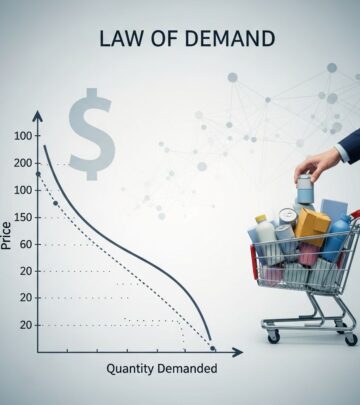
In economics, the concept of demand elasticity plays a crucial role in determining how consumers respond to price changes. Elasticity of demand refers to the degree to which the quantity demanded for a good or service changes in response to a change in its price. This fundamental economic principle helps businesses, policymakers, and economists understand consumer behavior and make informed decisions about pricing, production, and resource allocation.
The relationship between price and quantity demanded is not uniform across all products and services. Some goods experience significant changes in demand when their prices fluctuate, while others maintain relatively stable demand levels regardless of price movements. Understanding these distinctions between elastic and inelastic demand is essential for developing effective business strategies and economic policies.
What Is Elastic Demand?
Elastic demand occurs when the quantity demanded for a good or service changes significantly in response to price changes. In other words, consumers are highly sensitive to price variations, and small changes in price lead to substantial changes in the quantity demanded. When demand is elastic, the percentage change in quantity demanded exceeds the percentage change in price.
A practical example of elastic demand is the market for luxury goods or non-essential items. Consider the case of high-end electronics or fashion items. When the price of a designer handbag increases by 20%, consumers may reduce their purchases by 30% or more, seeking alternative brands or postponing their purchases. This demonstrates the price sensitivity characteristic of elastic demand.
The elasticity coefficient for elastic demand is greater than 1.0. This numerical representation helps economists quantify the responsiveness of demand to price changes. For instance, if the elasticity coefficient is 1.5, it means that a 1% increase in price results in a 1.5% decrease in quantity demanded.
Characteristics of Elastic Demand:
- Consumers have multiple substitute products to choose from
- The product is considered a luxury item rather than a necessity
- Consumers are price-conscious and compare alternatives
- The product represents a significant portion of household spending
- Time allows consumers to adjust their purchasing habits
- Demand is responsive to promotional activities and marketing campaigns
What Is Inelastic Demand?
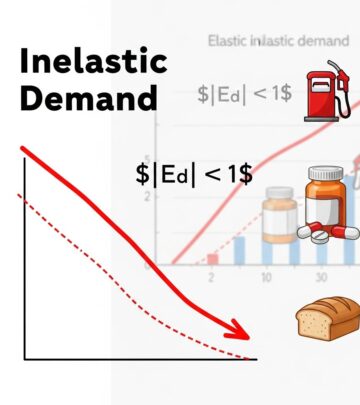
Inelastic demand represents the opposite scenario, where the quantity demanded remains relatively stable despite price changes. When demand is inelastic, consumers continue to purchase similar quantities of a product even when its price increases or decreases. This occurs when consumers have few alternatives, the product is essential, or consumers are less price-sensitive.
Essential goods and services typically demonstrate inelastic demand. Consider gasoline, for example. Most commuters must purchase gasoline to drive to work and conduct daily activities. When gas prices rise by 20%, consumers may reduce their consumption slightly, but they cannot eliminate their need for gasoline entirely. They might carpool, use public transportation occasionally, or make fewer trips, but they cannot abandon gasoline without fundamentally changing their lifestyle.
The elasticity coefficient for inelastic demand is less than 1.0. If the elasticity coefficient is 0.5, for instance, a 1% increase in price results in only a 0.5% decrease in quantity demanded. This demonstrates the relative insensitivity of demand to price fluctuations.
Characteristics of Inelastic Demand:
- The product is a necessity or basic staple
- Few substitute products are available
- Consumers perceive the product as essential
- The product comprises a small portion of total household spending
- Immediate substitutes are not readily accessible
- Consumers are less influenced by price changes in purchase decisions
Key Differences Between Elastic and Inelastic Demand
Understanding the distinctions between elastic and inelastic demand is fundamental for economists, business managers, and policymakers. These differences manifest in various economic behaviors and have significant implications for pricing strategies and market dynamics.
| Characteristic | Elastic Demand | Inelastic Demand |
|---|---|---|
| Price Sensitivity | Consumers are highly sensitive to price changes | Consumers are relatively insensitive to price changes |
| Elasticity Coefficient | Greater than 1.0 | Less than 1.0 |
| Product Type | Luxury items, non-essentials | Necessities, essential goods |
| Quantity Change | Significant change with price variations | Minimal change despite price variations |
| Available Substitutes | Many alternatives available | Few or no substitutes available |
| Impact on Revenue | Price increases reduce total revenue | Price increases increase total revenue |
| Consumer Behavior | Price-conscious, comparison shopping | Purchases driven by necessity, not price |
Real-World Examples of Elastic Demand
Several product categories demonstrate elastic demand characteristics in real-world markets. These examples help illustrate how consumer behavior changes in response to price variations.
Airline Tickets
Airline ticket pricing provides an excellent example of elastic demand. During peak travel seasons, airlines increase prices significantly, and many consumers delay travel, drive instead, or choose budget airlines. Conversely, when airlines offer discounts, bookings surge dramatically. The availability of multiple airlines, alternative transportation methods, and the discretionary nature of leisure travel all contribute to elastic demand in this market.
Luxury Fashion and Accessories
Designer clothing and high-end fashion accessories exhibit elastic demand because they are not essential and consumers have numerous alternatives. When luxury brands increase prices, consumers may opt for mid-range brands or delay purchases. Sales significantly improve during discount periods and seasonal promotions, demonstrating price sensitivity.
Entertainment and Dining Out
Restaurant and entertainment services demonstrate elastic demand as consumers can easily reduce spending on dining out and entertainment during economic downturns or when prices increase. Consumers can prepare meals at home or choose less expensive dining options, making demand responsive to price changes.
Real-World Examples of Inelastic Demand
Several essential goods and services demonstrate inelastic demand characteristics, where consumer purchases remain relatively stable despite price changes.
Pharmaceutical Medications
Essential prescription medications demonstrate highly inelastic demand. Patients requiring life-saving or managing chronic conditions must continue purchasing their medications regardless of price increases. While they might seek generic alternatives or negotiate prices, they cannot significantly reduce consumption without health consequences.
Utilities and Energy
Electricity, water, and heating fuel demonstrate inelastic demand. Consumers cannot significantly reduce usage without severely impacting their quality of life. During winter, heating demand remains stable even if prices increase, and summer cooling needs persist regardless of price fluctuations.
Gasoline and Fuel
Gasoline for vehicles exemplifies inelastic demand, particularly in regions without robust public transportation. Commuters must purchase gasoline to travel to work and conduct essential activities. While extremely high prices might encourage carpooling or more efficient vehicles over time, short-term demand remains relatively inelastic.
The Formula for Calculating Price Elasticity of Demand
Economists use a specific formula to calculate the price elasticity of demand, allowing for quantitative measurement of demand responsiveness:
Price Elasticity of Demand (PED) = (Percentage Change in Quantity Demanded) ÷ (Percentage Change in Price)
Or more precisely:
PED = [(Q2 – Q1) / ((Q1 + Q2) / 2)] ÷ [(P2 – P1) / ((P1 + P2) / 2)]
Where:
- Q1 = Initial quantity demanded
- Q2 = New quantity demanded
- P1 = Initial price
- P2 = New price
The resulting coefficient indicates the degree of elasticity. A coefficient above 1.0 indicates elastic demand, below 1.0 indicates inelastic demand, and exactly 1.0 indicates unit elastic demand.
Practical Business Implications
Understanding elasticity and inelasticity of demand has significant implications for business strategy and pricing decisions.
Pricing Strategy for Elastic Products
For products with elastic demand, companies typically employ competitive pricing strategies. Businesses recognize that price increases will result in substantial quantity decreases, potentially reducing total revenue. Therefore, companies often focus on volume sales through competitive pricing, promotions, and value propositions rather than premium pricing.
Pricing Strategy for Inelastic Products
For products with inelastic demand, companies have greater flexibility in pricing decisions. Since quantity demanded remains relatively stable despite price changes, companies can increase prices to improve profit margins. However, businesses must remain mindful of long-term elasticity changes as consumers may seek alternatives if prices become excessive.
Revenue Optimization
Businesses use elasticity analysis to optimize revenue. For elastic products, focusing on increasing volume through lower prices and promotions may generate higher revenues. For inelastic products, modest price increases typically enhance revenues without significantly reducing sales volume.
Factors Influencing Elasticity
Several factors determine whether a product experiences elastic or inelastic demand:
- Availability of Substitutes: Products with many substitutes exhibit more elastic demand as consumers can easily switch to alternatives
- Necessity vs. Luxury: Essential products tend toward inelastic demand, while luxury items display elastic demand
- Budget Share: Products consuming larger portions of household budgets typically show more elastic demand
- Time Horizon: Demand tends to be more elastic over longer time periods as consumers adjust behavior
- Consumer Income: Higher-income consumers typically display more inelastic demand for basic goods
- Brand Loyalty: Strong brand loyalty can reduce price sensitivity, creating more inelastic demand
Frequently Asked Questions
Q: How does elasticity differ from inelasticity of demand?
A: Elasticity of demand describes situations where quantity demanded changes significantly with price changes, while inelasticity refers to situations where quantity demanded remains relatively stable despite price fluctuations. Elastic demand indicates high consumer price sensitivity, whereas inelastic demand indicates low price sensitivity.
Q: What is the elasticity coefficient, and what does it tell us?
A: The elasticity coefficient is a numerical value calculated to measure the responsiveness of demand to price changes. A coefficient greater than 1.0 indicates elastic demand (demand is sensitive to price), a coefficient less than 1.0 indicates inelastic demand (demand is insensitive to price), and a coefficient of exactly 1.0 indicates unit elastic demand (proportional changes).
Q: Why is understanding elasticity important for businesses?
A: Understanding elasticity helps businesses develop effective pricing strategies, forecast revenue impacts of price changes, optimize profit margins, and respond appropriately to market conditions. For elastic products, volume-based strategies work better, while inelastic products allow for premium pricing strategies.
Q: Can a product shift from elastic to inelastic demand or vice versa?
A: Yes, products can shift between elastic and inelastic demand over time. Factors such as the emergence of new substitutes, changes in consumer preferences, economic conditions, and the development of alternative products can alter the elasticity characteristics of a product.
Q: How do economists measure elasticity of demand?
A: Economists use the price elasticity of demand (PED) formula, which divides the percentage change in quantity demanded by the percentage change in price. This calculation provides a quantitative measure of how responsive consumer demand is to price changes.
Q: What makes a product’s demand more elastic?
A: Products with elastic demand typically have many available substitutes, are considered luxury or non-essential items, represent a significant portion of household spending, and allow consumers time to adjust their purchasing behavior. These characteristics make consumers more price-sensitive.
References
- Principles of Economics — N. Gregory Mankiw. Cengage Learning, 2019. https://www.cengage.com/
- Price Elasticity of Demand — U.S. Bureau of Labor Statistics. U.S. Department of Labor. https://www.bls.gov/
- Microeconomics: Understanding Consumer Behavior and Market Dynamics — Harvard Kennedy School. https://www.harvard.edu/
- Elasticity of Demand in Real-World Markets — Journal of Economic Studies, Oxford University Press. 2023. https://academic.oup.com/
- Consumer Price Sensitivity and Market Response — International Monetary Fund. 2024. https://www.imf.org/
Similar Articles








Read full bio of medha deb