Elasticity in Economics: Measuring Demand and Supply
Understand elasticity and how it measures responsiveness in economic markets.
What Is Elasticity in Economics?
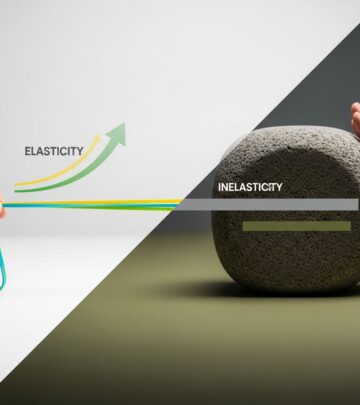
Elasticity is a fundamental concept in economics that measures the responsiveness of quantity demanded or quantity supplied to changes in one of its determinants, such as price. In simpler terms, elasticity quantifies how much buyers and sellers react to changes in market conditions, particularly price fluctuations. Understanding elasticity is crucial for businesses, policymakers, and economists because it helps predict how markets will respond to economic changes and inform strategic decision-making.
The concept of elasticity applies across various economic dimensions, including price changes, income variations, and the prices of related goods. By measuring elasticity, economists and business professionals can determine whether a product is elastic or inelastic, which has significant implications for pricing strategies, revenue forecasting, and policy implementation.
Understanding Price Elasticity of Demand
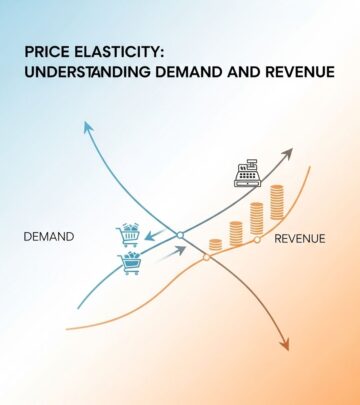
Price elasticity of demand (PED) is the most commonly discussed form of elasticity in economics. It measures how the quantity demanded of a good changes in response to a change in its price. Specifically, it quantifies the percentage change in quantity demanded divided by the percentage change in price.
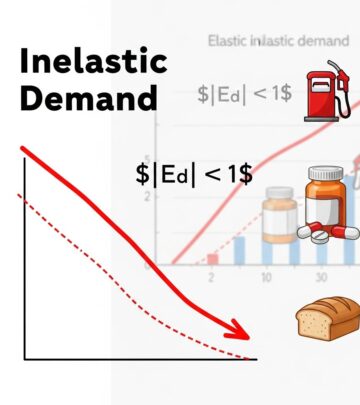
When demand is elastic, consumers are highly responsive to price changes. This typically occurs with products that have many substitutes or are considered luxury items. For example, if a coffee shop raises prices by 10% and customer purchases drop by 15%, the demand for coffee at that shop would be considered elastic. Conversely, when demand is inelastic, consumers are less responsive to price changes, often because the product has few substitutes or is considered essential. Medications, basic groceries, and utilities typically exhibit inelastic demand.
The practical implications of price elasticity of demand are significant. If a business sells a product with elastic demand, raising prices may actually decrease total revenue because the percentage drop in quantity sold exceeds the percentage increase in price. Conversely, for products with inelastic demand, raising prices typically increases revenue because customers continue buying relatively similar quantities despite the higher price.
Factors Affecting Price Elasticity of Demand
Several factors influence whether demand for a product will be elastic or inelastic:
- Availability of substitutes: Products with many close substitutes tend to have more elastic demand, as consumers can easily switch to alternatives.
- Necessity versus luxury: Essential goods and services typically have inelastic demand, while luxury items tend to be more elastic.
- Share of budget: Products that consume a significant portion of consumer budgets tend to have more elastic demand.
- Time horizon: Demand tends to be more elastic over longer periods as consumers have more time to adjust their behavior.
- Brand loyalty: Strong brand attachment can make demand more inelastic.
Price Elasticity of Supply
While demand elasticity measures buyer responsiveness, price elasticity of supply (PES) measures how producers respond to price changes. It quantifies the percentage change in quantity supplied divided by the percentage change in price. Elastic supply means producers can quickly increase production when prices rise, while inelastic supply indicates that production cannot be rapidly expanded regardless of price increases.
Different industries exhibit varying levels of supply elasticity. Manufacturing sectors typically have more elastic supply because production can be ramped up relatively quickly with additional labor and resources. Agricultural products often have inelastic supply in the short term because crops require specific growing seasons and cannot be produced instantly. Similarly, real estate and natural resources typically have inelastic supply because they cannot be quickly increased in response to demand.
Cross-Price Elasticity and Income Elasticity
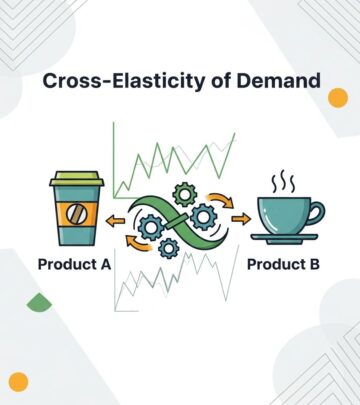
Beyond simple price elasticity, economists also measure cross-price elasticity of demand, which shows how demand for one good changes when the price of another good changes. This is particularly relevant for complementary goods (like hot dogs and buns) and substitute goods (like butter and margarine).
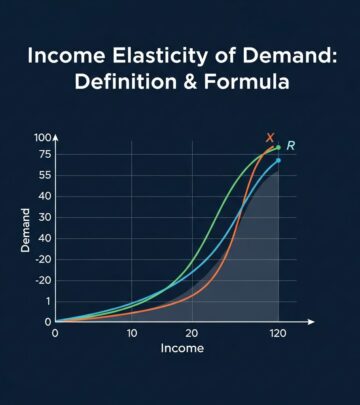
Income elasticity of demand measures how quantity demanded changes in response to changes in consumer income. Products with positive income elasticity are known as normal goods, as demand increases when incomes rise. Products with negative income elasticity are called inferior goods, as demand decreases when incomes rise—consumers might switch to higher-quality alternatives when they can afford them.
Calculating Elasticity
The basic formula for price elasticity of demand is:
PED = (% Change in Quantity Demanded) / (% Change in Price)
To calculate percentage changes, use the following approach:
% Change = (New Value – Original Value) / Original Value × 100
For example, if a product’s price increases from $10 to $12 (a 20% increase) and quantity demanded drops from 100 units to 80 units (a 20% decrease), the price elasticity of demand would be -1.0, indicating unit elasticity.
Elasticity coefficients are typically interpreted as follows:
- Greater than 1 (in absolute value): Elastic demand or supply
- Equal to 1: Unit elastic demand or supply
- Less than 1 (in absolute value): Inelastic demand or supply
Real-World Applications of Elasticity
Understanding elasticity has numerous practical applications across different sectors and decision-making contexts.
Business Pricing Strategy
Companies use elasticity analysis to determine optimal pricing strategies. For products with elastic demand, businesses often focus on keeping prices competitive and building market share. For products with inelastic demand, companies may have more flexibility to raise prices without significantly reducing sales volume. This is why pharmaceutical companies can maintain high prices for patented medications with few alternatives, while competitive consumer goods markets require more aggressive pricing strategies.
Government Policy and Taxation
Policymakers use elasticity to predict the effects of taxes and regulations. Taxing products with inelastic demand (like cigarettes or gasoline) generates substantial revenue while having minimal impact on consumption. Conversely, taxing elastic goods may generate less revenue as consumers reduce purchases in response to the tax-induced price increase.
Revenue Forecasting
Understanding elasticity helps businesses forecast how revenue will change with price adjustments. A retailer knowing that their product has elastic demand will predict that a 10% price increase will result in a greater than 10% decrease in sales volume, potentially reducing total revenue. This insight is critical for financial planning and investment decisions.
Elasticity and Economic Efficiency
Elasticity also relates to economic efficiency and consumer surplus. Markets function most efficiently when both producers and consumers respond appropriately to price signals. High elasticity in both demand and supply allows markets to adjust quickly to changes, allocating resources efficiently. When elasticity is low, markets may adjust slowly, potentially leading to prolonged shortages or surpluses.
Limitations and Considerations
While elasticity is a powerful analytical tool, it has limitations. Elasticity can vary over time, as consumer preferences and market conditions change. Additionally, elasticity calculations often rely on historical data, which may not perfectly predict future behavior. External factors such as technological innovations, changes in consumer preferences, and unforeseen events can significantly impact elasticity in ways that past data doesn’t capture.
Furthermore, the relationship between price and quantity isn’t always perfectly linear. At very high or very low price points, elasticity may change significantly, requiring more sophisticated analysis than simple linear models provide.
Frequently Asked Questions (FAQs)
Q: What is the difference between elastic and inelastic demand?
A: Elastic demand means consumers are highly responsive to price changes, with quantity demanded changing by a larger percentage than the price change. Inelastic demand means consumers are less responsive, with quantity demanded changing by a smaller percentage than the price change. A price elasticity coefficient greater than 1 indicates elastic demand, while less than 1 indicates inelastic demand.
Q: How does elasticity affect business pricing decisions?
A: For elastic products, businesses typically use competitive pricing and focus on volume, as price increases may significantly reduce sales. For inelastic products, businesses have more flexibility to increase prices without losing many customers, which can boost profit margins and revenue.
Q: Why is income elasticity important for businesses?
A: Income elasticity helps businesses understand how their products will perform during economic expansions and recessions. Products with high positive income elasticity (luxury goods) may see demand drop significantly during downturns, while products with low income elasticity (necessities) remain more stable.
Q: Can elasticity change over time?
A: Yes, elasticity can change significantly over time as consumer preferences evolve, substitutes become available, and market conditions shift. What is inelastic today might become more elastic tomorrow if consumers develop alternative options or if priorities change.
Q: How do governments use elasticity information?
A: Governments use elasticity analysis to predict how taxes, subsidies, and regulations will affect consumer behavior and market outcomes. They apply this knowledge to maximize tax revenue while minimizing negative behavioral responses and economic distortions.
Q: What is the relationship between elasticity and consumer surplus?
A: Products with inelastic demand tend to generate larger consumer surplus at equilibrium prices because consumers value them highly and continue purchasing even at higher prices. Elasticity helps economists determine how policy changes will affect the distribution of surplus between consumers and producers.
References
- Principles of Microeconomics — OpenStax. Last updated 2024. https://openstax.org/details/books/principles-microeconomics
- Elasticity of Demand and Supply — U.S. Bureau of Labor Statistics. 2024. https://www.bls.gov
- The Economics of Public Issues — Pearson Education. 2023. https://www.pearson.com
- Microeconomic Theory and Applications — Georgetown University Press. 2022. https://www.press.georgetown.edu
- Price Elasticity in Consumer Markets — Federal Reserve Economic Data. 2024. https://fred.stlouisfed.org
Similar Articles








Read full bio of medha deb