Elastic Demand: Definition, Formula, Curve, and Examples
Master elastic demand: Learn how price changes affect consumer purchasing behavior and business revenue strategies.

Understanding Elastic Demand: A Comprehensive Guide
Elastic demand represents a fundamental concept in economics that describes how responsive consumers are to price changes. When demand is elastic, even small fluctuations in price can lead to significant changes in the quantity of goods or services that consumers are willing to purchase. This responsiveness is crucial for businesses to understand when developing pricing strategies and forecasting revenue.
The concept of elastic demand helps economists and business professionals predict consumer behavior patterns and make informed decisions about pricing policies. Unlike inelastic demand, where quantity demanded remains relatively stable despite price changes, elastic demand demonstrates a strong correlation between price movements and purchasing decisions. Understanding this relationship enables companies to optimize their pricing strategies for maximum profitability.
What Is Elastic Demand?
Elastic demand occurs when a minor price change produces a significant effect on the quantity demanded of a product or service. In this scenario, consumers exhibit high price sensitivity, meaning they actively respond to price adjustments by changing their purchasing patterns. When prices increase, consumers reduce their purchases substantially, and conversely, when prices decrease, demand increases dramatically.
The underlying reason for elastic demand often relates to the availability of substitute products. When consumers have multiple alternatives available that satisfy the same need, they become more price-conscious. If one product’s price rises while similar alternatives remain unchanged, consumers readily switch to the less expensive option. This switching behavior is characteristic of elastic demand situations.
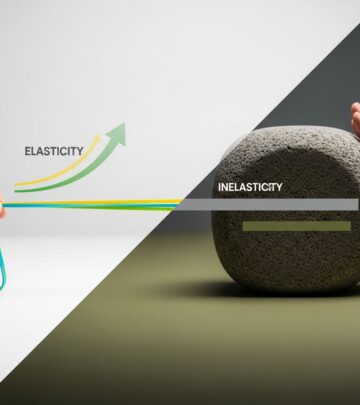
Think of elastic demand like a rubber band—it stretches and changes shape easily in response to external pressure. Similarly, demand stretches significantly when price pressures are applied. Products with elastic demand typically include luxury items, goods with many substitutes, and products that consumers can easily postpone purchasing.
The Price Elasticity of Demand Formula
The mathematical relationship between price changes and quantity demanded is expressed through the price elasticity of demand formula. This formula quantifies how responsive quantity demanded is to price changes, providing a precise measurement of elasticity.
The standard formula for calculating elasticity of demand is:
Elasticity of Demand = Percentage Change in Quantity Demanded ÷ Percentage Change in Price
This can also be expressed as:
Ed = (ΔQ/Q) ÷ (ΔP/P)
Where:
- Ed represents the elasticity of demand coefficient
- ΔQ is the change in quantity demanded
- Q is the initial quantity demanded
- ΔP is the change in price
- P is the initial price
An alternative formula that some economists prefer uses the midpoint method:
Ed = ((Q1 – Q2) / (Q1 + Q2)) ÷ ((P1 – P2) / (P1 + P2))
This method provides a more consistent elasticity measurement regardless of whether price increases or decreases. When the resulting elasticity coefficient has an absolute value greater than 1, demand is considered elastic. For example, if the elasticity equals -2.36, this indicates that a 1% increase in price results in a 2.36% decrease in quantity demanded, demonstrating elastic demand.
Interpreting Elasticity Coefficients
Understanding elasticity values is essential for applying economic theory to real-world business decisions. The elasticity coefficient reveals the degree of consumer responsiveness to price changes:
Elastic Demand (Ed > 1 in absolute value): When elasticity exceeds one in absolute value, demand is elastic, meaning quantity demanded is very sensitive to price. A 1% rise in price generates a significantly larger percentage decrease in quantity demanded.
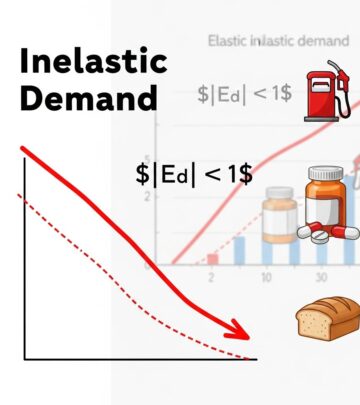
Inelastic Demand (Ed < 1 in absolute value): Demand becomes inelastic when the elasticity coefficient falls below one in absolute value. Price changes have a relatively small effect on quantity demanded, indicating consumers are less responsive to price fluctuations.
Unit Elastic Demand (Ed = -1): When elasticity equals exactly negative one, demand is unit elastic. The percentage change in quantity demanded equals the percentage change in price, with neither outweighing the other. This represents the midpoint on the demand curve.
The Elastic Demand Curve
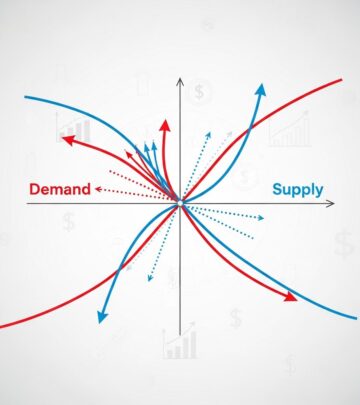
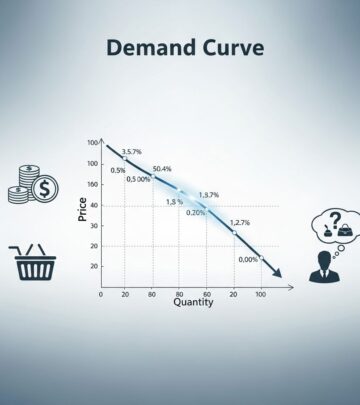
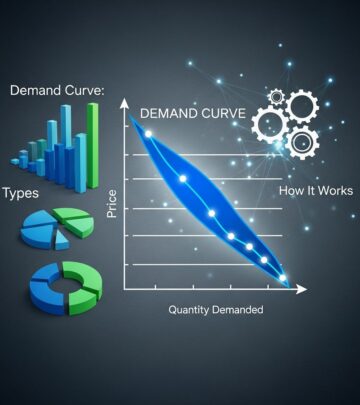
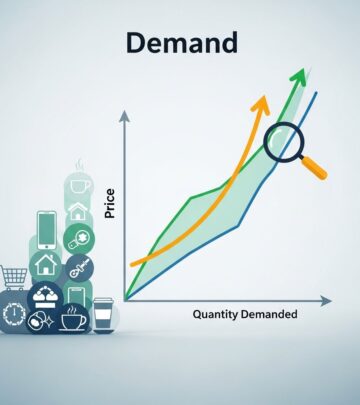
The demand curve is a graphical representation showing the relationship between price and quantity demanded. For elastic demand, the demand curve appears relatively flat and horizontal, indicating that small price changes result in large quantity changes.
The shape of the demand curve visually communicates elasticity:
- Flat, shallow curve: Indicates elastic demand where the quantity axis changes significantly relative to small price changes on the price axis
- Steep, vertical curve: Indicates inelastic demand where quantity changes minimally despite substantial price changes
- 45-degree angle: Represents unit elastic demand where price and quantity changes are proportional
The unit elastic demand typically sits at the midpoint of the demand curve, with the bottom half representing inelastic demand and the top half representing elastic demand. This positioning illustrates how elasticity varies along different points of the same demand curve.
Real-World Examples of Elastic Demand
Luxury Goods and Discretionary Items
Luxury products such as designer clothing, premium automobiles, and high-end electronics typically exhibit elastic demand. When prices for these items increase, consumers can more easily forgo the purchase or select less expensive alternatives. For instance, if a luxury watch brand raises prices by 20%, sales might decline by 50% as consumers switch to competing brands or delay purchases.
Products with Numerous Substitutes
Categories with many competing products demonstrate elastic demand. The airline industry provides a clear example—when one airline raises ticket prices, travelers readily book with competing airlines. Similarly, gasoline stations rarely have sales because consumers view gasoline as a commodity with perfect substitutes; they simply fill up at cheaper competitors instead.
Goods Consumers Can Postpone
Items that consumers can delay purchasing often have elastic demand. New furniture, home renovations, or vacation packages become less attractive when prices increase, as consumers postpone these discretionary purchases. However, when prices drop, demand increases substantially as consumers seize the opportunity.
Income-Sensitive Products
Certain products become more elastic at higher price points relative to consumer income. For middle-income consumers, a price increase in restaurant meals might trigger elastic demand as they cook at home instead, while high-income consumers might exhibit more inelastic demand for the same price change.
How Elastic Demand Affects Total Revenue
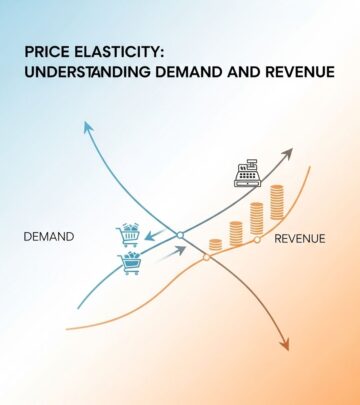
The relationship between elasticity and total revenue is crucial for business decision-making. Total revenue equals price multiplied by quantity sold, and this relationship changes based on demand elasticity:
When Demand is Elastic: Lowering prices increases total revenue because the percentage increase in quantity demanded exceeds the percentage decrease in price. Conversely, raising prices decreases total revenue. This counterintuitive result explains why businesses facing elastic demand often use price reductions as a revenue strategy.
When Demand is Inelastic: Raising prices increases total revenue because the percentage increase in price exceeds the percentage decrease in quantity demanded. Price reductions decrease total revenue when demand is inelastic.
When Demand is Unit Elastic: Changes in price do not affect total revenue. A percentage increase in price is exactly offset by the same percentage decrease in quantity demanded, leaving total revenue unchanged.
Factors Determining Demand Elasticity
Several key factors influence whether demand for a product will be elastic or inelastic:
Availability of Substitutes: Products with numerous close substitutes tend to have elastic demand. Consumers easily switch to alternatives when prices rise. Conversely, products with few substitutes exhibit inelastic demand.
Necessity vs. Luxury: Essential items like basic food, utilities, and medications typically have inelastic demand because consumers must purchase them regardless of price. Luxury items have elastic demand because consumers can forgo purchases when prices become prohibitively high.
Budget Share: Products representing a large share of consumer budgets demonstrate more elastic demand. For example, car purchases are highly price-sensitive because they constitute a significant expense, while small consumables might have inelastic demand.
Time Horizon: Demand tends to become more elastic over longer time periods as consumers adjust their behavior and find alternatives. In the short term, demand might be inelastic, but elasticity increases as time allows for adaptation.
Consumer Preferences: Strong brand loyalty can make demand more inelastic, as loyal consumers continue purchasing despite price increases. Weak brand attachment increases elasticity as consumers readily switch brands.
Business Strategies for Elastic Demand Markets
Companies operating in elastic demand markets must develop sophisticated pricing and marketing strategies:
Volume-Based Strategies: Businesses often reduce prices to capture market share volume. Lower prices increase quantity demanded significantly, potentially boosting total revenue and market position.
Product Differentiation: Creating unique features or building strong brands can reduce elasticity by decreasing substitutability. When products are differentiated, consumers become less price-sensitive.
Non-Price Competition: Focusing on quality, customer service, and brand image can shift the demand curve outward, allowing businesses to maintain prices despite competition.
Market Segmentation: Targeting different consumer segments with varied pricing strategies allows businesses to capture price-sensitive consumers while maintaining higher prices for less price-sensitive segments.
Frequently Asked Questions About Elastic Demand
Q: What is the main difference between elastic and inelastic demand?
A: The primary difference lies in consumer responsiveness to price changes. Elastic demand means quantity demanded changes significantly when price changes, while inelastic demand means quantity demanded changes minimally. With elastic demand, the percentage change in quantity exceeds the percentage change in price, whereas inelastic demand shows the opposite relationship.
Q: How does elastic demand impact pricing decisions?
A: In elastic demand situations, businesses should generally lower prices to increase total revenue. Since a small price decrease leads to a large quantity increase, total revenue (price × quantity) typically rises. The opposite strategy applies to inelastic demand.
Q: Can elasticity change for the same product?
A: Yes, elasticity can change over time and across different market segments. As new substitutes emerge, consumer preferences shift, or economic conditions change, a product’s elasticity can transition from inelastic to elastic or vice versa. Additionally, the same product might have elastic demand in one market segment and inelastic demand in another.
Q: What is the difference between unit elastic demand and perfectly elastic demand?
A: Unit elastic demand has an elasticity coefficient of exactly -1, where percentage changes in price equal percentage changes in quantity. Perfectly elastic demand represents an extreme case where elasticity approaches infinity—consumers will buy unlimited quantities at one price but zero quantities at any higher price.
Q: Why do businesses care about elasticity of demand?
A: Understanding elasticity helps businesses predict how price changes will affect quantity demanded and total revenue. This knowledge is essential for optimal pricing strategies, revenue forecasting, and competitive positioning in the market.
References
- Price Elasticity of Demand — Wikimedia Foundation. 2024-11-20. https://en.wikipedia.org/wiki/Price_elasticity_of_demand
- Unit Elastic Demand: Meaning, Example, Analysis, Conclusion — StudyFinance. 2024. https://studyfinance.com/unit-elastic-demand/
- Elastic vs. Inelastic Demand: What’s The Difference? — Indeed Career Advice. 2024. https://www.indeed.com/career-advice/career-development/difference-between-inelastic-and-elastic
- Elastic Demand — Economics Help. 2024. https://www.economicshelp.org/blog/1108/economics/perfectly-elastic-demand/
- Price Elasticity of Demand and Price Elasticity of Supply — Khan Academy. 2024. https://www.khanacademy.org/economics-finance-domain/microeconomics/elasticity-tutorial/price-elasticity-tutorial/a/price-elasticity-of-demand-and-price-elasticity-of-supply-cnx
- What Is Elasticity of Demand? Definition, Types, and Examples — NetSuite. 2024. https://www.netsuite.com/portal/resource/articles/business-strategy/elasticity-of-demand.shtml
Similar Articles








Read full bio of Sneha Tete