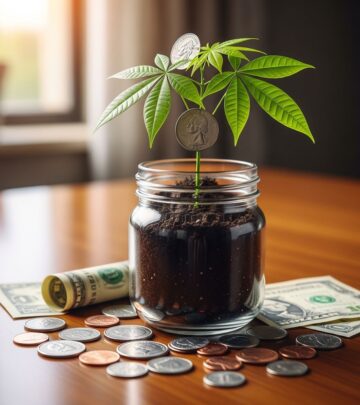
Effortless Saving Strategies: 9 Proven Ways To Save More
Unlock practical tools and habits to build wealth steadily without drastic lifestyle changes or complex plans.

Building a robust savings habit doesn’t require extreme measures or financial expertise. By adopting straightforward tools and routines, anyone can set aside money consistently for emergencies, goals, or retirement. This guide explores proven methods to track spending, automate growth, reduce outflows, and optimize accounts, drawing from established financial principles to help you save more with minimal effort.
Understanding Your Cash Flow
The foundation of effective saving lies in gaining visibility into your finances. Without knowing where your money flows, it’s impossible to redirect it toward savings. Start by monitoring every transaction to uncover patterns and opportunities for improvement.
- Record daily outflows: Log purchases via apps, spreadsheets, or notes, categorizing them into essentials like housing and food versus variables like entertainment.
- Review statements monthly: Cross-check bank and card records to capture overlooked items such as tips or small fees.
- Calculate surplus: Subtract fixed costs from income to identify your saving potential, aiming initially for 10-20% allocation.
This process typically reveals hidden leaks, such as recurring subscriptions or impulse buys, allowing quick wins without altering your lifestyle drastically.
Establish Clear Financial Targets
Specific goals transform vague intentions into actionable plans. Define what you’re saving for—be it a home down payment, travel, or an emergency buffer—and assign timelines to maintain momentum.
| Goal Type | Example Target | Monthly Contribution (for $10,000 in 2 years) |
|---|---|---|
| Short-term | Emergency fund | $417 |
| Medium-term | Vacation | $417 |
| Long-term | Retirement boost | $417 (plus interest) |
Work backward from the deadline: for an $8,000 trip in 12 months, save about $667 monthly. Adjust based on income, prioritizing high-interest debt payoff alongside building reserves.
Adopt Proven Budgeting Frameworks
Simplify allocation with the
50/30/20 rule
, a widely recommended guideline for balancing needs, wants, and savings.- 50% Needs: Cover rent, utilities, groceries, transport, and minimum debt payments.
- 30% Wants: Allocate to dining, hobbies, and leisure without excess.
- 20% Savings/Debt: Direct to accounts, investments, or extra principal payments.
For a $6,000 monthly take-home, this means $3,000 on necessities, $1,800 on fun, and $1,200 saved—equating to $14,400 annually. Zero-based budgeting complements this by ensuring every dollar has a purpose, eliminating surplus drift.
Automate Your Savings Journey
Remove human error by setting up automatic transfers, treating savings as a non-negotiable bill paid first each payday.
- Payroll deductions: Link directly to retirement or high-yield accounts for seamless growth.
- Bank automations: Schedule post-deposit moves to separate savings, preventing spending temptation.
- Round-up features: Apps that round purchases and transfer the change build savings incrementally.
This ‘set it and forget it’ approach leverages behavioral finance, fostering consistency even during busy periods.
Trim Expenses Without Sacrifice
Small, targeted reductions compound over time. Focus on high-impact areas like food, subscriptions, and energy without feeling deprived.
- Meal prep mastery: Plan weekly menus, shop lists, and batch-cook to slash grocery and takeout costs by hundreds monthly.
- Subscription audit: Cancel unused services—streaming, gyms, apps—saving $50-200 per month on average.
- Impulse control: Implement a 48-hour wait on non-essentials to differentiate needs from wants.
- Energy efficiency: Unplug devices, adjust thermostats, and use LED bulbs for bill reductions.
These tweaks, like bringing lunch thrice weekly, can free $200+ monthly, redirectable to goals.
Optimize Your Accounts for Growth
Don’t let savings idle at low rates. Shift to high-yield options and separate accounts to maximize returns and discipline.
- High-yield savings: Earn 4-5% APY versus 0.01% on standard accounts for short-term needs.
- Dedicated buckets: Use sub-accounts for emergencies (3-6 months expenses), vacations, and big purchases.
- Investment intro: For long-term, explore low-cost index funds post-emergency fund.
Maintain checking for daily use and savings segregated to curb borrowing urges.
Leverage Debt Reduction Techniques
High-interest debt erodes saving potential. Employ structured payoff methods alongside building reserves.
| Method | Focus | Best For |
|---|---|---|
| Snowball | Smallest balance first | Motivation via quick wins |
| Avalanche | Highest interest first | Maximum interest savings |
Minimum payments everywhere, then extra on priority debt. Refinance loans for lower rates to accelerate progress.
Monitor and Refine Habits
Quarterly reviews ensure alignment. Track progress against goals, celebrate milestones, and adjust for life changes like raises or expenses.
- Apps for oversight: Tools like Mint or YNAB categorize spends and alert overspending.
- Scale up gradually: Increase savings rate by 1-2% with income growth.
- Community resources: Free events and libraries cut entertainment costs.
Building an Emergency Safety Net
Aim for 3-6 months of living expenses in liquid savings to weather job loss or repairs without debt.
- Start small: $1,000 initial buffer, then full coverage.
- Habit stacking: Automate $50-100 weekly toward this goal first.
Government sites emphasize this as essential for stability.
Frequently Asked Questions
How much should I save monthly?
Target 20% of income, or start with 10% if building from zero, using frameworks like 50/30/20.
What’s the best savings account?
High-yield online accounts with FDIC insurance and competitive APYs for easy access and growth.
Can I save while in debt?
Yes—balance minimum payments with small savings transfers, prioritizing high-interest debt.
How do apps help with saving?
They track, categorize, automate round-ups, and provide insights for better decisions.
Is the 50/30/20 rule flexible?
Absolutely—adapt percentages to your situation, like 60/20/20 for high-cost areas.
References
- 10 ways to start saving money — Vanguard. 2023-05-15. https://investor.vanguard.com/investor-resources-education/article/how-to-save
- Simple ways to save money for the future — Bank of America Better Money Habits. 2024-01-10. https://bettermoneyhabits.bankofamerica.com/en/saving-budgeting/ways-to-save-money
- 10 Tips to Start Saving Money Today — Intuit Blog. 2023-11-20. https://www.intuit.com/blog/innovative-thinking/financial-tips/start-saving-money/
- Saving and Setting Financial Goals — University of Chicago Financial Aid. 2024-02-01. https://financialaid.uchicago.edu/undergraduate/managing-your-money/saving-and-setting-financial-goals/
- Save and Invest — MyMoney.gov (U.S. Government). 2025-01-15. https://www.mymoney.gov/saveandinvest
- An essential guide to building an emergency fund — Consumer Financial Protection Bureau. 2024-06-12. https://www.consumerfinance.gov/an-essential-guide-to-building-an-emergency-fund/
Similar Articles








Read full bio of Sneha Tete