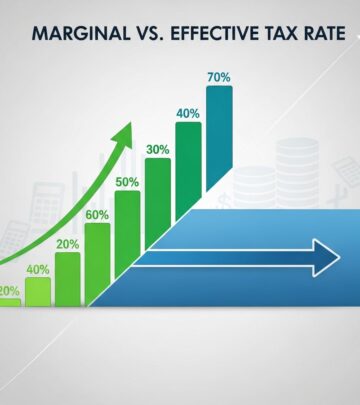
Effective Tax Rate: Calculations & Implications
Master the distinction between marginal and effective tax rates
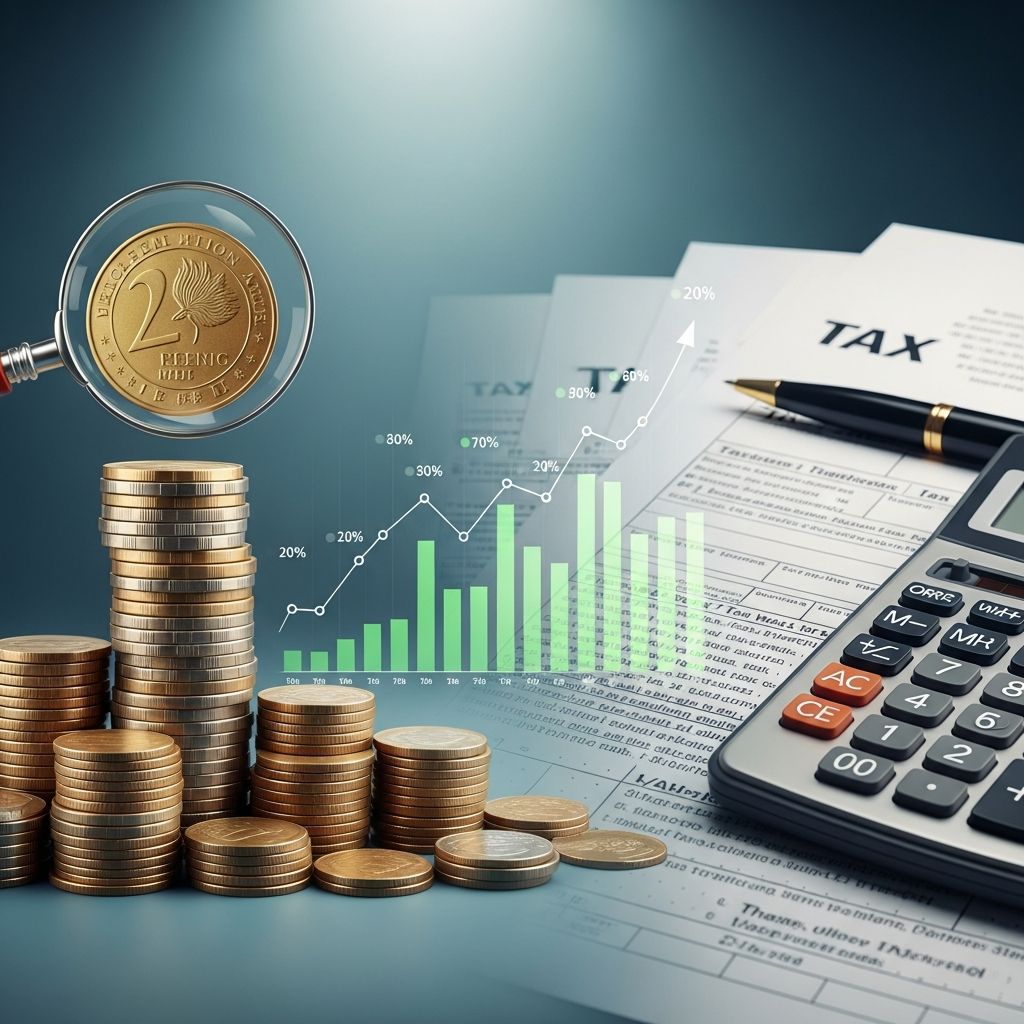
When tax season arrives, many individuals and business owners focus on their tax bracket without fully understanding their actual tax responsibility. The effective tax rate provides a more accurate picture of your true tax burden than your marginal tax rate. This comprehensive guide explains what effective tax rates are, how to calculate them, and why they matter for your financial planning.
What Is an Effective Tax Rate?
The effective tax rate represents the average percentage of income that you pay in taxes. Rather than applying a single percentage to all your earnings, the effective tax rate accounts for the progressive nature of the U.S. tax system, where different portions of your income are taxed at different rates.
For individuals, the effective tax rate reflects your total federal income tax liability divided by your total taxable income. For corporations, it measures the total tax expense divided by earnings before taxes. This metric provides a clearer understanding of your overall tax obligation compared to looking at tax brackets alone.
Think of it as capturing the true cost of taxation across your entire income spectrum. While your marginal tax rate tells you the percentage applied to your last dollar earned, your effective tax rate tells you the average percentage applied across all your dollars.
Marginal Tax Rate vs. Effective Tax Rate: Key Differences
Understanding the distinction between marginal and effective tax rates is crucial for tax planning. These two concepts, while related, serve different purposes in understanding your tax burden.
Marginal Tax Rate Explained
Your marginal tax rate is the percentage applied to your last dollar of income. The United States uses a progressive tax system with seven federal tax brackets ranging from 10% to 37%. Your marginal rate is determined by which bracket your highest income falls into.
To find your marginal tax rate, identify your total taxable income and locate the corresponding tax bracket for your filing status. This rate applies only to income within that specific bracket, not to your entire income. Many people mistakenly believe their marginal rate applies to all their earnings, leading to tax planning errors.
Effective Tax Rate Defined
Your effective tax rate is the average rate applied across all your income. Because the progressive tax system applies lower rates to initial income and higher rates to additional income, your effective rate is typically much lower than your marginal rate.
The effective tax rate provides a more realistic picture of your tax burden because it reflects the cumulative impact of all tax brackets your income passes through. This is why two people in the same marginal bracket often have different effective tax rates.
The Progressive Tax System and Your Effective Rate
The U.S. federal tax system uses a progressive structure where tax brackets increase with income levels. In 2024, the seven tax brackets for single filers range from 10% on the first portion of income up to 37% on the highest portion.
This structure means your income is taxed in layers. Your first dollars are taxed at 10%, subsequent dollars at 12%, and so on, until you reach your marginal bracket. This layered approach automatically reduces your effective tax rate compared to your marginal rate.
For example, someone earning $100,000 might have a marginal rate of 24% but an effective rate of only 12-13%. This difference grows larger for higher earners who pass through multiple brackets.
How to Calculate Your Effective Tax Rate
Calculating your effective tax rate requires only two pieces of information that you can find on your tax return.
The Formula
The calculation is straightforward:
Effective Tax Rate (%) = Total Taxes Paid ÷ Total Taxable Income × 100
Your total taxes paid appears on line 24 of IRS Form 1040, while your taxable income appears on line 15 of the same form.
Step-by-Step Calculation Process
Follow these steps to determine your effective tax rate:
- Gather your completed tax return or calculate your total tax liability for the year
- Identify your total taxable income after all deductions and adjustments
- Divide your total tax liability by your total taxable income
- Multiply the result by 100 to express it as a percentage
Practical Example
Consider someone with a taxable income of $75,000 and a total tax bill of $11,250.
Using the formula: $11,250 ÷ $75,000 = 0.15 × 100 = 15%
This person’s effective tax rate is 15%, meaning that on average, 15% of their taxable income goes toward federal income taxes. Despite potentially falling in the 22% marginal tax bracket, their effective rate is lower due to the progressive tax system.
Factors That Influence Your Effective Tax Rate
Several factors affect whether your effective tax rate will be higher or lower, independent of your income level.
Deductions and Credits
Tax deductions reduce your taxable income, which lowers your effective tax rate. Standard deductions, itemized deductions, and above-the-line deductions all decrease the amount of income subject to taxation.
Tax credits provide an even more powerful effect. Credits directly reduce your tax liability dollar-for-dollar, which substantially lowers your effective rate. The Earned Income Tax Credit, Child Tax Credit, and education credits are particularly impactful.
Filing Status
Your filing status affects which tax brackets apply to your income. Single filers, married filing jointly, heads of household, and other statuses have different bracket ranges, which impacts your effective rate calculation.
Types of Income
Your effective rate is influenced by your income composition. Long-term capital gains and qualified dividends are taxed at preferential rates (0%, 15%, or 20%) compared to ordinary income, which lowers your effective rate if you have significant investment income.
State and Local Taxes
While federal effective tax rate calculations focus solely on federal taxes, your total tax burden includes state and local income taxes. These additional taxes increase your overall effective tax rate when considering all taxation levels.
Effective Tax Rates for Corporations
Corporations calculate their effective tax rate similarly to individuals but with corporate-specific considerations.
For businesses, the effective tax rate equals total tax expense divided by earnings before taxes (EBT). This calculation helps investors and stakeholders understand the true cost of taxation on corporate profitability.
The statutory federal corporate tax rate is 21% under current law. However, corporate effective tax rates often differ from this statutory rate due to:
- Depreciation deductions and other cost recovery methods
- Research and development tax credits
- Deductions for business expenses and interest
- State and local tax obligations
- Differences between book accounting and tax accounting
Understanding corporate effective tax rates is essential for analyzing financial statements and comparing companies across industries.
Why Your Effective Rate Differs From Your Marginal Rate
A common source of confusion stems from the difference between marginal and effective rates. Several key factors explain why your effective rate is typically substantially lower than your marginal rate.
The Impact of Progressive Brackets
Because each bracket applies only to income within a specific range, your overall rate averages out to something lower than your top bracket. Income taxed at 10%, 12%, 14%, and 22% combines to produce an effective rate lower than 22%.
Deductions Reduce Taxable Income
Deductions remove income from taxation entirely. The standard deduction alone shields thousands of dollars from any taxation. This reduction in taxable income naturally lowers your effective rate because you’re dividing taxes by a smaller income figure.
Tax Credits Create Direct Reductions
Tax credits reduce your actual tax liability, not just your taxable income. A $2,000 child tax credit directly reduces your tax bill by $2,000, which significantly lowers your effective rate calculation.
Real-World Examples of Effective Tax Rate Calculations
Single Filer Example
Josie is a single filer with a 2024 taxable income of $50,000 and a total tax bill of $6,053.
Her effective tax rate: $6,053 ÷ $50,000 = 0.121 × 100 = 12.1%
Despite possibly being in the 22% marginal bracket, Josie’s effective rate is only 12.1%, reflecting the progressive nature of taxation.
Higher Income Example
Consider two individuals: Individual A with $450,000 in taxable income and Individual B with $380,000 in taxable income, using hypothetical brackets where income is taxed at 12% up to $100,000, 18% from $100,000 to $350,000, and 28% above $350,000.
Individual A’s calculation:
- $100,000 × 12% = $12,000
- $250,000 × 18% = $45,000
- $100,000 × 28% = $28,000
- Total tax: $85,000
- Effective rate: $85,000 ÷ $450,000 = 18.9%
Individual B’s calculation:
- $100,000 × 12% = $12,000
- $250,000 × 18% = $45,000
- $30,000 × 28% = $8,400
- Total tax: $65,400
- Effective rate: $65,400 ÷ $380,000 = 17.2%
Both individuals fall in the 28% marginal bracket, yet their effective rates differ by 1.7 percentage points due to their different income levels relative to bracket thresholds.
Why Effective Tax Rate Matters
Understanding your effective tax rate provides several practical benefits for financial decision-making.
Accurate Tax Planning
Your effective rate helps you understand your true tax burden and plan accordingly. If your effective rate is lower than you expected, you might identify opportunities to restructure income or investments.
Comparing Tax Situations
Effective tax rates allow meaningful comparisons between individuals or businesses with different income levels. A comparison of marginal rates alone would be misleading.
Evaluating Tax Strategy Changes
When considering major financial decisions—such as early retirement, selling an asset, or business reorganization—your effective tax rate helps project the actual tax impact.
Understanding Total Tax Burden
Your effective tax rate provides clarity on what percentage of your income ultimately flows to government taxes, helping with budgeting and financial planning.
Frequently Asked Questions About Effective Tax Rates
Is my effective tax rate the same as my tax bracket?
No. Your tax bracket is your marginal rate, which applies only to your last dollar of income. Your effective tax rate is lower and represents the average across all your income.
Can my effective tax rate be zero or negative?
Your effective rate can be zero or negative if tax credits exceed your tax liability. Negative effective tax rates occur when refundable tax credits result in receiving more money back than you paid in taxes.
How does self-employment income affect effective tax rate?
Self-employment income increases your taxable income and may push you into higher brackets, increasing your effective rate. Additionally, self-employment taxes (15.3% on net earnings) further increase your overall effective tax burden.
Should I use my effective tax rate to estimate quarterly taxes?
Your effective rate from prior years provides a rough estimate, but a CPA or tax software can better project quarterly estimated taxes by considering current year income, deductions, and credits.
How does capital gains treatment affect effective tax rate?
Long-term capital gains taxed at preferential rates (0%, 15%, or 20%) significantly lower your effective rate compared to ordinary income taxation (10%-37%).
Takeaways on Understanding Your Effective Tax Rate
Your effective tax rate is a powerful tool for understanding your actual tax burden. By dividing your total tax liability by your total taxable income, you gain insight into what percentage of your earnings goes toward federal income taxes.
The progressive tax system, combined with deductions and credits, typically results in an effective rate much lower than your marginal tax bracket. Recognizing this distinction enables better financial and tax planning decisions.
Whether you’re an individual taxpayer, business owner, or investor, calculating and monitoring your effective tax rate helps ensure you’re making informed decisions about your financial future.
References
- Effective Tax Rate (ETR) | Formula + Calculator — Wall Street Prep. 2024. https://www.wallstreetprep.com/knowledge/effective-tax-rate/
- Understanding Marginal Tax Rate vs. Effective Tax Rate — Jackson Hewitt Tax Service. 2024. https://www.jacksonhewitt.com/tax-help/tax-tips-topics/filing-your-taxes/marginal-tax-rate-vs-effective-tax-rate/
- Effective Tax Rate: Definition, Examples & More — Capital One. 2024. https://www.capitalone.com/learn-grow/money-management/effective-tax-rate/
- Effective Tax Rate – Overview, Calculation, Example — Corporate Finance Institute. 2024. https://corporatefinanceinstitute.com/resources/accounting/effective-tax-rate/
Similar Articles








Read full bio of medha deb