Effective Tax Rate: Definition, Calculation & Examples
Understand effective tax rate: how it's calculated, why it matters, and real-world examples.

Effective Tax Rate: Understanding Your True Tax Burden
When it comes to understanding how much you actually pay in taxes, the effective tax rate is one of the most important metrics to consider. Many people confuse their effective tax rate with their marginal tax rate, leading to misconceptions about their true tax liability. The effective tax rate represents the actual percentage of your income that goes toward federal, state, and local taxes—a critical figure for both individuals and businesses planning their finances.
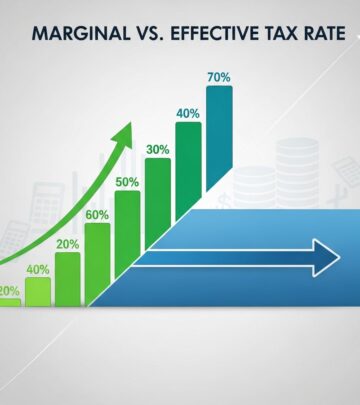
The effective tax rate differs significantly from the marginal tax rate, which is the rate applied to your last dollar of income. Understanding this distinction can help you make better financial decisions and avoid overpaying taxes. This comprehensive guide will walk you through what an effective tax rate is, how to calculate it, and why it matters for your financial planning.
What Is an Effective Tax Rate?
An effective tax rate is the average percentage of your total income that you pay in taxes. It’s calculated by dividing your total tax liability by your total taxable income, then multiplying by 100 to express it as a percentage. This figure gives you a true picture of your tax burden, accounting for the progressive nature of the tax system where different portions of your income are taxed at different rates.
Unlike the marginal tax rate—the highest tax bracket you fall into—the effective tax rate reflects what you actually pay across all your income. For example, if you earn $100,000 and pay $15,000 in taxes, your effective tax rate is 15 percent, regardless of whether your marginal rate is 22 percent or 24 percent.
How to Calculate Your Effective Tax Rate
Calculating your effective tax rate is straightforward, though gathering the right numbers requires attention to detail:
Step-by-Step Calculation
1. Determine Your Total Tax Liability
Begin by calculating all federal income taxes owed. This includes taxes on wages, investment income, self-employment income, and any other taxable sources. You can find this figure on your tax return (Form 1040, Line 24 for federal taxes).
2. Calculate Your Total Income
Add up all sources of income including wages, salaries, investment income, rental income, capital gains, and other taxable income. This should match your adjusted gross income (AGI) or taxable income before standard or itemized deductions for certain calculations.
3. Apply the Formula
Use this formula: Effective Tax Rate = (Total Tax Liability ÷ Total Income) × 100
Example: If your total tax liability is $18,500 and your total income is $125,000, your effective tax rate is ($18,500 ÷ $125,000) × 100 = 14.8%
Effective Tax Rate vs. Marginal Tax Rate
Understanding the difference between effective and marginal tax rates is crucial for accurate tax planning. Many people mistakenly believe their marginal rate is what they pay on all their income, leading to incorrect assumptions about their tax burden.
| Aspect | Effective Tax Rate | Marginal Tax Rate |
|---|---|---|
| Definition | Average tax rate on total income | Tax rate on your last dollar earned |
| Calculation | Total taxes ÷ total income | Applied to the highest tax bracket |
| Tax Planning Use | Shows true tax burden | Determines impact of additional income |
| 2024 Example | Single filer earning $100,000: ~12% | Single filer earning $100,000: 22% |
The marginal tax rate is important for understanding how much additional income will cost you in taxes. However, it doesn’t represent what you actually pay overall—that’s the job of the effective tax rate.
Why Effective Tax Rate Matters
Understanding your effective tax rate serves several important purposes in financial planning:
Accurate Budget Planning: Knowing your true tax rate helps you budget accurately and plan for tax obligations without overestimating or underestimating your liability.
Comparing Tax Situations: The effective rate allows meaningful comparisons between different income levels and tax situations, revealing how progressive taxation affects different earners.
Investment Decisions: When evaluating tax-advantaged investments or strategies, your effective rate helps determine the real benefit of tax deductions and credits.
Retirement Planning: Understanding how your effective rate changes with income helps in retirement planning and deciding between traditional and Roth accounts.
Business Comparisons: For corporations, effective tax rates help investors assess true profitability and compare performance across companies and years.
Factors That Influence Your Effective Tax Rate
Several factors can significantly impact your effective tax rate:
Income Level: The U.S. uses a progressive tax system where higher earners typically have higher effective rates due to increased tax brackets.
Type of Income: Capital gains and qualified dividends often receive preferential tax treatment compared to ordinary income, lowering effective rates for investors.
Deductions and Credits: Itemized deductions, standard deductions, and tax credits directly reduce tax liability and lower your effective rate.
Tax Filing Status: Your filing status (single, married filing jointly, head of household) affects tax bracket placement and effective rates.
State and Local Taxes: Including SALT in calculations increases your overall effective rate, though 2024 deductions are capped at $10,000.
Special Circumstances: Self-employment income, alternative minimum tax (AMT), and net investment income tax can increase effective rates.
Effective Tax Rate Examples
Example 1: Single Earner with Standard Deduction
A single taxpayer earns $75,000 in wages. Using the 2024 standard deduction of $14,600, their taxable income is $60,400. Based on 2024 tax brackets, their federal tax liability is approximately $6,850. Their effective tax rate is ($6,850 ÷ $75,000) × 100 = 9.13%.
Example 2: Married Couple with Investment Income
A married couple filing jointly earns $150,000 in wages and $20,000 in qualified dividend income. After the standard deduction of $29,200, their taxable income is approximately $140,800. With preferential rates on dividends, their total federal tax is roughly $16,500. Their effective rate is ($16,500 ÷ $170,000) × 100 = 9.7%.
Example 3: High-Income Earner with Deductions
A high earner makes $500,000 annually and itemizes deductions totaling $50,000 (subject to phase-outs). Their taxable income is approximately $450,000, resulting in federal tax of about $110,000. Their effective rate is ($110,000 ÷ $500,000) × 100 = 22%, significantly lower than their marginal rate of 37%.
Effective Tax Rate for Corporations
Corporate effective tax rates follow similar principles but are calculated differently. A corporation’s effective tax rate is its total tax liability divided by its pre-tax income. This metric is important for investors assessing company profitability and comparing companies across industries and countries where statutory rates vary.
The federal corporate statutory rate is 21 percent (post-2017 Tax Cuts and Jobs Act). However, most corporations pay effective rates lower than this due to deductions, credits, and depreciation benefits. Some highly profitable companies pay rates substantially lower than the statutory rate through legal tax planning strategies.
Ways to Lower Your Effective Tax Rate
Maximize Retirement Contributions: Contributing to traditional IRAs (up to $7,000 in 2024) or 401(k)s reduces taxable income dollar-for-dollar, directly lowering your effective rate.
Claim All Eligible Tax Credits: Tax credits directly reduce tax liability. The Earned Income Tax Credit (EITC), Child Tax Credit, and education credits can significantly lower rates.
Harvest Tax Losses: Offsetting capital gains with realized losses reduces net investment income and lowers tax liability.
Optimize Asset Location: Placing tax-inefficient investments in tax-advantaged accounts and efficient ones in taxable accounts improves after-tax returns.
Consider Charitable Giving: For those who itemize, charitable contributions provide deductions that reduce taxable income.
Manage Timing of Income: For business owners and self-employed individuals, timing income and expenses strategically can optimize tax liability.
Frequently Asked Questions
Q: Is a higher or lower effective tax rate better?
A: A lower effective tax rate is generally preferable as it means keeping more of your income. However, comparing effective rates across different income levels is important—higher earners naturally have higher rates due to the progressive system.
Q: Can my effective tax rate be zero?
A: Yes, if your income is below the standard deduction or if deductions and credits completely eliminate your tax liability, your effective rate is zero. Many lower-income earners have zero or negative effective rates due to refundable credits.
Q: How do tax credits differ from deductions in affecting effective tax rate?
A: Tax credits reduce tax liability dollar-for-dollar, providing a more powerful tax benefit than deductions, which only reduce taxable income. Credits have a more significant impact on lowering your effective rate.
Q: Should I consider state and local taxes in calculating effective rate?
A: Yes, for a complete picture of your tax burden, include state, local, and FICA taxes (for employees) in calculating your total effective rate. However, federal effective rate is often calculated separately.
Q: Does the effective tax rate apply to capital gains differently?
A: Yes, long-term capital gains receive preferential tax rates (0%, 15%, or 20% for most taxpayers), which significantly lowers the effective rate for investment-heavy income portfolios compared to ordinary income.
Q: How does the effective tax rate for self-employed individuals differ?
A: Self-employed individuals must pay both employer and employee portions of FICA taxes (15.3% on 92.35% of net earnings), significantly increasing their overall effective rate compared to W-2 employees.
Key Takeaways
Your effective tax rate represents your true tax burden—the actual percentage of income paid in taxes across all sources. It differs fundamentally from your marginal tax rate, which applies only to your last dollar of income. Calculating your effective rate involves dividing total tax liability by total income and multiplying by 100.
Understanding this metric is essential for accurate financial planning, comparing tax situations, and making informed decisions about investments and retirement strategies. The progressive tax system means higher earners face higher effective rates, but various deductions, credits, and strategic planning can optimize this rate regardless of income level.
By recognizing how deductions, credits, and income types affect your effective rate, you can implement strategies to minimize tax liability while remaining compliant with tax laws. Whether planning for retirement, evaluating investments, or simply understanding your tax burden, knowing your effective tax rate provides clarity and enables better financial decision-making.
References
- Internal Revenue Service – Individual Income Tax Rates and Brackets — U.S. Department of the Treasury. 2024. https://www.irs.gov/filing/federal-income-tax-rates-and-brackets
- IRS Publication 17: Your Federal Income Tax for Individuals — Internal Revenue Service. 2024. https://www.irs.gov/publications/p17
- Understanding Tax Credits — U.S. Department of the Treasury Internal Revenue Service. 2024. https://www.irs.gov/credits-deductions
- Tax Treatment of Capital Gains and Dividends — Internal Revenue Service. 2024. https://www.irs.gov/taxtopics/tc409
- Corporate Income Tax Rates — U.S. Department of the Treasury. 2024. https://home.treasury.gov/policy-issues/tax-policy/about-the-tax-code/corporation-income-tax
Similar Articles








Read full bio of Sneha Tete