Economies of Scale: Definition, Types, and Business Benefits
Understand how businesses reduce costs and increase profits through economies of scale strategies.

Understanding Economies of Scale
Economies of scale represent one of the most fundamental concepts in modern business and economics. At its core, economies of scale refer to the cost advantages that a business achieves when it increases the volume of production. As companies expand their operations and produce more goods or services, the average cost per unit of production typically decreases, allowing businesses to operate more efficiently and competitively in their respective markets.
The principle behind economies of scale is straightforward: when a company increases its production volume, it can spread fixed costs across a larger number of units, resulting in lower per-unit expenses. This cost reduction can be reinvested into the business for growth, used to increase profit margins, or passed on to consumers through lower prices, creating a win-win scenario for both the company and its customers.
Understanding economies of scale is crucial for entrepreneurs, business managers, and investors because it directly impacts profitability, market competitiveness, and long-term business sustainability. Companies that successfully leverage economies of scale can achieve significant competitive advantages over smaller competitors who cannot benefit from the same cost efficiencies.
Types of Economies of Scale
Economies of scale are generally divided into two main categories: internal economies of scale and external economies of scale. Each type offers distinct advantages and operates through different mechanisms within the business environment.
Internal Economies of Scale
Internal economies of scale are cost advantages that arise from factors within a company’s direct control. These advantages result from decisions made by management and the company’s own operational strategies. When a business grows in size, it can implement various internal improvements that reduce production costs and enhance efficiency.
Several key sources of internal economies of scale include:
- Bulk Purchasing: Larger companies can negotiate better prices when buying raw materials and supplies in large quantities. Suppliers offer volume discounts to major customers, significantly reducing per-unit material costs.
- Specialized Labor and Management: Larger companies can afford to hire highly skilled specialists and experienced managers who focus on specific areas of production, quality control, and operations. This specialization leads to improved efficiency and reduced waste.
- Technological Investment: Companies with greater output can justify investments in advanced technology and automation equipment that smaller competitors cannot afford. While the initial capital expenditure is substantial, spreading this cost across millions of units makes it economically viable and results in significant per-unit savings.
- Research and Development: Larger firms have more resources to allocate toward innovation and product improvement, leading to more efficient production processes and better products.
- Financial Advantages: Bigger firms typically receive lower interest rates on borrowed capital and have access to more diverse financial instruments, reducing financing costs.
External Economies of Scale
External economies of scale occur when firms benefit from the growth of their entire industry or geographic region, rather than from internal business decisions. These advantages arise from factors outside the individual company but within the broader business environment. When an industry becomes concentrated in a specific region or grows as a whole, all participating companies can benefit from improved infrastructure, supplier networks, and specialized services.
Common examples of external economies of scale include:
- Industry Clustering: When multiple companies in the same industry concentrate in one geographic area—such as Silicon Valley for technology companies—they benefit from shared infrastructure, access to specialized talent pools, and established supply chains.
- Supplier and Service Networks: As an industry grows, specialized suppliers and service providers establish themselves nearby, reducing transportation costs and improving service quality for all companies in the region.
- Knowledge Spillovers: Companies in concentrated industries benefit from the free flow of ideas, best practices, and technological innovations within their professional networks.
Real-World Examples of Economies of Scale
Examining practical examples helps illustrate how economies of scale function in actual business environments. Several well-known companies demonstrate these principles effectively.
Retail and Bulk Purchasing
Retail giants such as Walmart, Costco, and Sam’s Club exemplify economies of scale in bulk purchasing. These warehouse stores can purchase enormous quantities of products directly from manufacturers, securing significantly lower prices per unit than smaller retailers. By passing these savings to consumers through competitive pricing, these retailers attract higher customer volumes, which further strengthens their negotiating position with suppliers. This creates a virtuous cycle of cost reduction and increased market share.
Manufacturing and Technology
Apple provides an excellent example of economies of scale in global manufacturing and procurement. Because Apple sells millions of iPhones and other devices each quarter, it can commit to massive component orders with suppliers located around the world. This enormous purchasing power gives Apple significant leverage to negotiate volume-based discounts on semiconductors, display screens, and other components. Furthermore, because many Apple products share common components, the company can consolidate orders and achieve even greater discounts through increased volumes.
Infrastructure and Natural Monopolies
Water companies and utility providers demonstrate economies of scale through infrastructure investment. These companies invested heavily in extensive networks of pipes and systems to deliver water and resources to millions of customers across geographic regions. While the initial infrastructure investment is enormous, distributing these costs across millions of households dramatically reduces the per-unit cost. This fundamental economic reality often creates natural monopolies, as building a competing infrastructure network would be prohibitively expensive and inefficient.
Logistics and Transportation
Major shipping and logistics companies such as UPS and large oil companies benefit from economies of scale through specialized equipment. Shipping companies operate supertankers and container ships that can transport goods far more efficiently than smaller vessels. The cost per unit of cargo transported decreases significantly as ship size increases, creating substantial advantages for companies operating at large scale.
Key Factors Contributing to Economies of Scale
Several specific factors enable businesses to achieve economies of scale:
| Factor | Description | Business Impact |
|---|---|---|
| Bulk Discounts | Volume-based price reductions from suppliers and vendors | Directly reduces raw material and supply costs |
| Technology Investment | Advanced machinery and automation systems | Increases production efficiency and reduces labor costs per unit |
| Specialization | Dedicated teams and managers for specific functions | Improves quality, reduces errors, and increases productivity |
| Financial Access | Lower borrowing rates and diverse funding options | Reduces capital costs and improves cash flow management |
| Marketing Efficiency | Fixed advertising costs spread across larger sales volume | Reduces per-unit marketing expense |
| Infrastructure Networks | Established distribution and delivery systems | Lowers transportation and logistics costs |
Benefits of Economies of Scale
Companies that successfully achieve economies of scale experience numerous significant benefits that enhance their competitive position and profitability.
For Businesses
Lower production costs directly improve profit margins, allowing companies to reinvest in product development, expand market share, or reward shareholders. The cost advantages also create barriers to entry for competitors, as smaller companies cannot match the efficiency of larger firms. Additionally, economies of scale enable competitive pricing strategies that can capture market share from less efficient competitors.
For Consumers
As companies benefit from economies of scale, they often pass savings to consumers through lower prices. This increased affordability makes products and services accessible to broader populations. In critical sectors such as healthcare, education, and essential goods, economies of scale make these items affordable to more people, improving overall accessibility and quality of life.
For the Economy
When consumers benefit from lower prices resulting from economies of scale, they have greater purchasing power to spend on other goods and services. This increased economic activity stimulates overall economic growth and creates opportunities for business expansion across multiple sectors. The efficiency gains also reduce resource waste, contributing to more sustainable business practices.
Diseconomies of Scale: When Size Becomes a Disadvantage
While economies of scale offer significant advantages, it’s important to recognize that this principle has limits. When production reaches certain levels, continued expansion can lead to diseconomies of scale, where average costs begin to increase rather than decrease.
Diseconomies of scale can result from several factors:
- Management Complexity: As companies grow extremely large, management becomes more complex and bureaucratic, leading to slower decision-making and higher administrative costs.
- Communication Challenges: Larger organizations struggle with internal communication, leading to inefficiencies and duplicated efforts.
- Quality Control Issues: Extreme production volumes can make quality control more difficult and costly.
- Worker Alienation: Massive workforces may experience reduced motivation and productivity.
- Capacity Constraints: Facilities become overcrowded or equipment becomes overutilized, requiring additional expensive infrastructure.
Strategic Implications for Businesses
Understanding economies of scale helps businesses make strategic decisions about growth, pricing, and market positioning. Companies should identify which aspects of their operations can most benefit from scale and invest accordingly. This might include automating production processes, investing in larger facilities, or implementing bulk purchasing agreements with suppliers. However, businesses must also recognize their optimal scale and avoid expanding to the point where diseconomies outweigh economies.
Frequently Asked Questions
What is the difference between economies of scale and economies of scope?
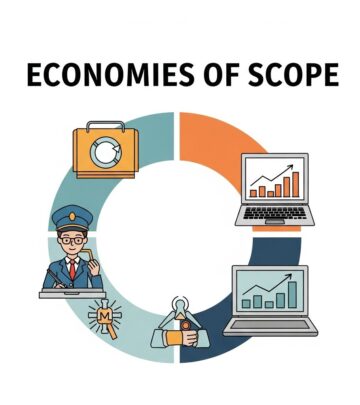
Economies of scale refer to cost advantages from increased production volume of the same product. Economies of scope, by contrast, refer to cost advantages from producing multiple different products together, as they can share resources and infrastructure.
Can small businesses benefit from economies of scale?
Small businesses can achieve some economies of scale, particularly through bulk purchasing cooperatives, shared services, and strategic partnerships. However, they typically cannot match the scale advantages of large corporations without collaboration or consolidation.
How do companies measure economies of scale?
Companies typically measure economies of scale by tracking average cost per unit as production volume increases. A declining average cost indicates successful economies of scale, while increasing average costs signal potential diseconomies.
Are economies of scale always beneficial?
While economies of scale typically reduce costs, they can lead to market concentration, reduced competition, and potentially negative effects on consumers if not balanced by competitive forces. Additionally, pursuing excessive scale can trigger diseconomies that negate benefits.
How do digital businesses leverage economies of scale?
Digital and software companies achieve economies of scale primarily through fixed infrastructure costs spread across large user bases. Once development is complete, serving additional customers involves minimal marginal costs, enabling dramatic economies of scale.
References
- Economies of Scale: Definition and Types (With Examples) — Indeed. 2024. https://www.indeed.com/career-advice/career-development/economies-of-scale
- Economies of Scale | Overview, Types & Examples — Study.com. 2024. https://study.com/academy/lesson/economies-of-scale-definition-benefits-examples.html
- Economies of scale examples — Economics Help. 2024. https://www.economicshelp.org/blog/326/concepts/economies-of-scale-examples/
- Economies of Scale (EOS) | Definition + Examples — Wall Street Prep. 2024. https://www.wallstreetprep.com/knowledge/economies-of-scale/
- What Are the Economies of Scale? (Definition and Examples) — Chisel Labs. 2024. https://chisellabs.com/glossary/what-are-economies-of-scale/
Similar Articles








Read full bio of Sneha Tete