Economic Growth: Definition, Measurement, and Impact
Understanding economic growth: How nations measure prosperity and sustainable development.
What Is Economic Growth?
Economic growth refers to an increase in the production of goods and services in an economy over a specific period. It is one of the most fundamental concepts in macroeconomics and serves as a primary indicator of a nation’s economic health and prosperity. When an economy experiences growth, it means that businesses are producing more output, consumers are spending more, and overall economic activity is expanding. This expansion creates opportunities for job creation, increased wages, and improved living standards for the population.
Economic growth is typically measured as the percentage increase in real gross domestic product (GDP) or real gross national income (GNI) compared to the previous period. Most countries track quarterly and annual growth rates, which help policymakers, investors, and economists understand the current state of the economy and make informed decisions about future investments and policy adjustments.
Understanding the Basics of Economic Growth
At its core, economic growth is driven by several interconnected factors that work together to expand an economy’s productive capacity. These include increases in labor supply, technological innovation, capital investment, and improved productivity. When an economy grows, it generates more income, which can be redistributed through taxation, wages, and business profits, leading to improved social outcomes and government capacity to invest in infrastructure and public services.
Economic growth is essential for maintaining financial stability and creating opportunities for upward mobility. Without growth, economies can stagnate, leading to job losses, declining consumer confidence, and reduced government revenues. However, it is important to note that not all growth is sustainable or beneficial. Growth achieved through resource depletion or environmental degradation may provide short-term benefits but can lead to long-term economic and social challenges.
How Economic Growth Is Measured
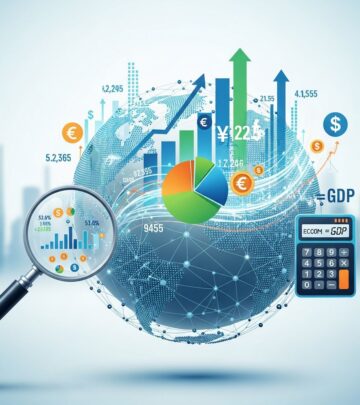
The primary method for measuring economic growth is through changes in Gross Domestic Product (GDP), which represents the total monetary value of all finished goods and services produced within a country’s borders during a specific period. GDP can be measured using three different approaches:
- Expenditure Approach: This method sums up consumer spending, business investment, government spending, and net exports (exports minus imports). The formula is GDP = C + I + G + (X – M).
- Income Approach: This approach adds up all incomes earned in producing goods and services, including wages, profits, rent, and interest.
- Production Approach: This method calculates the value added at each stage of production, avoiding double-counting by measuring only the value added at each step.
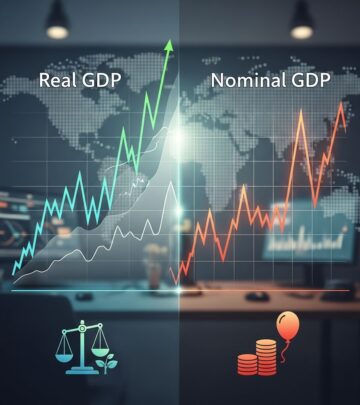
Economists also distinguish between nominal GDP and real GDP. Nominal GDP is measured in current prices and can be distorted by inflation. Real GDP, conversely, is adjusted for inflation and provides a more accurate picture of actual economic growth. When discussing economic growth rates, policymakers typically focus on real GDP growth to eliminate the effects of price changes and measure true expansion in productive output.
Real vs. Nominal Economic Growth
Understanding the difference between real and nominal growth is crucial for accurate economic analysis. Nominal GDP growth includes the effects of inflation, meaning it reflects both increases in actual production and increases in prices. For example, if nominal GDP grows by 5% but inflation is 3%, the real growth is only approximately 2%.
Real GDP growth provides a clearer picture of whether an economy is genuinely expanding or simply experiencing price increases. This distinction is particularly important during periods of high inflation, when nominal figures can be misleading. Central banks and governments typically target real growth rates when setting monetary and fiscal policies, as this reflects actual improvements in productive capacity and living standards.
The relationship between these measurements can be expressed as: Real GDP Growth Rate = Nominal GDP Growth Rate – Inflation Rate. This formula helps economists and policymakers understand the true health of an economy beyond surface-level statistics.
Key Factors Driving Economic Growth
Multiple factors contribute to economic growth, and understanding these drivers helps policymakers implement effective strategies for sustainable expansion:
- Technological Innovation: Advances in technology increase productivity, reduce costs, and create new industries and markets. From automation to artificial intelligence, technology drives efficiency gains across all sectors.
- Capital Investment: Business investment in equipment, infrastructure, and research and development expands productive capacity and creates jobs.
- Labor Force Growth: An expanding workforce increases production capacity. This can result from population growth, immigration, or increased participation rates.
- Human Capital Development: Education and training improve worker productivity and create skilled workforces capable of operating advanced technologies.
- Natural Resources: Access to raw materials, energy sources, and agricultural land provides the foundation for production.
- Institutional Framework: Strong legal systems, property rights protection, and stable governance create environments conducive to business expansion and investment.
- Trade and Global Integration: Access to international markets increases demand for exports and provides access to cheaper imports, benefiting consumers and businesses.
Short-Term vs. Long-Term Economic Growth
Economic growth can be analyzed at different time horizons, each with distinct characteristics and policy implications. Short-term growth, typically measured quarter-to-quarter or year-to-year, is often influenced by business cycles, consumer confidence, and temporary economic shocks. These fluctuations are normal parts of economic activity and are reflected in economic expansions and recessions.
Long-term economic growth, spanning decades or longer, reflects the structural changes in an economy and its fundamental productive capacity. This trend growth is determined by factors such as technological progress, population growth, and capital accumulation. Developed economies typically experience long-term growth rates between 2-3% annually, while developing economies may achieve higher rates as they catch up to developed nations through technology adoption and capital investment.
Economic Growth and Standards of Living
A primary objective of economic policy is to improve citizens’ standards of living, and economic growth is a key driver of this improvement. When GDP grows faster than population, per capita income increases, enabling higher consumption, better healthcare, improved education, and enhanced quality of life. However, the relationship between growth and living standards is not automatic—how growth is distributed across society matters significantly.
Economic growth concentrated among wealthy individuals or specific industries may not translate into widespread improvements in living standards. Conversely, growth accompanied by equitable income distribution, investment in public services, and human development tends to produce more broad-based improvements in quality of life. This distinction has led economists and policymakers to increasingly focus on inclusive growth models that benefit larger portions of the population.
Challenges and Criticisms of Economic Growth Models
While economic growth is generally viewed as positive, it faces several criticisms and challenges:
- Environmental Concerns: Rapid growth can lead to pollution, resource depletion, and climate change if not managed sustainably.
- Inequality: Growth may concentrate wealth among certain groups, increasing economic disparity and social tension.
- Quality of Life Issues: GDP measures don’t account for non-monetary factors like leisure time, community relationships, and environmental quality.
- Sustainability Questions: Unsustainable growth based on debt accumulation or resource depletion may be temporary, creating future economic problems.
Sustainable Economic Growth
In response to criticisms, economists increasingly emphasize sustainable economic growth—expansion that meets current needs without compromising future generations’ ability to meet their own needs. Sustainable growth incorporates environmental protection, social equity, and long-term viability into economic planning.
This approach recognizes that true prosperity extends beyond GDP figures to include quality of life, environmental health, and social cohesion. Sustainable growth strategies may include investments in renewable energy, education, healthcare, and infrastructure that provide long-term benefits while minimizing negative externalities.
Measuring Progress Beyond GDP
Recognition of GDP’s limitations has led to the development of alternative and supplementary measures of economic progress:
- Gross National Happiness (GNH): Used primarily in Bhutan, this measure emphasizes psychological well-being and environmental sustainability alongside economic metrics.
- Human Development Index (HDI): Combines GDP per capita with life expectancy and education levels to provide a more comprehensive view of development.
- Genuine Progress Indicator (GPI): Adjusts GDP for environmental factors, income distribution, and non-monetary well-being indicators.
- Better Life Index: Developed by the OECD, this tool allows comparison across multiple well-being dimensions including civic engagement, work-life balance, and environmental quality.
Frequently Asked Questions
Q: What is considered a healthy rate of economic growth?
A: For developed economies, growth rates of 2-3% annually are typically considered healthy and sustainable. Developing economies often experience higher growth rates as they adopt new technologies and increase capital investment. Growth rates significantly above or below these ranges may indicate overheating or stagnation, respectively.
Q: How does inflation affect economic growth measurements?
A: Inflation can distort growth measurements by inflating nominal GDP figures. This is why economists use real GDP, which is adjusted for inflation, to measure true economic expansion. Understanding the difference between nominal and real growth is essential for accurate economic analysis.
Q: Can an economy grow indefinitely?
A: While infinite exponential growth is theoretically unsustainable given finite resources, economies can achieve continuous growth through technological innovation, productivity improvements, and more efficient resource use. The concept of sustainable development seeks to achieve ongoing growth while managing environmental and social impacts.
Q: What role does government play in promoting economic growth?
A: Governments promote growth through monetary policy (interest rates, money supply), fiscal policy (taxation, spending), investment in infrastructure and education, and creating regulatory frameworks that encourage business development and innovation.
Q: How do recessions affect long-term economic growth?
A: Recessions temporarily reduce economic output and disrupt growth trends. However, the long-term growth trajectory depends on whether the underlying productive capacity has been permanently damaged. Economies typically recover from recessions and resume growth trends if fundamental factors remain sound.
Q: What is the difference between economic growth and economic development?
A: Economic growth refers to quantitative increases in GDP and output, while economic development encompasses qualitative improvements in living standards, healthcare, education, and institutional quality. Development is broader and more holistic than growth alone.
References
- Gross Domestic Product (GDP) — U.S. Bureau of Economic Analysis. 2025. https://www.bea.gov/resources/methodologies/nipa
- World Economic Outlook Database — International Monetary Fund. November 2024. https://www.imf.org/en/Publications/WEO
- Sustainable Development Goals: Ensuring Sustainable Consumption and Production — United Nations Environment Programme. 2024. https://www.unep.org/explore-topics-a-z/sustainable-development-goals
- Better Life Index — OECD. 2025. https://www.oecdbetterlifeindex.org/
- Human Development Report — United Nations Development Programme. 2024. https://hdr.undp.org/
- National Income and Product Accounts — U.S. Bureau of Economic Analysis. 2025. https://www.bea.gov/resources/landing/index.html
Similar Articles








Read full bio of Sneha Tete