Depression: Economic Definition and Historical Impact
Understanding economic depressions: causes, characteristics, and real-world examples.
What Is an Economic Depression?
An economic depression represents a severe and prolonged downturn in economic activity that extends far beyond typical business cycle fluctuations. Unlike recessions, which are relatively brief periods of economic contraction, depressions are characterized by their intensity and duration, creating widespread hardship across entire societies. An economic depression is defined as a major downturn in the business cycle marked by sharp and sustained declines in economic activity, including high rates of unemployment, poverty, and homelessness; increased rates of personal and business bankruptcy; massive declines in stock markets; and significant reductions in international trade and capital movements.
Most economists define an economic depression using specific quantifiable criteria. A depression typically occurs when real gross domestic product (GDP) declines by at least 10 percent in a single year, or when an economic downturn lasts for three or more years. This distinguishes depressions from recessions, which represent milder and more frequent economic slowdowns that the National Bureau of Economic Research (NBER) defines as “a significant decline in economic activity spread across the economy, lasting more than a few months.”
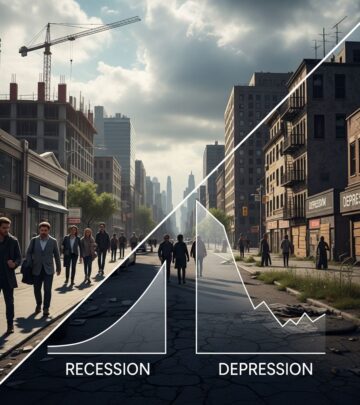
Depression Versus Recession: Key Differences
Understanding the distinction between a depression and a recession is crucial for comprehending economic cycles. While both represent periods of declining economic activity, their severity, duration, and societal impact differ substantially. A recession is generally understood as a period of at least two consecutive quarters of decline in real GDP relative to a national economy. Recessions are more common, less severe, and typically shorter in duration than depressions.
The relationship between these two phenomena is hierarchical: all depressions are technically recessions, but not all recessions become depressions. A depression represents a particularly severe period of economic weakness that is commonly understood to last from the onset of economic decline to the return of normal economic activity. The NBER maintains detailed records of cyclical peaks and troughs in U.S. economic activity dating back to 1854, providing historical context for understanding how these economic events have shaped the nation’s economic development.
The primary distinction lies in measurable impact. Under one definition, depressions are identified by a real GDP decline exceeding 10 percent or a recession lasting two or more years. Under this framework, depressions and recessions will have the same starting dates but different ending dates, making depressions inherently longer than the recessions that trigger them.
Characteristics of Economic Depressions
Economic depressions exhibit several defining characteristics that differentiate them from milder economic downturns. These hallmark features create cascading effects throughout the economy, touching virtually every aspect of financial and social life.
High Unemployment Rates
During an economic depression, unemployment reaches abnormally high levels, affecting millions of workers simultaneously. The widespread job loss extends beyond individual hardship to reduce consumer spending power, further contracting economic activity and creating a vicious cycle of declining demand and business failures.
Severe Stock Market Declines
Stock market crashes are characteristic features of depressions, wiping out substantial portions of household wealth and investor portfolios. These crashes destroy consumer confidence and reduce access to capital for businesses seeking to expand or maintain operations.
Deflation and Currency Instability
Depressions are often accompanied by deflation, where the general price level of goods and services falls. Paradoxically, this benefits no one, as consumers delay purchases hoping for further price declines, reducing demand and exacerbating economic contraction. Currency markets experience significant volatility, with exchange rate fluctuations reflecting economic uncertainty and capital flight.
Banking System Stress
Financial institutions face severe stress during depressions, with banking panics causing many banks to fail. This dramatically reduces consumer spending and business investment, as the credit system contracts and financial intermediation breaks down. Banks become reluctant to lend, fearing default in an environment of rising unemployment and business failures.
Reduced International Trade
Economic depressions produce massive reductions in international trade and capital movements. Protectionist policies proliferate as countries attempt to shield domestic industries, ultimately reducing overall trade volumes and perpetuating the downturn across multiple national economies.
Causes and Contributing Factors
Economic depressions result from combinations of factors that compound to create severe economic contractions. Understanding these causes is essential for recognizing warning signs and implementing preventive policies.
Loss of Consumer Confidence
A critical trigger for depression is a significant drop in consumer confidence. Consumer confidence represents how optimistic or pessimistic people feel about the future of the economy. When confidence is high, people spend more money, increasing demand for goods and services. When confidence plummets, consumers reduce spending dramatically, contracting economic activity and causing businesses to reduce production and investment.
Stock Market Crashes
Major stock market declines can precipitate depressions by destroying household wealth and undermining confidence in financial systems. The stock market crash of 1929, which devastated consumer confidence throughout the United States, exemplifies how financial market collapse can trigger broader economic crisis.
Banking System Failures
Banking panics cause many banks to fail, dramatically reducing money supply and credit availability. When banks collapse, depositors lose savings, and the financial system’s ability to facilitate economic transactions breaks down. Surviving banks become extremely cautious about lending, reducing investment and consumption spending.
Contractionary Monetary Policy
Central bank policies that reduce money supply can stifle spending and investment while leading to deflation. The Federal Reserve’s contractionary monetary policy during the Great Depression significantly worsened economic conditions by reducing the money supply when expansion was needed.
International Economic Linkages
The international gold standard and other fixed exchange rate systems can spread domestic economic problems globally. Countries tied to the gold standard must maintain fixed exchange rates, preventing them from independently managing their money supplies to address domestic recessions. This mechanism spread the U.S. downturn of 1929 to other countries, transforming a national crisis into a global depression.
Protectionist Trade Policies
Protectionist policies in multiple countries, including tariffs and trade barriers, reduce international commerce. While intended to protect domestic industries, these policies ultimately reduce overall trade volumes and perpetuate economic contraction across multiple nations.
Natural Disasters and External Shocks
Natural disasters, pandemic events, and other external shocks can trigger depressions by disrupting production, reducing consumer confidence, and destroying assets. Global interdependence means these shocks often have repercussions extending beyond national borders.
The Great Depression: Historical Example
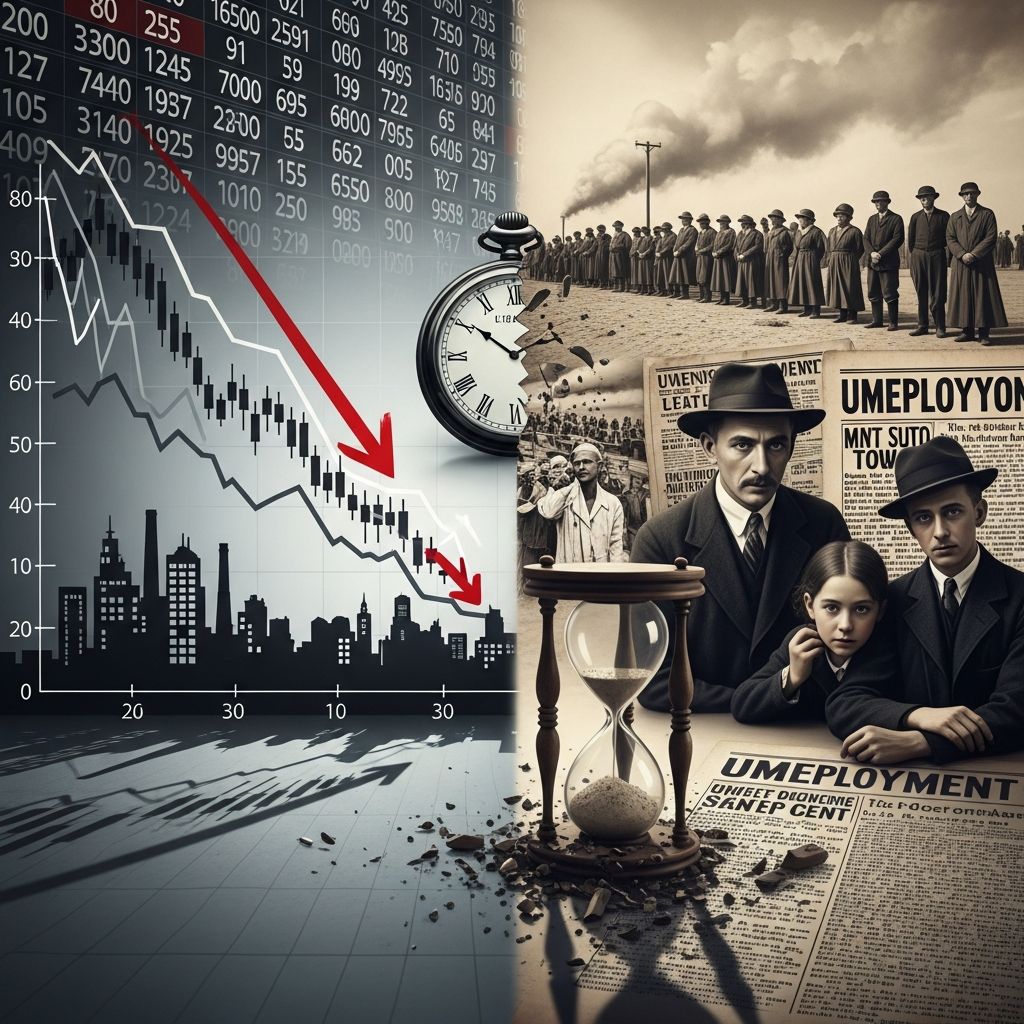
The Great Depression of the 1930s represents the most severe economic depression in modern history, providing valuable lessons about how multiple factors combine to create catastrophic economic collapse. Most economists believe the downturn began in summer 1929 when the United States entered a mild recession that caused consumer confidence to fall.
Several factors combined to transform this recession into the Great Depression. In October 1929, the stock market crashed, and millions of people lost their wealth overnight. The massive stock market crash caused consumer confidence to plummet further. This falling confidence reduced demand for goods and services, increased unemployment as businesses reduced production, and decreased productivity across the economy.
Banking panics followed, causing many banks to fail and greatly reducing consumer spending and business investment. The Federal Reserve’s contractionary monetary policy stifled spending and investment while leading to deflation. The international gold standard, which tied countries’ money supplies to gold reserves, spread the U.S. downturn to other countries. Protectionist policies in several countries reduced international trade, perpetuating the global depression.
The political effects of the Great Depression extended beyond economics. These severe economic conditions contributed to the rise of authoritarian regimes in Europe and influenced domestic politics in democratic countries. The depression’s impacts lasted throughout the 1930s and demonstrated the devastating consequences of economic collapse when multiple reinforcing factors operate simultaneously.
Societal Impact of Economic Depressions
Economic depressions create far-reaching consequences that extend well beyond financial markets. Consumer confidence and consumer spending fall dramatically, while unemployment reaches crisis levels. The availability of credit contracts severely, as banks refuse to lend to businesses and individuals perceived as high-risk.
Increased poverty and homelessness accompany widespread unemployment and reduced incomes. Business bankruptcies proliferate as firms cannot generate sufficient revenue to cover expenses. Reduced productivity affects living standards across society. The psychological toll of economic uncertainty and unemployment creates lasting damage to individual wellbeing and social cohesion.
Depressions can trigger political instability, as dissatisfied populations demand change or support radical political movements. Economic hardship strains social safety nets and government budgets precisely when demand for assistance peaks. The combination of these effects can take years or decades to overcome.
Modern Economic Safeguards
Since the Great Depression, governments and central banks have implemented safeguards designed to prevent or mitigate economic depressions. Federal Reserve policies now aim to maintain stable money supply and prevent banking panics. Deposit insurance protects bank customers from losses when banks fail. Unemployment insurance and other social safety nets reduce the harshness of job loss. International trade agreements reduce protectionist policies that exacerbate depressions. Economists monitor leading economic indicators to identify warning signs of developing problems.
These safeguards have reduced the frequency and severity of severe downturns. However, economists continue to debate the most effective policies for preventing depressions while maintaining economic growth and innovation.
Frequently Asked Questions
Q: What is the main difference between a depression and a recession?
A: The primary difference lies in severity and duration. A recession is a milder, shorter economic downturn typically lasting several quarters to a year or two. A depression is a severe, prolonged downturn lasting three or more years or involving a real GDP decline exceeding 10 percent in a single year. All depressions are recessions, but not all recessions become depressions.
Q: What causes an economic depression?
A: Depressions result from combinations of factors including loss of consumer confidence, stock market crashes, banking system failures, contractionary monetary policy, international economic linkages, protectionist trade policies, and external shocks. Multiple reinforcing factors typically operate simultaneously to create severe economic contractions.
Q: How does consumer confidence affect economic depressions?
A: Consumer confidence is crucial because it drives spending behavior. High confidence leads to increased spending and economic expansion. When confidence falls, consumers reduce spending, reducing demand for goods and services. This reduction in demand causes businesses to cut production, lay off workers, and reduce investment, creating a downward spiral that can develop into depression.
Q: Can governments prevent economic depressions?
A: While modern safeguards including Federal Reserve policies, deposit insurance, unemployment insurance, and international trade agreements have reduced depression frequency and severity, complete prevention remains impossible. Economists continue debating the most effective policies for preventing depressions while maintaining economic growth and innovation.
Q: How long do economic depressions typically last?
A: By definition, economic depressions last three or more years. However, the effects often extend far beyond the official end date. The Great Depression of the 1930s lasted nearly a decade, and its effects influenced economic policy and psychology for decades afterward.
References
- Depression | Definition, Characteristics, Comparison with Recession — Britannica. Accessed 2025. https://www.britannica.com/money/depression-economics
- Economic Depression — EBSCO Research Starters. Accessed 2025. https://www.ebsco.com/research-starters/economics/economic-depression
- National Bureau of Economic Research (NBER) Business Cycle Reference Dates — NBER. Accessed 2025. https://www.nber.org/research/data/us-business-cycle-expansions-and-contractions
- The Great Depression: Causes and Effects — Federal Reserve History. Accessed 2025. https://www.federalreservehistory.org/essays/great-depression
Similar Articles








Read full bio of Sneha Tete