Eco-Capitalism: How to Make Money from Garbage
Discover profitable ways to turn everyday trash into treasure through recycling, upcycling, and innovative waste business models.
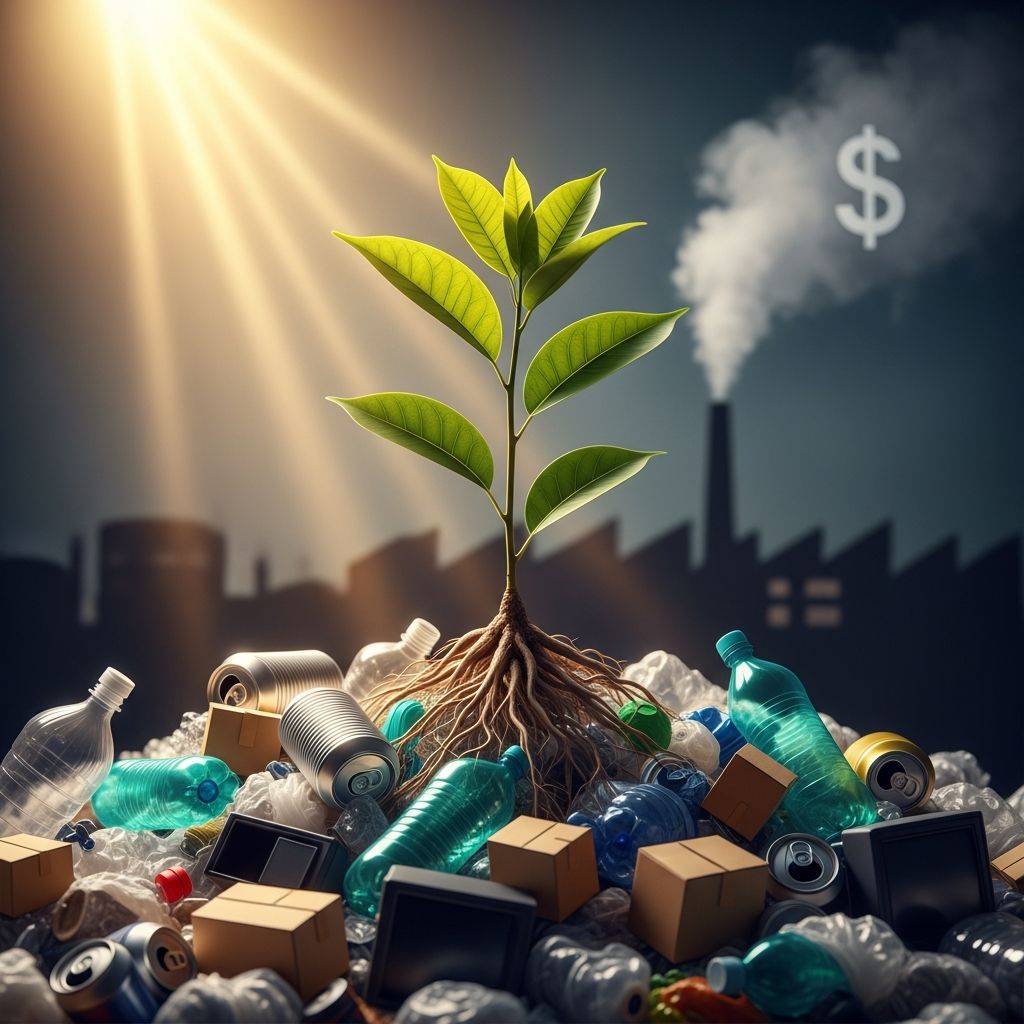
In today’s linear ‘take-make-waste’ economy, garbage piles up as a socio-ecological challenge, contributing to climate change and resource depletion. Eco-capitalism flips this script by commodifying waste—transforming it into marketable commodities through recycling, upcycling, and circular business models. This approach not only generates income but also promotes sustainability, as seen in global shifts toward closed-loop systems that minimize waste. Whether you’re an individual collector or aspiring entrepreneur, turning trash into cash is accessible and profitable.
The Rise of the Circular Economy
The circular economy model replaces the unsustainable linear chain of extraction, production, consumption, and disposal with a regenerative system that keeps materials in use. Drawing from industrial ecology, it emphasizes reusing, repairing, and recycling to eliminate waste at its source. Countries like Germany, Japan, and China have implemented policies favoring circular practices, such as eco-industrial parks that reduce waste by reusing byproducts.
For individuals and businesses, this means finding value in what others discard. TerraCycle founder Tom Szaky exemplifies eco-capitalism by upcycling hard-to-recycle waste into products, proving reuse is more profitable than traditional recycling. A waste-free growth model preserves natural capital while creating economic opportunities, aligning profit with planetary health.
Collect and Sell Recyclables
One of the simplest entry points into eco-capitalism is collecting aluminum cans, plastic bottles, and scrap metal for redemption at recycling centers. In the U.S., states like Michigan and California offer bottle bills paying 5-10 cents per container, turning curbside pickups into steady income.
- Aluminum Cans: At $0.50-$1 per pound, a dedicated collector can earn $500 monthly from 1,000 pounds.
- Cardboard and Paper: Bundled and sold to scrap buyers at $50-$150 per ton.
- Electronics (e-waste): Smartphones and computers fetch $5-$20 each when stripped for gold and copper.
Scale up by partnering with businesses for bulk collection. Risks include fluctuating commodity prices, but demand from circular economies ensures viability.
Upcycling: Craft Value from Trash
Upcycling elevates waste into higher-value products, outpacing basic recycling in profitability. TerraCycle’s model turns cigarette butts into park benches and coffee pods into playgrounds, commodifying ‘unrecyclable’ waste.
Start small:
- Furniture: Pallets into tables sold on Etsy for $100+.
- Jewelry: Bottle caps and circuit boards into unique pieces.
- Home Decor: Tires into ottomans or wine corks into trivets.
Business models for resource recovery from waste, like those in low-income countries, recover energy, nutrients, and water, proving scalability. Online platforms amplify reach, with regenerative economies fostering meaningful careers in sustainable design.
Launch a Junk Removal Service
Offer haul-away services for garages, attics, and construction debris, then sort and resell valuables. Profit margins hit 50% after recycling fees. Specialize in eco-friendly disposal to attract green clients.
| Service Type | Avg. Job Price | Profit Potential |
|---|---|---|
| Residential Cleanout | $300-$800 | $150-$400 |
| Construction Debris | $500-$2,000 | $250-$1,000 |
| Corporate e-Waste | $1,000+ | $500+ |
Integrate circular practices: donate usable items, recycle metals, compost organics.
Freelance Recycling for Businesses
Corporations face pressure to meet sustainability goals. Offer services to audit waste streams, implement separation, and track diversion rates. Charge $50-$150/hour or per project. Tools like Winnow reduce food waste with AI insights.
Governments and firms adapt via public-private partnerships for waste infrastructure, enhancing legitimacy in socio-ecological crises.
Scrap Metal Dealing
Focus on ferrous (steel) and non-ferrous (copper, brass) metals. Copper wiring from old appliances sells at $3-$4 per pound. Build supplier networks from demolition sites and appliances. Licenses may be required for volumes over 500 lbs.
- Tips: Use magnets to sort ferrous; strip insulation for max value.
- Markets: Fluctuate with industry—monitor via apps.
Composting and Worm Farming
Convert food scraps into ‘black gold’ compost or vermicompost. Sell to gardeners at $5-$10 per bag. Urban farms and homeowners pay premiums for organic soil amendments.
Low startup: worms cost $30/lb, double population monthly. Circular models integrate waste to regenerate soil.
Waste-to-Energy Ventures
Advanced: biogas from organics or pellets from biomass. Small-scale home digesters produce cooking gas; scale to community plants. Policies in China support such infrastructure.
Online Waste Marketplaces
Platforms like Facebook Marketplace or apps connect waste generators with buyers. Flip free Craigslist ‘curb alerts’ into profit. Recommerce platforms facilitate item reuse.
TerraCycle-Style Brigades
Emulate TerraCycle’s zero-waste brigades: collect niche waste (e.g., candy wrappers) via competitions, upcycle into products. Earn via sponsorships and sales.
Challenges and Power Dynamics in Waste
Waste commodification can reinforce hierarchies if mismanaged, as in Naples’ crisis where illegal dumping wasted communities. Ethical eco-capitalism prioritizes local benefits and equity.
Frequently Asked Questions (FAQs)
Q: Is eco-capitalism truly profitable?
A: Yes, models like TerraCycle prove profitability by finding value in waste streams others ignore, with reuse outperforming recycling.
Q: What startup costs for upcycling?
A: Minimal—$100-500 for tools and materials; scale with online sales.
Q: How does circular economy reduce environmental impact?
A: By closing loops, it minimizes extraction and pollution, as in eco-parks cutting waste.
Q: Legal considerations for scrap dealing?
A: Check local laws for licenses and metal theft reporting.
Q: Best waste for beginners?
A: Aluminum cans—high demand, easy collection.
Conclusion: Trash Your Way to Wealth
Eco-capitalism harnesses waste as a technique of power for positive change, building thrivable systems. Start small, scale sustainably, and profit while healing the planet.
References
- Theorizing Waste as a Technique of Power in Capitalistic Stakeholder Relations — Journal of Management Studies (Wiley). 2024-10-15. https://onlinelibrary.wiley.com/doi/10.1111/joms.13190
- The Future of Waste Management: Shifting Toward Circular Economies — Environmental Law Institute. 2023-05-12. https://www.eli.org/vibrant-environment-blog/future-waste-management-shifting-toward-circular-economies
- Trash the Take-Make-Waste Model of Industry and Embrace the Regenerative Economy — Net Impact. 2024-02-20. https://www.netimpact.org/blog/regenerative-economy-model
- Business models for recovering resources from waste — International Water Management Institute (IWMI). 2022-11-08. https://archive.iwmi.org/wle/solutions/business-models-recovering-resources-waste/index.html
- Circular Business Models: The Transition — THRIVE Project. 2023-08-14. https://thrivabilitymatters.org/circular-business-models-2/
- Circular economy introduction — Ellen MacArthur Foundation. 2024-01-10. https://www.ellenmacarthurfoundation.org/topics/circular-economy-introduction/overview
- 10 Tips from an Eco-Capitalist: Tom Szaky Shares TerraCycle’s Secrets to Success — Trellis. 2023-06-05. https://trellis.net/article/10-tips-eco-capitalist-tom-szaky-shares-terracycles-secrets-success/
Similar Articles








Read full bio of Sneha Tete