EBIT: Earnings Before Interest and Taxes
Understanding EBIT: A comprehensive guide to measuring operating profitability.

What Is EBIT?
Earnings Before Interest and Taxes, commonly abbreviated as EBIT, is a financial metric that measures a company’s operating profitability by calculating earnings after operating expenses have been deducted from revenues, but before interest expenses and income taxes are subtracted. This metric provides investors and analysts with a clear picture of how well a company is performing from its core business operations, independent of its financing structure and tax obligations.
EBIT is particularly valuable because it isolates the earnings generated by a company’s operational activities, allowing stakeholders to assess business performance without the distortion caused by different capital structures or tax jurisdictions. Whether a company is financed primarily through debt or equity, and regardless of the tax rate it faces, EBIT remains consistent, making it an excellent tool for comparing companies across different industries and countries.
EBIT Formula and Calculation
Understanding how to calculate EBIT is essential for anyone involved in financial analysis or investment decision-making. There are multiple approaches to calculating EBIT, each providing the same result but starting from different points in the income statement.
Method 1: Starting from Net Income
The most straightforward approach begins with a company’s net income and works backward by adding back interest expenses and taxes:
EBIT = Net Income + Interest Expense + Tax Expense
This method is useful when you have access to the bottom-line net income figure and want to understand how much earnings the company generated before financial and tax considerations.
Method 2: Starting from Revenue
The second approach begins with total revenue and subtracts all operating expenses:
EBIT = Revenue – Cost of Goods Sold – Operating Expenses
This method provides a more detailed view of how revenue flows through the income statement and where profitability is generated or lost.
Method 3: Using EBITDA
A third approach utilizes EBITDA (Earnings Before Interest, Taxes, Depreciation, and Amortization) and subtracts depreciation and amortization expenses:
EBIT = EBITDA – Depreciation and Amortization Expenses
This method is particularly useful when analyzing capital-intensive businesses where depreciation and amortization are significant expense items.
Practical Example of EBIT Calculation
To illustrate how EBIT works in practice, consider the following simplified income statement for a hypothetical manufacturing company (figures in thousands):
| Line Item | Amount |
|---|---|
| Sales Revenue | $20,438 |
| Cost of Goods Sold | ($7,943) |
| Gross Profit | $12,495 |
| Selling, General & Administrative Expenses | ($8,172) |
| Depreciation and Amortization | ($960) |
| Other Operating Expenses | ($138) |
| Operating Profit (EBIT) | $3,225 |
| Non-Operating Income | $130 |
| Earnings Before Interest and Taxes | $3,355 |
| Interest Expense | ($190) |
| Earnings Before Taxes (EBT) | $3,165 |
| Income Tax Expense | ($1,027) |
| Net Income | $2,138 |
In this example, the company generated $3,355 in EBIT, meaning that after accounting for all operating expenses, the business earned this amount from its core operations. The difference between Operating Profit ($3,225) and EBIT ($3,355) reflects non-operating income of $130, demonstrating how EBIT can include income from activities outside the primary business operations.
EBIT vs. Operating Income: Key Differences
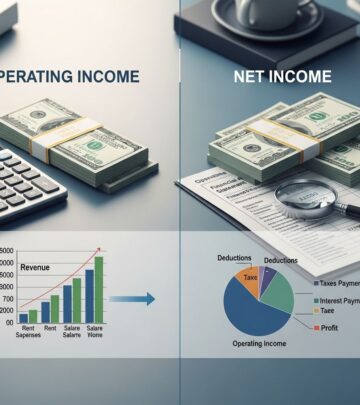
While EBIT and operating income are often used interchangeably, there are important distinctions between these two metrics. Operating income includes only revenues and expenses directly related to the company’s primary business activities. It excludes non-operating income and expenses such as investment gains, rental income, or losses from discontinued operations.
EBIT, on the other hand, can include both operating and non-operating income and expenses. This broader definition means EBIT may be higher or lower than operating income depending on whether the company has positive or negative non-operating items. When a company has no non-operating income or expenses, EBIT and operating income are equivalent.
Why EBIT Matters: Importance in Financial Analysis
Comparing Companies Across Different Capital Structures
Different companies finance their operations using different combinations of debt and equity. Some companies are highly leveraged with substantial debt, while others rely more on equity financing. EBIT allows investors to compare the operational performance of these companies on an equal footing because it excludes the effects of financing decisions. Two companies with identical operating performance will have the same EBIT regardless of whether one is financed primarily through debt and the other through equity.
Evaluating Operational Efficiency
EBIT provides a clear measure of how efficiently a company converts its revenues into profits from its core business operations. By removing the effects of taxes and financing decisions, EBIT reveals the true operational profitability and helps identify whether operational challenges or improvements are driving changes in overall earnings.
Assessing Takeover and Restructuring Potential
Professional investors evaluating potential acquisitions or considering changes to a company’s capital structure, such as through leveraged buyouts, first examine the company’s fundamental earnings potential reflected by metrics like EBIT and EBITDA. These metrics help determine the optimal balance between debt and equity financing in the restructured entity.
Facilitating International Comparisons
Since different countries have different tax rates and tax structures, comparing net income across international companies can be misleading. EBIT allows for more meaningful comparisons because it excludes the effects of varying tax regimes, making it easier to evaluate companies operating in different jurisdictions.
EBIT Margin: Measuring Operational Profitability as a Percentage
EBIT Margin is a profitability ratio calculated by dividing EBIT by total revenue and expressing the result as a percentage:
EBIT Margin = (EBIT / Revenue) × 100
This metric shows what percentage of each dollar in revenue becomes operating profit before interest and taxes. A higher EBIT margin indicates more efficient operations and better profitability from core business activities. EBIT margins vary significantly across industries, so comparisons are most meaningful when made between companies in the same sector.
Related Earnings Metrics and Variations
While EBIT is a useful metric, several related measures provide different perspectives on profitability and earnings potential:
EBITDA (Earnings Before Interest, Taxes, Depreciation, and Amortization) adds depreciation and amortization back to EBIT, providing a measure of cash-generating ability before capital expenditure impacts. This metric is particularly useful for analyzing companies in capital-intensive industries.
Earnings Before Taxes (EBT), also called Earnings Before Income Taxes (EBIT in some contexts), represents earnings after interest expense but before income taxes. EBT is calculated by subtracting interest expense from EBIT and provides a midpoint between EBIT and net income.
Operating Income is essentially EBIT when a company has no non-operating income or expenses, focusing exclusively on profits from core business activities.
EBITA (Earnings Before Interest, Taxes, and Amortization) excludes only amortization from the calculation, providing a middle ground between EBIT and EBITDA for companies where depreciation is material but amortization is considered part of operations.
Limitations of EBIT
While EBIT is a valuable metric, it has certain limitations that investors should understand. EBIT does not account for depreciation and amortization, which can be significant non-cash charges that reduce actual cash generation capacity. Additionally, EBIT excludes the impact of capital structure decisions, which means two companies with identical EBIT but different debt levels will have different net income and cash available to shareholders. Finally, EBIT does not account for working capital changes or capital expenditures, which are critical to understanding a company’s true economic performance.
Frequently Asked Questions
Q: How does EBIT differ from net income?
A: EBIT excludes interest expenses and income taxes, while net income includes all expenses and taxes. EBIT represents operational profitability, while net income represents the profit available to shareholders after all obligations are met.
Q: Why is EBIT important for investors?
A: EBIT allows investors to compare companies with different capital structures and tax situations on an equal basis, focusing on operational performance rather than financial structure or tax optimization strategies.
Q: Can EBIT be negative?
A: Yes, EBIT can be negative when operating expenses exceed revenues, indicating that the company is losing money from its core business operations before considering interest and tax impacts.
Q: Is EBIT the same as operating income?
A: EBIT and operating income are equivalent when a company has no non-operating income or expenses. When non-operating items exist, EBIT can differ from operating income.
Q: How can I use EBIT to evaluate company performance?
A: Calculate the EBIT margin and compare it to competitors’ EBIT margins, analyze EBIT trends over multiple periods to assess operational improvements or deterioration, and use EBIT as a starting point for valuation multiples like EV/EBIT ratios.
References
- Earnings before interest and taxes — Wikipedia. Retrieved November 29, 2025. https://en.wikipedia.org/wiki/Earnings_before_interest_and_taxes
Similar Articles








Read full bio of medha deb