Build A Resume: 10 Easy Steps To Create A Standout CV
Master resume building with our comprehensive step-by-step guide for job seekers.
Easy Steps to Build a Resume
Building a resume can feel overwhelming, especially if you’re entering the job market for the first time or returning after a significant gap. However, with the right approach and understanding of what employers look for, creating an effective resume becomes a manageable task. Your resume is often your first impression with potential employers, so it’s essential to get it right. This comprehensive guide walks you through the essential steps to build a resume that captures attention and showcases your qualifications effectively.
Understanding the Purpose of Your Resume
A resume serves as a marketing document that highlights your professional achievements, skills, and background. Unlike a job application form that asks specific questions, a resume gives you control over how you present your qualifications. The primary goal is to convince potential employers that you’re worth interviewing by demonstrating relevant experience and competencies. Your resume should be tailored to each position you apply for, emphasizing the skills and experiences most relevant to the role.
Step 1: Create an Outline and Define Your Format
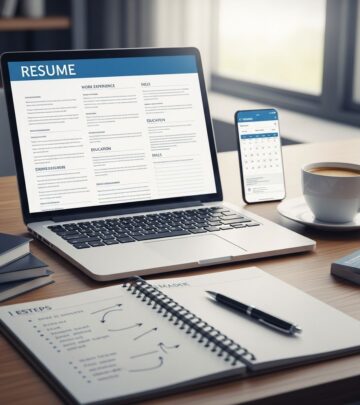
Before you start writing, take time to plan your resume’s structure. Creating an outline gives you a roadmap and prevents you from overlooking important information. Begin by gathering all relevant professional history, educational background, and accomplishments. Write down every job you’ve held, volunteer positions, internships, and significant projects or achievements.
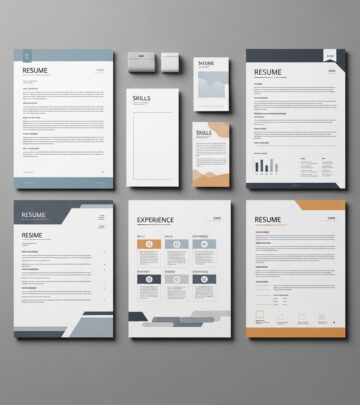
When defining your format, consider using a resume template that aligns with industry standards. Most modern resumes follow a clean, straightforward structure that employers can easily scan. Choose a professional font in 10-12 point size, maintain consistent margins of at least 0.5 inches on all sides, and ensure adequate white space throughout the document. Your resume should typically fit on one page, especially if you’re early in your career, though two pages is acceptable for experienced professionals with substantial accomplishments.
The standard format includes the following sections in order:
– Contact information at the top- Professional objective or summary (optional but recommended)- Education section- Professional experience- Skills section- Additional sections as relevant (certifications, awards, volunteer work)
Step 2: Display Your Highlights in the Upper Third
Recruiters and hiring managers typically spend only seconds scanning a resume before making an initial judgment. This means your most compelling information must appear in the upper third of the document. Position your strongest qualifications, most relevant experience, or key achievements near the top to immediately capture attention.
If you’re early in your career with limited professional experience, use this prime real estate to highlight your education, relevant coursework, internships, or standout projects. For experienced professionals, showcase your most impressive accomplishments or the experiences most directly related to the position you’re seeking. This strategic placement ensures that hiring managers see your value proposition immediately.
Step 3: Include Your Contact Information and Professional Summary
Your contact information should be prominently displayed at the top of your resume. Include your full name, phone number, and professional email address. While including a mailing address was once standard, it’s no longer necessary unless you’re applying locally and want to indicate geographic availability. Instead, consider including your LinkedIn profile URL, professional website, or portfolio link if these showcase your work effectively.
Below your contact information, you may include a professional objective or summary. An objective statement is brief (one or two lines) and specifies the type of position you’re seeking. A professional summary, conversely, highlights your key qualifications and value proposition. For example: “Results-driven marketing professional with 5+ years of experience in digital campaign management and brand strategy, seeking to leverage expertise in content creation and analytics at a forward-thinking tech company.” Choose whichever format best represents your career stage and goals.
Step 4: Detail Your Education
Your education section should include all relevant degrees, diplomas, and educational credentials you’ve earned or are currently pursuing. List them in reverse chronological order, starting with your highest level of education first. For each entry, include the degree earned (e.g., Bachelor of Science), your field of study, the institution name, and the graduation date or expected graduation date.
You can enhance your education section by including relevant coursework, academic honors, scholarships, or a GPA if it’s 3.5 or higher. If you’re still in school and haven’t accumulated significant work experience, emphasizing relevant coursework related to your target position can strengthen your candidacy. Include any specialized training, certifications, or professional development that relates directly to your career goals.
Step 5: Showcase Your Professional Experience
Your professional experience section is typically the largest and most important part of your resume. This is where you demonstrate your value through concrete examples of what you’ve accomplished. List all relevant work experience in reverse chronological order, beginning with your most recent position.
For each position, include:
– Job title- Company name and location- Dates of employment (month and year)- Three to five bullet points describing key accomplishments and responsibilities
When writing your bullet points, focus on accomplishments rather than just listing duties. Start each bullet with a strong action verb such as “developed,” “managed,” “implemented,” “coordinated,” or “achieved.” Avoid using first-person pronouns like “I” or “my.” Instead of saying “I was responsible for managing the team,” write “Managed a team of eight employees, resulting in a 15% increase in productivity.”
Always include quantifiable results when possible. Numbers make your accomplishments concrete and memorable. For example: “Increased social media engagement by 40%,” “Reduced operational costs by $50,000 annually,” or “Trained 25 new employees on company protocols.” These specific details help employers understand the scope of your impact.
If you’re early in your career without much paid work experience, don’t worry. Consider including relevant volunteer positions, internships, campus leadership roles, or significant academic projects. Frame these experiences using the same format and focus on transferable skills that apply to your target position.
Step 6: Include Your Skills Section
Your skills section should highlight both hard skills (technical abilities like software proficiency) and soft skills (interpersonal abilities like communication or leadership). Review the job description for positions you’re targeting and mirror relevant keywords in your skills section. This practice, known as keyword matching, helps your resume pass through applicant tracking systems and demonstrates alignment with employer needs.
Organize skills into categories such as:
– Technical Skills- Software Proficiencies- Languages- Certifications- Soft Skills
Be honest about your skill levels. If you list “Advanced Excel,” be prepared to demonstrate this during an interview. Including proficiency levels (beginner, intermediate, advanced) can help set proper expectations.
Step 7: Think Beyond Professional Experience
Don’t limit your resume to paid work experience alone. Employers value diverse backgrounds and experiences. Consider including sections for:
– Volunteer work and community service- Professional affiliations and memberships- Awards and recognitions- Publications or presentations- Speaking engagements- Languages spoken- Special projects or achievements- Relevant hobbies or interests
These additional elements provide a fuller picture of who you are as a candidate and can differentiate you from other applicants. Volunteer experience, for instance, demonstrates commitment, initiative, and the ability to work with diverse groups. Leadership roles in community organizations showcase management and organizational skills valuable to many employers.
Step 8: Format for Clarity and Consistency
A resume’s appearance matters as much as its content. Employers expect a clean, professional presentation that’s easy to scan. Use consistent formatting throughout your document. If you bold one job title, bold all job titles. If you italicize one company name, italicize all company names. Maintain uniform spacing between sections and use bullet points instead of paragraph form for experience descriptions.
Ensure your resume has visual balance, meaning content is distributed evenly across the page with adequate white space. Avoid cramming text or using excessively small fonts to fit more content. A cluttered resume is difficult to read and makes a poor impression. If you’re struggling to fit everything on one page, review each entry and eliminate words or phrases that don’t add value.
Use reverse chronological order consistently throughout your resume. List your most recent positions, education, and accomplishments first. This format helps hiring managers quickly identify your most current experience and relevant background.
Step 9: Tailor Your Resume for Each Application
Rather than using the same resume for every application, invest time in customizing your document for each position. Review the job description carefully and identify required skills, preferred qualifications, and key responsibilities. Adjust your resume to emphasize experiences and skills most relevant to that specific role.
You might reorder your professional experience to lead with the most relevant positions, adjust your objective statement to align with the specific role, or highlight particular skills that match the job requirements. This targeted approach demonstrates genuine interest in the position and increases your chances of passing the initial screening.
Step 10: Proofread and Polish
Before submitting your resume, thoroughly proofread for spelling, grammar, and punctuation errors. A single mistake can create a negative impression and suggest carelessness. Read your resume multiple times, ideally aloud, to catch errors your eyes might otherwise miss. Ask a trusted friend or mentor to review your resume with fresh eyes and provide feedback.
Check that all dates are accurate, company names are spelled correctly, and formatting is consistent throughout. Verify that action verbs are strong and sentences are concise. Ensure your contact information is current and accurate. A polished, error-free resume demonstrates professionalism and attention to detail.
Common Resume Mistakes to Avoid
As you build your resume, steer clear of these common pitfalls:
– Using personal pronouns like “I” or “me”- Including irrelevant information that doesn’t support your target position- Using generic or weak action verbs- Neglecting to quantify accomplishments- Poor formatting or inconsistent styling- Exceeding one page when you’re early in your career- Including outdated or irrelevant experience- Failing to tailor your resume for each application- Using unprofessional email addresses or outdated contact information- Submitting a resume with spelling or grammatical errors
Frequently Asked Questions About Resume Building
Q: How long should my resume be?
A: Your resume should typically fit on one page if you have less than five years of experience. Professionals with extensive experience may use two pages, but avoid exceeding two pages unless you have substantial accomplishments to showcase.
Q: Should I include a photo on my resume?
A: In most industries, including a photo is unnecessary and can introduce unconscious bias. However, certain fields like modeling, acting, or media may expect headshots. Follow industry norms and job description guidelines.
Q: What if I have employment gaps in my work history?
A: You don’t need to explain employment gaps on your resume itself. Focus on the positions you did hold and the value you brought. If asked during an interview, be honest and brief about the reason for the gap, then redirect focus to what you learned during that time.
Q: Should I include references on my resume?
A: It’s no longer necessary to include references on your resume. Instead, prepare a separate list of professional references to provide when requested. Use the space on your resume for more substantive content.
Q: How should I handle career changes on my resume?
A: Highlight transferable skills that connect your previous experience to your new target role. Use your objective statement to clarify your career transition and frame your diverse background as an asset that brings unique perspective and skills to your new field.
Q: What font should I use for my resume?
A: Use professional, easily readable fonts such as Arial, Calibri, Times New Roman, or Helvetica. Stick with 10-12 point font size to ensure readability. Avoid decorative or unusual fonts that may be difficult to read or not display properly on all systems.
Q: Should I include my GPA on my resume?
A: Include your GPA only if it’s 3.5 or higher. For experienced professionals, education and GPA become less critical, so it’s acceptable to omit this information after several years in the workforce.
Q: How can I make my resume stand out?
A: Focus on quantifiable achievements, use strong action verbs, tailor your resume to each position, and ensure impeccable formatting. Tell your professional story through specific accomplishments rather than general job duties, and highlight unique skills or experiences relevant to your target role.
Conclusion
Building a compelling resume is an investment in your career that pays dividends throughout your job search. By following these steps, you create a document that effectively communicates your qualifications, achievements, and potential value to employers. Remember that your resume is a living document that should evolve as your career progresses. Regularly update it with new accomplishments, skills, and experiences. Take time to customize it for each application, proofread carefully, and ensure it presents your professional brand authentically and compellingly. With a well-crafted resume in hand, you’ll be better positioned to move forward in the hiring process and secure the career opportunities you’re pursuing.
References
- Resume Resources – WashU Center for Career Engagement — Washington University in St. Louis. 2024. https://careers.washu.edu/resume-resources/
- Resume Writing 101: Tips for Creating a Resume — Indeed Career Guide. 2024. https://www.indeed.com/career-advice/resumes-cover-letters/resume-writing-101
- Résumé Writing Guide — Cornell University School of Hotel Administration. 2019. https://sha.cornell.edu/
- Resume, Cover Letter and Thank You Guide 2025 — Baruch College Student Affairs. 2020. https://studentaffairs.baruch.cuny.edu/
Similar Articles








Read full bio of Sneha Tete