Easier Home Loans Despite Student Debt: Proceed Wisely?
New rules simplify mortgages for those with student loans, but weigh risks before buying a home amid rising debt burdens.

Recent updates to mortgage lending guidelines have made it simpler for borrowers carrying student loan debt to qualify for home loans. Lenders now offer more flexible approaches to calculating debt-to-income (DTI) ratios, potentially opening doors for millions with education debt.
However, while access improves, the core challenges of managing dual debts1udent loans and mortgages1ersist. This article breaks down the changes, qualification strategies, risks, and whether pursuing a home loan now aligns with your financial health.
What Changed in Home Loan Guidelines?
Federal housing agencies like Fannie Mae, Freddie Mac, FHA, and VA have revised how student loan payments factor into mortgage approvals. Previously, high monthly student loan payments often pushed DTI ratios above acceptable limits, disqualifying buyers.
- Fannie Mae and Freddie Mac: For deferred or income-driven repayment (IDR) plans, lenders can now use 5% of the loan balance annually (0.42% monthly) instead of the full payment or 1% if payments are $0. This replaces stricter prior rules.
- FHA Loans: Similar flexibility; for IDR plans, use the actual documented payment if it rises within 3 years, or 0.5% of the balance monthly.
- VA Loans: Zero payments under IDR count as $0 toward DTI, a major win for veterans.
These shifts stem from 2023-2024 policy updates recognizing that IDR plans cap payments at 10-20% of discretionary income, not fixed high amounts. Average student debt hit $38,374 in Q4 2024 per Federal Student Aid data.
How Student Debt Previously Blocked Homeownership
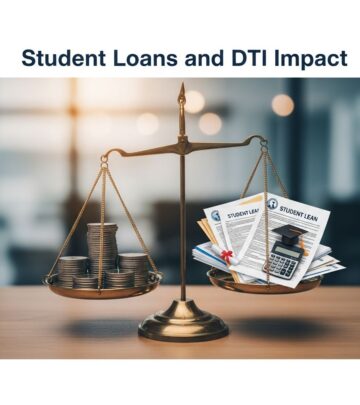
Student loans have derailed homeownership for years. With U.S. student debt exceeding $1.7 trillion, payments inflate DTI1onthly debt payments divided by gross income. Lenders cap front-end DTI (housing costs) at 28-31% and back-end (all debts) at 36-43%.
A $40,000 loan at 6.53% interest yields ~$450/month on standard 10-year terms, easily spiking DTI. IDR users saw even conservative 1% estimates ($333/month) used, blocking approvals. Homeownership rates for under-35s fell partly due to this.
| Debt Scenario | Old DTI Impact (Monthly) | New DTI Impact (Monthly) |
|---|---|---|
| $38k loan, IDR $0 payment | $319 (1% rule) | $0 or $160 (0.42%) |
| $38k loan, deferred 5 years | Full accruing interest | $160 (5% annual) |
| Standard repayment $432/mo | $432 | $432 (unchanged) |
Result: Borrowers save hundreds in counted payments, qualifying with lower income.
Who Benefits Most from These Changes?
- Recent grads on SAVE/IDR plans with low/$0 payments.
- Public service workers qualifying for PSLF (Public Service Loan Forgiveness), where payments count low.
- Teachers, nurses, first responders using employer-specific IDR perks.
- Independent undergrad borrowers facing lifetime caps under proposed bills, pushing private debt.
Median bachelor’s earner at $80,263 sees SAVE payments ~$121-221/month vs. $432 standard. New rules amplify this relief.
Steps to Qualify for a Mortgage with Student Debt
- Document Your Loans: Gather servicer statements showing IDR enrollment, deferment status, or $0 payments. Avoid recent switches to standard plans.
- Lower Your DTI Proactively: Pay down credit cards, auto loans. Aim for <36% back-end DTI.
- Boost Income Proof: Use 2 years tax returns, W2s. Overtime/bonuses count if consistent.
- Shop Lenders: Compare DTI allowances; some push to 50% with strong credit.
- Consider Manual Underwriting: For self-employed or thin credit, provide bank statements.
- Make Voluntary Payments: While in school, curb interest capitalization.
Tools like Federal Student Aid’s loan simulator project payments accurately.
Pros of Buying a Home Now
- Build Equity: Mortgage payments grow wealth vs. rent. Rates stabilizing post-2024 hikes.
- Tax Benefits: Deduct mortgage interest, property taxes (up to limits).
- Lock in Payments: Fixed-rate mortgages shield from rent inflation.
- Leverage New Rules: Qualify easier without refinancing student debt.
Cons and Hidden Risks
Don’t rush—student debt amplifies pitfalls.
- IDR Recalculation: Annual income jumps trigger higher payments, straining mortgage + loans.
- Private Loans: No IDR flexibility; full payments always count. Proposed caps force more into costly private debt at 1.5-3x federal rates.
- Opportunity Cost: Debt snowball stalls; focus mortgage over accelerating student payoff.
- Default Risks: Non-payment ruins credit, wage garnishment—worse than other debts. RAP plans under bills cost $1,761-$2,928 more yearly than SAVE.
- Market Volatility: Home values dip; you’re stuck underwater with dual debts.
Smart Strategies Before Applying
Assess affordability beyond DTI.
- Emergency Fund: 6 months expenses, including both payments.
- Debt Payoff Plan: Use avalanche (high-interest first) or snowball.
- Refinance Check: Federal loans? Lose IDR/PSLF. Private only if rates drop.
- Co-Signer Caution: Avoid burdening family.
- Budget Stress Test: Survive 20% income drop?
Typical borrower: $38k debt at 6.3%, median income. SAVE: $0-$891/year; standard/RAP: $5,182. Prioritize high-reward degrees/careers.
Alternatives to Buying Immediately
- Rent and aggressively pay student debt.
- Co-buy or house hack (rent rooms).
- Wait for PSLF forgiveness (10 years).
- Employer assistance programs.
Frequently Asked Questions (FAQs)
Q: Do deferred student loans affect mortgage DTI?
A: Under new rules, lenders use 5% of balance annually divided by 12 (~0.42% monthly) for Fannie/Freddie, not zero.
Q: Can I switch to standard repayment for better qualification?
A: No—full payment counts, worsening DTI. Stick to IDR for relief.
Q: What’s the max DTI for FHA with student debt?
A: Up to 43% front-end, 56.99% total with compensating factors like reserves.
Q: How does PSLF impact home buying?
A: $0 IDR payments count minimally; forgiveness erases debt post-10 years.
Q: Are private student loans treated differently?
A: Yes, full minimum payment always used—no IDR benefits.
Final Thoughts: Should You?
New guidelines ease access, but student debt remains a financial anchor. Calculate total obligations: If post-home expenses leave >50% income free after savings/debt, proceed. Otherwise, fortify finances first. Tools like debt snowball accelerate escape. Homeownership rewards patience.
References
- Deep Dive: House Reconciliation Bill Makes Paying for College More Expensive & Risky 1udent Borrower Protection Center. 2024. https://protectborrowers.org/resource/deep-dive-house-reconciliation-bill-makes-paying-for-college-more-expensive-risky/
- Student Loans: The Third Way to Ruin Your Finances ise Bread. N/D. https://www.wisebread.com/student-loans-the-third-way-to-ruin-your-finances
- 15 Ways to Pay Back Student Loans Faster ise Bread. N/D. https://www.wisebread.com/15-ways-to-pay-back-student-loans-faster
- How Student Loan Debt Can Derail Your Future ise Bread. N/D. https://www.wisebread.com/how-student-loan-debt-can-derail-your-future
Similar Articles








Read full bio of medha deb