Earned Income Tax Credit: Complete Guide to EITC
Maximize your tax refund: Comprehensive guide to understanding and claiming the Earned Income Tax Credit.

What is the Earned Income Tax Credit?
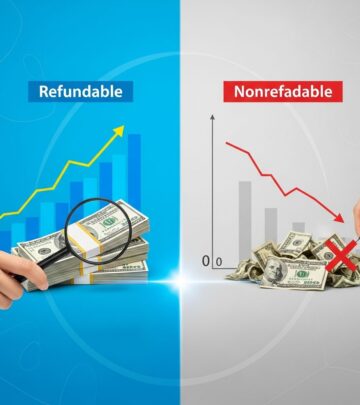
The Earned Income Tax Credit (EITC) is a refundable federal tax credit designed to assist working individuals and families with low to moderate incomes. Unlike many tax credits that simply reduce the amount of tax you owe, the EITC can result in a refund, meaning you may receive money back from the government even if you owe no taxes. This powerful tax benefit has helped millions of Americans reduce their tax burden and improve their financial situation.
The EITC recognizes and rewards work, providing financial support to those who earn income through employment. Whether you work for an employer or are self-employed, if you meet the eligibility requirements, you could qualify for this valuable tax credit. The credit amount varies based on your income, filing status, and number of qualifying children.
Who Qualifies for the Earned Income Tax Credit?
Determining eligibility for the EITC involves meeting several important requirements. To qualify, you must satisfy all of the following conditions:
Basic Eligibility Requirements
- Have a valid Social Security number
- Have earned income from employment or self-employment
- Be a U.S. citizen or resident alien for the entire tax year
- Not file using the Married Filing Separately status
- Have lived in the United States for more than half the tax year
- Not be claimed as a dependent on someone else’s tax return
- Not exclude any foreign earned income on your return
Income Limits for 2025
Your earned income must fall below certain thresholds to qualify for the EITC. The income limits vary depending on your filing status and number of qualifying children. For the 2025 tax year, the following income limits apply:
Earned Income and AGI Limits
- With no qualifying children: $25,511 if married filing jointly, or $18,591 for other filing statuses
- With one qualifying child: $56,004 if married filing jointly, or $49,084 for other filing statuses
- With two qualifying children: $62,688 if married filing jointly, or $55,768 for other filing statuses
- With three or more qualifying children: $66,819 if married filing jointly, or $59,899 for other filing statuses
These limits have increased from the 2024 tax year, reflecting adjustments for inflation. It’s important to note that these limits apply to your adjusted gross income (AGI), which is the income figure used on your tax return after certain deductions are taken.
Investment Income Restrictions
An important limitation for EITC eligibility involves investment income. If you have too much income from investments, you cannot claim the EITC regardless of your earned income level. For the 2025 tax year, you cannot have more than $11,950 in investment income. This includes interest, dividends, capital gains, rental income, royalties, and income from the sale of stocks or other assets.
This restriction ensures the credit primarily benefits those whose income comes from wages and work rather than investments. If you are close to this threshold, you may want to carefully track all investment income sources before filing your return.
Qualifying Children Requirements
If you claim qualifying children on your tax return to receive a larger EITC amount, those children must meet specific criteria. The credit amount increases significantly with each qualifying child, so understanding these requirements is essential.
Age Requirements for Qualifying Children
A child must be younger than you (or your spouse if filing jointly) and meet one of these age conditions:
- Younger than 19 years old at the end of the tax year
- A full-time student younger than 24 years old at the end of the tax year
- Permanently and totally disabled at any age (with medical documentation)
Residency and Relationship Requirements
To qualify as your dependent child for EITC purposes, the child must:
- Be your biological son or daughter, stepchild, adopted child, or a descendant of any of these
- Be your foster child placed with you by an authorized agency or court order
- Be your brother, sister, stepbrother, stepsister, or a descendant of any of these
- Reside with you in the United States for more than half the tax year
- Not be a qualifying child of another person
- Have a valid Social Security number
Qualifying Without Children
You don’t need to have qualifying children to claim the EITC, though the credit amount will be smaller. If you have no qualifying children, you can still receive the credit if you meet all of the following conditions:
- You are at least 25 years old but under 65 at the end of the tax year
- You have lived in the United States for more than half the tax year
- You are not claimed as a dependent on another person’s tax return
- You are not married filing separately (or if married, your spouse also qualifies)
- You meet all other basic eligibility requirements
For those without qualifying children, the EITC can still provide valuable tax relief, though the maximum credit amount is substantially lower than for those with children.
Maximum Credit Amounts by Year
The amount of the EITC you receive depends on your income, filing status, and number of qualifying children. The maximum credit amounts have been increasing with inflation adjustments:
- 2025: Maximum credit of $8,046 (varies by family size and income)
- 2024: Maximum credit of $7,830 (varies by family size and income)
The credit is calculated based on a formula that increases as your income rises up to a certain point, then begins to phase out at higher income levels. This means your actual credit amount depends on where your income falls within the range.
Special Circumstances and Exceptions
Military Service Members and Veterans
Military service members may have special considerations for the EITC. Active duty military pay can be excluded from income for purposes of calculating the credit, which can result in a larger EITC amount. Veterans receiving disability compensation are generally not counted as earned income for EITC purposes.
Foster Youth and Homeless Youth
Certain foster youth and homeless youth have exceptions to the age requirement for claiming the EITC without qualifying children. Some young people who have experienced foster care or homelessness may claim the credit at age 18 rather than the standard age 25 requirement.
Nonresident Aliens
Generally, you must be a U.S. citizen or resident alien to claim the EITC. However, a nonresident alien may claim the credit if filing a joint return with a spouse who is a U.S. citizen or resident alien and meets all other requirements.
How to Claim the Earned Income Tax Credit
Filing Your Tax Return
To claim the EITC, you must file a tax return even if you have no tax liability. This is because the credit is refundable, meaning you could receive a refund even if you earned no income tax.
Using Tax Software or Hiring a Professional
Many taxpayers use tax preparation software to claim the EITC, as the software will guide you through the eligibility questions and calculations. Alternatively, you can work with a tax professional who can ensure you receive all credits you’re entitled to.
Getting Free Help
The IRS provides free tax filing assistance to qualifying individuals. The IRS has an interactive EITC Assistant online tool that can help you determine eligibility and understand how to claim the credit. Additionally, many community organizations and nonprofit groups offer free tax preparation services, particularly for low-income families.
Common Mistakes to Avoid
When claiming the EITC, be careful to avoid these common errors:
- Reporting the wrong income amount or forgetting to include all sources of income
- Listing a child who doesn’t meet all relationship, age, and residency requirements
- Failing to report investment income that exceeds the limit
- Incorrectly calculating the credit when you have multiple children
- Claiming the credit when filing as Married Filing Separately
- Not having valid Social Security numbers for yourself and any dependents
Frequently Asked Questions (FAQs)
Q: Can I claim the EITC if I’m self-employed?
A: Yes, self-employed individuals can claim the EITC if they have net earned income and meet all other eligibility requirements. You must report your self-employment income on Schedule C.
Q: What if I received unemployment benefits during the year?
A: Unemployment benefits are generally not counted as earned income for EITC purposes. However, certain union strike benefits and some long-term disability benefits may count as earned income.
Q: Can I claim a child who lives with another parent part of the year?
A: No, the child must live with you for more than half the tax year to be a qualifying child. If custody is shared, only one parent can claim the child for EITC purposes.
Q: What happens if I receive the EITC but later find I was not eligible?
A: You may be required to repay part or all of the credit. The IRS will notify you if an audit determines you were not eligible. Having documentation to support your eligibility is important.
Q: When is the EITC available for filing in 2025?
A: The IRS typically begins accepting returns in late January. The deadline to file and claim the EITC for 2024 returns is April 15, 2025.
Q: Can I claim EITC if I’m a nonresident alien?
A: Generally no, unless you’re filing jointly with a qualifying U.S. citizen or resident alien spouse. You must have a valid Social Security number valid for employment to claim the credit.
References
- Earned Income Tax Credit (EITC) — Internal Revenue Service. 2025. https://www.irs.gov/credits-deductions/individuals/earned-income-tax-credit-eitc
- The Earned Income Tax Credit — Michigan Legal Help. 2025. https://michiganlegalhelp.org/resources/income-tax/earned-income-tax-credit
- Federal Earned Income Tax Credit — University of Wisconsin Extension Financial Education. 2025. https://finances.extension.wisc.edu/articles/federal-earned-income-credit/
- What is the Earned Income Credit? Find Out If You Qualify — TurboTax/Intuit. 2025. https://turbotax.intuit.com/tax-tips/tax-deductions-and-credits/earned-income-credit/
- Earned Income Tax Credit (EITC) — USA.gov. 2025. https://www.usa.gov/earned-income-credit
Similar Articles








Read full bio of Sneha Tete