Early Auto Loan Payoff: Financial Strategy Guide
Explore the financial benefits and considerations of accelerating your car loan repayment.

Deciding whether to accelerate your car loan repayment is a significant financial decision that requires careful evaluation of your overall monetary situation. While the prospect of becoming debt-free sooner may seem appealing, the actual financial benefit depends on numerous factors including your interest rate, loan structure, emergency fund status, and alternative investment opportunities. This comprehensive guide examines the key considerations that should influence your decision-making process.
Understanding Your Loan Structure Before Accelerating Payments
Not all auto loans are created equal, and this fundamental distinction should be your starting point when considering early payoff. The type of interest calculation your lender uses significantly impacts whether accelerating payments will actually save you money.
Simple interest loans calculate monthly charges based on your remaining balance, meaning that each additional principal payment reduces the total interest you’ll owe. This is the most common structure used by credit unions and many traditional lenders. With simple interest loans, paying extra toward principal directly decreases future interest charges.
Conversely, precomputed interest loans calculate the total interest upfront and distribute it across your entire loan term. Even if you pay off the loan early, you may not recover much—or any—of this prepaid interest, since the lender has already factored it into your total cost. Understanding which type you have requires reviewing your loan documentation or contacting your lender directly.
Another critical consideration involves prepayment penalties. Some lending institutions impose fees if you pay off your loan before the scheduled maturity date. These penalties can range from modest amounts to substantial figures, potentially offsetting any interest savings you’d gain through early repayment. Always examine your loan agreement for this provision before committing to accelerated payments.
Quantifying Your Interest Savings Potential
The most straightforward advantage of accelerating loan repayment is reducing the total interest expense. To understand the magnitude of potential savings, consider how interest accumulates throughout your loan’s life.
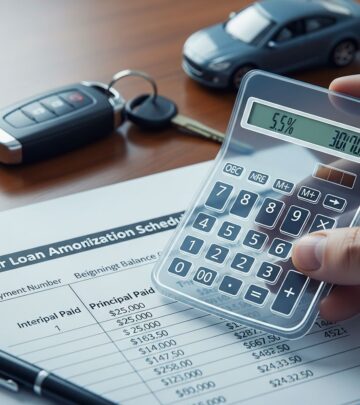
During the early months of any loan, a larger portion of your payment goes toward interest rather than principal. As you progress through the loan term, this balance gradually shifts, with more of each payment reducing your actual debt. By paying off the loan earlier in its lifecycle, you bypass months or years during which substantial interest would accumulate.
For example, a $20,000 auto loan at 5% interest over 60 months would generate approximately $500 in interest savings if paid off in 48 months instead. While this specific savings amount varies based on your loan parameters, the principle remains consistent: higher interest rates and longer remaining terms mean greater potential savings through early payoff.
The calculation becomes even more significant with higher interest rates. Someone carrying a car loan at 7% or 8% interest would see substantially larger savings by accelerating payments compared to borrowers with favorable 3% or 4% rates. This consideration should weigh heavily in your decision, particularly if you secured financing during a period of elevated interest rates.
Strategic Payment Methods for Accelerated Repayment
If you determine that early payoff aligns with your financial situation, several approaches can help you accumulate the necessary funds without straining your budget.
Leveraging Windfall Income
Unexpected financial gains present excellent opportunities for loan acceleration without impacting regular monthly budgeting. Tax refunds, employment bonuses, inheritance proceeds, or other lump-sum income sources can be applied directly to your loan principal. This approach requires minimal lifestyle adjustment since you’re deploying funds you weren’t already counting on for regular expenses.
Implementing Bi-Weekly Payment Schedules
A structured approach involves making half your regular monthly payment every two weeks. This scheduling method results in 13 total payments annually instead of the standard 12, creating one extra full payment each year without requiring a dramatic budget overhaul. Many lenders facilitate this arrangement, and it naturally accelerates your loan payoff timeline.
Increasing Regular Payment Amounts
Even modest increases to your monthly payment amount compound significantly over time. Adding $50, $100, or $200 to your regular payment—depending on your financial capacity—meaningfully reduces your loan term and accumulated interest.
Consolidating Extra Cash Flow
If your income increases through raises, side income, or reduced household expenses, directing this additional cash toward auto loan principal creates meaningful acceleration without requiring you to reduce your quality of life.
Evaluating Your Broader Financial Picture
While interest savings sound attractive, accelerating loan payoff may not be optimal if it conflicts with other financial priorities or depletes your financial security. A comprehensive evaluation requires examining multiple dimensions of your financial health.
Emergency Fund Adequacy
Financial professionals typically recommend maintaining three to six months of living expenses in accessible savings. Draining this buffer to accelerate loan payoff exposes you to significant risk if unexpected expenses arise, such as medical emergencies, home repairs, or job loss. Ensuring a robust emergency fund should take priority over early loan payoff.
High-Interest Debt Comparison
Auto loans typically carry moderate interest rates compared to credit cards, which frequently charge 15% to 25% annually. If you simultaneously carry high-interest credit card debt, directing extra funds toward those balances often produces greater financial benefit than accelerating a lower-rate auto loan. The mathematics of interest calculation makes this prioritization clear: saving 20% through credit card payoff exceeds saving 5% through auto loan acceleration.
Investment Return Potential
This consideration applies primarily to borrowers with low-interest auto loans, typically 3% or 4%. If you could invest extra funds in diversified portfolios historically returning 7% to 8% annually, mathematically you’d gain more through investment than through loan payoff. However, this strategy requires comfort with investment risk and a sufficiently long time horizon.
Impact on Your Borrowing Capacity and Credit Profile
Reducing or eliminating auto loan debt produces measurable improvements to your borrowing position that extend beyond simple monthly payment relief.
Debt-to-Income Ratio Enhancement
Lenders evaluate your debt-to-income ratio (DTI) by dividing your total monthly debt payments by your gross monthly income. A lower DTI demonstrates stronger borrowing capacity and makes you more attractive to lenders for mortgages, personal loans, and other credit products. By eliminating your auto loan payment, you meaningfully improve this critical metric.
For example, if your total monthly debt payments are $1,400 and gross monthly income is $4,000, your DTI would be 35%—acceptable to most lenders but not optimal. Eliminating a $300 auto payment would reduce this to 30%, strengthening your qualification prospects for mortgage financing, which prioritizes low DTI ratios.
Timing Considerations for Major Purchases
If you’re planning to apply for a mortgage or other major loan within the coming months, accelerating auto loan payoff beforehand improves your DTI ratio and demonstrates financial responsibility. Conversely, if you’re not planning major credit applications, this advantage becomes less pressing.
Ownership Benefits and Vehicle Control
Beyond financial metrics, owning your vehicle outright provides practical advantages that extend to insurance and operational flexibility.
When you’ve paid off your auto loan, you gain unrestricted ownership rights, meaning you can sell, trade, or modify your vehicle without lender approval. More significantly, full ownership often enables you to reduce insurance coverage from comprehensive and collision to liability-only protection—often producing substantial premium savings that compound over the vehicle’s remaining useful life.
For many borrowers, the psychological benefit of owing nothing on their vehicle carries value beyond mathematics. This emotional security can justify early payoff even if modest interest savings exist.
Risks and Drawbacks to Consider
Early payoff isn’t universally optimal and carries specific scenarios where it may work against your financial interests.
Prepayment penalties represent the most direct obstacle, as they can eliminate all interest savings. Limited liquid reserves resulting from early payoff can create vulnerability to unexpected expenses. Opportunity cost—the returns you forgo by not investing extra funds—warrants consideration if you have favorable interest rates. Declining credit mix occurs when paying off your only installment loan, potentially affecting credit scores that benefit from diverse debt types, though this impact typically remains minor.
Decision Framework for Your Situation
Early payoff makes strongest sense when you meet several conditions: you have a simple interest loan without prepayment penalties, your interest rate exceeds 5%, you maintain adequate emergency reserves, you possess no high-interest debt, and you prioritize psychological benefits of debt elimination. Conversely, maintain your current schedule if you carry high-interest credit card debt, lack emergency savings, have a low-interest auto loan, are planning major credit applications within months, or could achieve better returns through investment.
Frequently Asked Questions
Can refinancing serve as an alternative to early payoff?
Yes, refinancing allows you to obtain a new loan with potentially better terms, lower interest rates, or shortened duration, effectively resetting your auto loan without aggressive additional payments. This approach may better suit those who want payment relief without depleting savings.
How should I specify early payments to my lender?
Always instruct your lender that additional payments apply specifically to principal only, ensuring the extra amount reduces your debt rather than being applied to interest or future payments.
Does early payoff hurt my credit score?
Early payoff may produce a minor temporary credit score reduction since closing an active account reduces your debt mix, but this impact generally proves negligible and quickly recovers, particularly if you maintain other credit responsibly.
What if my loan uses precomputed interest?
Carefully review your loan agreement or contact your lender directly. Precomputed interest loans offer minimal savings through early payoff and may include prepayment penalties, making acceleration financially unwise.
References
- Should You Pay Off Your Car Loan Early? — Affinity FCU. Accessed February 2026. https://www.affinityfcu.com/financial-wellbeing/blog/auto-buying/should-you-pay-off-your-car-loan-early
- Pros and Cons of Paying Off a Car Loan Early — Experian. Accessed February 2026. https://www.experian.com/blogs/ask-experian/should-i-pay-off-car-loan-early/
- Should You Pay Off Your Car Loan Early? — Bankrate. Accessed February 2026. https://www.bankrate.com/loans/auto-loans/should-you-pay-your-car-loan-off-early/
- Paying Off a Car Loan Early: Pros and Cons — Car and Driver. Accessed February 2026. https://www.caranddriver.com/auto-loans/a43149185/paying-off-a-car-loan-early/
- Should You Pay Off Your Auto Loan Early? The Pros and Cons — Ouachita Valley FCU. Accessed February 2026. https://ouachitavalleyfcu.org/blog/should-you-pay-off-your-auto-loan-early-the-pros-and-cons
- Pros and Cons of Paying Off a Car Loan Early — Chase Auto. Accessed February 2026. https://www.chase.com/personal/auto/education/financing/the-pros-and-cons-of-paying-off-a-car-loan-early
Similar Articles








Read full bio of medha deb