E-Books Vs Print Books: A Budget Guide To Your Best Choice
Discover the pros and cons of e-books versus print books to decide which format saves you money and suits your reading style best.
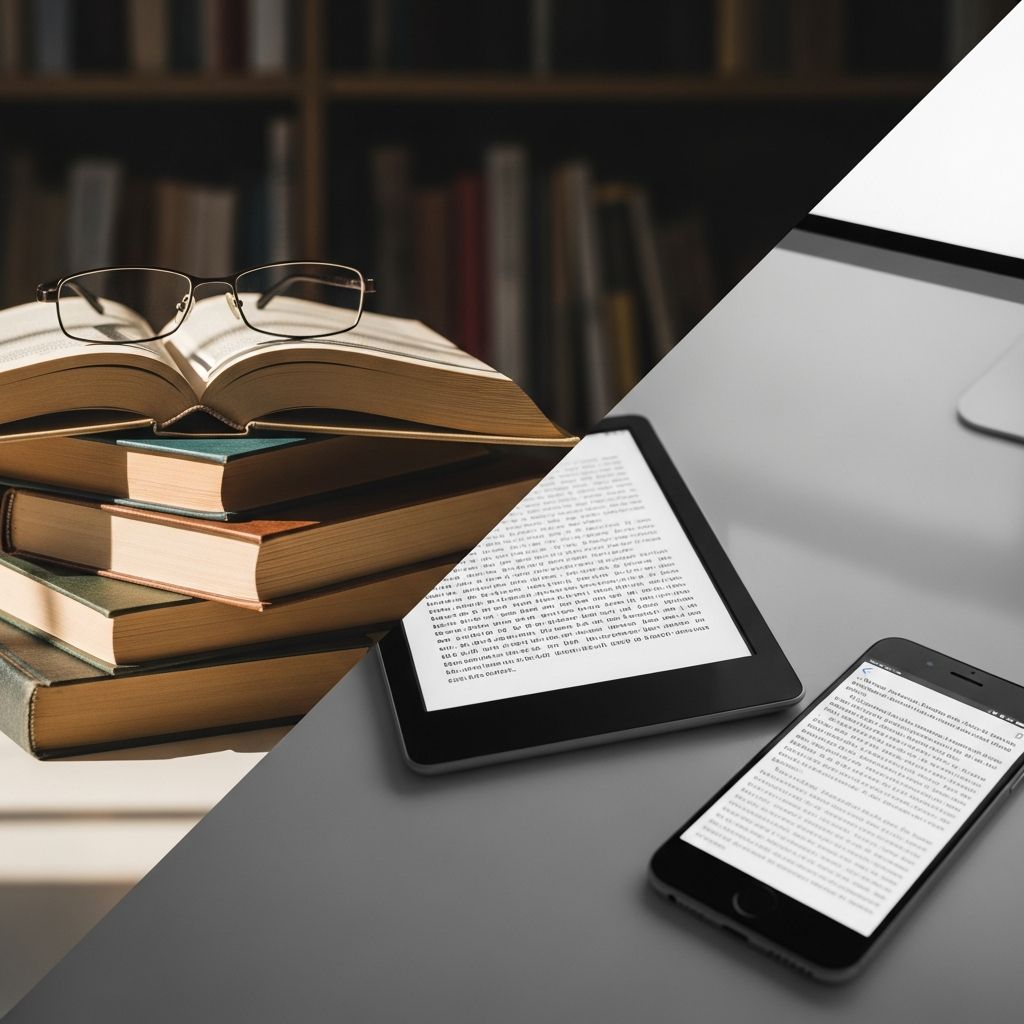
Choosing between e-books and print books involves weighing factors like upfront costs, long-term savings, convenience, and reading experience. While e-books offer portability and instant access, print books provide tactile benefits and better comprehension for many readers. This comparison helps budget-conscious readers decide based on lifestyle and financial priorities.
Cost Comparison: E-Books vs. Print Books
The financial aspect is a primary concern for money-savers. E-books often appear cheaper individually, but print books can offer better value through libraries, used markets, and resale. Initial e-reader costs add up, while print requires no device investment.
- E-books: Typically 20-30% less than print for new releases, with older titles often under $5 or free. No shipping fees on platforms like Kindle, but device purchase ($100-$200) is required upfront.
- Print books: New hardcovers cost $20-30, paperbacks $10-15. Savings via libraries (free), used bookstores ($1-5), or resale on sites like eBay. Bulkier shipping may add $4-10.
| Factor | E-Books | Print Books |
|---|---|---|
| Average New Release Price | $10-15 | $15-25 |
| Device/Access Cost | $100+ (one-time) | $0 |
| Library Access | Limited (OverDrive) | Unlimited free |
| Resale Value | None (DRM-locked) | High (50% recovery) |
For avid readers buying 20+ books yearly, e-books save ~$100 after device cost. Heavy library users favor print for zero expense.
Portability and Convenience
E-books excel in travel scenarios, storing thousands of titles on slim devices. Print books demand space but offer no-battery reliability.
- E-books: Carry a library in your pocket; adjustable fonts aid low vision or dyslexia. Auto-save progress, read in dark with backlights.
- Print: No charging needed, ideal outdoors. Fixed layout aids precise referencing but bulky for commuters.
Statistics show 74.6% of students prefer e-books for portability, spending over 1 hour daily on them.
Reading Experience and Comprehension
Print books outperform in retention and focus. Studies confirm 6-8 times better comprehension with physical formats due to spatial memory and reduced distractions.
- Print advantages: Tactile page-turning activates emotional brain areas; 66% of readers find it more fulfilling. No eye strain or blue light disrupting sleep.
- E-book advantages: Searchable text, built-in dictionaries, hyperlinks. Enhanced e-books boost child engagement but reduce story recall.
University research shows print aids note-taking (66.7% preference) and multi-source study. Digital scrolling and ads hinder deep reading.
Environmental Impact: E-Books vs. Print
E-books reduce paper use but e-readers’ production has high carbon footprints (mining rare earths). Print with sustainable practices can be greener long-term.
- E-books: No physical waste, but device manufacturing equals 50 books’ emissions. Recycling e-waste challenging.
- Print: Modern mills use 90% recycled paper; books recyclable. Used/gifted books extend lifecycle.
Life-cycle analyses favor print for low-use readers; e-books for high-volume if device lasts 5+ years.
Durability and Ownership
Print books last generations, lendable without restrictions. E-books face DRM (no true ownership), publisher revocations, and device failures.
- Print: Lend, gift, resell indefinitely. 41% of seniors offline, relying on physical.
- E-books: Platform-locked; libraries limited by holds. Reflowable layout shifts, no fixed pages.
Eye Strain and Health Considerations
Digital screens cause strain; print is easier on eyes, especially pre-bed. E-readers disrupt melatonin, affecting sleep. Children learn better with print via parent co-reading.
For Kids: Which Format Wins?
Print fosters vocabulary and comprehension in early literacy. Enhanced e-books distract with games, reducing narrative recall. Parents report better interaction with print.
Hybrid Approach: Best of Both Worlds
Many opt for e-books for travel/commutes, print for home/study. Libraries like OverDrive bridge gaps. Budget tip: Buy print used, e-books for backlist deals.
Frequently Asked Questions (FAQs)
Are e-books cheaper than print books?
Yes for new releases (20% less), but print wins with libraries and resale. Device cost offsets e-book savings initially.
Do e-books cause more eye strain?
Yes, screens lead to fatigue vs. print’s natural reflection. Avoid pre-bed e-reading for better sleep.
Which is better for comprehension?
Print: Studies show superior retention (6-8x better) due to tactile cues and no distractions.
Are e-books better for the environment?
Mixed: Less paper, but high device impact. Sustainable print competes well.
Can I own e-books forever?
No, DRM limits lending/resale unlike print’s true ownership.
References
- EBooks vs. Printed Books: Which Are Better? — The Print Authority. 2023. https://theprintauthority.com/ebooks-vs-printed-books/
- Print Book vs. Ebook: What’s the Difference? — eBook Launch. 2023. https://help.ebooklaunch.com/article/43-difference-between-print-book-and-ebook
- Printed Books vs eBooks Statistics, Trends and Facts [2024] — Toner Buzz. 2024. https://www.tonerbuzz.com/blog/paper-books-vs-ebooks-statistics/
- Print Books vs. E-books — Joan Ganz Cooney Center. 2012-07. https://joanganzcooneycenter.org/wp-content/uploads/2012/07/jgcc_ebooks_quickreport.pdf
- Preferences for printed books versus E-books among university students — PMC (NCBI). 2023-05-29. https://pmc.ncbi.nlm.nih.gov/articles/PMC10248253/
- The Case for Paper: Books vs. E-Readers — Psychology Today. 2024-02. https://www.psychologytoday.com/us/blog/well-read/202402/the-case-for-paper-books-vs-e-readers
Similar Articles








Read full bio of medha deb