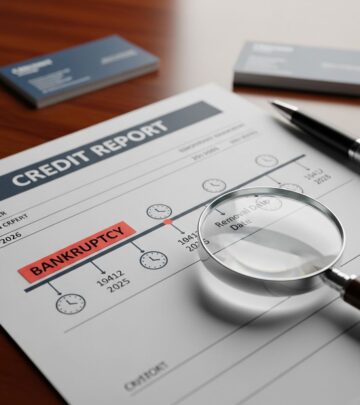
Duration of Negative Credit Report Items
Discover the legal time limits for negative marks on your credit report and strategies to manage your financial future effectively.
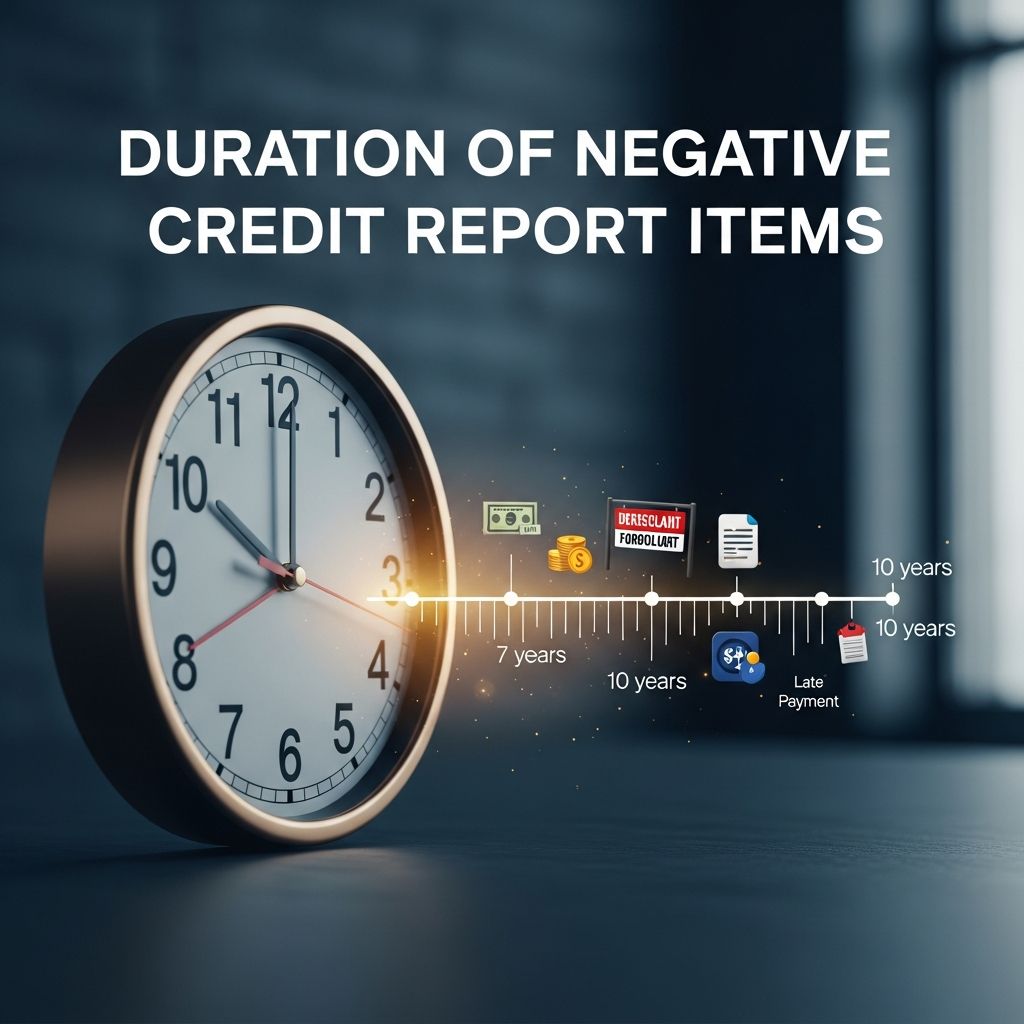
Negative information on credit reports, governed by the Fair Credit Reporting Act (FCRA), has defined time limits to prevent indefinite financial penalties. Most derogatory marks must be removed after seven years, though certain bankruptcies extend to ten years, allowing consumers a chance to rebuild creditworthiness over time.
Legal Framework Governing Credit Report Lifespans
The FCRA, codified in 15 U.S.C. § 1681c, establishes precise reporting periods for adverse data to balance lender needs with consumer rights. This federal law mandates that credit bureaus like Equifax, Experian, and TransUnion purge obsolete negatives, recognizing that old issues lose predictive value for future behavior.
Congress enacted these limits to promote fairness, ensuring past errors do not perpetually hinder access to loans, housing, or employment. Without such rules, minor setbacks could doom financial prospects indefinitely.
Standard Seven-Year Rule for Common Derogatory Marks
The majority of negative entries follow a seven-year reporting window, calculated from the date of first delinquency—the initial missed payment triggering the issue.
- Late Payments: Any payment over 30 days late appears for exactly seven years from the delinquency date, regardless of severity.
- Defaults: Occurring after 90 days of nonpayment, these stay seven years from the original missed payment.
- Collections: Debts sent to agencies report for seven years plus 180 days from delinquency, accommodating processing time.
- Foreclosures: Seven years from the first missed mortgage payment leading to proceedings.
- Charge-Offs: When creditors write off unpaid debt, the mark lasts seven years and 180 days from delinquency.
This uniform timeline applies across major bureaus, though minor variations in calculation can occur based on reporting practices.
Bankruptcy Reporting Periods and Variations
Bankruptcies represent the primary exception, with durations tied to filing dates rather than delinquencies.
| Type | Duration | Start Date | Notes |
|---|---|---|---|
| Chapter 7 (Liquidation) | 10 years | Filing date | Discharges most debts; full 10-year report |
| Chapter 13 (Reorganization) | 7 years | Filing date | Involves repayment plan; often removed earlier by bureaus |
Accounts discharged in bankruptcy may drop off sooner if their individual delinquency clocks expire first, typically seven years from filing at latest. Major bureaus sometimes voluntarily shorten Chapter 13 to seven years, reflecting successful repayment.
Positive Information: The Long-Term Benefits
Unlike negatives, positive data endures longer, bolstering scores over time.
- Open accounts in good standing: Indefinite, enhancing payment history length.
- Closed positive accounts: 10 years from closure.
This asymmetry favors building a robust history, as timely payments contribute perpetually while harms fade.
Why Timelines Do Not Reset and Common Myths
The FCRA clock starts irrevocably at the delinquency or filing date and does not restart with actions like partial payments, settlements, or debt sales. Myth: Paying a collection resets the timer—false; it only affects current status, not reporting duration.
Another misconception: All negatives vanish after seven years flat. Reality: Precise triggers and extensions apply, demanding careful date checks.
Identifying and Disputing Outdated Negative Entries
Outdated items—those exceeding FCRA limits—are illegal to retain. Regularly review reports via AnnualCreditReport.com for free weekly access.
Steps to Dispute:
- Obtain reports from all three bureaus.
- Pinpoint items past limits, noting original dates.
- File disputes online, by mail, or phone with evidence (e.g., delinquency timelines).
- Bureaus must investigate within 30-45 days.
- Expect removal if verified as obsolete.
Success rates are high for clear violations, often yielding rapid deletions without creditor input.
Impact of Negative Items on Credit Scores
Derogatories heavily weigh on FICO and VantageScore models, with recency mattering most. Fresh marks tank scores 100+ points; aged ones near expiration harm less. Post-drop-off, scores typically rise 20-100 points, depending on overall profile.
Strategy: Parallel rebuilding via on-time payments and low utilization accelerates recovery.
Practical Timeline Examples
Consider these scenarios:
- 2018 late payment: Drops mid-2025 (7 years).
- 2020 collection delinquency: Expires ~mid-2028 (7.5 years).
- 2022 Chapter 7 filing: Remains until 2032.
Use bureau tools or calculators to project exact fall-off dates.
Strategies to Mitigate Damage While Waiting
Do not ignore negatives; offset via:
- Secured cards for history building.
- Debt snowball for current obligations.
- Credit-builder loans.
- Score monitoring for disputes.
Many achieve prime scores (700+) within 1-2 years of major negatives aging off.
Frequently Asked Questions
How do I check my credit report dates?
Free weekly reports detail original delinquency dates for each item.
Does settling a debt remove it sooner?
No, settlement updates status but preserves the full timeline.
Can I pay to expedite removal?
Only legitimate disputes work; “credit repair” scams promising instant deletes violate FCRA.
What if bureaus ignore my dispute?
Escalate to CFPB or sue under FCRA for willful noncompliance.
Do all bureaus drop items simultaneously?
Not always; dispute each separately for consistency.
Long-Term Credit Health After Cleanup
Once negatives expire, maintain vigilance: Automate payments, keep utilization under 30%, diversify credit mix. Scores stabilize higher, unlocking better rates.
Proactive monitoring prevents new issues, turning past lessons into sustained financial strength.
References
- Cleaning Up Your Credit Report: Outdated Negative Items and the FCRA 7-Year Rule — CLA Legal. Accessed 2026. https://clalegal.com/cleaning-up-your-credit-report-outdated-negative-items-and-the-fcra-7-year-rule/
- How Long Can Negative Items Stay on Your Credit Report? — Experian. Accessed 2026. https://www.experian.com/blogs/ask-experian/how-long-can-negative-items-stay-on-your-credit-report/
- How Long Does it Take to Remove Bad Credit Report Information? — 800LoanMart. Accessed 2026. https://www.800loanmart.com/improving-my-credit/why-does-it-take-so-long-for-things-to-drop-off-my-credit-report-after-payment/
- How Long Does Negative Information Stay on a Credit Report? — Nolo. Accessed 2026. https://www.nolo.com/legal-encyclopedia/how-long-does-negative-information-stay-credit-report.html
- How Long Do Derogatory Marks Stay on Your Credit? — NerdWallet. Accessed 2026. https://www.nerdwallet.com/finance/learn/negative-marks-on-your-credit-report-how-long
- How long does it take to repair an error on a credit report? — Consumer Financial Protection Bureau (CFPB). Accessed 2026. https://www.consumerfinance.gov/ask-cfpb/how-long-does-it-take-to-repair-an-error-on-a-credit-report-en-1339/
- How Long Does Information Stay on my Equifax Credit Report? — Equifax. Accessed 2026. https://www.equifax.com/personal/education/credit/report/articles/-/learn/how-long-does-information-stay-on-credit-report/
Similar Articles








Read full bio of medha deb