DUI vs DWI: Key Legal Differences
Unravel the confusing world of impaired driving charges: how DUI and DWI differ across states and what it means for penalties.
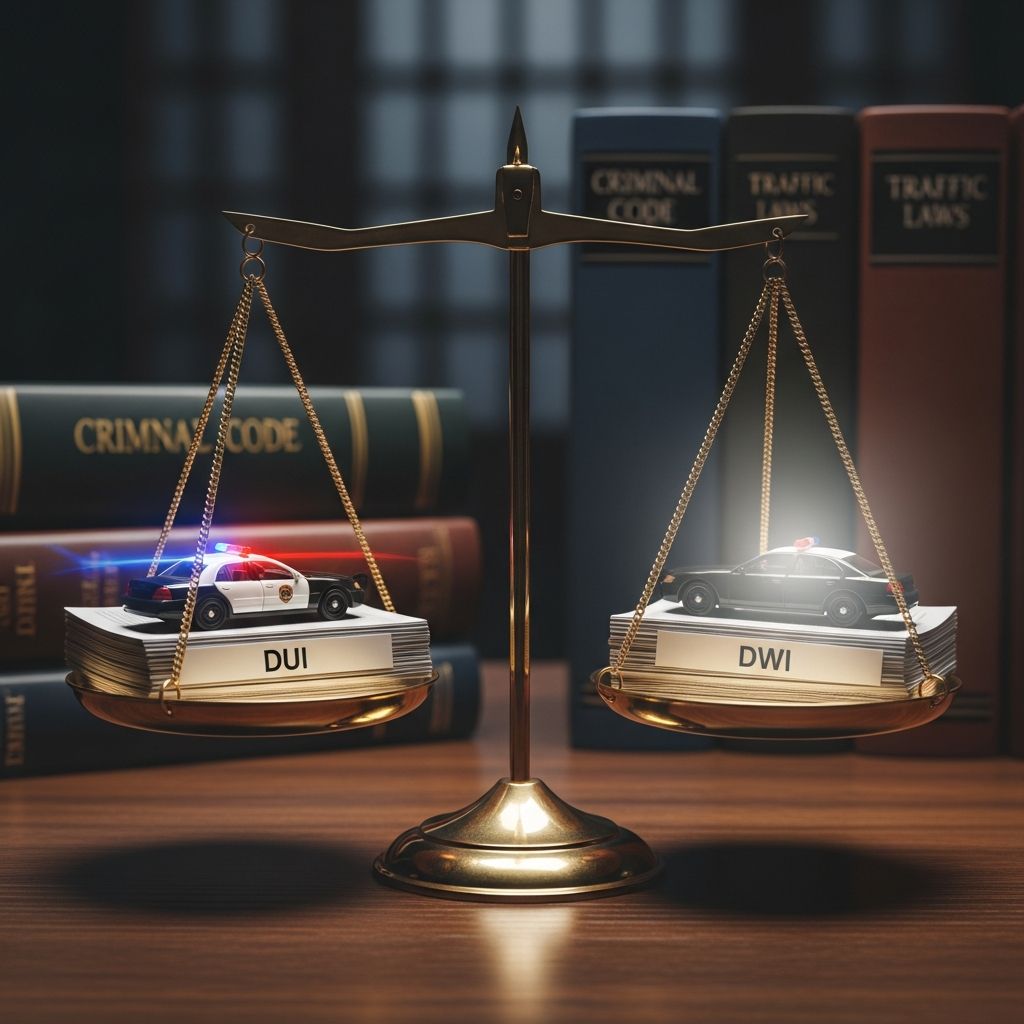
Impaired driving charges like
DUI
andDWI
often spark confusion due to their varying meanings across U.S. states. While both address operating a vehicle under the influence of alcohol or drugs, the specific definitions, thresholds, and consequences depend heavily on local laws. This article breaks down these distinctions, examines state variations, and outlines potential repercussions to help drivers navigate this complex legal landscape.Understanding the Core Definitions
**DUI**, or Driving Under the Influence, typically refers to operating a motor vehicle while impaired by alcohol, drugs, or controlled substances to a degree that affects safe driving. Prosecutors must prove the driver’s ability was compromised, often through field sobriety tests, breathalyzers, or observed erratic behavior.
In contrast,
DWI
, or Driving While Intoxicated (or Impaired in some contexts), may denote a higher level of intoxication or focus specifically on alcohol impairment. Some jurisdictions reserve DWI for cases exceeding standard blood alcohol concentration (BAC) limits, such as 0.08% or more.Key point: In many states, these terms are interchangeable, but others use them to differentiate severity. For instance, Maryland distinguishes DUI (BAC 0.08+) as more severe than DWI (BAC around 0.07, indicating impairment).
State-by-State Variations in Terminology
U.S. drunk driving laws are not uniform, leading to diverse applications of DUI and DWI. Alabama simplifies matters by using only DUI for all impairments from alcohol, drugs, or combinations, regardless of BAC—covering everything from 0.08%+ to unsafe driving under influence. No separate DWI or lesser DWAI charges exist there.
Arizona differentiates: DUI applies to influence from alcohol or drugs without requiring a specific BAC, while DWI demands intoxication from alcohol reaching 0.08% or higher, with extremes at 0.15% or 0.20%.
Missouri treats DWI as alcohol-specific impairment and DUI as broader, including drugs alongside alcohol. Yet, Mothers Against Drunk Driving notes no practical difference in Missouri between DUI and DWI, with a separate DUID for drugs.
| State | DUI Definition | DWI Definition | BAC Threshold |
|---|---|---|---|
| Alabama | All impairments (alcohol/drugs) | Not used | 0.08%+ |
| Maryland | BAC 0.08+ (per se) | BAC ~0.07 (impaired) | 0.08% for DUI |
| Arizona | Under influence (any substance) | Intoxicated by alcohol | 0.08%+ for DWI |
| Missouri | Alcohol + drugs | Alcohol impairment | 0.08% |
This table highlights how terminology shifts, impacting charge selection and defenses.
Blood Alcohol Concentration Thresholds Explained
The standard BAC limit nationwide is 0.08% for adults, but nuances apply. Under-21 drivers often face zero-tolerance at 0.02%, commercial drivers at 0.04%. DUI charges can proceed below these if impairment is evident via sobriety tests.
DWI might require surpassing 0.08%, signaling greater intoxication. In Arkansas, DWI needs 0.08% BAC, while DUI covers drug influence or lower alcohol levels. Drugs complicate matters—any impairing substance, legal or not, can trigger charges without a BAC test.
- Per se limits: Automatic violation at 0.08% BAC, no impairment proof needed.
- Impairment-based: Charged on behavior, even under BAC limits.
- Aggravated cases: Higher BAC (e.g., 0.15%+) escalates to felonies.
Proving the Charges: What Prosecutors Must Show
For DUI, elements include vehicle operation, substance influence, and impaired safe driving ability. Evidence spans breathalyzers, blood tests, dashcam footage, and witness accounts.
DWI proof mirrors this but emphasizes intoxication level. In alcohol-focused DWI states, higher BAC or failed sobriety tests are pivotal. Field tests assess balance, coordination, and sobriety, though they’re subjective and challengeable.
Drug-related cases rely on toxicology, officer observations, or drug recognition experts, as no universal “limit” exists like BAC.
Potential Penalties and Long-Term Impacts
Convictions bring steep fines ($500–$5,000+), jail (months to years), license suspension (6 months+), and mandatory education. Repeat offenses or aggravators like accidents intensify punishments.
- First offense: Fines, short suspension, probation.
- Multiples: Longer jail, interlock devices, revocation.
- Injury/death: Felony upgrades with years in prison.
Collateral effects include higher insurance (100–400% hikes), employment barriers, and ignition interlocks. In South Carolina, DUI penalties scale with impairment and circumstances.
When Does It Become a Felony?
Not all charges are misdemeanors. Felony elevation occurs with fourth+ offenses, serious injuries, fatalities, or child passengers. Alabama felonies mean multi-year prison and permanent revocation. Arizona’s extreme DWI (0.20% BAC) carries felony risks.
Maryland caps most at misdemeanors but escalates with harm. Understanding triggers is vital for defense strategies.
Defensive Strategies and Legal Rights
Post-arrest, invoke rights to silence and attorney. Challenge breathalyzer accuracy, test administration, or probable cause. Question sobriety test validity, especially medical conditions mimicking impairment.
Plea bargains, diversions, or dismissals are possible for first-timers. State-specific defenses vary—consult local counsel immediately.
Prevention: Staying Safe on the Roads
Avoid risks: Designate sober drivers, use rideshares, or stay over. Know limits—impairment starts below 0.08%. Recent data underscores dangers: Impaired driving kills thousands yearly.
Frequently Asked Questions
What is the difference between DUI and DWI?
Definitions vary by state; DUI often covers any impairing substance, DWI alcohol-specific or higher severity.
Can you get a DUI without a breathalyzer?
Yes, via observed impairment or sobriety tests.
Is DWI worse than DUI?
In some states yes (higher penalties), others identical.
Do DUI/DWI affect insurance?
Severely—rates can quadruple for years.
How to fight a DUI charge?
Hire a lawyer to challenge evidence, procedures.
References
- DUI vs. DWI vs. DWAI: What’s the Difference? — Alabama Injury Lawyer. 2023. https://www.alabamainjurylawyer.com/blog/dui-vs-dwi-vs-dwai-whats-the-difference/
- The Difference Between a DUI and a DWI Charge — Enc Attorneys. 2024. https://www.encattorneys.com/post/the-difference-between-a-dui-and-a-dwi-charge/
- DUI/DWI — Maryland People’s Law Library. 2025-02-15. https://www.peoples-law.org/duidwi
- Differences between DUI and DWI — Arizona Criminal Defense Lawyer. 2024. https://www.arizonacriminaldefenselawyer.com/practice-areas/dui/dui-defense/differences-between-dui-and-dwi/
- The Difference Between a DUI and a DWI: Why It Matters — Truslow Law. 2023. https://www.truslowlaw.com/the-difference-between-a-dui-and-a-dwi-why-it-matters/
- The Difference Between DWI and DUI in Missouri — Cole and Martin. 2025-02-01. https://www.coleandmartin.com/blog/2025/february/the-difference-between-dwi-and-dui-in-missouri/
- DUI or DWI — MADD Missouri. 2024. https://madd.org/missouri/dui-or-dwi/
Similar Articles








Read full bio of medha deb