Driver’s License Classes Explained: Complete Guide
Navigate U.S. roadways legally: Understand CDL vs NCDL, classes A-D, endorsements, and state variations for safe driving.
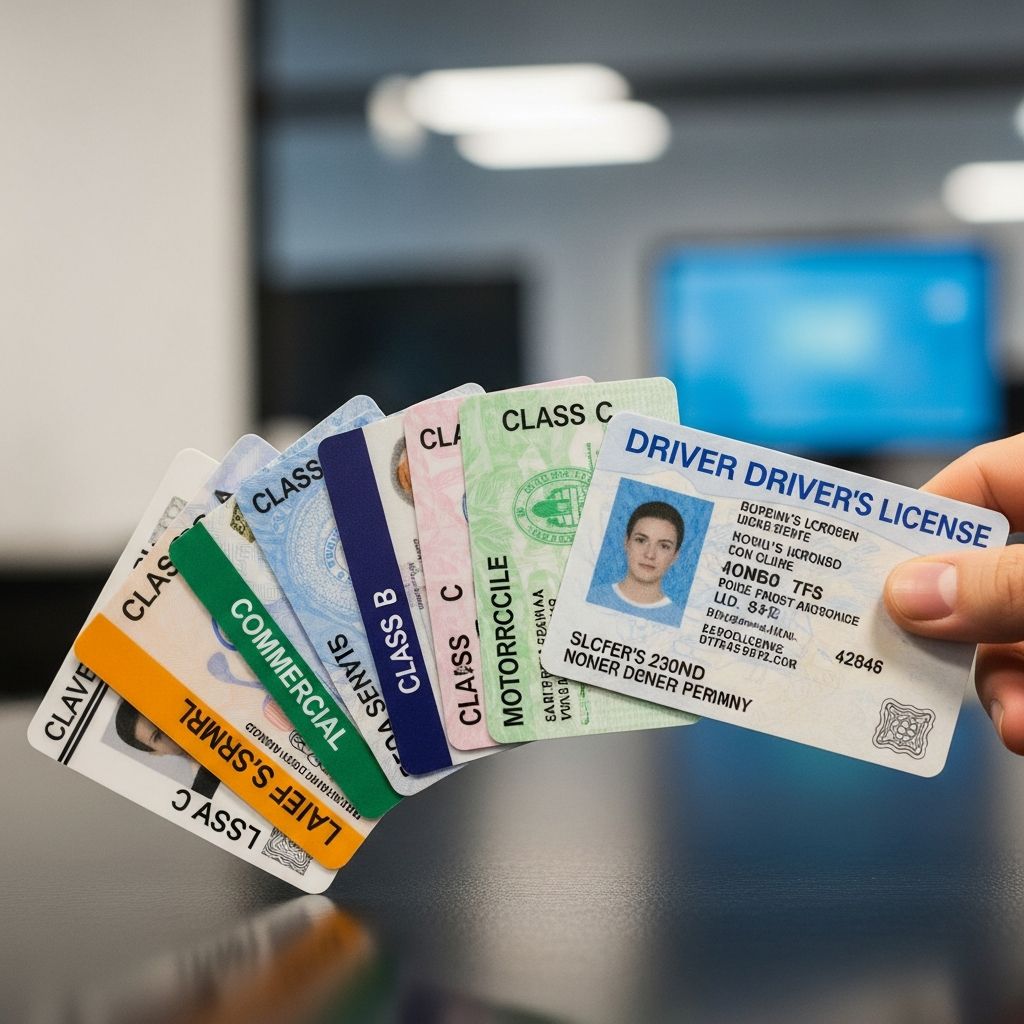
Driver’s licenses in the United States are categorized into classes and types that determine the vehicles you can legally operate, reflecting factors like vehicle weight, purpose, and passenger capacity. These distinctions ensure drivers possess the necessary skills for specific vehicles, promoting road safety and compliance with federal and state regulations.
Core Categories: Commercial vs. Non-Commercial Licenses
At the foundation, licenses divide into commercial driver’s licenses (CDL) and non-commercial driver’s licenses (NCDL). A CDL is required for operating large vehicles in a professional capacity, such as trucks or buses used for business, while an NCDL covers personal use of standard automobiles.
CDLs demand rigorous training, testing, and often a minimum age of 21 for interstate travel, especially with hazardous materials. NCDLs, held by most drivers, suffice for everyday commuting and errands without commercial intent.
- CDL Key Features: Handles vehicles over 26,001 pounds GVWR (Gross Vehicle Weight Rating); mandatory for paid transport.
- NCDL Key Features: For non-work driving; includes cars, vans under weight limits.
Standard Non-Commercial Classes for Everyday Vehicles
Most states designate Class D (or Class C in some) as the baseline NCDL for operating passenger cars, SUVs, and light trucks under 26,001 pounds GVWR. This class also permits towing trailers up to 10,000 pounds, ideal for personal RVs or boats.
Class D holders can drive family vehicles, pickups, and small vans. Requirements typically include a learner’s permit at age 15-16, followed by written, vision, and road tests. Restrictions for juniors (under 18) may limit nighttime driving or passengers.
| Class | Allowed Vehicles | Typical Users | Weight Limit |
|---|---|---|---|
| Class D/C | Cars, SUVs, light trucks, small trailers | General public | <26,001 lbs |
| Class M | Motorcycles, scooters | Riders | N/A |
Class M: Licensing for Motorcycles and Two-Wheelers
A Class M license or endorsement authorizes motorcycles, motor scooters, and sometimes mopeds. It can stand alone or attach to a Class D license. Applicants must pass a written exam on safety and handling, plus a skills test or certified course demonstrating balance, braking, and traffic maneuvers.
Junior versions like Class MJ (New York) apply to under-18 riders with extra restrictions. Helmets are often mandatory for novices, and minimum ages vary from 16.
Commercial Classes: From Class B to Class A
Class B CDL permits single vehicles over 26,001 pounds GVWR but towing under 10,000 pounds. Common for city buses, dump trucks, and delivery rigs. Operators include transit drivers and waste management professionals.
Class A CDL, the most comprehensive, covers combinations exceeding 26,001 pounds with trailers over 10,000 pounds—think semi-trucks and tractor-trailers. It requires advanced training in coupling, air brakes, and load securement.
Class C CDL handles smaller commercial vehicles like those with 16+ passengers or hazardous placards under 26,001 pounds, such as small shuttles.
Essential Endorsements for Specialized Operations
Endorsements expand license privileges for specific scenarios, mandatory for CDLs but available on NCDLs too. They involve extra tests, background checks, and training.
- H (HazMat): For flammable liquids, chemicals; requires TSA fingerprinting and written exam.
- P (Passenger): Vehicles carrying 16+ people; focuses on evacuation and safety.
- S (School Bus): Yellow buses; needs P endorsement plus child safety checks.
- N (Tanker): Liquid/gas tanks over 1,000 gallons; stability training.
- T (Doubles/Triples): Multi-trailer setups; handling dynamics.
- X (HazMat + Tanker): Combined for high-risk cargo.
State Variations and Junior Licenses
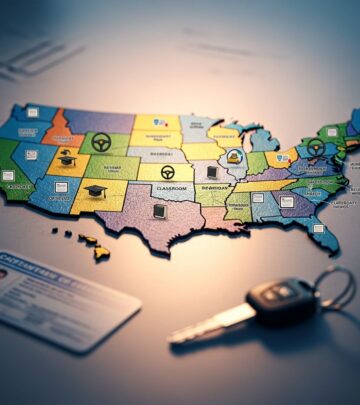
While federal guidelines standardize CDLs via the Department of Transportation, NCDLs differ by state. Tennessee uses Class D for regulars, Michigan has operator/chauffeur codes, and New York offers DJ/MJ for juniors under graduated systems.
Junior licenses impose curfews, passenger limits, and higher supervision to reduce teen crashes. Full privileges unlock at 18.
How to Obtain and Upgrade Your License
Start with a learner’s permit: study manuals, pass vision/written tests. Progress to road skills. For CDLs, complete Entry-Level Driver Training (ELDT) from FMCSA-approved schools.
Upgrading? Gather docs (ID, SSN, residency), pass specialized tests. Renewals every 4-8 years include medical exams for CDL.
Implications for Insurance and Employment
Holding the wrong class risks fines, vehicle impound, or jail. Insurers charge more for CDLs due to accident severity; employers verify classes for job fits.
Frequently Asked Questions (FAQs)
What is the most common driver’s license class?
Class D or C for standard cars under 26,001 pounds.
Do I need a CDL for a personal RV over 26,000 pounds?
Often Class B NCDL suffices if non-commercial; check state DOT.
How old must I be for a CDL?
18 intrastate, 21 interstate/hazmat.
Can I add a motorcycle endorsement to my regular license?
Yes, via Class M tests.
What if my state calls it Class E?
Some use E for taxis/livery; equivalents vary—consult DMV.
References
- The Different Types of Drivers Licenses on U.S. Roadways Explained — Drift Travel. 2023. https://drifttravel.com/the-different-types-of-drivers-licenses-on-u-s-roadways-explained/
- What Different Types of Driver’s Licenses Mean — NETTTS (New England Tractor Trailer Training School). 2024. https://nettts.com/blog/student-learning/types-of-drivers-licenses/
- Driver’s licenses in the United States — Wikipedia (references state DMVs). N/A. https://en.wikipedia.org/wiki/Driver’s_licenses_in_the_United_States
- What Are the Different Types of Driver’s License Classes? — Zutobi. 2024. https://zutobi.com/us/driver-guides/types-of-drivers-license-classes
- Licenses and ID — Michigan Secretary of State (.gov). 2025. https://www.michigan.gov/sos/faqs/license-and-id/licenses-and-id
Similar Articles








Read full bio of medha deb