Drawdown in Finance: Definition, Types, and Risk Management
Understanding drawdown: A critical measure of investment losses and portfolio risk.
Understanding Drawdown: A Comprehensive Guide to Investment Risk
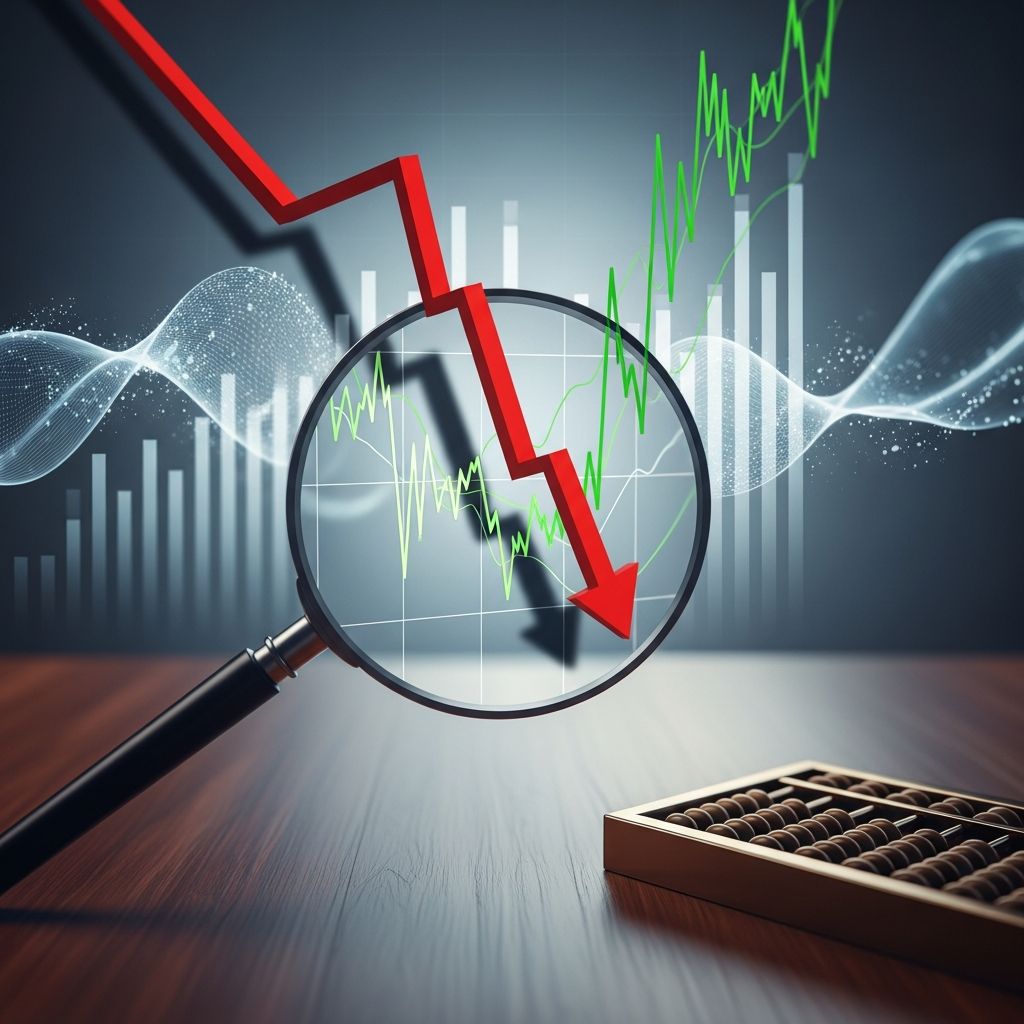
Drawdown is a critical concept in finance and investing that measures the decline from a historical peak in the value of an investment or trading account. For investors and traders, understanding drawdown is essential for assessing risk, evaluating portfolio performance, and making informed decisions about their investments. Whether you’re managing your own portfolio or evaluating a professional fund manager’s performance, drawdown provides valuable insights into the potential losses you might experience.
In essence, a drawdown represents the “pain” period that investors experience when their investments decline in value from a previous high point. Unlike simple calculations of percentage change, drawdown specifically tracks the worst-case scenario from peak to trough, making it a more realistic measure of investment risk.
What Is Drawdown?
Drawdown is formally defined as the measure of decline from a historical peak in a financial variable, typically the cumulative profit or total open equity of a financial trading strategy. Put simply, if you invest $100,000 and your account grows to $150,000 before declining to $120,000, you have experienced a drawdown of $30,000 from the peak value.
The mathematical representation of drawdown at time T, denoted as D(T), is expressed as the maximum value observed up to time T minus the current value: the peak minus the current price or portfolio value. This formula captures the essence of what drawdown measures: the distance from where your investment was at its best to where it currently stands.
Types of Drawdown: Understanding Different Measurements
Financial professionals and investors use several variations of drawdown to assess different aspects of investment risk and performance. Each type provides unique insights into portfolio behavior and potential losses.
Maximum Drawdown (MDD)
The maximum drawdown represents the worst peak-to-valley loss an investment has experienced since its inception. This is perhaps the most commonly used drawdown metric because it provides a single number that captures the most severe loss scenario an investor could have encountered. If you’re reviewing a fund’s five-year history, the maximum drawdown tells you the largest percentage decline from peak to bottom that occurred during that entire period.
Maximum drawdown is expressed as a percentage and is calculated by taking the difference between the highest point and the lowest subsequent point, then dividing by the highest point. For example, if a portfolio peaked at $100,000 and later fell to $70,000, the maximum drawdown would be 30%.
Average Drawdown (AvDD)
Average drawdown measures the mean of all drawdowns that have occurred up to a specific time. Rather than focusing on the single worst loss, average drawdown considers all declines from peaks and provides a measure of typical losses experienced. This metric gives investors a sense of the average pain they can expect from their investments, smoothing out the impact of one catastrophic loss.
Drawdown Duration
While maximum drawdown measures magnitude, drawdown duration measures time. Specifically, drawdown duration refers to the length of any peak-to-peak period—the time between new equity highs. The maximum drawdown duration is the longest period an investment has gone without reaching a new high. This metric is crucial for investors who need to understand not just how much they might lose, but how long they might wait for recovery.
Calculating Drawdown: The Mathematical Approach
Calculating drawdown involves tracking the peak value of an investment and comparing it to subsequent values. The basic formula for drawdown at any point is:
Drawdown = (Peak Value – Current Value) / Peak Value × 100
To calculate maximum drawdown across a period, you must:
- Identify the highest value the investment reached during the period
- Find the lowest value that occurred after that peak
- Calculate the percentage decline between these two points
- Repeat this process for all peaks and identify the largest decline
Professional investors and software systems use algorithmic approaches to calculate these metrics efficiently. The process involves iterating through historical data, tracking each new peak, and measuring how far the value falls from that peak before establishing a new high.
Why Drawdown Matters for Investors
Drawdown serves multiple important functions in investment analysis and risk management:
Risk Assessment
Drawdown provides a more intuitive understanding of risk than standard deviation or other statistical measures. When you learn that an investment has a maximum drawdown of 40%, you immediately understand that you could lose nearly half your investment value. This clarity helps investors align their investment choices with their risk tolerance.
Performance Evaluation
When comparing investment options, drawdown helps distinguish between consistent performers and those with volatile swings. Two investments might have similar average returns, but very different drawdown profiles, indicating different risk levels.
Psychological Preparation
Understanding drawdown helps investors mentally prepare for market downturns. Knowing that a particular investment experienced a 35% drawdown historically can help you avoid panic selling when similar declines occur in the future.
Drawdown and Risk Ratios
Financial analysts use drawdown as a component of several important performance metrics designed to evaluate risk-adjusted returns:
The Calmar Ratio
The Calmar ratio divides the compound annual return by the maximum drawdown, providing a measure of return per unit of drawdown risk. A higher Calmar ratio indicates better risk-adjusted performance.
The Sterling Ratio
Similar to the Calmar ratio, the Sterling ratio compares returns to maximum drawdown but uses a slightly different calculation methodology.
The Burke Ratio
The Burke ratio incorporates both the magnitude and duration of drawdowns, providing a comprehensive risk measure that accounts for how long losses persist.
These ratios represent modifications of the traditional Sharpe ratio, replacing standard deviation with drawdown-based measures to provide more realistic assessments of downside risk.
Maximum Drawdown and Portfolio Management
Maximum drawdown serves as a crucial decision-making tool for portfolio managers and individual investors. When evaluating managed funds or investment strategies, examining the maximum drawdown provides insight into the worst-case scenarios an investor might face.
A fund with a 50% maximum drawdown experienced a period where investors saw their investments cut in half. This information is invaluable for understanding whether a particular investment aligns with your financial goals, time horizon, and psychological ability to withstand losses.
Drawdown in Different Financial Contexts
Trading Strategies
For active traders, drawdown is fundamental to evaluating trading system performance. Traders use maximum drawdown to set risk limits, determine position sizing, and decide whether a strategy is worth pursuing. A trading system with exceptional returns but extreme drawdowns might not be suitable for risk-averse investors.
Credit and Funding Drawdowns
In banking and corporate finance, drawdown refers to a different concept: the act of accessing available credit or funds. When a company has a line of credit established, drawing down against that line creates debt, which may carry associated interest terms and repayment obligations.
Project Funding
In project finance, drawdowns occur when funds allocated for specific purposes are released as conditions are met or milestones are achieved.
Conditional Drawdown-at-Risk (CDaR)
Advanced financial analysis employs a more sophisticated measure called Conditional Drawdown-at-Risk (CDaR). This metric considers not just the maximum drawdown but the distribution of large drawdowns, providing a more nuanced risk assessment. CDaR can be optimized using linear programming techniques and represents a bridge between average drawdown and maximum drawdown concepts.
Practical Examples of Drawdown Analysis
Consider a mutual fund with the following year-end values over five years: $100,000, $120,000, $110,000, $140,000, $105,000. The maximum drawdown would be from the $140,000 peak to the $105,000 low, representing a 25% decline. The drawdown duration would be one year—the time from reaching the $140,000 peak to the next year’s $105,000 value.
This analysis reveals that while the fund grew overall, investors experienced a significant decline. Understanding this helps prospective investors assess whether they can tolerate such fluctuations.
Limitations of Drawdown Analysis
While drawdown is a valuable metric, it has limitations. It doesn’t account for the frequency of drawdowns, the recovery time after losses, or the overall probability of specific loss magnitudes. Maximum drawdown also looks backward—a fund that experienced a 40% drawdown five years ago might never experience such a loss again, yet the historical metric remains the same.
Frequently Asked Questions
Q: How is drawdown different from a simple loss?
A: Drawdown specifically measures the decline from a peak value, while a simple loss just measures a change from one point to another. Drawdown captures the full severity of a decline from the best point to a subsequent low point.
Q: Can drawdown be negative?
A: No, drawdown is always non-negative. It measures declines from peaks, so it’s either zero (when at a peak) or positive (when below a previous peak).
Q: Which is more important: maximum drawdown or average drawdown?
A: Both provide valuable information. Maximum drawdown tells you the worst-case scenario, while average drawdown tells you what typical losses look like. Together, they give a complete picture of downside risk.
Q: How should I use drawdown in investment decisions?
A: Compare maximum drawdown across investment options, ensure it aligns with your risk tolerance, and consider it alongside returns and other performance metrics. Use drawdown to understand potential losses you might experience.
Q: Does a lower drawdown always mean a better investment?
A: Not necessarily. An investment with lower drawdown might also have lower returns. The goal is to find investments with acceptable return-to-risk ratios, using drawdown as one component of your analysis.
References
- Drawdown (economics) — Wikipedia. Accessed 2025-11-29. https://en.wikipedia.org/wiki/Drawdown_(economics)
- What Is A Drawdown? — Fidelity Investments Learning Center. Accessed 2025-11-29. https://www.fidelity.com/learning-center/trading-investing/trading/what-is-drawdown-video
Similar Articles








Read full bio of medha deb