$2 Bills: Why They’re Rare and Often Misunderstood
Uncover the mystery behind $2 bills: history, rarity, superstitions, and their true value today.
Understanding the Two-Dollar Bill Mystery
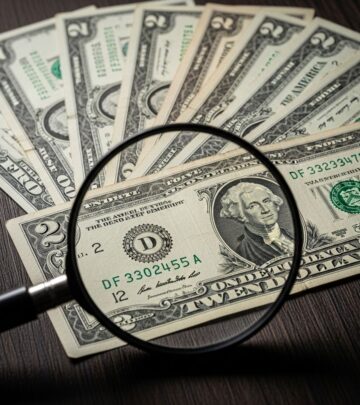
When was the last time you saw a two-dollar bill in circulation? For most Americans, the answer is probably “I can’t remember.” The $2 bill has become something of a phantom currency in everyday transactions—a denomination that technically exists but rarely appears in wallets, cash registers, or pocket change. This scarcity has spawned countless myths, misconceptions, and urban legends about $2 bills, leading many people to believe they are no longer produced or are worth significantly more than their face value. However, the reality behind $2 bills is far more nuanced and interesting than most people realize.
The two-dollar bill represents a unique chapter in American monetary history, one marked by periods of discontinuation, controversial cultural associations, and a surprising resurgence that most citizens remain unaware of. Understanding why $2 bills are so rare requires examining their complex history, the superstitions that have plagued them, and the economic decisions that have shaped their place—or lack thereof—in modern commerce.
The Historical Journey of the Two-Dollar Bill
Early Origins and Development
Interestingly, two-dollar banknotes have a history that predates the United States itself. The original bills in that denomination were authorized by the Continental Congress before the Declaration of Independence was even signed. Once the nation was formally established, the federal government first issued a $2 note in 1862, during the Civil War era when paper money was still a relatively new concept. At that time, paper currency was revolutionary—many Americans preferred coins, and the government needed rapid ways to raise funds.
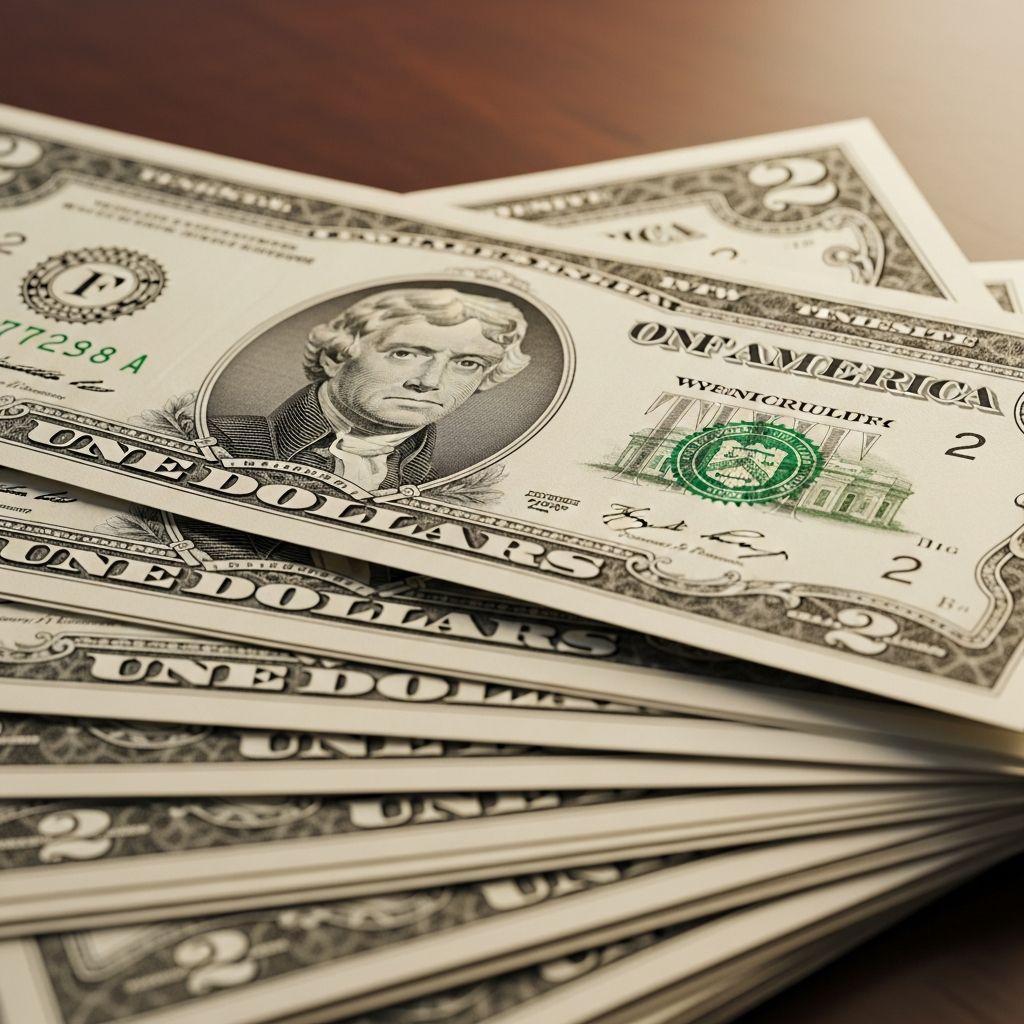
The original 1862 $2 bills featured a portrait of Alexander Hamilton, the first Secretary of the Treasury, and were classified as United States Notes or “Legal Tenders.” The design would undergo significant changes throughout the 19th century, reflecting various artistic movements and government preferences. By 1869, Thomas Jefferson’s portrait began appearing on $2 bills, and his image has remained on this denomination ever since, making Jefferson arguably more synonymous with the $2 bill than any other currency denomination.
The Golden Age and Artistic Evolution
Throughout the late 1800s and early 1900s, $2 bills underwent several redesigns, each more elaborate than the last. The National Bank Notes issued in 1875 featured an intricate design with a woman unfurling a flag and a large sideways ‘2’—colloquially known as the “Lazy Deuce”—on the obverse. By 1896, the “Educational Series” Silver Certificate was issued with allegorical imagery covering the entire obverse of the note, depicting science presenting steam and electricity to commerce and manufacture. These early designs were remarkably artistic and complex, reflecting the era’s craftsmanship and attention to currency security.
The Downsizing Era (1928-1966)
In 1928, all U.S. currency was redesigned and downsized to the smaller dimensions used today. During this period, the $2 bill featured a cropped version of Thomas Jefferson’s portrait on the obverse and Monticello—Jefferson’s Virginia estate—on the reverse. The treasury seal and serial numbers were printed in red ink, distinguishing them from other denominations.
However, the 1950s marked the beginning of the end for $2 bills’ mainstream circulation. Production began to decrease significantly during this decade, and the relative scarcity of the notes led consumers to begin saving any $2 bills they received, creating a self-fulfilling prophecy where the bills became progressively less common in everyday transactions. By 1966, faced with declining demand and the cultural stigma surrounding the denomination, the Treasury Department discontinued production of both the $2 and $5 denominations of United States Notes.
Cultural Superstitions and Negative Associations
The Curse and Bad Luck Narrative
One of the most significant factors in the $2 bill’s decline was its association with bad luck and superstition. The $2 bill became linked to the term “deuce,” which was a name for the devil, leading many people to view the denomination as unlucky. This superstition became so prevalent that recipients of $2 bills would actually tear off one corner of the bill, believing that this action would ward off the supposed curse. The Bureau of Engraving and Printing officially acknowledges this dark history: “For most of their history, $2 notes have been unpopular, being viewed as unlucky or simply awkward to use in cash exchanges.”
In extreme cases, people viewed the torn corners as making the bills “mutilated currency” and would return them to the Treasury rather than spend them. This behavior created a feedback loop where fewer $2 bills remained in circulation, further reinforcing the perception that they were unusual or worthless.
Association with Vice and Illegality
Beyond superstition, $2 bills accumulated a notorious reputation for being used in sketchy venues and illicit activities. The bills became historically linked to bribery, election rigging, gambling, prostitution, and other unsavory practices. Horse racing tracks and gambling halls reportedly became primary venues where $2 bills circulated, tarnishing the denomination’s image and making ordinary citizens reluctant to use or hold them. This association with vice and criminality created a cultural stigma that persisted for decades, far exceeding any rational basis for avoiding the currency.
The Resurrection and Modern Reissuance
The 1976 Bicentennial Revival
The $2 bill’s story took a dramatic turn on November 3, 1975, when Secretary of the Treasury William E. Simon announced the reissuance of the $2 note as a cost-saving measure. The government believed that bringing back the $2 bill could reduce costs and revitalize interest in the denomination. Series 1976 $2 notes became available from banks on April 13, 1976—Thomas Jefferson’s birthday—making the reissuance symbolically appropriate.
The redesigned $2 bills featured a significantly revised reverse design. Instead of Monticello, the back now displayed an engraved rendition (not an exact reproduction) of John Trumbull’s iconic painting “Declaration of Independence,” which showed the signing of the Declaration to the Continental Congress. This artistic choice was deliberate and meaningful: Jefferson, being one of the men credited with penning the Declaration, made the imagery particularly fitting for the nation’s bicentennial celebration.
First-day issues of the new $2 bills could be taken to a post office and stamped with the date “APR 13 1976,” creating a collectible variant that attracted numismatists and history enthusiasts. The Bureau of Engraving and Printing produced a total of 590,720,000 notes from Series 1976, with the final run printed in 1978.
The Counterintuitive Outcome
Despite the government’s hopeful intentions, the reissuance had an unexpected outcome. Many Americans incorrectly believed that the newly designed $2 bills, produced for the United States Bicentennial, would be special limited-edition printings destined to become valuable collector’s items. Consequently, rather than spending the bills, people saved them—storing them away in safe deposit boxes, drawers, and keepsake boxes in hopes of future financial gain. This hoarding behavior once again reduced the circulation of $2 bills, recreating the very problem the government had hoped to solve.
Current Status and Production
Ongoing Production Despite Misconceptions
Contrary to popular belief, $2 bills are still produced today. The most recent printing of the $2 note has the Series 2017A designation, and there are no plans to redesign the $2 note in the foreseeable future. The Federal Reserve continues to print $2 bills, though in much smaller quantities than other denominations, and they remain legal tender with a face value of two dollars.
Interestingly, printing $2 bills is approximately twice as cost-effective as printing $1 notes, making them economically attractive from a government perspective despite their low circulation rates. The $2 bill’s status as a still-minted denomination is perhaps the best-kept secret in American currency, with most citizens remaining unaware that these bills are readily available from banks.
Niche Uses and Collector Interest
While $2 bills are rarely encountered in everyday commerce, they have found specialized uses in certain contexts. Clemson University, Geneva Steel, and Second Amendment proponents have been known to use or promote $2 bills, though these applications remain outside mainstream consumer awareness. Additionally, the denomination has maintained collector interest, particularly among numismatists and history enthusiasts who appreciate the bill’s unique designs and historical significance.
Why Are Two-Dollar Bills So Rare in Circulation?
The Perfect Storm of Factors
The rarity of $2 bills in everyday transactions results from a perfect convergence of historical, cultural, and economic factors. The decades-long discontinuation from 1966 to 1976 created a generation of Americans who never encountered $2 bills in childhood or young adulthood, making them seem exotic or suspicious when they eventually appeared. The cultural superstitions and criminal associations further discouraged their use and made people reluctant to accept them in transactions.
Additionally, the hoarding phenomenon—both during the 1950s-60s decline and after the 1976 revival—removed $2 bills from active circulation. When people save bills rather than spend them, those bills effectively vanish from the money supply in use. Furthermore, businesses’ banking policies often do not accommodate $2 bills, meaning that even when consumers receive them, merchants may be unfamiliar with processing them or may refuse them out of unfamiliarity rather than illegality.
Debunking Common Myths About Two-Dollar Bills
| Myth | Reality |
|---|---|
| $2 bills are no longer printed | They are still produced today with the most recent Series 2017A designation |
| $2 bills are worth significantly more than $2 | Circulated bills are worth face value; only rare historical variants have numismatic value |
| $2 bills are bad luck | This is a cultural superstition with no factual basis; the bills are regular legal tender |
| Receiving a $2 bill means you should tear it | This practice only creates mutilated currency; there is no legitimate reason to damage bills |
| Businesses will refuse $2 bills | They are legal tender and must be accepted; any refusal is based on unfamiliarity, not legality |
Frequently Asked Questions
Q: How rare are $2 bills really?
A: While $2 bills are uncommon in circulation compared to other denominations, they are not rare in the numismatic sense. Most circulated $2 bills are worth their face value of $2. However, certain historical series or bills in exceptional condition may command higher values among collectors.
Q: Where can I get $2 bills?
A: You can obtain $2 bills directly from most banks. Simply visit your local bank and request them. Because banks don’t stock large quantities due to low demand, you may need to special-order them or visit a larger branch.
Q: Is it illegal to spend a $2 bill?
A: No, $2 bills are completely legal tender. You can spend them anywhere that accepts U.S. currency. Some cashiers may be unfamiliar with the denomination, but refusal to accept them would be unusual and unjustified.
Q: What is the significance of the Declaration of Independence on the back of $2 bills?
A: The Declaration of Independence was chosen for the redesigned $2 bill’s reverse in 1976 to commemorate the United States Bicentennial. The image features John Trumbull’s painting of the signing of the Declaration, and Thomas Jefferson—who appears on the obverse—was one of the document’s primary authors.
Q: Will $2 bills ever be discontinued again?
A: The Federal Reserve has indicated no plans to discontinue the $2 bill. While production continues at modest levels, the denomination is expected to remain part of U.S. currency indefinitely.
Conclusion: The Enigma of American Currency
The two-dollar bill represents one of the most fascinating paradoxes in modern American currency. Despite being actively produced legal tender with no plans for discontinuation, $2 bills remain virtually invisible to most citizens, who encounter them so rarely that many question whether they actually exist. This phenomenon results not from any government conspiracy or economic necessity but rather from a unique combination of historical circumstances, cultural superstitions, and collective consumer behavior.
Understanding the story of the $2 bill provides valuable insights into how money, economics, and culture intersect. It demonstrates that currency’s value and utility extend beyond their economic functions—they are shaped by history, superstition, and public perception. The $2 bill’s journey from prominence to obscurity to continued production offers a compelling lesson in how something as fundamental as money can be profoundly influenced by social attitudes and historical events.
The next time someone claims that $2 bills are rare or no longer produced, you now have the knowledge to correct this misconception. More importantly, the next time you encounter a $2 bill, you can appreciate it as a tangible connection to American history, design, and the enduring power of myths in shaping everyday economic life.
References
- United States Two-Dollar Bill — Wikipedia. Accessed 2025. https://en.wikipedia.org/wiki/United_States_two-dollar_bill
- $2 Note — Bureau of Engraving and Printing, U.S. Department of the Treasury. Accessed 2025. https://www.bep.gov/currency/circulating-currency/2-note
- Dollar Scholar Asks: What’s the Deal With $2 Bills? — Nasdaq. Accessed 2025. https://www.nasdaq.com/articles/dollar-scholar-asks-whats-deal-2-bills
- Rare, Real, and Rumored: The Truth About the $2 Bill — Thunderword. 2025-05-08. https://thunderword.highline.edu/2025/05/08/rare-real-and-rumored-the-truth-about-the-2-bill/
- History of the Infamous $2 Two-Dollar Bill — Commerce National Bank St. Louis. Accessed 2025. https://www.cnbstl.com/about-us/news/the-history-of-the-two-dollar-bill
Similar Articles








Read full bio of medha deb