Dollar-Cost Averaging: A Strategic Investment Approach
Master dollar-cost averaging to reduce investment risk through consistent, disciplined portfolio building.
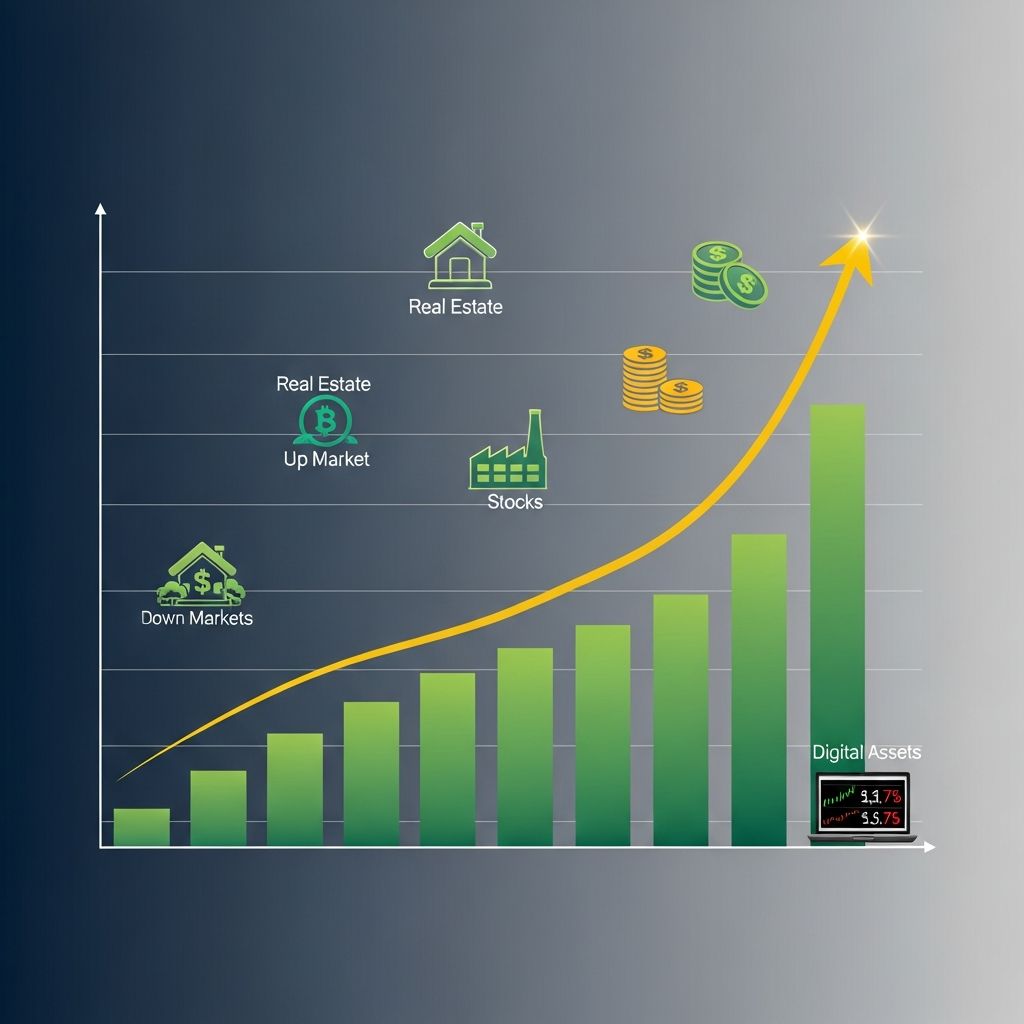
Understanding Dollar-Cost Averaging
Dollar-cost averaging (DCA) is an investment strategy that involves committing a fixed amount of money to purchase investments at regular intervals, regardless of the asset’s price or market conditions. This disciplined approach removes emotion from investing decisions and helps investors build wealth systematically over time. Rather than attempting to time the market or invest large sums at once, DCA spreads investments across multiple periods, allowing investors to purchase more shares when prices are low and fewer shares when prices are high.
The fundamental principle of dollar-cost averaging is that consistent, predetermined investments can help mitigate the risk associated with market volatility. By maintaining a steady investment schedule, investors avoid the common pitfall of trying to predict market movements or making impulsive decisions based on short-term price fluctuations. This methodical approach transforms market downturns from sources of anxiety into opportunities to accumulate assets at discounted prices.
How Dollar-Cost Averaging Works
The mechanics of dollar-cost averaging are straightforward yet powerful. An investor determines a fixed investment amount and an investment interval—for example, investing $500 every month into a particular stock or mutual fund. Regardless of whether the market is bullish or bearish, the investor maintains this commitment, purchasing more shares during price declines and fewer during price increases.
Consider a practical example: An investor decides to invest $1,000 quarterly into a technology mutual fund. In the first quarter, when the fund’s value is $50 per share, the $1,000 purchase yields 20 shares. In the second quarter, if the share price drops to $40, the same $1,000 investment acquires 25 shares. When the price rebounds to $60 in the third quarter, that $1,000 buys approximately 16.67 shares. Over time, this approach naturally increases share accumulation during downturns and reduces it during upswings, optimizing the average purchase price.
The beauty of this strategy lies in its automatic rebalancing mechanism. Without requiring active management or market timing expertise, DCA naturally encourages buying low and selling high through the simple mathematics of fixed-dollar investing.
Key Advantages of Dollar-Cost Averaging
Dollar-cost averaging offers several significant benefits for individual investors, particularly those seeking a structured, low-stress approach to building investment portfolios.
Reduced Market Timing Risk
One of DCA’s primary advantages is eliminating the pressure and difficulty of timing market entry points. Novice investors often struggle to determine optimal moments to invest, frequently making poor decisions by buying near market peaks and avoiding purchases during downturns. By committing to regular investments regardless of market conditions, DCA removes this burden entirely, allowing investors to participate in market growth without attempting to predict unpredictable fluctuations.
Psychological Benefits
Emotionally-driven investment decisions frequently undermine long-term wealth accumulation. Fear during market corrections can prompt panic selling, while greed during rallies can lead to buying at inflated prices. Dollar-cost averaging counteracts these emotional tendencies by establishing a predetermined investment schedule. This behavioral discipline helps investors maintain focus on long-term objectives rather than reacting to short-term market noise.
Accessibility for Modest Investors
DCA makes systematic investing accessible to individuals with limited capital. Rather than requiring substantial lump sums, this strategy enables investors to begin with modest monthly or quarterly contributions. Over time, even small regular investments compound into significant portfolios through the combined effects of DCA’s share accumulation and investment returns.
Reduced Average Cost Per Share
Because dollar-cost averaging purchases more shares during low-price periods and fewer during high-price periods, it naturally lowers the average cost per share compared to lump-sum investing strategies. This mathematical advantage can meaningfully improve long-term returns and portfolio performance.
Potential Drawbacks and Limitations
While dollar-cost averaging offers substantial benefits, investors should also understand its limitations and potential disadvantages.
Underperformance in Rising Markets
In consistently bullish markets, lump-sum investing typically outperforms dollar-cost averaging. When prices rise steadily, investing available capital immediately captures gains from the entire investment amount immediately. DCA’s gradual approach means portions of capital remain uninvested during these growth periods, missing potential returns. Historical data suggests that in periods of sustained market appreciation, lump-sum investors often achieve superior results.
Transaction and Fee Considerations
Frequent regular investments can generate transaction costs, particularly when investing through brokers charging per-trade fees. While modern commission-free investing has reduced this concern for many investors, expense ratios and other ongoing fees can accumulate across multiple investment periods. Investors should evaluate whether frequent investments align with their fee structures.
Complex Implementation with Multiple Assets
Managing dollar-cost averaging across numerous securities or asset classes increases complexity. Coordinating fixed investments across stocks, bonds, real estate investment trusts (REITs), and international assets requires careful scheduling and record-keeping to maintain the strategy’s integrity.
Discipline Requirements
Dollar-cost averaging’s success depends entirely on investor commitment to maintaining the established schedule. Market volatility and changing personal circumstances can tempt investors to abandon their plan, undermining the strategy’s long-term effectiveness. The strategy functions optimally only when investors remain disciplined through market cycles.
Dollar-Cost Averaging vs. Lump-Sum Investing
Understanding the distinction between dollar-cost averaging and lump-sum investing helps investors select the approach best suited to their circumstances.
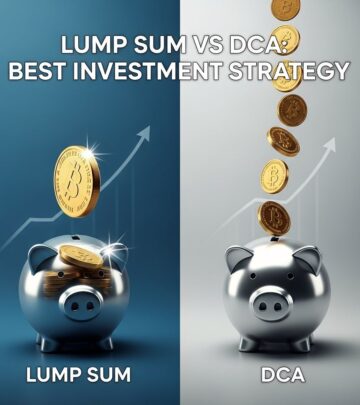
| Factor | Dollar-Cost Averaging | Lump-Sum Investing |
|---|---|---|
| Investment Approach | Fixed amounts at regular intervals | Full available capital invested immediately |
| Market Timing Risk | Minimized through diversified entry points | Higher risk of buying at market peaks |
| Rising Market Performance | May underperform due to gradual capital deployment | Typically outperforms with sustained growth |
| Psychological Comfort | Higher due to predetermined schedule | Requires confidence in immediate investment decision |
| Capital Deployment | Gradual over extended periods | Complete from start date |
| Average Cost Advantage | Potentially lower average share cost | Single price point entry |
Practical Applications of Dollar-Cost Averaging
Retirement Account Contributions
Retirement accounts like 401(k)s and IRAs naturally incorporate dollar-cost averaging through regular payroll deductions and systematic contributions. These automatic investments ensure consistent portfolio building while benefiting from the strategy’s risk-reduction properties.
Brokerage Account Investing
Individual investors can implement DCA through brokerage accounts by establishing automatic monthly or quarterly transfers to purchase specific mutual funds, exchange-traded funds (ETFs), or individual securities.
Employee Stock Purchase Plans
Many employers offer employee stock purchase plans (ESPPs) that embody DCA principles through regular payroll deductions used to purchase company stock, often at discounted prices.
Target-Date Funds
Target-date funds automatically adjust asset allocation over time, functioning as a form of DCA that incorporates risk management alongside regular investing patterns.
Dollar-Cost Averaging for Different Investor Types
Conservative Investors
Risk-averse investors particularly benefit from DCA’s risk mitigation characteristics. The strategy’s systematic approach and reduced exposure to market timing mistakes align well with conservative investment philosophies.
Young Investors
Beginning investors advantage from DCA’s simplicity and accessibility. Starting with modest regular investments builds strong financial habits while allowing extended time horizons to benefit from compound growth.
Income-Based Investors
Investors with regular, predictable income can seamlessly implement DCA through automatic monthly contributions, creating a straightforward connection between earnings and wealth building.
Market-Uncertain Investors
During periods of economic uncertainty or market volatility, DCA provides psychological comfort and operational clarity. The predetermined schedule removes decision-making burden during turbulent market conditions.
Common Misconceptions About Dollar-Cost Averaging
Several misunderstandings surround dollar-cost averaging that warrant clarification:
Misconception 1: DCA Guarantees Profits — Dollar-cost averaging reduces certain investment risks but cannot eliminate market losses or guarantee positive returns. In declining markets, even systematic investing results in portfolio losses.
Misconception 2: DCA Beats All Market Conditions — While DCA performs admirably in volatile or declining markets, rising markets often deliver superior lump-sum returns. DCA’s advantage varies with market conditions.
Misconception 3: DCA Eliminates Need for Diversification — Dollar-cost averaging complements but does not replace diversification. Investors still require proper asset allocation across stocks, bonds, and other investment categories.
Misconception 4: DCA Works Only for Stock Investing — DCA principles apply across all investment types, including bonds, mutual funds, ETFs, and alternative investments.
Getting Started with Dollar-Cost Averaging
Implementing a dollar-cost averaging strategy involves several practical steps:
Step 1: Determine Your Investment Amount — Calculate a fixed amount you can comfortably invest at regular intervals without straining finances or requiring emergency fund withdrawals.
Step 2: Select Your Investment Interval — Choose an investment frequency (monthly, quarterly, or annually) that aligns with your income patterns and cash flow cycles.
Step 3: Choose Your Investment Vehicles — Select appropriate investments such as mutual funds, ETFs, or individual stocks that match your risk tolerance and investment objectives.
Step 4: Set Up Automatic Investments — Use your brokerage’s automatic investment features to remove manual involvement and ensure consistent execution.
Step 5: Monitor and Adjust Periodically — Review your strategy annually to ensure continued suitability as your circumstances and market conditions evolve.
Frequently Asked Questions
Q: Is dollar-cost averaging suitable for beginners?
A: Yes, dollar-cost averaging is particularly well-suited for beginning investors. Its simplicity, accessibility with small amounts, and psychological benefits make it an excellent starting point for wealth building.
Q: Can dollar-cost averaging be used with index funds?
A: Absolutely. Dollar-cost averaging works exceptionally well with index funds and ETFs, which offer low costs, diversification, and transparency ideal for systematic investing strategies.
Q: How long should I practice dollar-cost averaging?
A: Dollar-cost averaging functions best over extended periods spanning multiple market cycles, ideally five years or longer. Longer time horizons increase the probability that the strategy delivers intended risk-reduction benefits.
Q: Does dollar-cost averaging work during market crashes?
A: During market crashes, dollar-cost averaging proves particularly valuable. Continuing investments during downturns purchases assets at significantly discounted prices, positioning portfolios for recovery gains.
Q: Can I combine dollar-cost averaging with dividend reinvestment?
A: Yes, combining DCA with dividend reinvestment plans (DRIPs) amplifies the strategy’s benefits, creating multiple layers of systematic investing and compound growth.
Q: What happens if I miss an investment interval?
A: Occasionally missing scheduled investments minimally impacts long-term results. However, maintaining discipline maximizes DCA’s effectiveness, so investors should prioritize consistent implementation.
References
- Dollar Cost Averaging — U.S. Securities and Exchange Commission, Investor.gov. 2025. https://www.investor.gov/introduction-investing/investing-basics/glossary/dollar-cost-averaging
- What Is Dollar-Cost Averaging? Guide for Investors — Merrill Lynch, Bank of America Corporation. 2025. https://www.ml.com/articles/what-is-dollar-cost-averaging.html
- Investment Basics and Principles — Financial Industry Regulatory Authority (FINRA). 2024. https://www.finra.org/investors/learn-to-invest
Similar Articles








Read full bio of Sneha Tete