Dollar Cost Averaging: Benefits and Drawbacks
Explore how dollar cost averaging can stabilize your investments while weighing its limitations in volatile markets.
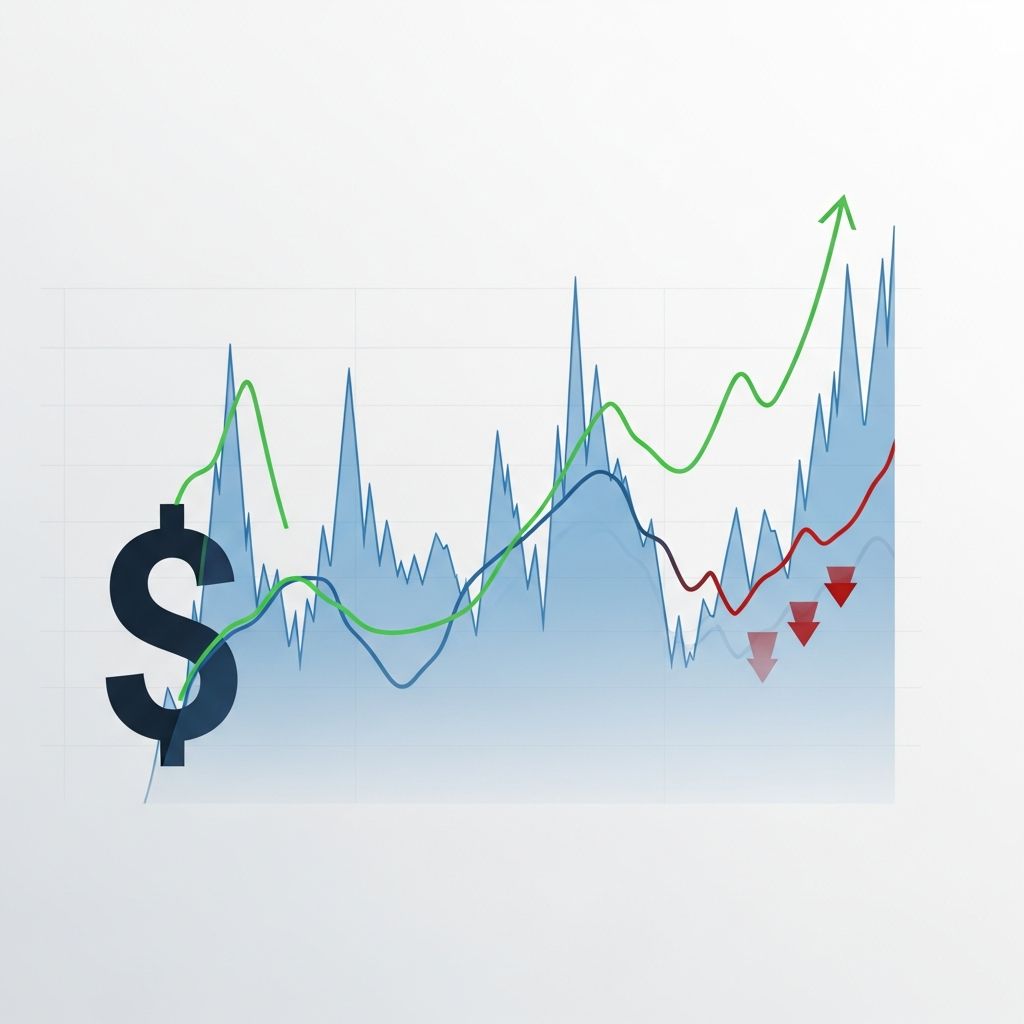
Dollar cost averaging (DCA) involves committing a fixed dollar amount to investments at set intervals, irrespective of market conditions. This method aims to diminish the influence of short-term price swings by acquiring more shares when prices dip and fewer when they rise.
Understanding the Mechanics of DCA
At its core, DCA promotes consistent investing without the need to forecast market movements. Investors select an asset, like stocks or ETFs, and allocate the same sum—say $500 monthly—over time. During downturns, this buys more units; in uptrends, fewer. The outcome often yields a lower average cost per share than a single large purchase at a peak.
For example, consider investing $1,000 monthly in a stock over six months. If prices start at $50, drop to $40, then recover to $60, $70, $55, and $65, the total outlay is $6,000 for varying shares each time, averaging around $55 per share—potentially better than a lump-sum buy at the initial high.
Key Advantages of Implementing DCA
DCA appeals to many due to its simplicity and psychological benefits. It enforces discipline, preventing emotional decisions driven by fear or greed.
- Volatility Mitigation: By spreading purchases, DCA lessens the risk of investing everything at a market top. Regular buys capture lower prices during dips, smoothing the entry cost.
- Psychological Ease: Investors avoid the stress of timing the market, which even experts struggle with. Automation via brokerage recurring investments builds habits without constant monitoring.
- Accessibility for Beginners: No large upfront capital required; small, regular contributions suit salaried individuals or retirement savers like 401(k) participants.
- Long-Term Compounding: Consistent investing harnesses time in the market, historically outperforming attempts to time entries.
Studies and historical data support DCA’s role in risk reduction. For instance, in volatile periods, it has helped portfolios weather storms better than impulsive lump sums.
Potential Shortcomings to Consider
While beneficial, DCA isn’t flawless. It assumes markets trend upward over time, which isn’t always true.
- Missed Gains in Bull Markets: If prices rise steadily, DCA results in fewer total shares than a lump-sum investment at the start. A Vanguard analysis shows lump-sum often beats DCA in rising markets.
- Opportunity Cost: Cash held for future buys earns minimal returns compared to immediate market exposure. Over decades, this drag can compound.
- No Protection in Prolonged Declines: DCA keeps buying into falling assets, amplifying losses if the market doesn’t recover soon. It doesn’t prevent drawdowns.
- Transaction Fees Impact: Frequent trades can erode returns if commissions apply, though many platforms now offer commission-free options.
In a hypothetical where a stock climbs from $20 to $30 over months, a $5,000 lump sum buys 250 shares initially, versus DCA’s 238 shares at a higher average cost.
Comparing DCA to Lump-Sum Investing
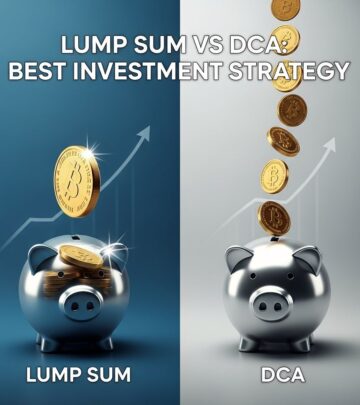
To evaluate DCA, contrast it with lump-sum investing, where all funds deploy immediately.
| Aspect | Dollar Cost Averaging | Lump-Sum Investing |
|---|---|---|
| Risk Profile | Lower timing risk, spread exposure | Higher short-term volatility risk |
| Performance in Rising Markets | Often underperforms | Typically superior due to early compounding |
| Performance in Falling Markets | Potentially better average cost | Larger immediate losses |
| Investor Suitability | Disciplined, risk-averse individuals | Those with high risk tolerance |
| Historical Edge | Good for volatility; lump-sum wins ~68% of time per Vanguard | Higher returns long-term |
Data from sources like Fidelity and Vanguard indicate lump-sum outperforms DCA about two-thirds of the time in historical U.S. market simulations, but DCA shines for emotional comfort.
Best Scenarios for Using DCA
DCA excels when:
- Markets show high uncertainty or volatility, like post-recession recoveries.
- Investors have steady inflows, such as paychecks, rather than windfalls.
- Building positions gradually in individual stocks prone to swings.
- Combining with diversification across ETFs tracking broad indices like the S&P 500.
For retirement accounts, DCA aligns naturally with periodic contributions, fostering steady growth.
Strategies to Optimize DCA
Enhance DCA effectiveness with these tactics:
- Automate Investments: Use brokerage tools for hands-free execution, ensuring consistency.
- Diversify Assets: Apply across multiple sectors or index funds to spread risk.
- Adjust for Inflation: Gradually increase contributions to maintain purchasing power.
- Periodic Reviews: Reassess every 6-12 months, but avoid reactive changes.
- Hybrid Approach: Invest a portion lump-sum, then DCA the rest for balance.
Match the strategy to your risk tolerance: conservative types favor stable ETFs; aggressive ones might target growth stocks.
Real-World Examples and Calculations
Suppose $100 monthly into an ETF over 5 months: prices $10, $8, $12, $9, $11.
- Month 1: 10 shares
- Month 2: 12.5 shares
- Month 3: 8.33 shares
- Month 4: 11.11 shares
- Month 5: 9.09 shares
- Total shares: 51.03; Average cost: $9.81 (vs. $10 lump-sum).
This illustrates DCA’s edge in volatile conditions.
Frequently Asked Questions
What is the main goal of dollar cost averaging?
It reduces average purchase price by buying more shares at lows and fewer at highs, managing volatility.
Does DCA guarantee profits?
No, it manages risk but not losses in down markets. Long-term market growth is key.
Is DCA better than lump-sum?
Not always; lump-sum often yields higher returns historically, but DCA aids discipline.
Can I use DCA for any investment?
Yes, stocks, ETFs, crypto, but best for assets with growth potential.
How often should I invest with DCA?
Monthly aligns with pay cycles; weekly or bi-weekly works for finer averaging.
Final Thoughts on DCA in Your Portfolio
DCA suits patient investors prioritizing consistency over optimization. While lump-sum may edge out mathematically, DCA’s behavioral advantages make it invaluable for most. Integrate it thoughtfully, alongside diversification and long-term focus, for resilient wealth building.
References
- Dollar Cost Averaging (DCA) Meaning: A Simple Strategy to Build… — HeyGoTrade. 2023. https://www.heygotrade.com/en/blog/dollar-cost-averaging-dca-strategy
- Dollar cost averaging | Fidelity — Fidelity Investments. 2024. https://www.fidelity.com/learning-center/trading-investing/dollar-cost-averaging
- Dollar cost averaging – Wikipedia — Wikipedia. 2024. https://en.wikipedia.org/wiki/Dollar_cost_averaging
- Dollar Cost Averaging | Investor.gov — U.S. Securities and Exchange Commission (investor.gov). 2023. https://www.investor.gov/introduction-investing/investing-basics/glossary/dollar-cost-averaging
- What Is Dollar-Cost Averaging? Guide for Investors – Merrill Lynch — Merrill Lynch. 2024. https://www.ml.com/articles/what-is-dollar-cost-averaging.html
- How to invest a lump sum of money – Vanguard — Vanguard. 2024. https://investor.vanguard.com/investor-resources-education/online-trading/dollar-cost-averaging-vs-lump-sum
- What Is Dollar-Cost Averaging? | Fidelity Investments – YouTube — Fidelity Investments. 2023. https://www.youtube.com/watch?v=DojGdOFPZyE
- What Is Dollar Cost Averaging? | U.S. Bank — U.S. Bank. 2024. https://www.usbank.com/investing/financial-perspectives/investing-insights/what-is-dollar-cost-averaging.html
Similar Articles








Read full bio of Sneha Tete