Dollar-Based Investing: 5 Key Benefits And How To Start
Unlock the power of dollar-based investing to build wealth steadily with fractional shares and disciplined strategies.
Dollar-based investing revolutionizes how individuals approach the stock market by allowing purchases in specific dollar amounts rather than whole shares. This method, often paired with fractional share ownership, enables investors to deploy fixed sums at regular intervals, smoothing out volatility and promoting consistent participation regardless of price fluctuations.
Understanding the Fundamentals of Dollar-Based Investing
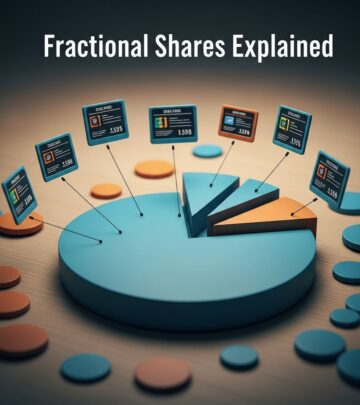
At its core, dollar-based investing shifts focus from share counts to monetary value. Instead of calculating how many full shares $500 buys at a fluctuating price, you simply instruct your broker to invest exactly $500 worth of a stock or ETF. This results in fractional shares when the amount doesn’t divide evenly into whole units—for instance, investing $1,000 in a $230 stock might yield 4.35 shares.
This approach democratizes access to high-priced assets like tech giants or premium ETFs. Previously, a $3,000 share price might sideline smaller investors; now, $100 secures a slice of ownership. Platforms supporting this feature automate the process, making it seamless for beginners and seasoned traders alike.
How Dollar-Based Investing Works in Practice
Implementation is straightforward. Select your investment vehicle, specify the dollar amount, and set a schedule if desired. Brokers handle the math: if a stock trades at $52.45 and you invest $100, you receive approximately 1.91 shares. Over time, reinvesting dividends or automating monthly contributions compounds the effect.
- Step 1: Choose a brokerage with fractional share support, such as those offering dollar-based orders.
- Step 2: Decide on your fixed investment amount, e.g., $200 bi-weekly.
- Step 3: Pick assets aligning with your risk profile—diversified ETFs work well for novices.
- Step 4: Automate to enforce discipline and capture opportunities.
A practical example: Investing $100 monthly in a volatile stock averaging $50/share over six months. High-price months buy fewer fractions; dips allow more. Total shares accumulate efficiently, often at a lower average cost than lump-sum timing.
Integrating Dollar-Cost Averaging for Optimal Results
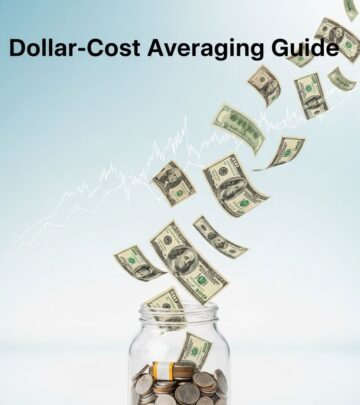
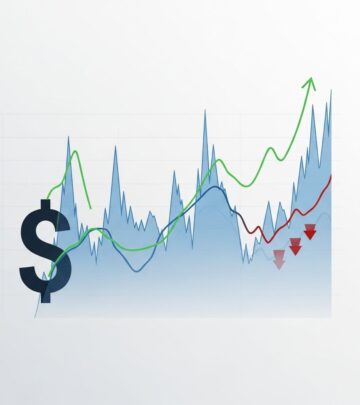
Dollar-based investing shines when combined with dollar-cost averaging (DCA), a technique of fixed periodic investments irrespective of market conditions. DCA mitigates timing risk—the pitfall of investing a lump sum at a peak.
Consider this hypothetical table comparing strategies:
| Month | Share Price | DCA Shares Bought ($100/mo) | Lump Sum ($600 in Month 1) |
|---|---|---|---|
| 1 | $10 | 10 | 60 |
| 2 | $8 | 12.5 | 60 |
| 3 | $12 | 8.33 | 60 |
| 4 | $6 | 16.67 | 60 |
| 5 | $9 | 11.11 | 60 |
| 6 | $11 | 9.09 | 60 |
| Total Invested | $600 | $600 | |
| Total Shares | 67.7 | 60 | |
| Avg Cost/Share | $8.86 | $10 |
DCA yields more shares at a reduced average cost, illustrating its edge in uncertain markets.
Key Advantages Driving Adoption
This strategy offers multifaceted benefits, appealing to diverse investor profiles.
- Enhanced Accessibility: Low entry barriers mean $10 investments build portfolios, ideal for young savers or those with modest incomes.
- Superior Diversification: Spread capital across multiple holdings without minimum share requirements, reducing single-stock risk.
- Emotional Discipline: Automation curbs impulsive decisions, fostering adherence to long-term plans amid volatility.
- Efficient Capital Use: No idle cash waiting for whole-share thresholds; every dollar works immediately.
- Dividend Optimization: Reinvest full payouts into fractions, accelerating compounding without leftovers.
Studies and broker data affirm DCA’s reliability: over decades, it matches or outperforms lump-sum in most scenarios, especially for equities.
Potential Drawbacks and Risk Management
No strategy is flawless. Dollar-based investing via fractions has limitations.
- Oppportunity Cost in Bull Markets: Steady investing may lag lump-sum during prolonged rallies, as full deployment happens gradually.
- Liquidity and Trading Constraints: Not all brokers support fractional sales or transfers; verify platform policies.
- Fees and Spreads: Frequent small trades could incur higher relative costs if commissions apply—opt for zero-fee venues.
- Market Decline Exposure: DCA doesn’t prevent losses; it averages into falling prices, prolonging recovery.
Mitigate by diversifying across asset classes, maintaining emergency funds, and aligning with risk tolerance. Long horizons (5+ years) favor this over short-term speculation.
Real-World Applications and Success Stories
Investors leverage dollar-based methods for retirement, education funding, or wealth accumulation. A millennial automating $300/month into an S&P 500 ETF since 2020 would hold substantial fractions despite initial dips, benefiting from recovery.
High-net-worth individuals use it for rebalancing: injecting $10,000 into underweighted sectors via precise dollar targets. Retirees appreciate steady dividend streams from fractional blue-chips.
Choosing the Right Platform and Tools
Success hinges on supportive infrastructure. Prioritize brokers with:
- Zero-commission fractional trading.
- Robust automation for DCA.
- Mobile apps for easy monitoring.
- Extensive ETF/stock coverage.
Popular options include those from major firms enabling dollar orders on U.S. equities and select internationals.
Frequently Asked Questions (FAQs)
What is the difference between dollar-based investing and traditional share buying?
Dollar-based focuses on amount invested, yielding fractions; traditional requires whole shares, potentially leaving cash uninvested.
Can I sell fractional shares?
Yes, most platforms allow dollar-based sales, converting fractions back to cash.
Is dollar-based investing suitable for beginners?
Absolutely—its simplicity and low barriers make it ideal for novices building habits.
Does it guarantee profits?
No strategy does; it reduces volatility risk but markets can decline.
How does taxation work with fractions?
Taxes apply to gains on sale, calculated proportionally per fraction—track via broker statements.
Building Your Dollar-Based Portfolio: Actionable Steps
Start small: Assess goals, risk appetite, and timeline. Allocate 60-80% equities for growth, balance with bonds. Review quarterly, adjusting contributions upward with income growth. Consistency trumps perfection—over 20 years, modest DCA often yields six-figure nests.
Incorporate tax-advantaged accounts like IRAs for amplified effects. Monitor via apps tracking average costs and performance. This methodical approach transforms sporadic saving into systematic wealth creation.
References
- What Is Dollar-Cost Averaging? — Charles Schwab. 2023. https://www.schwab.com/learn/story/what-is-dollar-cost-averaging
- What is dollar-based investing? — Hatch Help Centre. 2023. https://help.hatchinvest.nz/en/articles/2360970-what-is-dollar-based-investing
- Power of Fractional Investing — Metro Community Development. 2024. https://metrocommunitydevelopment.com/power-of-fractional-investing/
- Fractional shares | Dollar-based investing — Fidelity. 2024. https://www.fidelity.com/learning-center/trading-investing/fractional-shares
- What are fractional shares? Pros and Cons, Examples — Trading 212. 2024. https://www.trading212.com/learn/investing-101/fractional-shares
- What Is Dollar-Cost Averaging? Guide for Investors — Merrill Lynch. 2023. https://www.ml.com/articles/what-is-dollar-cost-averaging.html
- Fractional Shares: What Are They and How Do You Buy Them? — Chase. 2024. https://www.chase.com/personal/investments/learning-and-insights/article/what-are-fractional-shares-and-how-do-they-work
Similar Articles








Read full bio of medha deb