Does Paying Off Loans Boost Your Credit Score?
Discover how settling loans early influences your credit profile, with insights on potential gains and temporary setbacks for smarter financial moves.
Clearing a loan ahead of schedule often strengthens your financial position by cutting interest costs and easing monthly obligations, yet its effect on your credit score varies based on your overall credit makeup. While it generally supports long-term score improvements through better debt management, short-term fluctuations can occur due to shifts in credit composition.
Understanding Credit Score Mechanics
Credit scores, such as FICO, derive from multiple elements, each carrying distinct weight in the calculation. Payment history dominates at 35%, underscoring the value of consistent on-time payments. Amounts owed follow at 30%, heavily influenced by credit utilization on revolving accounts like cards. Credit mix contributes 10%, reflecting diversity across installment and revolving debts, while length of history (15%) and new credit (10%) round out the factors.
Installment loans, including auto, personal, or mortgages, differ from revolving credit by having fixed repayment schedules. Paying these off alters the balance between account types, potentially impacting the mix factor if it leaves your profile skewed toward one category.
Potential Short-Term Score Declines
A frequent concern is whether early payoff harms scores. If the loan represents your sole installment account, closing it narrows your credit mix, which can trigger a temporary drop of several points. The average age of accounts might also shorten if the loan was among your older ones, as closed accounts age differently.
However, these dips are typically minor and transient. Lenders update credit bureaus monthly, so changes reflect 30-45 days post-payoff. Positive payment records persist on reports for up to 10 years, bolstering scores long-term if history was strong.
Long-Term Advantages of Debt Elimination
Beyond scores, payoff yields tangible benefits. Interest savings accumulate quickly, especially on high-rate loans. Debt-to-income (DTI) ratio drops, calculated as monthly debt payments divided by gross income, enhancing eligibility for mortgages or new credit. Lenders favor DTI under 36% for prime rates.
Reduced overall debt signals responsibility, improving lender perceptions. For revolving debt, payoffs excel by slashing utilization below 30%—ideally under 10%—for rapid boosts. Installment payoffs, though mixed initially, align with financial health goals.
Comparing Revolving vs. Installment Debt Payoffs
| Debt Type | Typical Impact | Timeline to Improvement | Key Factors |
|---|---|---|---|
| Revolving (Credit Cards) | Positive Increase | 1-2 Months | Lowers utilization ratio |
| Installment (Loans) | Possible Initial Dip, Then Rise | 2-3 Months | Affects mix and history length |
This table illustrates core differences: revolving payoffs deliver quicker wins via utilization, while installment ones require patience for recovery.
Real-World Scenarios and Outcomes
Consider a borrower with one car loan and multiple cards. Paying off the loan might dip the score 10-20 points from mix changes but saves thousands in interest and lowers DTI for homebuying. Scores rebound as bureaus update and positive history endures.
Conversely, someone with diverse debts sees minimal disruption, as mix remains balanced. Prioritizing high-interest revolving debt first maximizes gains.
Strategies to Maximize Positive Effects
- Maintain Open Accounts: Keep paid-off cards active with light use to preserve utilization and mix benefits.
- Time Payoffs Strategically: Settle near statement close dates for optimal bureau reporting.
- Automate Payments: Ensures flawless history, the top score driver.
- Monitor Reports: Check free weekly via AnnualCreditReport.com for errors post-payoff.
- Build Utilization Buffer: Pay cards multiple times monthly to stay low.
These steps mitigate risks and accelerate recovery.
When Payoff Might Not Be Ideal
If your score hinges on a single loan’s positive history or if prepayment penalties apply, weigh costs. Low-rate, long-term debts like mortgages often warrant minimum payments to preserve mix and age. Consult advisors for personalized math.
Timeline for Score Recovery
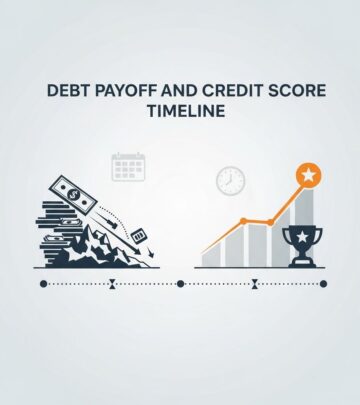
Post-revolving payoff, expect uplift in 1-2 months as utilization updates. Installment closures may dip scores briefly, rebounding in 2-3 months amid bureau refreshes every 30-45 days. Consistent habits ensure sustained growth.
Broader Financial Implications
Stronger scores unlock lower rates on future borrowing, insurance, and rentals. DTI improvements aid big purchases. Focus on holistic health: emergency funds, budgeting, and diversified credit use amplify payoff impacts.
Frequently Asked Questions
Will my score drop immediately after payoff?
Not instantly; updates lag 30-45 days. Initial dips stem from mix or age shifts.
How long does a paid loan stay on my report?
Up to 10 years if positive, aiding scores throughout.
Should I pay off cards or loans first?
Target cards for quick utilization wins, then loans for DTI relief.
Does closing paid accounts hurt?
Yes, if it spikes utilization or alters mix; keep open where possible.
Can autopay prevent issues?
Absolutely; it safeguards payment history, 35% of your score.
Proven Tips for Credit Optimization
- Review scores monthly via free tools.
- Dispute inaccuracies promptly.
- Avoid new applications post-payoff.
- Diversify responsibly over time.
- Track DTI for lending readiness.
Implementing these fosters resilience.
References
- Will Paying Off a Loan Improve Credit? — Experian. 2023-10-15. https://www.experian.com/blogs/ask-experian/will-paying-off-a-loan-improve-credit/
- How Long After You Pay Off Debt Does Your Credit Improve? — Experian. 2024-02-20. https://www.experian.com/blogs/ask-experian/how-long-after-you-pay-off-debt-does-your-credit-improve/
- Why Your Credit Scores May Drop After Paying Off Debt — Equifax. 2024-05-10. https://www.equifax.com/personal/education/credit/score/articles/-/learn/why-credit-scores-may-drop-after-paying-off-debt/
- Does Paying Off Loans Early Hurt Your Credit? — State Credit Union. 2023-11-05. https://www.sccu.com/articles/personal-finance/does-paying-off-loans-early-hurt-your-credit
- Does Paying Off Debt Improve Credit Score? — Credit Acceptance. 2024-01-12. https://www.creditacceptance.com/car-buyers/express-lane/how-to-improve-your-credit-paying-down-debt
- Does Paying Off a Debt Increase Your Credit Score? — SoFi. 2023-12-18. https://www.sofi.com/learn/content/does-paying-off-a-debt-increase-credit-score/
- Will paying off my credit card balance every month improve my score? — Consumer Financial Protection Bureau. 2024-03-01. https://www.consumerfinance.gov/ask-cfpb/will-paying-off-my-credit-card-balance-every-month-improve-my-score-en-1293/
Similar Articles








Read full bio of Sneha Tete