Does Checking Credit Score Hurt It?
Discover if monitoring your own credit score impacts your rating and learn safe ways to stay informed on your financial health.

Your credit score serves as a vital snapshot of your financial reliability, influencing everything from loan approvals to interest rates. A common worry among consumers is whether simply viewing your own credit score will cause it to drop. The short answer is no: accessing your own credit score through soft inquiries has no negative effect on your rating. This article explores the mechanics behind credit inquiries, the factors that truly drive your score, and practical strategies for ongoing monitoring.
Understanding Credit Inquiries: Soft vs. Hard
Credit inquiries fall into two categories, each with distinct impacts on your score. Soft inquiries occur when you check your own credit or when companies pre-qualify you for offers without a full application. These do not influence your score at all. Hard inquiries, however, happen when you apply for new credit, such as a credit card or mortgage, and can temporarily lower your score by a few points.
- Soft inquiries: Include self-checks, employer background checks, or promotional offers. They appear on your report but are invisible to lenders and scoring models.
- Hard inquiries: Triggered by credit applications; multiple in a short period may signal risk to lenders, potentially dropping your score by 5-10 points per inquiry, lasting up to 12 months.
According to the Consumer Financial Protection Bureau (CFPB), scoring models like FICO and VantageScore ignore soft inquiries entirely when calculating scores. This distinction protects proactive consumers from penalties for staying informed.
The Core Components of Your Credit Score
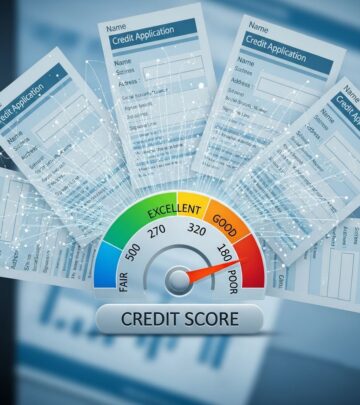
Credit scores, typically ranging from 300 to 850, are derived from data in your credit report compiled by bureaus like Experian, Equifax, and TransUnion. Major models such as FICO and VantageScore weigh five primary factors, though exact algorithms remain proprietary.
| Factor | FICO Weight | VantageScore 4.0 Weight | Description |
|---|---|---|---|
| Payment History | 35% | 41% | Tracks on-time payments, late payments, bankruptcies, and collections. Most influential factor. |
| Amounts Owed | 30% | 20% (Balances) | Measures credit utilization (balances vs. limits). Aim for under 30%. |
| Length of Credit History | 15% | 20% (Depth) | Average age of accounts; older histories boost scores. |
| New Credit | 10% | 11% | Recent inquiries and new accounts; too many can harm. |
| Credit Mix | 10% | Included in Depth | Variety of revolving (cards) and installment (loans) accounts. |
Payment history reigns supreme: a single 30-day late payment can drop your score significantly, while consistent on-time payments build it steadily. Credit utilization is calculated as total balances divided by total limits, multiplied by 100 for a percentage. For example, $2,000 owed on $10,000 limits yields 20% utilization.
Why Self-Checks Are Risk-Free
When you log into services like Experian or annualcreditreport.com for your free weekly reports, it’s a soft inquiry. Lenders cannot see these, and they don’t factor into FICO or VantageScore calculations. Scores update dynamically whenever a report is pulled, incorporating the latest bureau data, but self-pulls remain neutral.
Differences in scores arise from varying bureau data or model versions, not from checking itself. For instance, your Experian score might differ from Equifax due to incomplete lender reporting across bureaus. Regular self-monitoring helps spot errors early, such as unauthorized inquiries or fraudulent accounts.
When Inquiries Do Matter: The Impact of Hard Pulls
Hard inquiries stem from credit applications and are visible to future lenders for two years, affecting scores for one year. Each can reduce your score modestly, but the effect diminishes over time. Opening multiple new accounts amplifies this, as it signals potential financial strain.
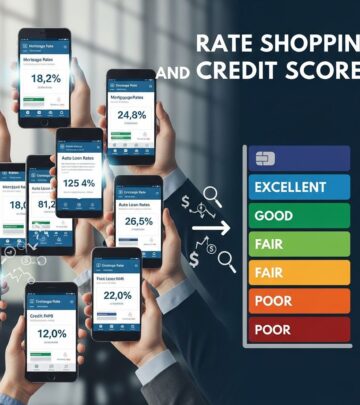
- Shop rates within 14-45 days for mortgages/auto loans; models treat them as one inquiry.
- Avoid unnecessary applications; each adds to your ‘new credit’ factor.
MyFICO notes that while inquiries are only 10% of FICO, they compound with other negatives like high utilization.
Strategies for Safe Credit Monitoring
Empower yourself with these habits to track your score without harm:
- Use free services: AnnualCreditReport.com offers weekly reports from all three bureaus; sites like Credit Karma provide VantageScore estimates via soft pulls.
- Sign up for alerts: Experian and FICO apps notify you of changes, using soft inquiries only.
- Calculate utilization manually: List balances and limits monthly to gauge health without pulling reports.
- Dispute errors: Review reports quarterly; correct inaccuracies promptly via bureau sites.
- Build positive history: Automate payments and keep utilization low for organic score growth.
Fidelity emphasizes that scores recalculate per request, so frequent soft checks yield fresh insights without penalty.
Common Myths About Credit Checks Debunked
Myth 1: Any credit check hurts your score. Reality: Only hard inquiries do, and self-checks are exempt.
Myth 2: Scores update monthly on a fixed schedule. Reality: They’re generated on-demand, reflecting real-time report data.
Myth 3: More accounts always improve scores. Reality: Balance matters; poor management tanks scores via utilization and payment factors.
Long-Term Benefits of Regular Monitoring
Consistent tracking prevents surprises, like score drops from unreported late payments. It also positions you for better terms: scores above 740 often secure prime rates. Banks like Citizens note that understanding utilization—keeping it under 30%—can raise scores 20-50 points quickly.
Over time, a strong score (740+) correlates with lower borrowing costs, saving thousands on loans. Proactive habits, rooted in soft inquiry monitoring, foster financial discipline.
Frequently Asked Questions (FAQs)
Can I check my credit score for free without affecting it?
Yes, use official sites like AnnualCreditReport.com or free bureau tools for soft inquiries that leave your score unchanged.
How long does a hard inquiry stay on my report?
Hard inquiries remain visible for two years but impact scores for only 12 months.
Why do I have different scores from each bureau?
Lenders may report variably; not all update every bureau simultaneously.
Does paying rent or utilities affect my score?
Typically no, unless reported via services like Experian Boost, which can add positive payment history.
How can I improve my score quickly?
Pay down balances to lower utilization, dispute errors, and avoid new applications.
Advanced Tips for Score Optimization
Beyond basics, consider credit mix: blending revolving credit (cards) with installment (loans) shows versatility. Length of history grows naturally—avoid closing old accounts. For thin files (few accounts), secured cards build history safely.
VantageScore 4.0 tweaks weights, emphasizing payment history more (41%), making timely payments paramount. Hancock Whitney advises keeping utilization below 30% across all cards for optimal results.
References
- How Is Your Credit Score Calculated? — Experian. 2023. https://www.experian.com/blogs/ask-experian/how-is-your-credit-score-determined/
- How is your credit score calculated-and what does it mean? — Fidelity. 2024-01-15. https://www.fidelity.com/learning-center/smart-money/how-is-credit-score-calculated
- How Is Your Credit Score Calculated? — Discover. 2023-11-20. https://www.discover.com/credit-cards/card-smarts/how-is-credit-score-calculated/
- What’s in my FICO Scores? — myFICO. 2024. https://www.myfico.com/credit-education/whats-in-your-credit-score
- How Is Credit Score Calculated? — Hancock Whitney Bank. 2023-09-10. https://www.hancockwhitney.com/insights/how-is-credit-score-calculated
- How Is Credit Score Calculated? — Citizens Bank. 2024-02-05. https://www.citizensbank.com/learning/credit-score-calculation.aspx
- What is a credit score? — Consumer Financial Protection Bureau. 2024. https://www.consumerfinance.gov/ask-cfpb/what-is-a-credit-score-en-315/
Similar Articles








Read full bio of medha deb