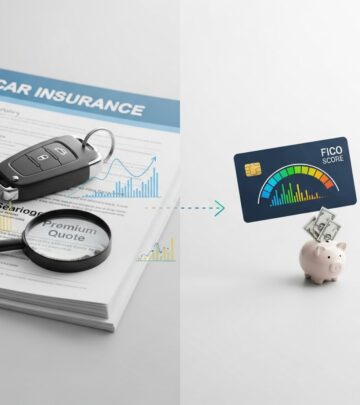
Does Car Insurance Build Credit? What You Need To Know
Uncover the truth about how car insurance payments influence your credit profile and strategies to leverage them effectively for financial growth.

Paying for car insurance generally does not directly build your credit history because most insurers do not report premium payments to major credit bureaus like Equifax, TransUnion, or Experian. However, specific payment arrangements and delinquency scenarios can indirectly influence your credit profile, either positively or negatively.
The Mechanics of Credit Reporting and Insurance Payments
Credit scores are calculated based on activities reported as credit accounts, such as loans, credit cards, and installment plans. Standard car insurance premiums function as service payments rather than credit obligations, so they rarely appear on credit reports. This distinction arises because insurance contracts do not typically involve borrowed money or revolving credit lines.
Exceptions occur with monthly installment plans offered by some insurers, which may be structured as credit agreements. In these cases, consistent on-time payments could contribute positively to your credit file, similar to repaying a small loan. Conversely, lump-sum annual payments bypass credit reporting entirely.
Positive Pathways: When Insurance Can Help Your Score
While traditional premiums do not build credit, innovative tools bridge this gap. Services like Experian Boost allow users to include eligible insurance bills in their credit file, potentially raising FICO scores by recognizing on-time payments that were previously invisible to lenders.
- Enroll in free credit-boosting programs to add utility and insurance payment history.
- Opt for insurer-provided installment plans that report to bureaus, ensuring timely payments.
- Use a credit card for premiums if managed responsibly, as the card’s payment history will reflect positively.
These methods transform routine expenses into credit-building opportunities without additional debt.
Risks of Negative Impact: Delinquency and Collections
Missing insurance payments poses the greatest threat to your credit. While initial late fees do not trigger reporting, prolonged non-payment can lead to policy cancellation and referral to collections agencies. Once in collections, the debt appears on your credit report, significantly lowering your score for up to seven years.
| Scenario | Credit Impact | Potential Consequences |
|---|---|---|
| On-time payments | None or positive (if reportable) | Maintains policy; no credit change |
| 1-2 late payments | Minimal/none | Late fees, coverage lapse risk |
| Policy cancellation | Indirect negative | Collections entry, score drop |
| Collections reported | Severe negative | Higher future premiums, loan denials |
Drivers in this situation face compounded issues, including SR-22 requirements and elevated rates upon reinsuring.
The Reverse Relationship: Credit Scores Driving Insurance Costs
Insurers frequently use credit-based insurance scores (distinct from FICO scores) to set premiums. Strong credit signals lower risk, yielding discounts, while poor credit correlates with higher claims likelihood, resulting in 20-50% premium increases in permitted states.
Not all states allow this practice; California, Hawaii, and Massachusetts prohibit it. Factors beyond credit include driving record, vehicle type, and location, but credit remains a key predictor backed by actuarial data.
Strategic Tips for Aligning Insurance and Credit Goals
To optimize both coverage affordability and credit health:
- Shop annually: Compare quotes from multiple providers, as rates vary based on credit and other factors.
- Pay annually when possible: Avoids installment interest and non-reporting risks.
- Monitor your credit: Dispute errors and use free tools to track changes.
- Build credit elsewhere: Focus on secured cards, small loans, or authorized user status for reliable history.
Budgeting premiums via direct debit ensures consistency without credit card interest traps.
Insurance Claims and Credit: Indirect Connections
Filing a claim does not directly affect credit scores, as claims are not credit events. However, at-fault accidents may lead to uncovered costs or lawsuits, straining finances and indirectly harming credit if bills go unpaid. Subrogation processes, where insurers pursue at-fault parties, could escalate to collections if ignored.
Regional Variations in Reporting Practices
Practices differ by country and insurer. In the UK, monthly car insurance often counts as a credit product with interest, directly impacting scores positively or negatively. U.S. consumers should inquire about reporting policies before enrolling in plans.
Frequently Asked Questions
Will paying car insurance on time improve my credit score?
In standard cases, no, unless using reporting installment plans or services like Experian Boost.
Can I use a credit card for insurance without hurting my score?
Yes, if paid in full monthly to avoid interest and utilization spikes.
How long does insurance collections stay on my report?
Up to seven years from the delinquency date.
Does canceling car insurance affect credit?
Not if done properly; improper cancellation risks missed payments.
Are there insurance options designed for credit building?
Some fintech insurers offer reporting features; research via bureau partnerships.
Advanced Strategies for Credit-Conscious Drivers
For those with thin credit files, combine insurance management with broader habits: maintain utilization under 30%, diversify accounts, and age accounts responsibly. Tools like credit monitoring apps provide alerts for insurer inquiries, which are typically soft pulls without score impact.
Low-credit drivers may qualify for non-standard policies, though at higher costs. Improving credit over 6-12 months can unlock preferred rates, creating a virtuous cycle.
In summary, while car insurance rarely builds credit directly, proactive management prevents harm and unlocks savings. Leverage reporting tools, pay promptly, and integrate with holistic credit strategies for optimal results.
References
- Can Paying Car Insurance Build Credit: What You Need to Know — Car and Driver. 2023-06-15. https://www.caranddriver.com/car-insurance/a36465167/does-paying-car-insurance-build-credit/
- Does Paying for Your Car Insurance Build Credit? — SoFi. 2024-02-10. https://www.sofi.com/learn/content/does-paying-car-insurance-build-credit/
- Does Car Insurance Affect My Credit Score? — Experian. 2024-08-22. https://www.experian.com/blogs/ask-experian/does-car-insurance-affect-my-credit-score/
- How Car Insurance Affects Your Credit Score — Cuvva. 2023-11-05. https://www.cuvva.com/how-insurance-works/car-insurance-credit-scores
- Credit-Based Insurance Scores Aren’t the Same as Credit Scores — NAIC. 2023-05-18. https://content.naic.org/article/consumer-insight-credit-based-insurance-scores-arent-same-credit-score-understand-how-credit-and-other-factors
Similar Articles








Read full bio of medha deb