Do Term Life Insurance Rates Change?
Discover when and why term life insurance premiums stay level or rise, plus tips to secure stable coverage for your family's future.
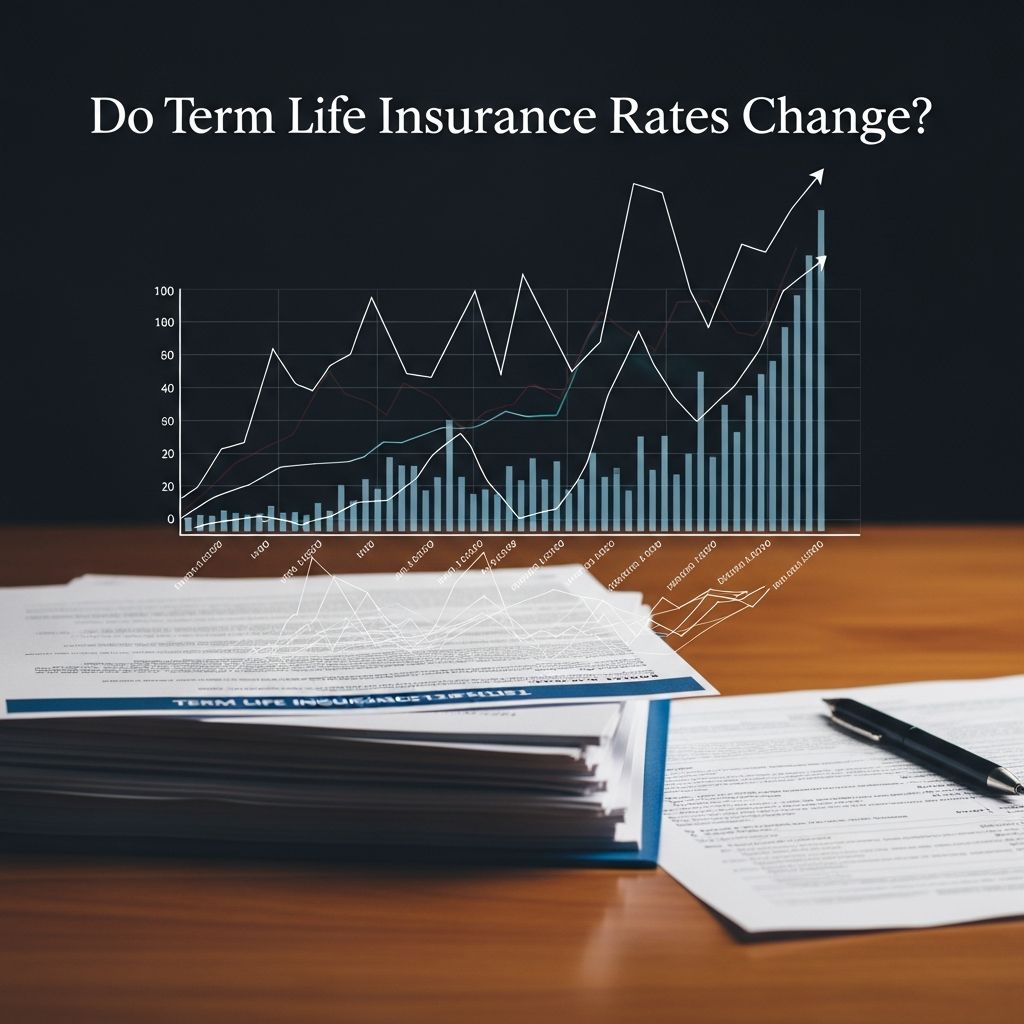
Term life insurance offers temporary coverage at predictable costs, but understanding when premiums might shift is crucial for long-term planning. Most standard policies feature level premiums that remain constant throughout the chosen term, providing financial stability. However, rates can adjust under specific conditions like policy expiration or optional features.
Understanding Level Premiums in Term Policies
The hallmark of traditional term life insurance is its fixed premium structure. When you purchase a policy, say for 20 or 30 years, the monthly or annual payment stays the same regardless of age or health changes during that period. This predictability appeals to families seeking protection for mortgages, education costs, or income replacement without escalating expenses.
Insurers calculate these level rates upfront by averaging the risk across the entire term. Younger applicants benefit most, as premiums lock in at lower rates before mortality risks rise. For instance, a 30-year-old securing a 20-year term pays the same at age 49 as at purchase, assuming timely payments.
When Do Premiums Stay Fixed?
- During the Initial Term: As long as premiums are paid on time, the rate does not fluctuate. This applies to standard level term products from major carriers.
- No Mid-Term Adjustments: Unlike some adjustable policies, standard term life does not reassess health or lifestyle annually for premium changes.
- Automatic Coverage Continuation: Some policies auto-renew at term end, though rates often increase based on attained age.
Scenarios Where Term Life Rates Can Increase
While premiums hold steady within the term, several events trigger potential hikes. Recognizing these helps in proactive planning.
Policy Renewal or Reapplication
At term end, coverage lapses unless renewed or replaced. Renewing typically means higher premiums due to advanced age and possibly deteriorated health. A policy bought at 35 for 20 years renews at 55 with rates reflecting current risk profiles, often 5-10 times higher.
Switching to a New Policy
Applying for fresh coverage post-term subjects you to underwriting anew. Factors like weight gain, new diagnoses, or smoking resumption elevate costs. Data shows premiums for a $500,000 20-year term jump from $25/month at age 40 to over $150/month at 60 for healthy non-smokers.
Increasing or Adjustable Term Options
Not all term policies are level. Increasing term life adjusts death benefits upward annually, often with rising premiums to match. This combats inflation but accumulates higher total costs over time.
| Year | Death Benefit (Percentage Increase) | Premium Impact |
|---|---|---|
| 1 | $105,000 (5% on $100k) | Initial rate |
| 5 | $127,628 | ~25% higher |
| 10 | $162,889 | ~60% higher |
This table illustrates a 5% annual compound increase, common in such products. Flat increases add fixed amounts yearly, still raising premiums proportionally.
Key Factors Driving Life Insurance Premium Variations
Beyond policy type, personal attributes heavily influence base rates and renewal costs. Insurers use actuarial data to price risk.
Age: The Primary Driver
Age tops the list, with premiums escalating sharply post-40. Younger buyers lock in decades of low rates; delaying purchase multiplies costs exponentially.
Health Status and Medical History
Chronic conditions, family predispositions to disease, or poor metrics like high blood pressure raise rates. Full medical exams or records reviews determine classifications from preferred to substandard.
Gender and Longevity Stats
Women often pay 10-20% less due to longer average lifespans, per statistical models.
Lifestyle and Habits
Smokers face 2-3x higher premiums from elevated disease risks. Quitting can lower rates upon requalification. High-risk jobs or hobbies like skydiving also factor in.
Policy Specifics
Larger death benefits, longer terms, or add-ons like riders increase costs. Term policies remain cheaper than permanent ones due to finite duration.
| Factor | Low-Risk Example | High-Risk Impact |
|---|---|---|
| Age | 30-year-old: $20/mo | 50-year-old: $80/mo |
| Smoking | Non-smoker baseline | +200% premium |
| Term Length | 10 years: Lower | 30 years: +50% |
| Health | Excellent: Preferred | Chronic illness: +100% |
Strategies to Manage and Minimize Rate Increases
Proactive steps ensure coverage without surprises.
- Buy Early and Long-Term: Secure 30-year terms in your 20s or 30s to cover peak needs like child-rearing.
- Conversion Options: Many policies allow switching to permanent life without new underwriting before a deadline, preserving rates.
- Inflation Riders: Add cost-of-living adjustments tied to CPI for growing benefits, though premiums rise accordingly.
- Lifestyle Improvements: Quit smoking, exercise, and manage health to qualify for better bands at renewal.
- Shop Competitively: Compare quotes from multiple insurers, as rates vary by algorithm and portfolio.
Comparing Term Life Variants
Term isn’t monolithic; subtypes affect stability.
- Level Term: Fixed premium and benefit—most popular for predictability.
- Decreasing Term: Benefit drops over time (e.g., matching mortgage), premiums level.
- Increasing Term: Benefit and premiums grow, ideal for inflation hedging.
- Renewable Term: Extends without exam but at higher attained-age rates.
Real-World Rate Examples by Age
For a $1M 10-year term (non-smoker male, approximate 2021 averages):
- Age 30: $45/month
- Age 40: $70/month
- Age 50: $200/month
- Age 60: $600+/month
These underscore buying young; a 30-year wait triples or quadruples costs.
Frequently Asked Questions
Can my term life premium increase mid-policy?
No, for standard level term policies, premiums remain fixed if payments are current.
What happens when my term ends?
Coverage ends unless renewed, converted, or replaced. Renewals base rates on current age/health.
Does quitting smoking lower my rate?
Yes, after 1-2 years nicotine-free, requalify for non-smoker rates, potentially halving premiums.
Are women charged less?
Typically yes, by 10-20%, reflecting actuarial longevity data.
Should I add riders for changing needs?
Consider for inflation or conversion; weigh added premium costs against benefits.
Planning for Long-Term Protection
Term life excels in affordability and simplicity, but foresight prevents rate shock. Assess needs periodically—mortgages decline, kids independence grows—adjusting coverage accordingly. Pair with savings or permanent policies for comprehensive security. Consult advisors to model scenarios, ensuring premiums align with budgets across life’s phases.
References
- What is Increasing Term Life Insurance? — Aflac. 2023. https://www.aflac.com/resources/life-insurance/what-is-increasing-term-life-insurance.aspx
- Factors That Impact Life Insurance Premiums — Horizon Credit Union. 2024. https://advice.hzcu.org/family-finances/insurance/article/factors-that-impact-life-insurance-premiums
- 8 Factors That Can Affect Life Insurance Premiums — Farm Bureau Financial Services. 2023. https://www.fbfs.com/learning-center/8-factors-that-can-affect-life-insurance-premiums
- Do Term Life Insurance Premiums Increase Over Time? — National Life Group. 2024. https://www.nilife.com/articles/can-term-life-insurance-premiums-increase-over-time.html
- Term Life Rates Increase with Age — Ethos. 2023. https://www.ethos.com/life-insurance/term-life-rates-increase-with-age/
- Why Do Life Insurance Rates Vary? — Vago Insurance. 2024. https://www.vagoinsurance.com/blog/why-do-life-insurance-rates-vary-factors-that-impact-your-premium
- Top 8 Factors that Impact the Cost of Life Insurance — The Zebra. 2023. https://www.thezebra.com/life-insurance/factors/
Similar Articles








Read full bio of Sneha Tete