Do Lenders Check Backgrounds for Mortgages?
Discover if mortgage providers scrutinize your past beyond credit scores, and how employment and records impact home loan approvals.
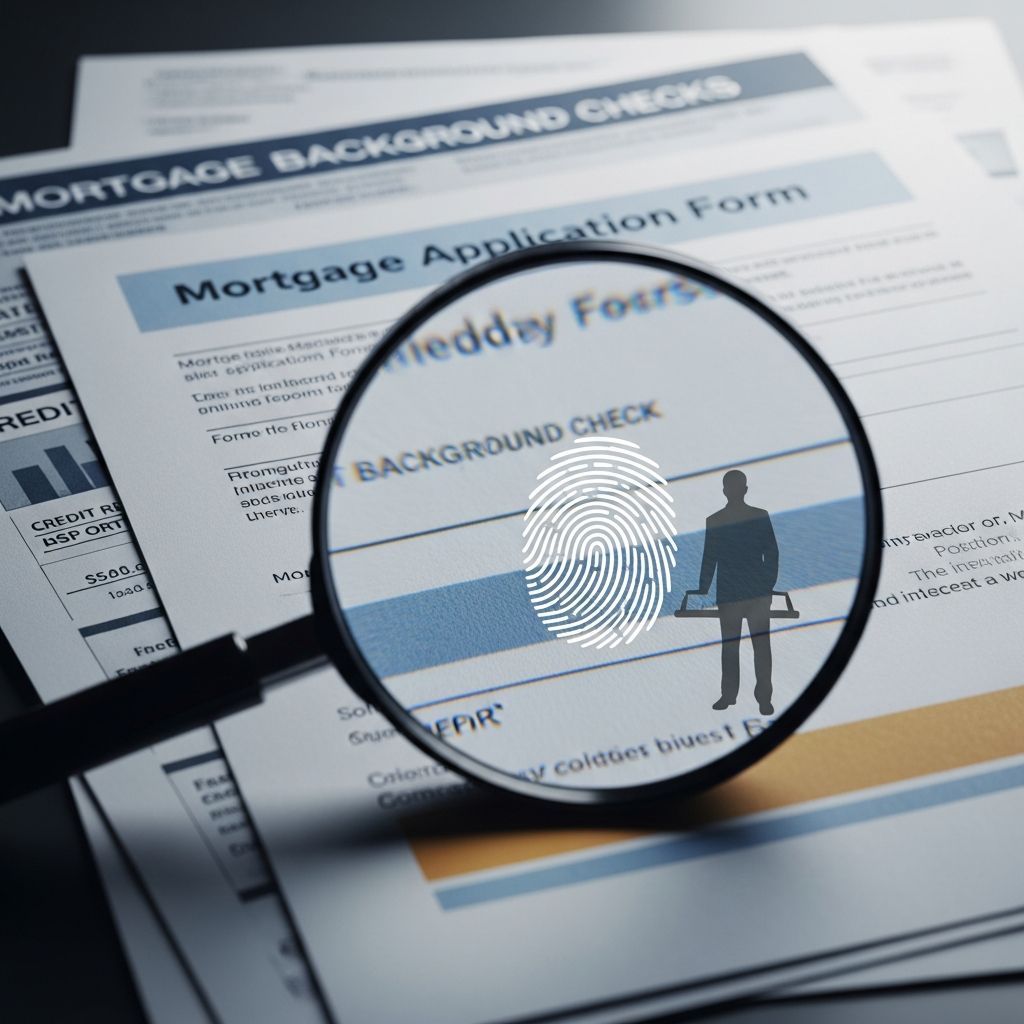
Mortgage providers routinely evaluate applicants’ financial stability and reliability through various verification steps, which may extend beyond credit reports to include employment details and, in select cases, criminal history reviews. This comprehensive assessment helps ensure borrowers can meet repayment obligations over the long term.
Understanding the Mortgage Underwriting Process
The journey to securing a home loan involves multiple stages where lenders scrutinize an applicant’s profile. Underwriting stands as the critical phase where decisions are made based on gathered data. Lenders collect information on income, assets, debts, and personal history to gauge risk.
Key elements examined include:
- Income stability: Proof of consistent earnings over at least two years.
- Asset verification: Bank statements and investment records to confirm down payment funds.
- Debt-to-income ratio: Comparison of monthly obligations against income.
- Creditworthiness: Scores typically starting at 620 for conventional loans or 500 for FHA options with higher down payments.
This process aligns with federal standards like those from the Consumer Financial Protection Bureau (CFPB), ensuring fair lending practices.
Employment Verification: A Core Component
Lenders prioritize confirming steady employment as it directly correlates with repayment capacity. Expect requests for recent pay stubs, W-2 forms, and direct employer contact for validation. Self-employed individuals face additional hurdles, needing tax returns, profit-loss statements, and 1099s to demonstrate two years of viable business income.
During the application phase, the Uniform Residential Loan Application (Form 1003) captures employment details, which underwriters cross-check using services like The Work Number for automated verifications. Gaps in work history, such as those from recent unemployment, can trigger further documentation or even denial if not adequately explained.
| Employment Type | Typical Documentation | Verification Method |
|---|---|---|
| W-2 Employee | Pay stubs, W-2s | Employer call or database |
| Self-Employed | Tax returns, P&L statements | CPA letter, IRS transcripts |
| Commission-Based | Yearly earnings proof | Average income calculation |
This table outlines common scenarios, highlighting how lenders adapt checks to employment types for accuracy.
Criminal History and Mortgage Applications
While not universally required for borrowers, some lenders opt for criminal background checks to evaluate risk factors. No federal law prohibits denying loans or adjusting rates based on criminal records, though many focus primarily on financial metrics. Recent incarceration often creates employment gaps that pose greater challenges than the record itself.
Certain offenses, like financial felonies, raise red flags more than others. Lenders may review public records or use third-party services, but this is lender-discretionary rather than mandatory. For context, mortgage professionals themselves undergo rigorous FBI-level checks via the Nationwide Multistate Licensing System (NMLS).
Regulatory Framework Governing Checks
Federal regulations shape how background information is handled. The SAFE Act mandates criminal background checks, credit reports, and NMLS data for loan originators, including fingerprint submissions to the FBI. Employers must review these for administrative, civil, or criminal findings before allowing originators to engage in consumer transactions.
Compliance involves written policies for screening, training, and record-keeping under Regulation Z. Borrowers benefit indirectly, as these rules ensure licensed professionals handle applications ethically. For private note holders, a structured seven-step process—from consent to compliance review—mirrors professional standards.
- Gather borrower data and consent.
- Run credit and public records searches.
- Verify employment and income.
- Check criminal and civil histories.
- Assess financial stability.
- Review for red flags.
- Document and finalize compliance.
Impact of Background Elements on Loan Approval
A solid employment record bolsters applications by signaling reliability. Conversely, unstable job history or unexplained income dips can lead to requests for more proof or outright rejection. Criminal records vary in impact: minor issues might be overlooked if finances are strong, but serious financial crimes could bar approval.
Credit scores remain pivotal. Conventional loans favor 620+, while FHA accommodates lower scores with stricter down payment rules. Lenders weigh all factors holistically during underwriting, potentially approving borderline cases with compensating strengths like substantial reserves.
Preparing for Lender Scrutiny
Proactive steps enhance approval odds:
- Organize documents early: Compile two years’ tax returns, pay stubs, and bank statements.
- Address gaps: Provide explanations and proof for employment breaks.
- Boost credit: Pay down debts and correct errors before applying.
- Disclose upfront: Reveal any criminal history to avoid surprises.
- Shop lenders: Policies differ; some are more lenient on non-financial records.
For self-employed applicants, partnering with a CPA for verified financials proves invaluable. Recent regulatory updates emphasize periodic training for originators, ensuring checks remain current.
Special Cases: Non-Traditional Borrowers
Individuals with unique profiles, like gig workers or recent immigrants, encounter tailored verifications. Gig economy participants may need platform earnings summaries. Those with foreign income require translated documents and U.S. equivalency proofs.
Notary signing agents in the closing process also face screenings covering SSN traces, county courts, MVRs, sex offender lists, and Patriot Act compliance—standards that indirectly protect borrower data security.
FAQs
Will a past criminal record prevent a mortgage?
Not always; it depends on the lender and offense severity. Financial crimes weigh heavier, but strong finances can offset issues.
How far back do employment checks go?
Typically two years, with direct employer verification for current status.
Are fingerprints required for borrowers?
No, that’s for loan originators via NMLS and FBI. Borrowers face lighter reviews.
Can self-employed get mortgages easily?
Yes, with two years’ tax documentation proving stable income.
What if I have credit issues?
FHA loans allow scores as low as 500 with 10% down; improve credit for better terms.
Navigating Denials and Next Steps
If denied due to background flags, request the reason in writing per FCRA rights. Dispute inaccuracies and reapply after resolutions. Alternative programs like VA or USDA loans offer flexibility for eligible applicants.
Lenders must maintain records of checks and decisions, fostering transparency. Borrowers should monitor their credit annually and build reserves for stronger profiles.
References
- Private Mortgage Note Protection: Your 7-Step Borrower Background Check Blueprint — Note Servicing Center. 2024. https://noteservicingcenter.com/private-mortgage-note-protection-your-7-step-borrower-background-check-blueprint/
- Screening and Training Requirements for Mortgage Loan Originators — Consumer Financial Protection Bureau. 2019-11-01. https://files.consumerfinance.gov/f/documents/201911_cfpb_final-rule_loan-originator.pdf
- Criminal Background Check for Mortgage Loan Originators — Nationwide Multistate Licensing System. Accessed 2026. https://mortgage.nationwideslicensingsystem.org/knowledge/products/nmls/pubs/ugIndFed/licensing/individual_Fed/maps/topics/regFedMLO_CBC.html
- Do Mortgage Companies Run Background Checks? — Experian. Accessed 2026. https://www.experian.com/blogs/ask-experian/do-mortgage-companies-run-background-checks/
- How to Get Your NMLS Background Checks and Fingerprints Done — Mortgage Educators. Accessed 2026. https://mortgageeducators.com/articles?id=721
Similar Articles








Read full bio of medha deb