Do Credit Card Issuers Check Income? What To Expect
Discover when and how credit card companies verify your reported earnings, and what income sources you can include on applications.

Credit card companies typically accept self-reported income during applications but reserve the right to verify it later through various methods. This practice stems from legal obligations to assess a borrower’s ability to pay, balancing approval speed with risk management.
Understanding Income Reporting Rules
When applying for a credit card, applicants must disclose their income accurately. The Credit CARD Act of 2009 mandates that issuers evaluate repayment capacity before approval or credit limit increases. For those 21 and older, ‘income’ extends beyond personal earnings to any funds with reasonable access, such as spousal income or gifts.
Issuers distinguish between gross income—total earnings before deductions—and net income—take-home pay. Applications usually request gross annual or monthly figures to standardize comparisons.
- Gross Annual Income: Full yearly earnings prior to taxes or withholdings.
- Net Income: Earnings after deductions, used less frequently unless specified.
- Monthly Income: Annual gross divided by 12, ideal for consistent reporting.
When Do Issuers Verify Reported Income?
Most initial approvals rely on stated income without verification, as credit reports lack direct income data. However, issuers may scrutinize high spenders, frequent applicants, or those seeking large limits.
Verification triggers include:
- Multiple applications in a short period.
- Spending patterns exceeding reported means.
- Requests for significant credit limit increases.
During these checks, issuers might request tax returns, pay stubs, or W-2 forms. Failure to substantiate can lead to reduced limits or account closure.
Methods of Income Verification
Credit card issuers employ several tools to confirm earnings without always needing documents.
Income Modeling Algorithms
Credit bureaus like Experian develop models estimating income from credit history, assets, and spending. These algorithms cross-check self-reported figures quickly and cost-effectively.
Such models analyze factors like existing debts, payment history, and account ages to predict financial capacity.
Financial Reviews and Audits
Rare but thorough, financial reviews occur for suspicious activity. Issuers may demand proof-of-income letters, bank statements, or IRS transcripts via services like Income Verification Express Service (IVES).
IVES allows authorized lenders to access tax records with taxpayer consent, streamlining verification for loans including credit cards.
Emerging Tech: Open Finance Solutions
Platforms like Mastercard’s Finicity use open banking to scan bank transactions for deposit patterns, estimating income over 24 months with AI confidence scores. This reduces paperwork for real-time decisions, especially for thin-credit files.
These tools categorize income sources and verify employment continuity, aiding approvals for young applicants or immigrants.
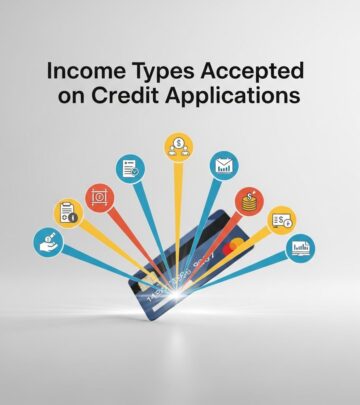
Eligible Income Sources for Applications
Applicants over 21 can broadly define income. Consumer advocates stress using ‘common sense’—only include verifiable funds.
| Income Type | Description | Verification Notes |
|---|---|---|
| Personal Salary/Wages | Earnings from employment | Pay stubs, W-2s |
| Spousal/Partner Income | Household funds accessible | Joint statements (if applicable) |
| Retirement/Social Security | Pensions, benefits | Benefit statements |
| Gifts/Allowances | Regular non-employment support | Bank deposits |
| Scholarships/Grants | Student aid | Award letters |
Under 21? Limit to personal income only, per CARD Act rules.
Risks of Inaccurate Reporting
Exaggerating income risks denial during reviews or future audits. Issuers can retroactively adjust limits or pursue collections if defaults occur.
Keep records like pay stubs and tax returns handy. Even post-approval, issuers may request updates for limit boosts, as required by law.
“Card issuers may not rely solely on household income; they must assess individual access to funds.”
Best Practices for Applicants
To maximize approval odds:
- Calculate Accurately: Use gross income; include all accessible sources ethically.
- Prepare Documents: Have proofs ready for potential requests.
- Update Proactively: Notify issuers of income changes for better terms.
- Monitor Usage: Avoid patterns triggering reviews.
For limit increases, issuers often solicit updates via app or mail. Responding boosts chances.
Frequently Asked Questions
Do all credit card applications require income?
Yes, legally mandated to gauge ability to pay.
Can I use net income instead of gross?
Check the form; gross is standard unless specified.
What if I can’t provide proof during a review?
Expect limit reductions or account restrictions.
How often do issuers perform financial reviews?
Rarely, due to cost, but more common for high-risk profiles.
Does open banking replace document verification?
It supplements, offering faster alternatives for many cases.
Income Verification in the Digital Age
As fintech evolves, expect more automated checks. Open finance empowers consumers to share transaction data securely, speeding approvals while minimizing fraud. For issuers, it provides granular insights beyond static reports.
Traditional methods persist: IRS IVES for transcripts, The Work Number for employment data. These ensure compliance amid rising regulatory scrutiny.
Applicants benefit from transparency—knowing what counts as income prevents pitfalls. Issuers, meanwhile, refine risk models to approve creditworthy individuals efficiently.
In summary, while routine verifications are uncommon, preparedness is key. Accurate reporting aligns with legal standards and personal financial health.
References
- How to Report Income on Your Credit Card Application — NerdWallet. 2023. https://www.nerdwallet.com/credit-cards/learn/report-income-credit-card-application
- Annual Income For Credit Card Applications: What To Know — Quicken Loans. 2023. https://www.quickenloans.com/learn/annual-income-for-credit-card-applications
- Open finance unlocks income verification data for lending — Mastercard. 2025-01-01. https://www.mastercard.com/us/en/news-and-trends/Insights/2025/Open-banking-unlocks-income-verification-data-for-lending.html
- Comment for 1026.51 Ability To Pay — Consumer Financial Protection Bureau (.gov). 2024. https://www.consumerfinance.gov/rules-policy/regulations/1026/Interp-51
- Should You Give Income Updates To Your Credit Card Issuers? — Bankrate. 2023. https://www.bankrate.com/credit-cards/advice/income-updates-to-your-credit-card-issuer/
- Income Verification Express Service (IVES) — Internal Revenue Service (.gov). 2025. https://www.irs.gov/individuals/income-verification-express-service
Similar Articles








Read full bio of Sneha Tete