Do Auto Lenders Verify Income?
Discover how lenders confirm your earnings for car loans, what documents they require, and tips to streamline approval.
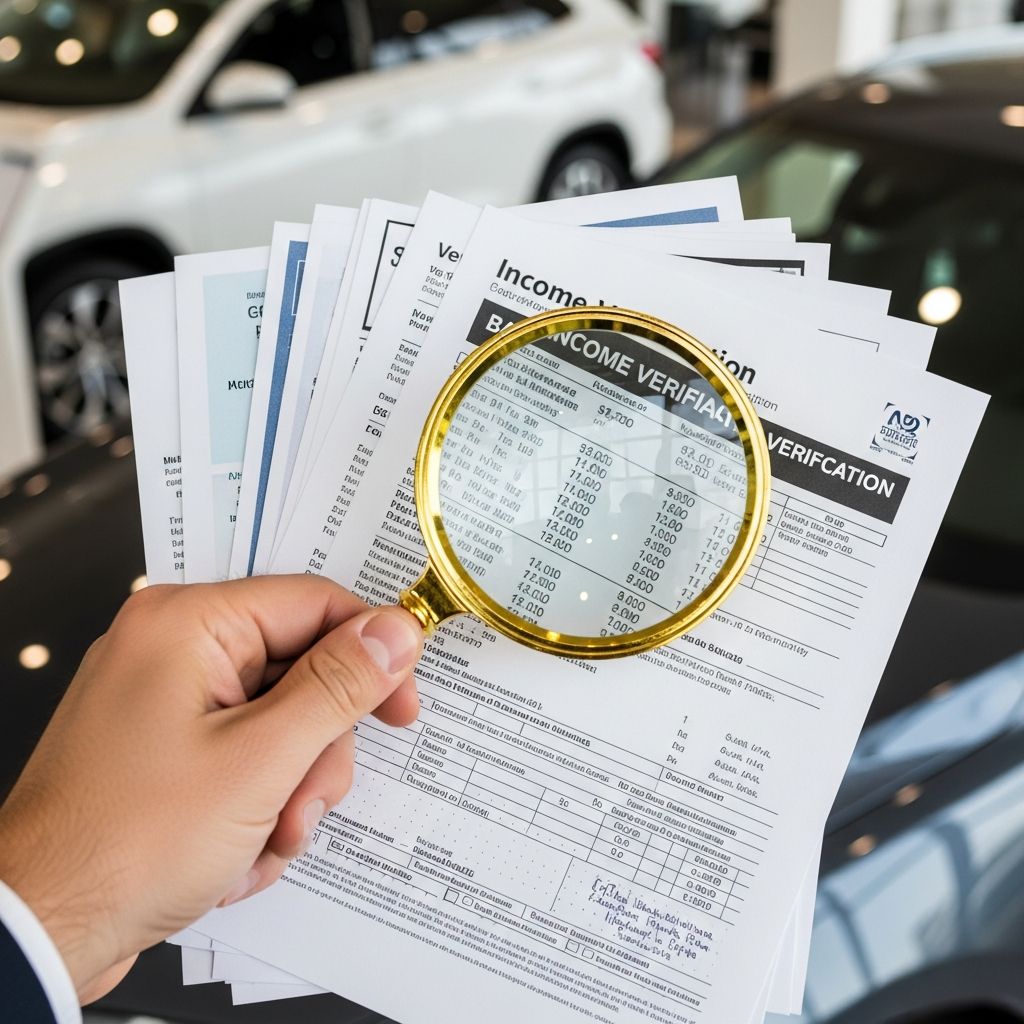
Auto lenders routinely examine income during the loan application process to determine if borrowers can manage monthly payments alongside existing obligations. This verification helps calculate key metrics like the debt-to-income ratio (DTI), ensuring financial stability before approving financing for a vehicle purchase.
Why Income Matters in Auto Financing
Income verification serves as a cornerstone of auto loan underwriting. Lenders use it to gauge affordability, minimizing default risks. For instance, a stable income stream signals reliability, while fluctuating earnings may prompt closer scrutiny. Beyond basic eligibility, verified income influences interest rates and loan terms, with higher earnings often unlocking better offers.
The primary goal is to compute the DTI, which compares total monthly debt payments to gross monthly income. Lenders prefer a DTI below 36%, though some accept up to 45% for qualified applicants. This ratio integrates auto loan estimates with mortgages, credit cards, and other debts, providing a holistic view of financial health.
When Do Lenders Require Income Proof?
Not every application triggers full verification. Prequalification often relies on self-reported figures without documentation, offering a quick estimate of borrowing power. Preapproval, however, demands concrete evidence like pay stubs or tax forms for precise terms.
Triggers for deeper checks include thin credit files, low scores, high loan amounts, or irregular employment histories. Borrowers with excellent credit (above 740) and long job tenure might bypass extensive reviews, especially at banks holding direct deposit records. Conversely, subprime applicants face rigorous exams to offset lender risk.
Standard Documents for Income Verification
Lenders accept various proofs tailored to employment types. Preparing these in advance speeds up approvals and avoids delays at dealerships.
- Pay stubs: Recent ones (last 1-3 months) showing year-to-date earnings, deductions, and employer details.
- Bank statements: 2-3 months highlighting direct deposits, useful for gig workers or multiple jobs.
- W-2 forms: Annual summaries for salaried employees, confirming prior-year income.
- 1099 forms: For freelancers, detailing payments from clients.
- Tax returns: Last two years, especially Form 1040 and Schedule C for business owners.
Dealerships may contact employers directly, so inform HR of potential calls. Digital tools like payroll portals simplify access to stubs without printing.
Verification Challenges for Different Workers
| Employment Type | Common Documents | Additional Steps | Potential Hurdles |
|---|---|---|---|
| Full-Time Employee | Pay stubs, W-2 | Employer contact | Minimal, if stable job |
| Part-Time/Multiple Jobs | Stubs from all sources, bank statements | Average income calculation | Proving consistency |
| Self-Employed | Tax returns, Schedule C, 1099s, P&L statements | 2-year history review | Income fluctuations, longer processing |
| Freelancer/Gig Economy | Bank statements, 1099s | Platform earnings verification | Irregular deposits |
| Retired/Government Benefits | Benefit statements, pension docs | Award letters | Age restrictions (often 21+) |
Self-employed applicants endure the most scrutiny due to variable earnings. Lenders average two years of tax-reported income, excluding one-time gains. Gig workers leverage bank analysis of deposit patterns, while benefit recipients submit official notices from agencies like Social Security.
Digital and Alternative Verification Methods
Modern lenders embrace tech for efficiency. Open banking APIs pull transaction data, analyzing deposits without manual uploads. E-verify systems cross-check employer details instantly. For thin-file borrowers, alternatives like utility bills or lease agreements supplement core proofs.
No-doc loans exist but carry premiums—rates often exceed 10%—and target prime borrowers. Strong credit or large down payments (20%+) can waive verifications, reducing lender exposure.
Boosting Your Approval Chances
Proactive steps enhance outcomes:
- Build credit: Aim for 670+ FICO; pay down debts to lower DTI.
- Save for down payment: 10-20% cuts loan size and perceived risk.
- Get preapproved: Shop multiple lenders online for competitive rates.
- Organize docs: Compile a folder with all potentials.
- Co-signer option: Adds joint income for weaker profiles.
Timing matters—apply mid-month after pay cycles for fresh stubs. Avoid new credit inquiries pre-application to preserve scores.
Common Pitfalls and How to Avoid Them
Fake or outdated documents lead to instant rejection; lenders spot alterations via patterns or calls. Underreporting income hampers DTI favorably but risks later audits. Overstating invites scrutiny if unverifiable.
Self-employed pitfalls include seasonal dips; provide explanations or projections. Multiple jobs require holistic views—lenders sum but discount instability.
Frequently Asked Questions
Do all auto loans require income verification?
No, prequalification skips it, but full applications and preapprovals demand proof, especially for riskier profiles.
How long does verification take?
Typically 1-3 days for employees; 1-2 weeks for self-employed due to tax reviews.
Can I use rental income for qualification?
Yes, with lease agreements and 12-24 months of bank deposits or tax Schedule E.
What if I have no pay stubs?
Bank statements or tax docs suffice; notify lender of your situation upfront.
Does bad credit mean more verification?
Yes, subprime loans scrutinize income heavily to offset default risks.
Navigating the Process with Confidence
Understanding lender expectations empowers informed decisions. By aligning documentation with your profile and optimizing financials, borrowers secure favorable auto financing. Stay organized, transparent, and patient—approval follows preparation.
References
- Do Lenders Check Income for an Auto Loan? — Experian. 2023-05-15. https://www.experian.com/blogs/ask-experian/do-lenders-check-income-for-auto-loan/
- Getting Verified for Auto Loans: Income & Employment Checks — RefiJet. 2024-02-20. https://www.refijet.com/blogs/do-lenders-check-income-and-employment-history-for-auto-loan
- How Do Banks Verify Income For An Auto Loan? — FormPros. 2024-08-10. https://www.formpros.com/how-do-banks-verify-income-for-an-auto-loan/
- How Do Banks Verify Income For Auto Loan? — ThePayStubs. 2023-11-05. https://www.thepaystubs.com/blog/w2-form/how-do-banks-verify-income-for-auto-loan
- How Do Banks Verify Income for an Auto Loan? — Truliant FCU. 2024-03-12. https://www.truliantfcu.org/borrow/auto-loans/how-do-banks-verify-income-for-auto-loan
Similar Articles








Read full bio of medha deb